The best landscaping around trees is a wide mulch ring with a few small, shade-loving plants set in by hand. Keep mulch about a foot off the trunk, do not add soil over the roots, and avoid cutting roots. Tree roots spread 2 to 3 times past the canopy, so most damage happens out of sight.
That simple pattern works well in Flagler County yards, where sandy soil drains fast and summer storms test every tree. A live oak or palm shades the yard, and the bed under it should help the tree, not fight it. The ideas below show how to build that kind of bed, and the mistakes to avoid.
Know Where the Roots Are
Most of a tree’s roots sit near the surface, and they reach much farther than most people expect. The University of Florida IFAS Extension notes that roots are commonly found 2 to 3 times past the dripline, and a tree with a 10 ft crown can have roots about 20 to 30 ft out, sometimes farther. Read the UF/IFAS notes on root growth for the full picture.
That wide spread changes how you should treat the ground under a tree. Digging, fill, and heavy equipment under the canopy can harm roots you never see. Plan the whole area under and beyond the canopy as root zone, and keep any work there light and shallow.
What Not to Do Around a Tree
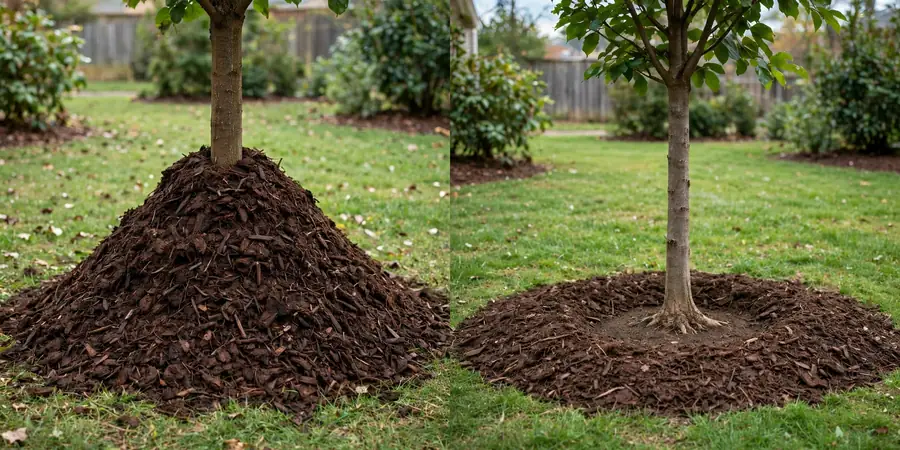
Most tree damage in a yard happens slowly, from small choices that add up. These rules from UF/IFAS will help you avoid the common ones:
- Do not add fill under the canopy. Soil can go only just above the top of the roots, and it should be coarser than the soil already there.
- Do not cut roots larger than about 1 inch on an established tree. Cutting or damaging roots that size could cause harm.
- Do not drive or park equipment under the canopy. Weight compacts the soil and can damage roots, so keep equipment and parking clear of the root zone.
- Do not volcano mulch. Piling mulch against the trunk holds moisture on the bark and encourages trunk rot.
- Do not bury roots that have grown up into old mulch placed against the trunk. Adding more soil over them only makes the problem worse.
- Do not build stone rings filled with soil around a tree. Tall rings break the same rules, since they bury roots and hold moisture against the trunk.
UF/IFAS also advises routing utilities into one trench instead of digging several lines through the root zone. One careful trench beats many small cuts.
8 Landscaping Ideas Around Trees
Each idea below keeps the roots safe first and looks good second. Pick one or two for a single tree, and let the bed grow in over time.
1. Wide Mulch Ring
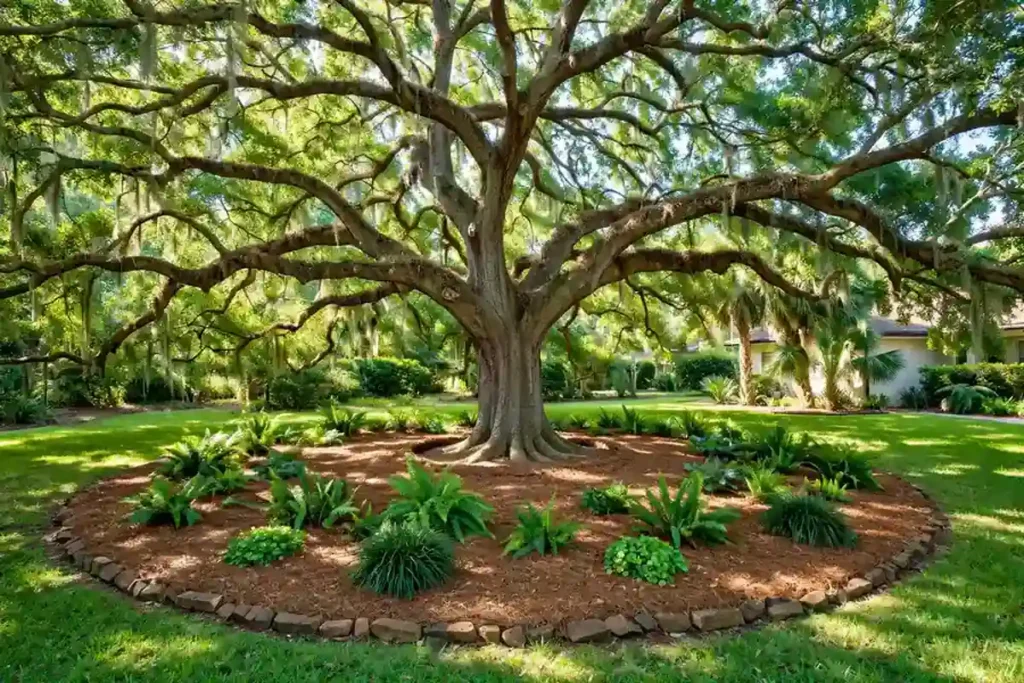
A wide mulch ring is the best bed you can give a tree. Make it at least 8 ft across and about 3 inches deep, with mulch kept about 1 ft clear of the trunk. Extend it to the dripline if you can. Pine bark suits Flagler County yards and feeds the soil as it breaks down. Compare types in our guide on how long mulch lasts, and see rock vs mulch before you choose stone. Safety note: never pile mulch against the trunk.
2. Shade-Loving Groundcover
Thin grass under a tree rarely fills in, no matter how much you water it. A shade-tolerant groundcover does better, since it grows in low light and needs less mowing. Plant small pots by hand, and space them so they can spread and knit together over a season or two. Asiatic jasmine and similar low groundcovers suit Flagler County shade, and they stay low enough to read as a clean bed. Safety note: set each plant in by hand, and do not dig deep holes that cut through roots.
3. Small Shade Plants in Pockets
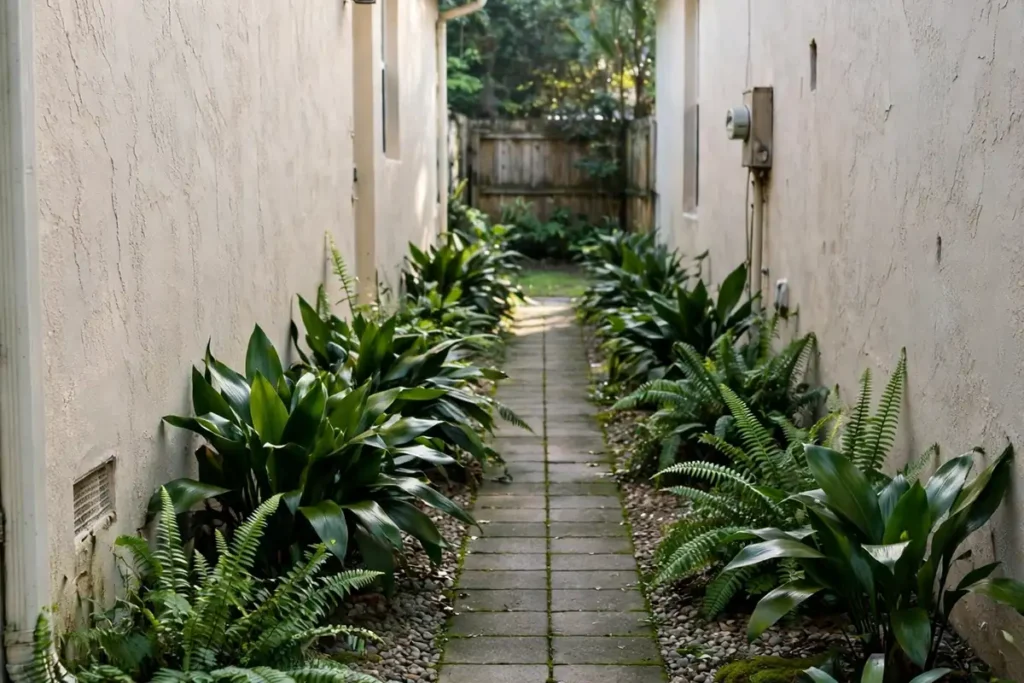
Ferns and other small shade plants bring life to a tree bed without big digging. Set them into hand-dug pockets between the roots, using small pots with small root balls. Work around the roots you find, and shift a plant a few inches rather than forcing a hole. For more shade bed ideas, see our shade garden guide, and browse hydrangea shade plants for color in deep shade. Safety note: do not cut roots over 1/2 inch, and move the plant if you hit one that size.
4. Low Edging With No Added Soil
A low edge gives the bed a finished line without raising the soil level. Set stone, brick, or metal edging on the surface around the mulch ring, and keep the soil inside at its natural level. A tall wall backfilled with soil would bury roots, so keep the edge low and simple. For costs and options, see our guide to landscape curbing. Safety note: if the edging needs a trench, keep it shallow and on the surface, well away from the trunk flare.
5. Stepping Stones Through the Bed
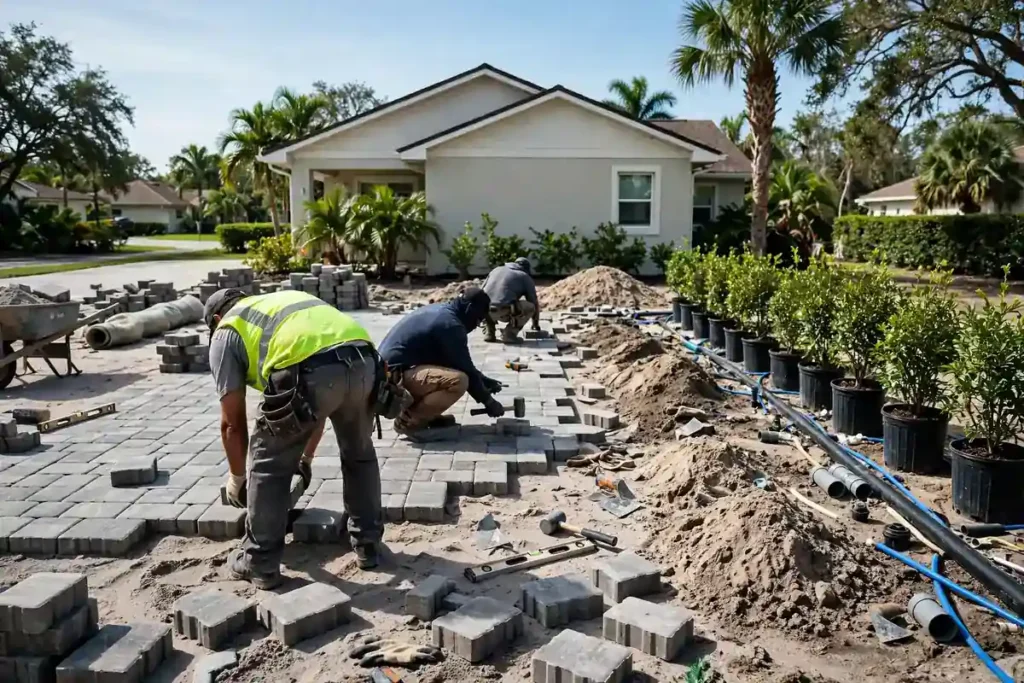
Stepping stones let you cross a wide bed without stepping on roots or packing the soil. Set each stone on the surface or on a thin sand layer, and level it by hand. Space them for a natural stride, and let mulch or groundcover fill the gaps between them. The path reads as part of the bed, not as a walkway cut through it. Safety note: do not dig deep footings or pour concrete under the canopy, since that compacts soil and blocks water from roots.
6. Landscape Lighting Uplight
One or two uplights can turn a live oak into a night focal point. Place the fixture a few feet from the trunk, aimed up into the canopy, and keep the count low so the effect stays soft. Run the low-voltage wire shallow, and route it around large roots instead of cutting through them. Our landscape lighting page shows how we plan fixtures for a whole yard. Safety note: never trench deep under the canopy, and hand-dig any wire path near surface roots.
7. Bench or Seating Spot
A bench under a tree turns shade into a place to sit, and it needs no digging at all. Place the bench outside the root flare, on stepping stones or a mulch pad, so it sits level and stays dry after rain. A simple wood or metal bench suits the bed better than a built structure. Safety note: do not pour a concrete slab over roots, since a slab compacts soil, blocks water, and can crack as roots grow.
8. Under Palm Trees
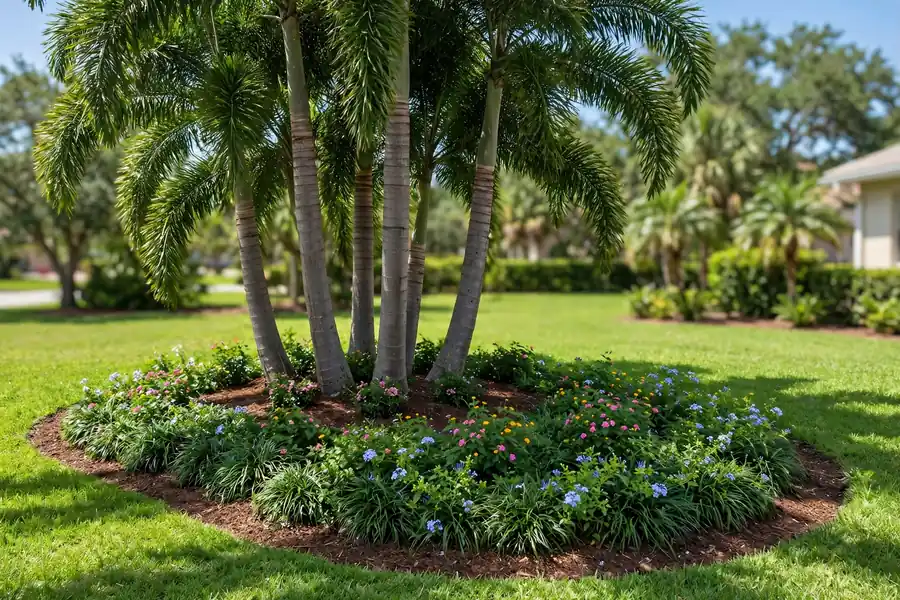
Palms need a lighter touch than shade trees, since their trunks scar and do not heal like bark. Keep a mulch bed clear of the trunk, and fill it with low plants that will not climb or crowd the trunk. Small flowering plants and groundcover give color without hiding the trunk line. If a palm looks stressed, check the signs a palm tree is dying before you change anything around it. Safety note: keep string trimmers away from the trunk, since one nick can open a wound that invites pests.
How to Plant Under a Tree Without Hurting It
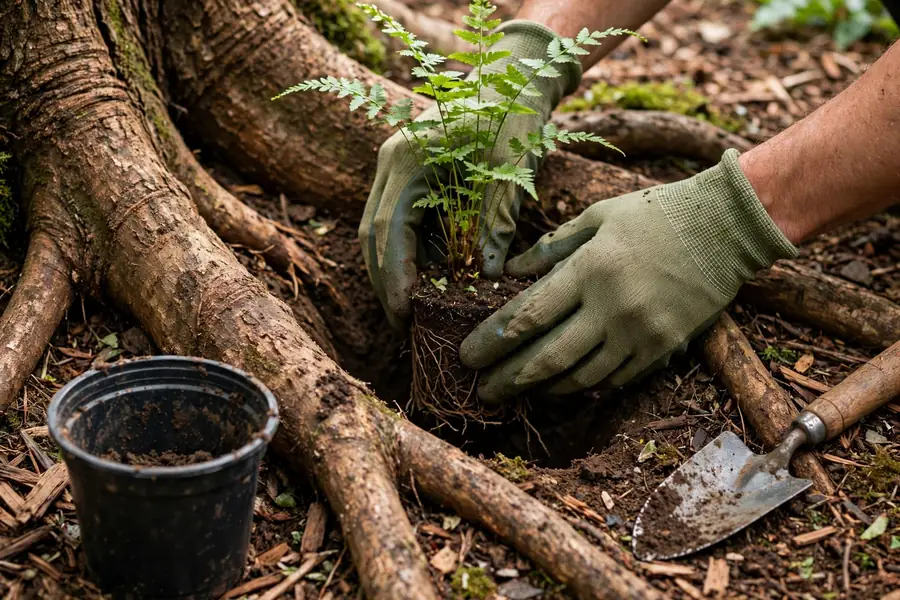
Planting under a tree works when you keep every step small and by hand. Follow these steps in order:
- Choose small plants with smaller root balls, so each hole stays small.
- Contact Sunshine 811 at least two full business days before you dig. The service is free, and Florida law asks you to contact them first. See Sunshine 811 for homeowners.
- Dig by hand with a trowel or small spade, and feel for roots as you go.
- Shift the hole if you hit a root larger than 1/2 inch. Do not cut it.
- Spread any soil by hand. Do not run heavy spreading equipment over roots, since it compacts the soil and can damage them.
- Water the new plants well, then mulch about 3 inches deep while keeping mulch about 1 ft from the trunk.
For trees that need steady water, drip irrigation for trees delivers water slowly to the root zone without wetting the whole bed.
Why Grass Struggles Under Trees
Grass thins under trees for two plain reasons: shade and root competition. The canopy cuts the light grass needs, and tree roots take water and nutrients from the same soil. Feeding and watering more rarely fixes it, since the tree still wins the contest. A mulch bed is often the better choice under the canopy, with lawn kept at the edge where light reaches it. If you want to thicken the lawn at that edge, see how to make St. Augustine grass thicker.
Landscaping Around Trees in Palm Coast
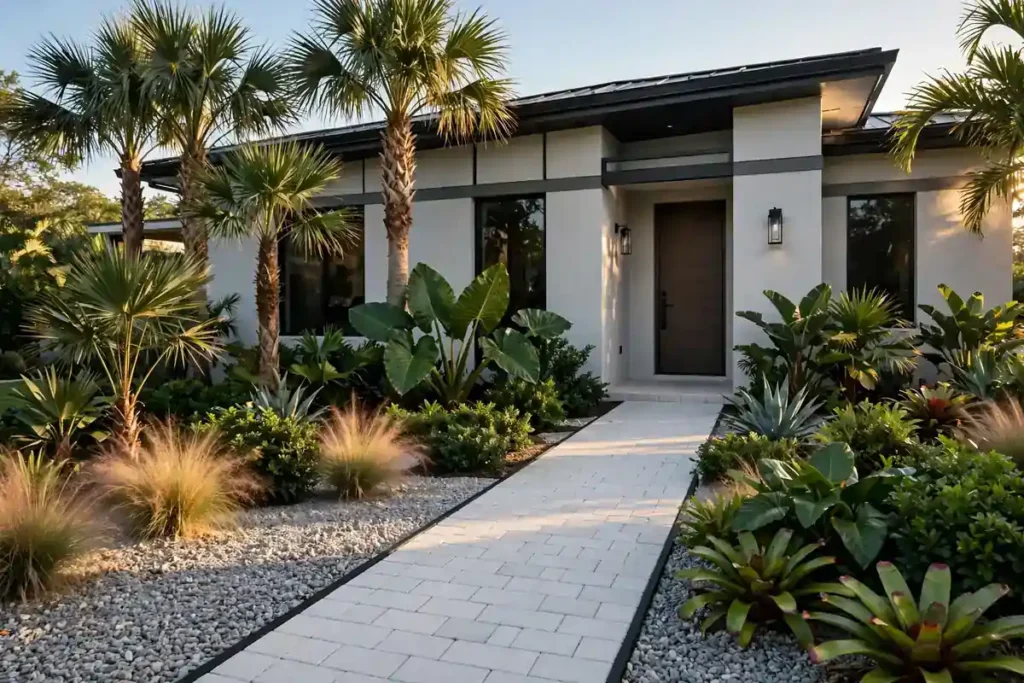
At Dreamscapes Florida, we design tree rings and shade beds that protect roots, install them by hand under the canopy, and keep them maintained through the seasons. That care matters in Flagler County, where sandy soil, summer storms, and salt air test trees year round. We have served Palm Coast, Flagler Beach, Bunnell, Ormond Beach, and St. Augustine since 2015, and we build beds that suit each yard’s trees and light. See our landscape design and landscape installation pages, or call (386) 237-2983 for a free estimate.
Frequently Asked Questions
Only a little. UF/IFAS says soil can be added just to cover the top of the roots, and it should be coarser than the existing soil. Deep fill can suffocate roots, and it traps moisture against the trunk. If the grade must change, keep the added layer thin and spread it by hand.
Roots spread 2 to 3 times past the canopy, so plan the whole area under and beyond the canopy as root zone, not just the ground near the trunk. That wide zone is where digging, fill, and heavy equipment do the most harm. Keep mulch about a foot from the trunk.
Small, shade-tolerant plants and groundcovers set into hand-dug pockets between the roots work best. Ferns and other low shade plants fit this pattern well. Avoid large shrubs that need big holes, which cut through roots and disturb the soil the tree feeds from.
A thin layer at the surface will not smother roots, but rock adds heat and does not feed the soil. Organic mulch is the better choice for the tree, and it breaks down into food the soil can use. Rock also makes it harder to add plants later, since you must move it to dig.
Not a deep one. Tall rings filled with soil bury roots and keep moisture against the trunk, which can lead to rot. A low edge set on the surface gives you a clean bed line with no added fill. Your tree keeps its roots near the surface air it needs.
At least 8 feet across, about 3 inches deep, and kept about 1 foot from the trunk, according to UF/IFAS. Wider, out to the dripline, is better, since it covers more of the root zone. Refresh the layer when it thins, and never pile it against the trunk.