Drip irrigation for trees delivers water slowly and directly to the root zone through a network of 1/2-inch mainlines and 1/4-inch emitter rings. Instead of spraying the trunk and the lawn around it, drip lines soak the soil where feeder roots actually live. For trees in Palm Coast and the rest of Flagler County, this is the most reliable way to keep roots moist in sandy soil without wasting water or drowning the crown.
We install and repair tree watering lines across Palm Coast, Ormond Beach, Flagler Beach, and Bunnell every week. The same handful of mistakes show up again and again, and most of them are easy to avoid once you understand how tree roots drink. Here is what works on the ground here.
Why Trees in Flagler County Need Drip Instead of Spray Heads
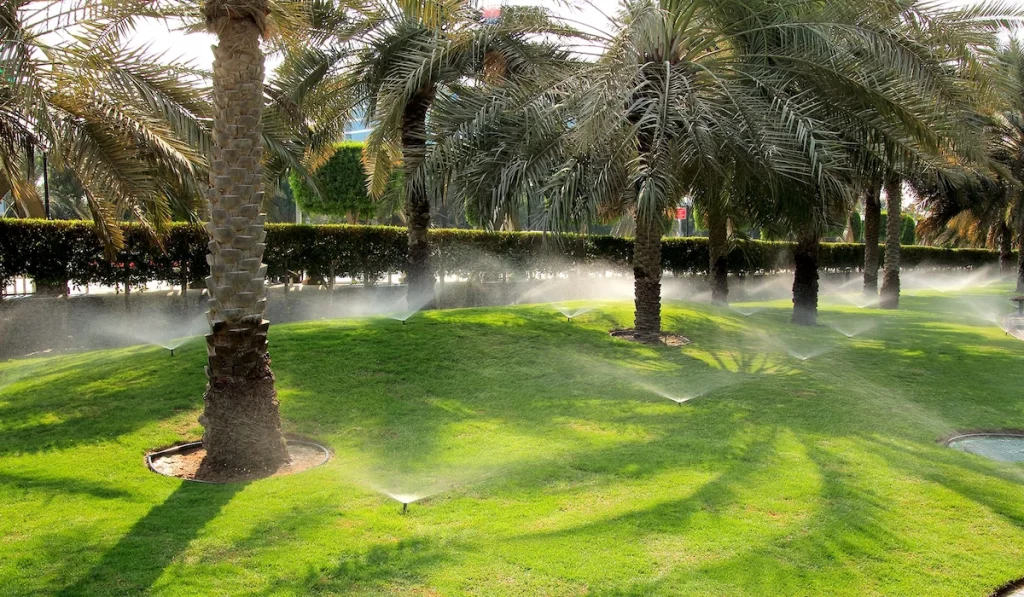
Our soil is the reason. Most yards along this stretch of the coast sit on fine sand that drains fast. Pop-up spray heads throw water across the surface, and a good share of it runs past the root zone before the tree ever gets a chance to use it. Sprinklers also spray the trunk, which invites rot on young palms and thin-barked shade trees. A drip line puts a slow, steady supply of water into the soil so it moves down instead of sideways, and the tree takes up what it needs over several hours.
There is a rule-book advantage too. Landscape watering here falls under St. Johns River Water Management District rules, and micro-irrigation, which includes drip, bubbler, and micro-spray, is generally allowed on any day at any time. Lawn zones are held to assigned days, and during a declared shortage, that can drop to one day per week. That gap matters. When your neighbour’s oak is coasting on a single lawn cycle, your trees can still get a proper soak. Our irrigation services in Palm Coast, FL team sets up tree zones on their own valve for exactly this reason. Rules do change during drought, so check the district’s current schedule before you set a controller.
How a Tree Drip System Is Put Together
The layout is simple once you see the parts. Water leaves the valve, passes through a filter and a pressure regulator, then runs into half-inch poly tubing that circles the tree. Small emitters, usually rated at one or two gallons per hour, punch into that tubing and sit on the soil surface under a layer of mulch.
Here are the pieces that matter:
- Backflow preventer at the source, required on any system tied to a potable supply
- Filter, 150 to 200 mesh, to keep well sediment out of the emitters
- Pressure regulator set around 25 to 30 PSI, since drip fittings blow apart at household pressure
- Half-inch distribution tubing that forms a ring or loop around each tree
- Emitters or inline drip tubing with spacing that matches your soil
- Stakes and end caps so the ring stays put and can be flushed
- A dedicated valve and timer zone so trees run on their own schedule
If you want the step-by-step build, our guide on how to install a drip irrigation system covers the assembly order, fitting choices, and the pressure test we run before backfilling.
Where the Emitters Actually Go
This is where most homeowner setups go wrong. Water goes near the trunk, and the roots never follow it outward.
Tree roots spread wide and shallow. The bulk of the feeder roots sit in the top 12 to 18 inches of soil, and they extend out to the dripline, which is the imaginary circle under the outer edge of the canopy. Your emitters should sit in that broad band, not against the bark.
For a newly planted tree, place a ring of four to six emitters about 12 to 18 inches out from the trunk so the original root ball stays moist while roots establish. Once the tree has been in the ground a season, add a second, wider ring closer to the dripline. Every year or two, move that outer ring further out as the canopy grows. Keep all emitters at least six inches away from the trunk flare. Constant moisture against bark leads to collar rot, and that is one of the more common problems we diagnose on trees that look healthy above and are failing below.
Spacing on our sandy soil should be tighter than what the tubing package suggests. Sand does not spread water sideways well, so emitters 12 to 18 inches apart give you overlapping wet zones instead of isolated damp spots. Clay soils can go wider. If you are still deciding what to plant before you run pipe, our list of the best trees to plant in Palm Coast yards will save you from putting a thirsty species in the driest corner of the property.
How Much Water Does a Tree Need?
A dependable starting point for young trees is about 10 gallons per inch of trunk diameter, per watering. A tree with a two-inch trunk wants roughly 20 gallons each time you run the zone.
Turn that into run time with simple math. Six emitters at 1 GPH deliver 6 gallons an hour, so 20 gallons takes a little over three hours. That surprises people who are used to 15-minute sprinkler cycles, but slow is the whole point. Long, infrequent soaks push roots deeper, which builds a tree that survives a dry spring instead of one that lives off the sprinkler.
Frequency depends on age and season:
- First 30 days after planting: every two to three days
- Months two through six: twice a week
- Established trees, dry season: once every 7 to 14 days
- Established trees, summer rains: often nothing at all
Check before you water. Push a screwdriver or a soil probe six inches into the ground near the dripline. If it slides in easily and comes out with damp sand clinging to it, skip the cycle. Our wet season can deliver a month of water in a week, and running a timer straight through it does more harm than a missed watering ever would. Standing water and saturated root zones are their own problem, which is why irrigation and drainage solutions get planned together on properties with low spots.
Mistakes We Fix Most Often
Emitters left where they were installed. A tree planted five years ago has a canopy twice as wide. The ring never moved, so the tree is being watered under its inner branches while the working roots sit in dry sand.
Trees sharing a zone with turf. Grass wants short and frequent. Trees want long and rare. On one valve, somebody loses, and it is usually the tree.
No filter on well water. Fine sediment plugs emitters within a season. The tree slowly declines and nobody connects it to the clogged line buried under the mulch.
Mulch piled against the trunk. Two to three inches of mulch spread out to the dripline holds moisture and cuts evaporation. A volcano of mulch stacked on the trunk traps water against bark and shortens the life of the tree.
No pressure regulator. Municipal pressure will pop fittings and blow emitters off the line, often in the middle of the night.
Keeping the System Working
Twice a year, pull the end cap and flush the line until the water runs clear. Once a month during the dry season, walk the zone with it running and look for dry emitters, wet spots that suggest a split, or tubing that a mower has clipped. Replace cracked fittings as you find them, since a single split fitting can starve every emitter downstream. Before the summer storm season, confirm the rain sensor works so you are not irrigating through a downpour.
Trees are the slowest part of a landscape to show stress and the most expensive to replace. A properly zoned drip system costs less than one mature replacement tree and pays for itself in water savings within a few seasons.
Talk to a Local Irrigation Crew
Every property here waters a little differently. Soil depth, canopy size, well versus city water, and grade all change the design. If you want your trees on a system built for how they actually drink, contact Dreamscapes Florida and we will walk the property, map the zones, and give you a straight quote.
Frequently Asked Questions
Yes. Established trees benefit from wide drip rings placed near the canopy edge. Older trees need water less often, but they need a larger area covered and a longer run time to reach the volume they use.
Long enough to deliver the target volume. With 1 GPH emitters, most residential tree zones run two to four hours per cycle. Divide your target gallons by total emitter flow to get your number.
Micro-irrigation, including drip, is generally allowed on any day under St. Johns River Water Management District rules, even when lawn zones are limited. Confirm the current schedule with the district or your city, since shortage declarations change the rules.
At least six inches from the trunk flare for young trees, with the main ring 12 to 18 inches out. As the tree matures, move emitters outward toward the dripline.
Yes. The cleanest method is converting an existing zone with a filter, pressure regulator, and drip manifold, or adding a dedicated valve so trees run separately from turf.