To build paver steps, measure the total rise, divide it into equal risers of 6 to 7 inches, and give each step a tread of at least 12 inches. Build a base of 6 to 8 inches of compacted gravel, set each riser level, slope every tread slightly forward, and lock the joints with polymeric sand.
A short flight of paver steps turns a steep bank or a drop from a patio into a safe walk. Done right, the steps stay level for years. Done wrong, they tilt, sink, or hold water.
What Paver Steps Are
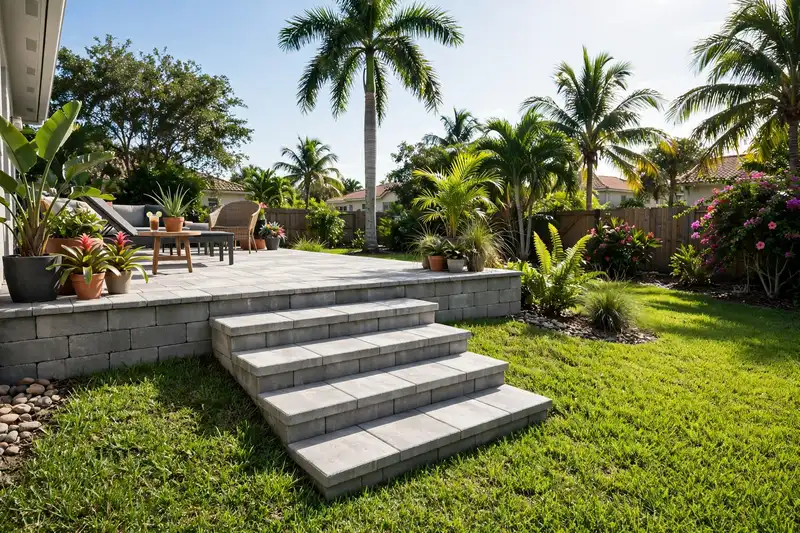
Paver steps are short stairs built from concrete pavers and wall blocks. Each step has a riser, the vertical face you lift your foot over, and a tread, the flat surface you stand on. They suit a drop of one to four risers: patio to lawn, walkway to pool deck, or a gentle slope.
Check Codes, Permits, and Utilities First
Before you dig, call 811. The service marks underground utilities for free, and Florida asks for two full business days notice. Next, check Palm Coast rules. Most local codes follow the International Residential Code: a riser caps at 7-3/4 inches, a tread runs at least 10 inches, and the largest riser cannot exceed the smallest by more than 3/8 inch. A handrail is often required at four or more risers.
Measure the Total Rise and Run
Every step starts with two numbers: the total rise, the vertical drop from the top surface to the ground below, and the total run, the horizontal distance the steps cover. Measure the rise with a stake at the top, a tall pole at the bottom, and a mason’s line between them, then measure from the line down to the ground.
Now do the math. Divide the total rise by a target riser of 6 to 7 inches, then round to a whole number for your step count. Divide the total rise by the step count again for the exact riser height. Every riser must come out the same. For example, a patio 21 inches above the lawn gives 3 steps at 7 inches each. Never build one odd riser to use up the leftover inches.
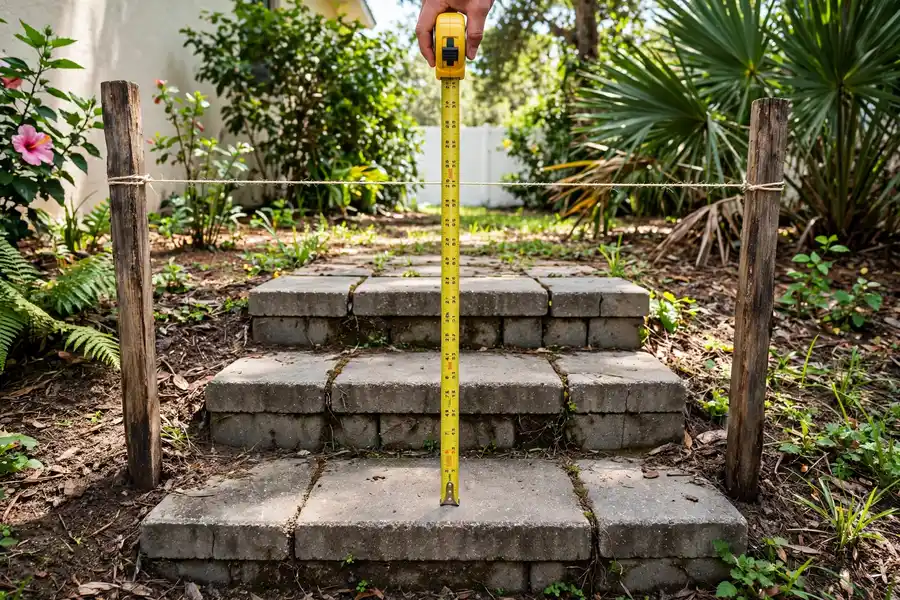
Pick Step Sizes That Feel Right
Code sets the limits. Comfort sets the size. A 6-inch riser with a 12-inch tread is the sweet spot for most Florida yards. It adds up to 18 inches, the riser plus tread total that Fine Homebuilding notes as the comfortable range for outdoor steps. Make the treads at least 12 inches deep and the flight at least 36 inches wide. Plan the steps around the pavers you buy, so the treads use full pavers and need no cuts.
| Riser height | Tread depth | Best for |
|---|---|---|
| 6 inches | 12 inches | Most Florida yards, gentle and comfortable |
| 6-1/2 inches | 12 inches | A patio one to two feet above the lawn |
| 7 inches | 11 to 12 inches | Steeper banks where run is tight |
| 7-3/4 inches | 10 inches | Code maximum, steep, use only when space is short |
Tools and Materials You Need
You need a shovel, a wheelbarrow, a plate compactor, a 4-foot level, a rubber mallet, a mason’s line and stakes, a tape measure, and a broom. For materials, get 3/4-inch angular crushed gravel, coarse bedding sand, riser blocks and tread pavers, landscape fabric, edge restraint with spikes, construction adhesive, and polymeric sand for the joints. Rent a plate compactor for the day.
How to Build Paver Steps
Work from the bottom up. Each step is built on the one below it.
Step 1: Mark Out the Staircase
Drive stakes at the top and bottom of the run and stretch a mason’s line between them. Mark the width of the flight and where each riser will sit, and check the line is square to the patio edge.
Step 2: Excavate the Base
Dig out the whole staircase footprint. Start at the finished height of the lowest tread and subtract the paver thickness, the bedding sand, and the compacted base, which usually means digging 8 to 10 inches below the finished tread level. Remove all grass, roots, and soft soil, lay landscape fabric, and slope the excavation away from the house.
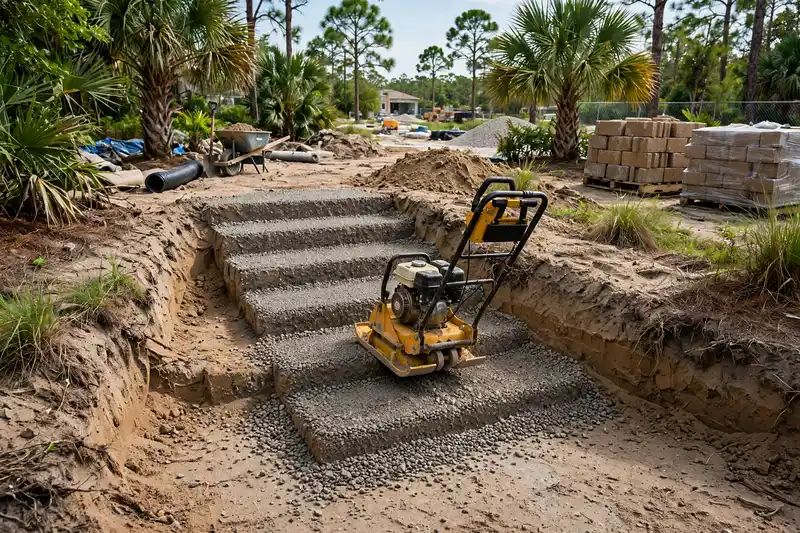
Step 3: Build the Gravel Base in Layers
Add 3/4-inch angular crushed gravel in lifts no thicker than 3 inches, compacting each lift before you add the next one, until the base is 6 to 8 inches thick. The Concrete Masonry and Hardscapes Association gives this depth range for residential work, and Rochester Concrete Products gives 4 to 6 inches of gravel under a 1-inch sand layer for standard pavers. On Florida sand, go to the deeper end.
Step 4: Set the First Riser
Spread about 1 inch of coarse sand over the compacted base and screed it level. Set the first riser block on the sand at the bottom of the flight, tap it level with the rubber mallet, and check it front to back and side to side. Backfill behind the riser with compacted gravel as you go, because the fill is what stops the block from tipping forward.
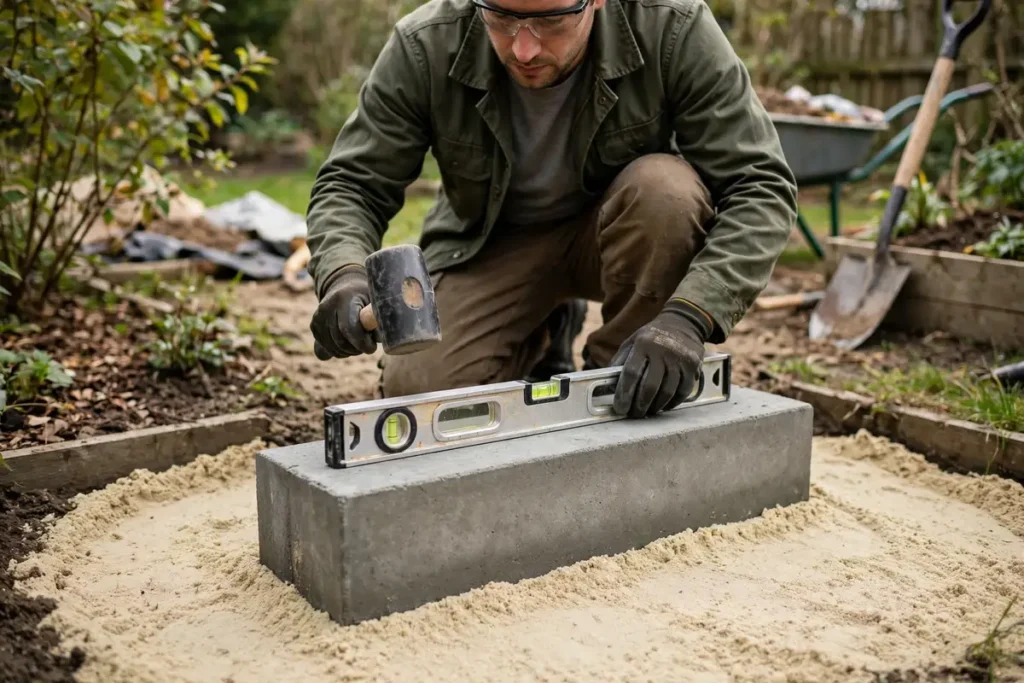
Step 5: Lay the Tread Pavers
Lay the tread pavers on a thin sand bed over the compacted fill, set tight against the riser face and tapped level. Give every tread a slight forward slope, about 1/8 inch per foot, so rain runs off the front edge instead of pooling against the riser. Our guide to how to install pavers covers the same bedding method for flat patios and walkways. Let the tread overhang the riser face by about 1 inch, and glue it down so it cannot shift.
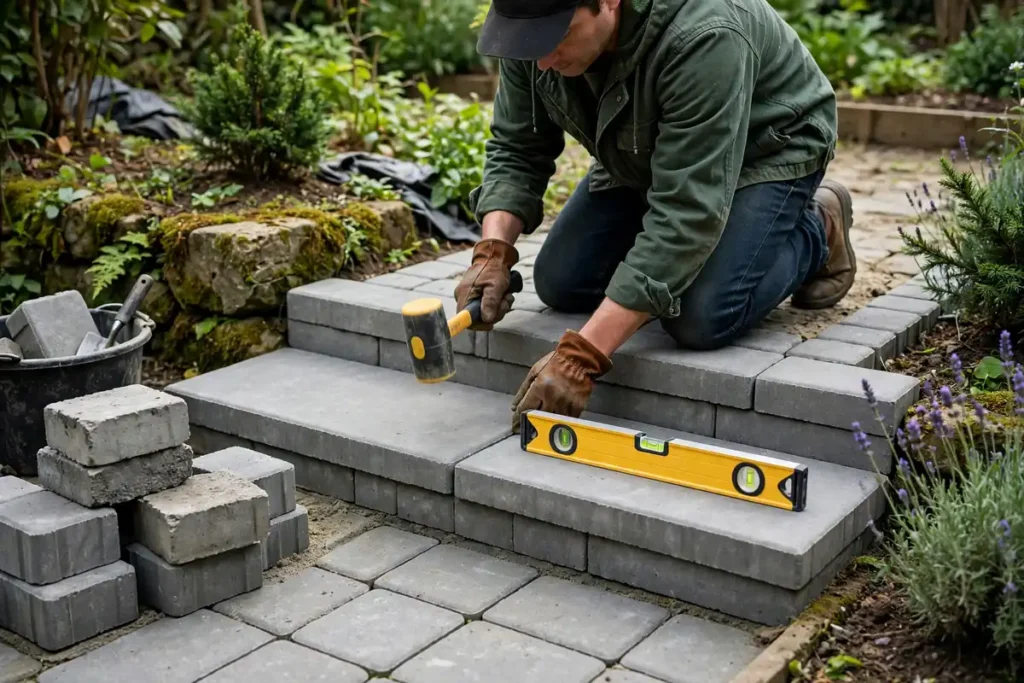
Step 6: Repeat Up the Flight
Build each step the same way: compacted fill behind the riser, a level sand bed, the next riser, then the tread. Check the riser height after every step, because a quarter inch error at step two becomes a half inch error at step four.
Step 7: Add Edge Restraint and Polymeric Sand
Spike edge restraint along both sides of the flight so the pavers cannot creep outward. This is the part most DIY builds skip, and it is why their steps spread apart after a year. Sweep polymeric sand into every joint, then mist it lightly with water so it sets. Do not flood it, or the water washes the sand out before it sets.
Drainage on Florida Sandy Soil
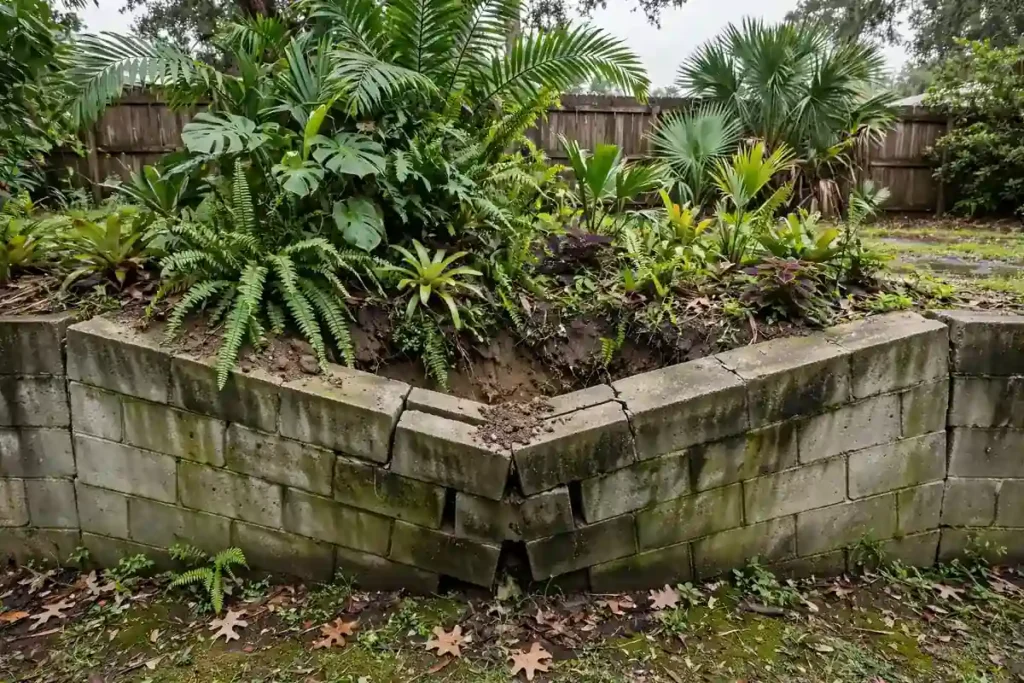
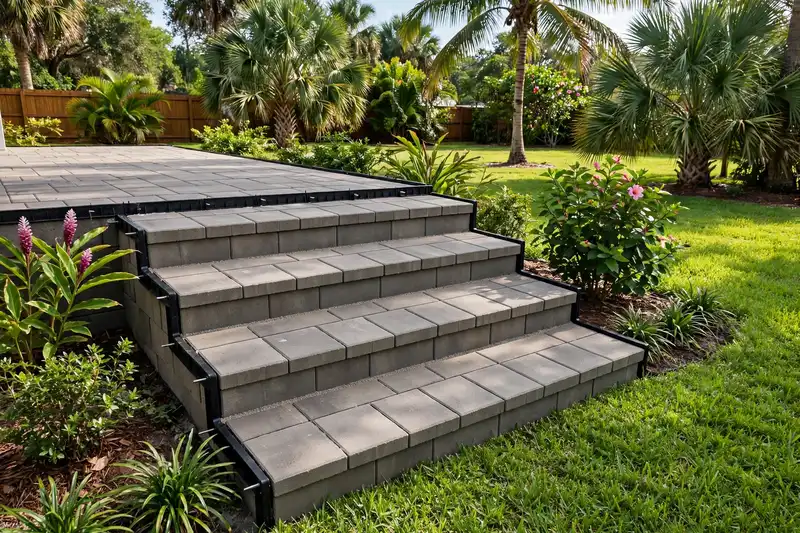
Florida sand drains fast, but it also moves. Water running down a slope can wash sand out from under a step in a single storm, and a step with no support under its front edge will tip forward. Give every tread its 1/8-inch-per-foot forward slope, and keep runoff from the roof or the driveway off the staircase. Our guide to retaining wall drainage covers the same gravel and backfill ideas that keep water moving behind a structure instead of under it. A sloped backyard with paver steps and planting terraces sheds water in small drops instead of one fast sheet.
5 Mistakes That Make Paver Steps Shift or Sink
Most failed steps fail for the same five reasons, and all of them are easy to avoid.
- Skipping compaction. Loose gravel settles under weight, so compact every lift or the steps sink in the first month.
- Uneven risers. A riser a half inch taller than the rest trips people. Divide the total rise evenly and check every riser as you build.
- No edge restraint. Without it, the pavers creep sideways and the joints open up. Spike restraint on both sides first.
- Flat treads that hold water. A tread with no forward slope ponds water, grows algae, and turns slick. The 1/8 inch per foot of pitch is not optional.
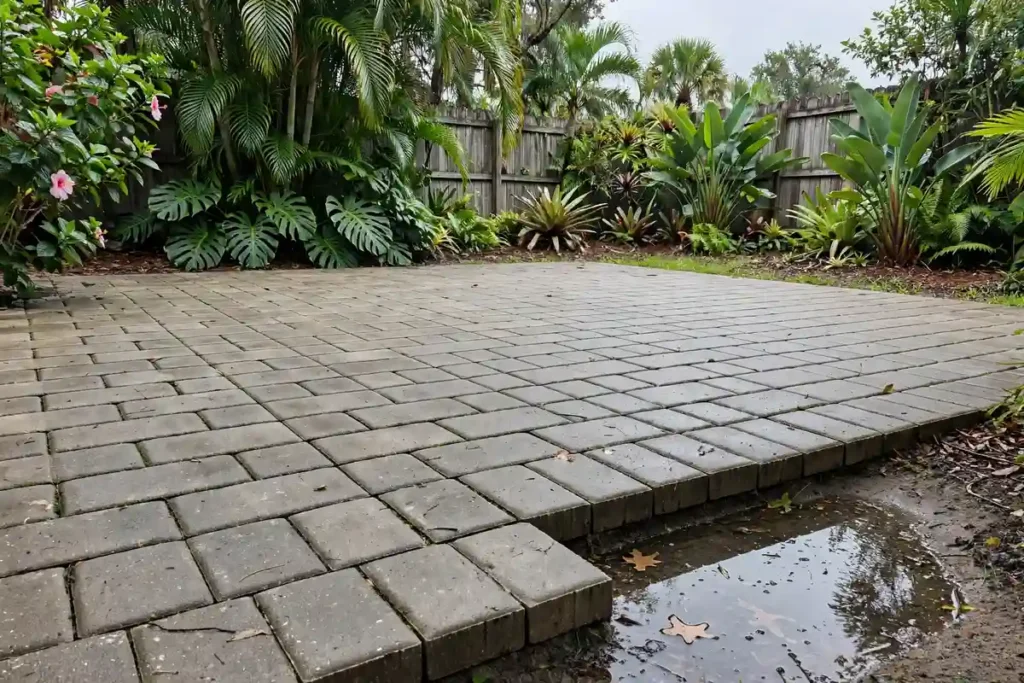
- Building on soft soil. Grass, roots, and topsoil rot and settle, so dig them all out and build on compacted gravel. Sunken pavers are almost always a base problem, and steps on a bad base sink the same way.
How Much Do Paver Steps Cost?
Prices vary too much to quote a single number. The cost depends on the number of steps, the width of the flight, the paver and block you choose, and whether the site needs extra excavation or drainage work. Ask a local supplier for a quote with your measurements in hand.
When to Call a Pro Instead
Call a pro if the flight is more than four risers, if the steps hold up a retaining wall, if the slope needs a handrail, or if water already pools where the steps will go.
Conclusion
Paver steps are simple work when the math and the base are right. Measure the total rise, divide it into equal risers of 6 to 7 inches, and give each tread at least 12 inches of depth. Dig a base of 6 to 8 inches of compacted gravel in thin lifts, set each riser level, slope every tread forward, and lock it all in with edge restraint and polymeric sand. We serve Palm Coast, Flagler Beach, Bunnell, Ormond Beach, and St. Augustine. Call Dreamscapes Florida at (386) 237-2983 and tell us about the drop in your yard.
Frequently Asked Questions
Each riser should be 6 to 7 inches tall, and every riser in the flight must be the same height. The code maximum for a residential step is 7-3/4 inches, and the largest riser cannot exceed the smallest by more than 3/8 inch.
At least 12 inches deep outdoors. The code minimum is 10 inches, but 12 inches lets a whole foot land on the step and leaves room for a small nose overhang past the riser face.
Dig 8 to 10 inches below the finished tread level, then build 6 to 8 inches of 3/4-inch angular crushed gravel in lifts no thicker than 3 inches, compacting each lift. Finish with about 1 inch of coarse bedding sand under the pavers.
Not for a low flight of one to three steps on a well-compacted gravel base. Taller flights, steps that hold up a wall, or steps on poor soil need a concrete footing.
Compact the gravel base in thin lifts, remove all grass and soft soil before you start, add edge restraint on both sides, and keep water from pooling on the treads with a slight forward slope.
Yes. Steps are often the best fix for a slope. Measure the total rise and run first, plan equal risers, and keep runoff from washing sand out from under the steps.