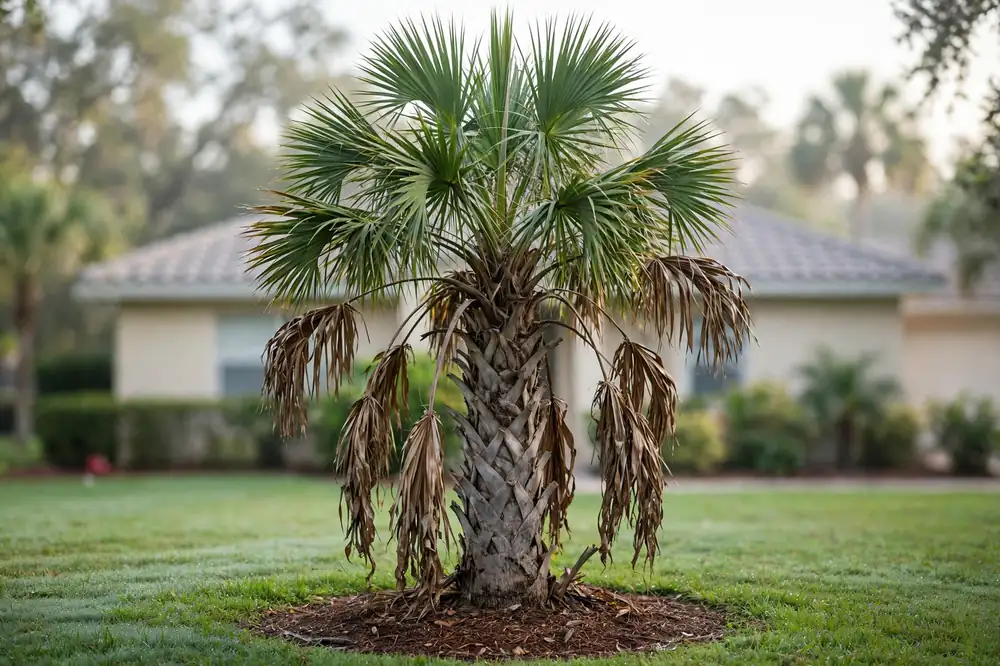
To tell if a palm tree is dying, check the spear leaf first. That is the tall, unopened frond in the center of the crown. If it slides out with a light tug and smells rotten, the bud is dead and the palm will not recover. If the spear is firm and green, the palm can usually be saved.
That one test tells you more than any other sign, because palms are built differently from oaks and maples. A palm has a single growing point, called the bud, hidden inside the top of the trunk. Every new frond comes from it. A palm cannot grow new branches or sprout from the trunk the way other trees do. If the bud survives, the palm has a future. If the bud dies, nothing else matters.
Here in Palm Coast and across Flagler County, most dying palms we look at fall into a few groups: freeze damage, hungry palms in sandy soil, bad pruning, and two diseases with no cure. This guide shows you how to tell which one you are looking at, what you can fix yourself, and when it is time to take the palm down.
The 5-Minute Palm Health Check
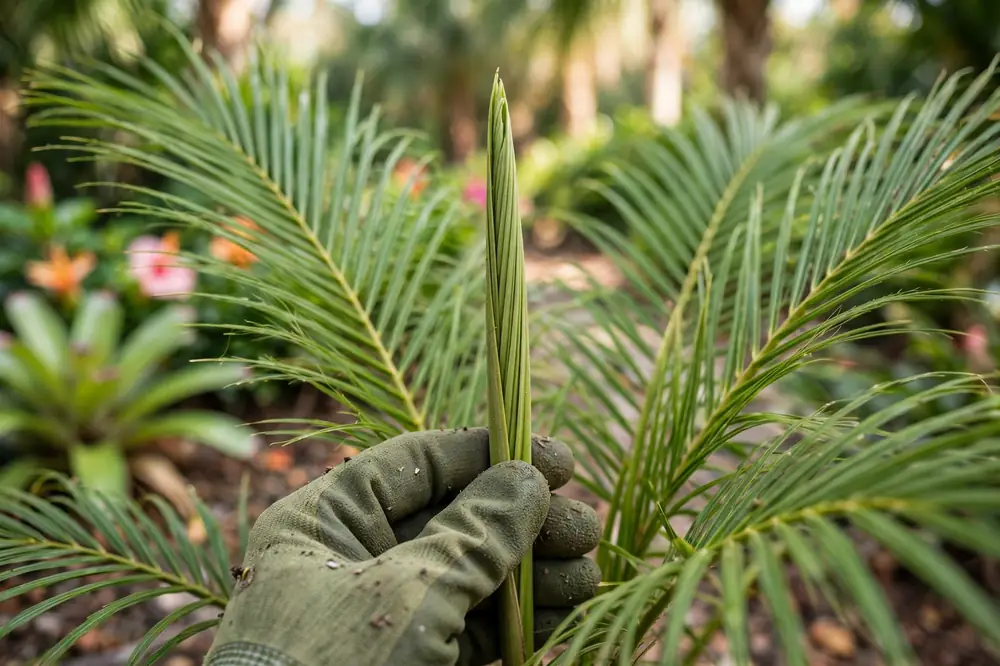
Walk around the palm and check these five spots in order. For tall palms, use binoculars from the ground. Never climb a palm, and never set a ladder near power lines.
- The spear leaf. Is it upright and green? Grab it gently and give a light pull. Firm is good. Loose, mushy, or foul-smelling means bud rot.
- The newest fronds. Are they full size and green? Small, yellow, stunted, or frizzled new fronds point to a problem in the bud or a missing nutrient.
- The oldest fronds. Look at the bottom of the canopy. Note whether the yellow or brown shows up on the tips, along the edges, in spots, or on just one side of the leaf.
- The trunk base. Look at the bottom four feet of the trunk. A shelf-like mushroom, oozing sap, deep cracks, or rusty stains are serious warning signs.
- The canopy and upper trunk. Count the green fronds. A shrinking crown, or a trunk that gets narrow just below the fronds, means the palm has been starving for a while.
Where the Damage Shows Tells You the Cause
Palms show problems in patterns. Where the damage starts is often the best clue to what is wrong. Use this table to match what you see on your palm.
| What You See | Likely Cause | Can It Be Saved? |
| Spear leaf pulls out easily, base is mushy and smells bad | Bud rot, often after a freeze | Rarely. Only if caught very early |
| Fruit drops early, flowers turn black, then fronds turn reddish-bronze | Lethal bronzing disease | No. Remove the palm |
| Lower fronds wilt and die fast, then a hard shelf mushroom grows near the trunk base | Ganoderma butt rot | No. Remove the palm |
| Leaflets die on only one side of a frond first | Fusarium wilt (queen, Mexican fan, Canary Island date palms) | No |
| Oldest fronds have yellow-orange spots and brown, frizzled tips | Potassium deficiency | Yes, but slowly |
| Oldest fronds have a wide yellow band along the edges and a green center | Magnesium deficiency | Yes |
| Newest fronds come out small, yellow, streaked, and frizzled | Manganese deficiency (frizzle top) | Yes, if treated before the bud fails |
| Brown fronds across the canopy after a cold snap, but the spear is firm | Cold damage | Usually yes. Give it time |
| Only a few fronds left on top and the trunk is getting thinner | Over-pruning (hurricane cut) | Yes, but the thin section stays |
Signs Your Palm Is Not Actually Dying
Not every brown frond is bad news. Before you worry, rule out these normal changes.
- One or two brown fronds at the bottom. Palms shed their oldest fronds as they grow. A few dying at a time is healthy. Cabbage palms and royal palms even drop their own dead fronds.
- Slow growth on a new palm. A freshly planted palm often grows very little in its first year while it builds roots. A green, firm spear means it is fine.
- Half-yellow old fronds. These are still feeding the palm. A partly yellow frond is moving its potassium into new growth, so leave it on the tree.
- Slower growth in winter. Palms grow less in our cooler months and pick up again in spring.
Florida Palm Problems Most Guides Skip
Most “is my palm tree dead” articles online are written for indoor palms or California yards. Florida palms face a different set of threats. These are the ones we see most often in Northeast Florida.
Lethal Bronzing Is Already in Our Area
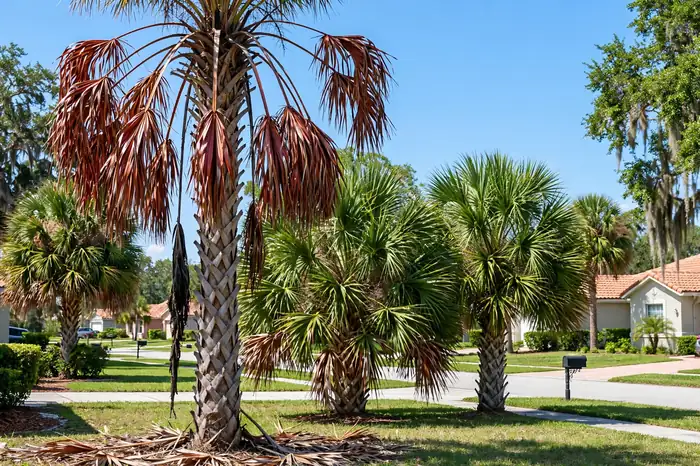
Lethal bronzing is a bacterial disease spread by a tiny planthopper insect. It was first found near Tampa in 2006, and UF/IFAS has since confirmed it in 36 Florida counties, including our neighbors Volusia and St. Johns. It attacks cabbage palms (also called sabal palms), which are Florida’s state tree. It also hits Canary Island date, wild date, pygmy date, queen, and Bismarck palms.
The first signs show up four to five months after infection. Fruit drops early or the flowers turn black. Then the spear leaf dies and the fronds turn a reddish-bronze color. Once a palm shows symptoms, there is no cure. Remove it quickly so it does not spread to nearby palms. Healthy palms close by can be tested and protected with antibiotic trunk injections. If you suspect lethal bronzing, contact the UF/IFAS Extension office in Flagler County for help with testing.
Ganoderma Butt Rot Hides Inside the Trunk
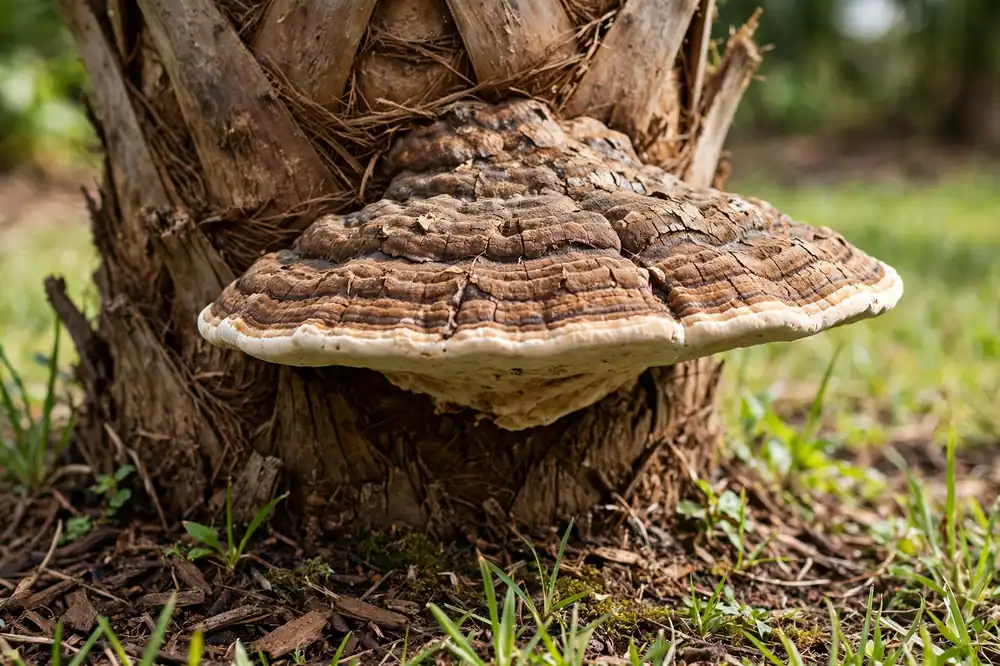
Ganoderma butt rot is a fungus that rots the lower trunk from the inside. UF/IFAS has recorded it on at least 65 palm species. Early signs look like many other problems, mostly lower fronds that wilt and die faster than normal. The one sure sign is a conk, which is a shelf-shaped mushroom on the lower trunk. It starts as a small white bump and hardens into a brown shelf.
By the time the conk shows up, the palm cannot be saved. The trunk will not feel soft, so do not wait for that clue. The fungus also stays in the soil after the palm is gone. Do not plant another palm in the same spot. Choose a shrub or a different kind of tree instead.
Sandy Soil Starves Palms
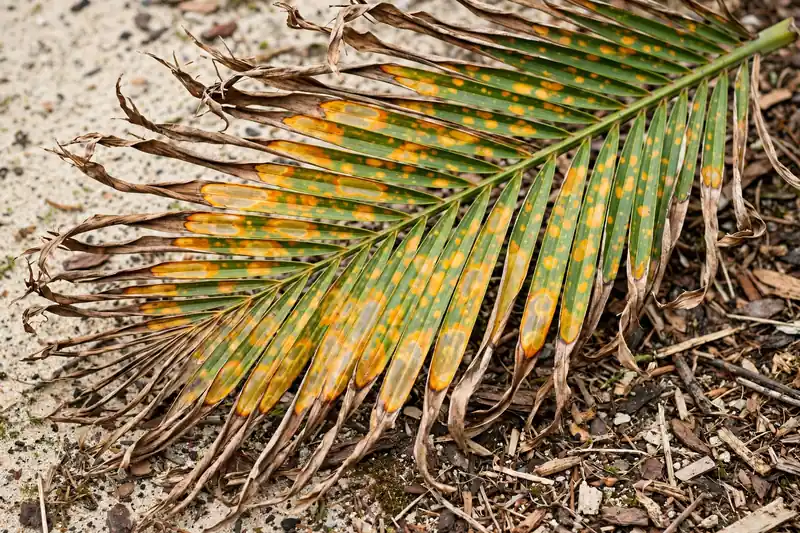
Our sandy soil does not hold nutrients well, and heavy rain washes them away fast. That is why potassium deficiency is so common in Florida palms. It shows up first on the oldest fronds as yellow-orange spots and brown, frizzled tips. Manganese deficiency hits the newest fronds instead, and it is often called frizzle top.
Lawn fertilizer near palms can make things worse, because it is heavy in nitrogen and light on potassium. Feed palms with a slow-release palm fertilizer, such as an 8-2-12 blend with added magnesium, spread evenly under the canopy. Our Florida garden fertilizer guide explains timing and what to look for on the bag. Keep in mind that damaged fronds never turn green again. You will see the fix in the new fronds over the next year.
Freeze Damage Looks Worse Than It Is
Northeast Florida gets real frost, and cold-tender palms like queen, foxtail, and king palms often turn brown after a hard cold night. Do not cut them down right away. The fronds may look dead while the bud is still alive.
Wait a few weeks, then check the spear. If it is firm, leave every frond that still has green on it and let the palm grow out of the damage. If the spear pulls out, remove it and drench the opening with a copper fungicide such as copper hydroxide. Do not use a copper nutrient spray, and do not apply copper more than twice. UF/IFAS notes that cold damage can keep showing for six months to three years after a freeze. To get ready for next winter, read our guide on protecting plants during a Florida freeze.
The Hurricane Cut Slowly Kills Palms
Many palms in Florida are dying from the top because of how they were trimmed. The so-called hurricane cut strips off almost every green frond and leaves a small tuft on top. This takes away the palm’s food supply and leaves the bud open to wind and cold. Over time the trunk gets narrow just below the crown. This is called pencil-pointing, and a pencil-pointed palm can snap in a storm.
The rule is simple. Only remove fronds that are fully brown, and never cut anything above an imaginary line from 9 o’clock to 3 o’clock, as UF/IFAS pruning guidance recommends. Clean your saw or loppers between palms, because diseases like Fusarium wilt spread on dirty tools. Our guide on how to prune trees and plants covers more safe pruning habits.
How to Save a Dying Palm Tree
If the spear is firm and there is no conk or bronzing, your palm has a good chance. Follow these steps.
- Find the cause first. Use the table above. Treating a nutrient problem with more water, or a water problem with more fertilizer, only wastes time.
- Stop cutting green fronds. Every green or partly green frond is feeding the palm. Remove only fully brown ones.
- Use the right fertilizer. Pick a palm-specific, slow-release blend and keep lawn fertilizer out from under the canopy.
- Water deeply, not daily. Sandy soil drains fast, but a palm sitting in soggy ground will rot. Water new palms often while they root in, then cut back once they are established. A drip irrigation system for trees puts water at the roots instead of on the trunk.
- Protect the trunk. Keep string trimmers and mowers away from the base, because wounds let fungus in. A ring of mulch kept a few inches off the trunk helps.
- Be patient. Palms recover slowly. Look for a healthy new spear and green new fronds. Old damage stays on the old fronds until they are shed.
When a Palm Tree Needs to Come Down
Some palms are past saving, and a dead palm can become dangerous. A heavy crown or a rotted trunk can fall on a roof, car, or fence, especially during hurricane season. Plan for removal if you see any of these signs:
- The spear is rotten and no new fronds appear through a full warm season
- The crown has turned bronze, or lethal bronzing has been confirmed
- A conk is growing on the trunk
- The trunk is cracked, hollow, leaning, or narrow enough to snap
When you replace it, pick a palm that fits your space and handles our winter lows. Our list of the best palm trees for landscaping is a good place to start. If you lost a palm to lethal bronzing or Ganoderma, ask about plants that are not known hosts before you replant.
Get a Palm Check in Palm Coast
If you cannot tell whether your palm is stressed or dying, an on-site look can save a healthy tree or catch a dangerous one before it falls. Dreamscapes Florida helps homeowners in Palm Coast, Flagler Beach, Bunnell, Ormond Beach, and St. Augustine figure out what is wrong with their palms and plan the next step. When a palm has to go, our team handles new palm and landscape installation to fill the space. Call (386) 237-2983 or request a free estimate.
Frequently Asked Questions
Yes, as long as the bud is alive. If the spear leaf is still firm and green, new fronds can grow from the center. This often happens after a freeze. If the spear pulls out and the center is rotten, the palm will not come back.
Check the spear leaf and watch for new growth. A stressed palm keeps a firm spear and keeps pushing out new fronds, even if they look a little off. A dead palm has a loose or rotten spear and makes no new fronds through the warm months.
Damage that starts at the top usually points to the bud. Common causes are bud rot after a freeze, manganese deficiency, lethal bronzing, or a hurricane cut that left the bud exposed. Check the spear first, then compare the color pattern to the symptom table in this guide.
It depends on which fronds are yellow. Yellow on the oldest fronds usually means potassium or magnesium deficiency. Yellow on the newest fronds often means manganese deficiency. Yellowing across the whole canopy can mean low nitrogen, poor drainage, or roots that stay too wet.
Only cut fronds that are completely brown, and never remove fronds above the 9 o’clock to 3 o’clock line. Fronds that are still partly green or yellow are feeding the palm. Removing them early weakens the tree.
Expect several months to a year or more. A palm shows recovery through healthy new fronds, while old damaged fronds stay marked until they are shed. After a hard freeze, UF/IFAS notes that symptoms can keep appearing for up to three years.