To strip old sealer off of pavers, test what type of sealer is on them. Dab xylene on a hidden spot: if the film turns soft and tacky in about a minute, it is a solvent-based acrylic, and xylene will strip it. If nothing happens, use a paste stripper. Rinse, dry the pavers for a few days, then reseal.
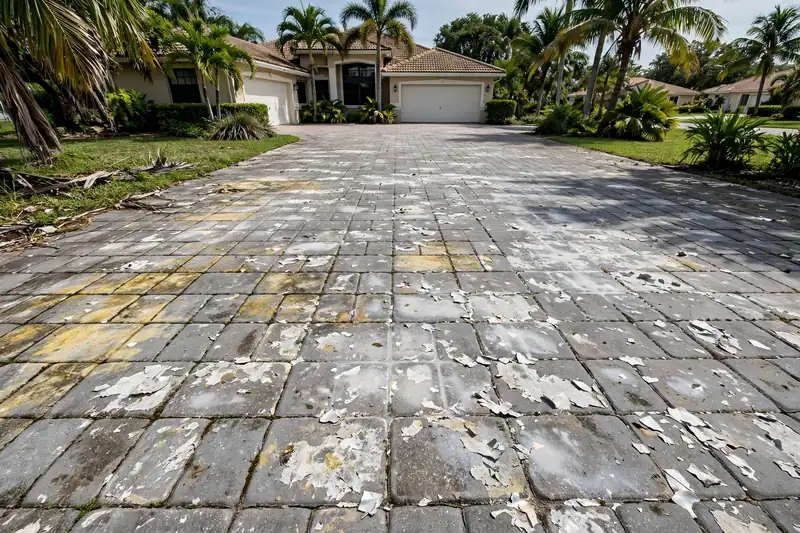
A failed sealer coat makes a driveway or patio look tired. It peels, turns milky white, or yellows under the Northeast Florida sun, and a new coat will not fix it. The only fix is to take the old film off first.
When Old Sealer Has to Come Off
Stripping is the right call when the film itself has failed. Peeling or flaking is the clearest sign: if the film lifts off in chips or sheets, it has lost its bond and no recoat will save it. A milky white film, called blushing, means moisture is trapped under the coat, and yellowing or stains under the coat are other signs. A change of sealer type is the last reason: water-based sealer can never go on top of a solvent-based film, since the two do not bond.
First Check: Do You Really Need to Strip?
Before you buy a stripper, run this check. A film that has only worn thin does not need stripping. If the sealer looks dull but it is still stuck down flat, a clean and a compatible recoat is the better job. See our guide to general paver cleaning. Strip only when the film is peeling or you are switching between water-based and solvent-based products.
What Type of Sealer Is on Your Pavers?
Sealer removers are made for particular chemistries, and buying the wrong one wastes a weekend. A topical sealer, usually an acrylic or a urethane, forms a visible film that adds gloss or a wet look and deepens the paver color. A penetrating sealer, usually made of silane or siloxane, soaks into the pores and leaves no film. It usually cannot be stripped at all. It wears away on its own, and you simply reapply it. Two quick tests on a hidden spot tell you which one you have.
The Xylene Test
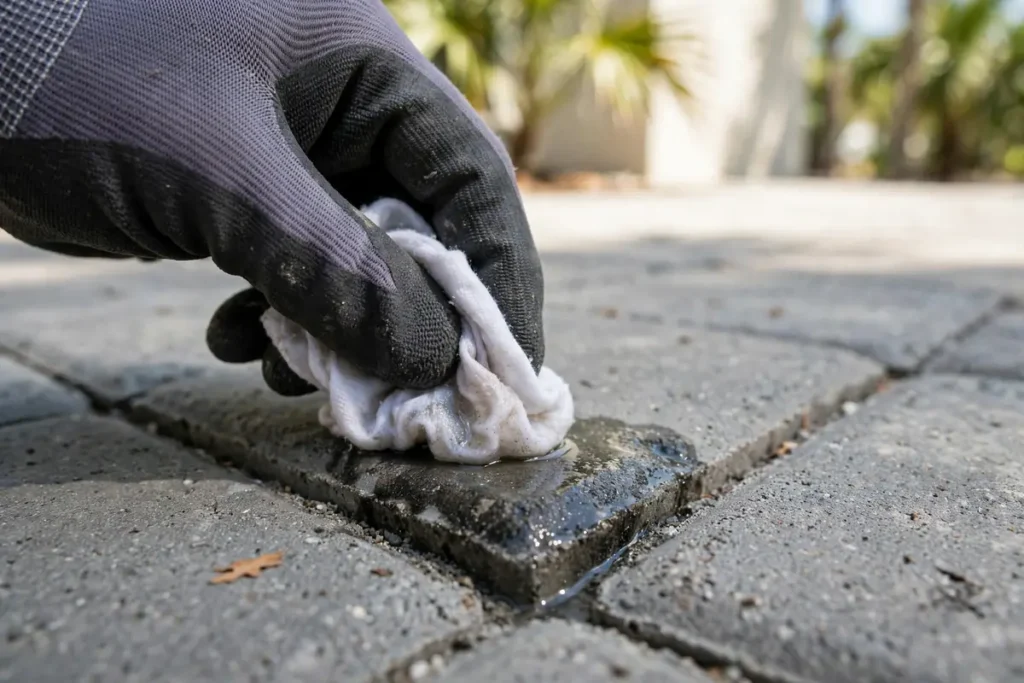
Dab a rag with xylene and hold it on a hidden spot of sealed pavers for about a minute. If the film softens, turns tacky, or dissolves, the sealer is a solvent-based acrylic. If nothing happens, it is a water-based acrylic, a polyurethane, an epoxy, or a penetrating sealer. Xylene is a strong solvent, so wear solvent-rated gloves and eye protection and work outside in moving air.
The Water Test
Sprinkle water on the surface. Strong beading on a visible film means a film-forming sealer is still intact. Water that soaks straight in means a spent film or a worn-down penetrating sealer. If the film softens under denatured alcohol, it is a water-based acrylic.
| Test result | Likely sealer | What it means |
|---|---|---|
| Softens with xylene | Solvent-based acrylic | Strip with xylene or a paste stripper |
| Softens with alcohol, not xylene | Water-based acrylic | Strip with a paste stripper |
| Beads water, no visible film | Penetrating sealer | Usually no strip needed, just reapply |
| Very hard, crazes instead of peeling | Polyurethane or epoxy | Hard to strip, call a pro |
What You Need Before You Start
Gather everything before the first drop of stripper goes down. You need chemical-resistant gloves, eye protection, a respirator with organic-vapor cartridges if you use xylene, a stiff broom, a pump sprayer or a solvent-resistant roller, and plastic sheeting. Wet down or cover nearby plants, and keep rinse water out of drains and plant beds.
Method 1: Xylene for Solvent-Based Acrylic
If the xylene test came back positive, xylene itself is your stripper. Flood one section and let it sit for 30 to 60 seconds until the sealer liquefies. Scrub hard with a stiff broom, then wipe or squeegee up the dissolved sealer before it hardens again. A gallon runs about 30 dollars at a big-box store, according to Craft Pavers. Wear solvent-rated gloves, eye protection, and a respirator with organic-vapor cartridges. No smoking, no pilot lights nearby, and never in still air or indoors.
Xylene has a second use. If a solvent-based sealer has only gone milky, roll a wet coat over the hazy area. The film melts open, the trapped moisture escapes, and the sealer cures clear again. Test a small patch first.
Method 2: Paste Stripper for Water-Based and Unknown Coatings
When the xylene test comes back negative, or when there are layers of unknown sealer down, you need a purpose-made paste stripper. Alliance Gator Sealer Stripper is a common pick: a water-based paste that takes off both water-based and solvent-based acrylic sealers, even several layers at once. Spread it at least 1/8 inch thick, cover it with plastic sheeting, and leave it for a minimum of 12 hours. Alliance lists 3 to 24 hours as best practice. Coverage runs 40 to 50 square feet per gallon. It is zero VOC and pH neutral.
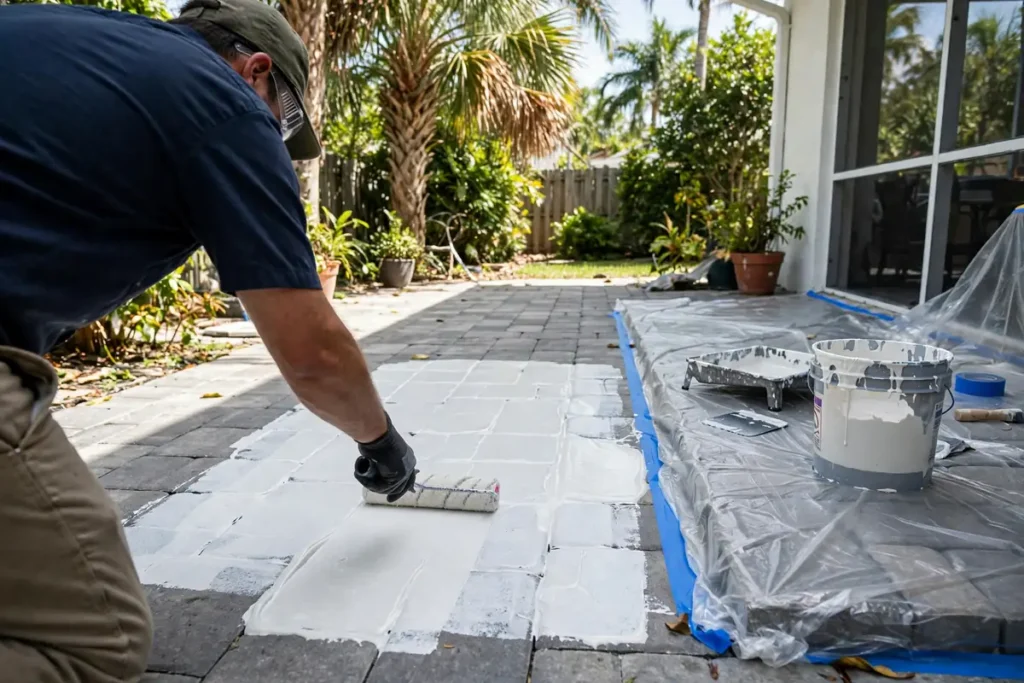
Liquid removers such as INSECO Paver Sealer Remover work the same way at full strength, with a 20 to 30 minute dwell. Keep the stripper wet, scrub with a stiff brush, then wash off the dissolved coating. Start from the downhill side and work uphill, because rinse water deactivates some liquid removers.
Rinsing Without Damaging the Pavers
A pressure washer is the rinse step, not the removal step. Water alone cannot dissolve a cured sealer film, and blasting at it will damage the pavers before it removes the film. After a stripper has softened the sealer, rinse below 1,500 PSI with a wide 25-degree fan tip held at least 12 inches from the surface. Never use a zero-degree pencil tip. It can etch the face and cut the joints open. Never aim straight at the joint sand, because the spray blows the sand out.
When the First Pass Is Not Enough
Expect a second pass on the stubborn spots. Thick films often need two or three rounds. After rinsing, wet the patio and look for beading. Treat any spot that still beads again. Polyurethane and epoxy coatings are a different case. They are hard, they craze or chip instead of peeling, and they resist most strippers. That job belongs to a pro.
Clean Up and Let the Pavers Dry
Once the old sealer is off, clean the surface again. If the stripper was a caustic type, wash with a pH-neutralizing rinse so no residue interferes with the new sealer. Sweep up the stripped residue, bag it, and throw it in the trash.
Then wait. The pavers must be fully dry before any new sealer goes on, and that takes several genuinely dry days. Tape a 2-by-2-foot piece of plastic to the pavers on a sunny, dry day. If you see fog or droplets under the plastic after a few hours, the pavers are still giving off moisture.
5 Mistakes That Ruin a Stripping Job
Most bad strips come from the first step, not the product.
- Pressure washing first. A washer alone will not lift a cured film, and high pressure etches paver faces and blows out joint sand.
- Letting the stripper dry out. A stripper only works while it stays wet. Work small sections, cover with plastic, and mist it if it skins over.
- Skipping the sealer test. Buying a stripper before the xylene test wastes a day on the wrong chemistry.
- Putting water-based sealer over solvent-based film. The two never bond. Strip the old film first, or the new coat fails.
- Resealing damp pavers. Moisture under a fresh coat turns it milky. Wait for several dry days and run the plastic sheet test.
When to Call a Pro Instead
Call a pro for a large driveway, for polyurethane or epoxy coatings, for travertine or natural stone, or for a pool deck. A pro also makes sense when the old sealer has trapped oil stains deep in the pores, or when a white film turns out to be efflorescence rather than sealer. A white chalky film needs a different fix, as our guide to white haze on pavers explains. Our paver driveway cost guide covers what a new driveway or a full reset runs in Palm Coast.
Conclusion
Stripping old sealer off pavers starts with a test, not a purchase. Test first: xylene shows a solvent-based acrylic, and the water test rules out a penetrating sealer. Strip solvent-based film with xylene or a paste stripper, strip water-based and unknown coatings with a paste stripper under plastic, and rinse below 1,500 PSI. Let the pavers dry for several days, run the plastic sheet test, and only then reseal. Follow our guide on how to seal pavers for the full steps. We serve Palm Coast, Flagler Beach, Bunnell, Ormond Beach, and St. Augustine. Call Dreamscapes Florida at (386) 237-2983.
Frequently Asked Questions
Test the sealer type first with xylene on a hidden spot. If the film turns tacky, it is a solvent-based acrylic and xylene will strip it. If nothing happens, spread a paste stripper at least 1/8 inch thick, cover it with plastic, and leave it for 12 to 24 hours. Then scrub, rinse, and dry before resealing.
Not on its own. Water cannot dissolve a cured sealer film, and high pressure damages the pavers before it removes the film. Use a pressure washer only as the rinse step after a stripper has softened the sealer, below 1,500 PSI.
Dab xylene on a hidden spot for about a minute. If the film softens or turns tacky, it is a solvent-based acrylic. If nothing happens, it is a water-based acrylic, a polyurethane, an epoxy, or a penetrating sealer.
Only if the film is peeling, milky beyond rescue, built up from repeated recoats, or you are switching between water-based and solvent-based products, which do not bond. A film that has only worn thin should be cleaned and recoated instead.
Wait several genuinely dry days. Tape a 2-by-2-foot piece of plastic to the pavers on a sunny day: if fog or droplets appear under it after a few hours, the pavers are still giving off moisture.
Yes, if the sealer is a solvent-based acrylic. Xylene re-dissolves that film in 30 to 60 seconds. It will not remove a water-based acrylic, a polyurethane, an epoxy, or a penetrating sealer. For those, use a paste stripper.