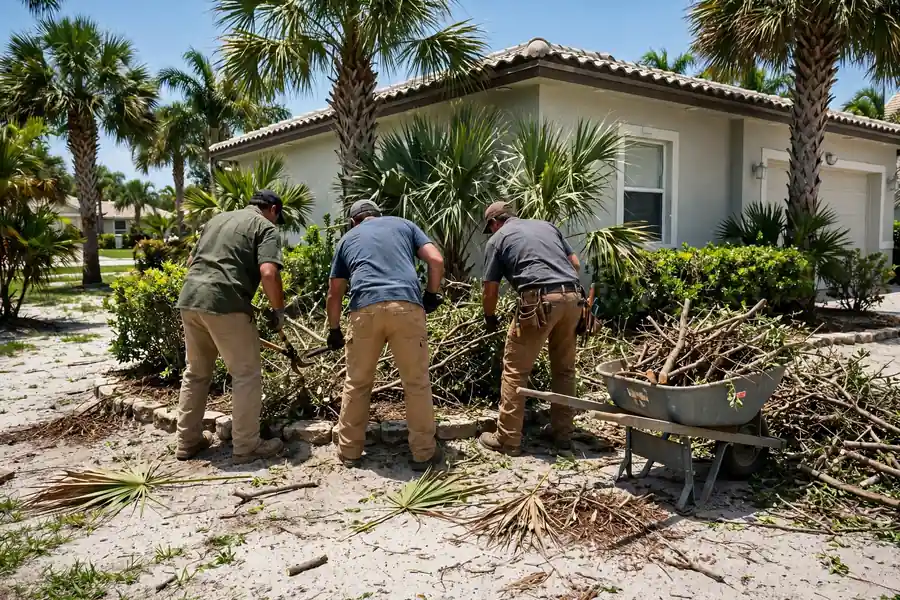
Shrub removal cost in Florida runs $150 to $650 per shrub, with a national average of $400 (Angi, September 2026). Small shrubs cost far less, and large overgrown ones cost far more. The final price depends on the size of the shrub, the roots, access to the bed, and what the quote includes.
We remove old and overgrown shrubs across Palm Coast and Flagler County. Homeowners ask the same three things on every job: what is fair, what a quote should cover, and what happens to the bed after. This guide answers all three.
What Shrub Removal Costs by Size
Most companies price shrub removal per shrub, per job, or per linear foot for hedges. That is why published prices look so different. The table below pulls the main national figures together so you can compare like with like.
| Job | Typical national range | Source |
|---|---|---|
| One small shrub, under 3 feet | $15 to $60 | Lawn Love and Angi, 2026 |
| One medium shrub, 3 to 5 feet | $40 to $150 | Lawn Love, 2026 |
| One large or overgrown shrub | $150 to $650 | Angi, September 2026 |
| Full bed of several shrubs, roots and hauling included | $380 to $1,170 | Lawn Love, 2026 |
| Hedge line, per linear foot | $10 to $50 | Tree Cost Removal Calculator, 2026 |
The national average for one shrub is $400 (Angi, September 2026). That average sits high because it includes big, deep-rooted shrubs and jobs with stump work. These are national averages, not Dreamscapes prices. Local quotes in Palm Coast vary with labor, access, and disposal fees, so always get a written quote for your own yard.
Before you pay to remove a hedge, check whether it can be saved. Brown does not always mean dead. Our guide on why is my hedge turning brown walks through the common causes, from watering and salt to pests, and what to do about each one.
What Drives the Price Up or Down
Five things move the price more than anything else. Knowing them helps you read a quote and spot one that is missing something.
Size and height
Taller shrubs take more cutting, more digging, and more hauling. A shrub under 3 feet may take one worker less than half an hour. A shrub over 6 feet can take an hour or more, and the root ball may need a second person or a small machine.
Species and root depth
Shallow-rooted shrubs such as boxwood come out fast. Angi puts boxwood removal at $20 to $60 each (September 2026). Deep-rooted shrubs such as holly fight back, and Angi puts holly at $40 to $120 each. Old shrubs with thick woody roots cost more than young ones, even at the same height.
Number of shrubs
One shrub costs more per plant than ten. A crew spreads the trip, the tools, and the disposal run across the whole job. Ask for a per-job price as well as a per-shrub price and compare the two.
Access to the bed
A bed beside an open driveway is fast work. A bed behind a fence, up a slope, or wedged between a house and a pool takes longer. When a truck or wheelbarrow cannot reach the bed, crews carry everything out by hand, and that time shows up in the quote.
Stump and root grinding
Pulling the shrub out is one job. Grinding the stump and roots is another. Angi budgets stump removal at $150 to $350 per stump (September 2026). If the bed will be replanted, the roots need to come out. If the bed will be paved over, you may not need that step at all.
Haul-away and dumping
Cut branches and root balls are heavy, and dumping fees add up. Some quotes include haul-away and dumping. Some do not. Ask before you sign, because a cheap quote that leaves a pile of debris in your driveway is not cheap.
What a Good Quote Should Include
A good quote lists each part of the job, so you can compare two quotes side by side. Look for these five items.
- Cutting the shrub down to the base
- Digging out the root ball and stump
- Hauling away branches, roots, and soil
- Raking and leveling the bed
- Any stump grinding, priced separately
If a quote leaves out haul-away or stump work, ask what those cost. A low bid often covers only the cutting. The stump work, the hauling, and the cleanup are part of a finished job, not extras. If the job also leaves a big pile of branches and leaves beyond the shrubs, our yard cleanup cost guide explains what that cleanup usually runs.
Cut It Down or Pull the Roots Out?
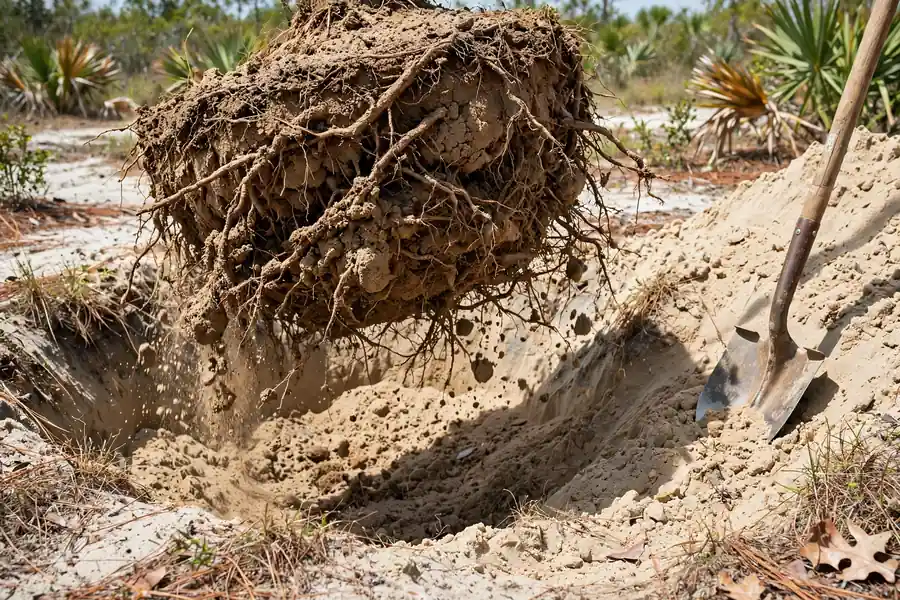
You can cut the shrub to ground level and leave the roots, or pull the whole root ball out. The right choice depends on what happens to the bed next.
Cut to grade
Cutting to grade is cheaper and faster. The crew cuts the shrub flat at ground level and leaves the stump and roots in the soil. This works when the bed will be covered, paved, or planted with ground cover that can grow over the old roots.
Full root removal
Full removal digs out the root ball and stump. It costs more, and it is the right choice when you plan to replant the same bed. New shrubs need loose soil and room for their own roots. Old roots in the way will slow them down.
Roots also matter because many shrubs grow back. Privet, holly, yew, and boxwood can all resprout from roots left in the ground. If you cut one of these down and leave the roots, expect new shoots within a season. Full removal is the only way to stop that cycle.
DIY or Hire a Pro?
A small, shallow-rooted shrub is a fair DIY job if you are fit and have the tools. A large, deep-rooted shrub is not. Here is how to decide.
When DIY makes sense
DIY works for one or two small shrubs with shallow roots. You need loppers, a sharp spade, a mattock, gloves, and a way to haul the debris away. Cut the top growth first, dig a wide circle around the base, cut the roots as you go, and lever the root ball out. Plan on an hour or two per shrub, and more for your first one.
Before you dig anything, call 811. Florida law requires at least two full business days of notice to Sunshine 811 before you dig (Florida Statutes, Chapter 556). The call is free, and utility companies mark buried lines so you do not hit gas, electric, or water. This applies to pros too, and we call 811 on every job that involves digging.
When to hire a pro
Hire a pro when the shrubs are large, overgrown, or close to the house, a fence, or a pool. Hire a pro when there are many shrubs, when the roots are thick, or when you cannot haul the debris yourself. A crew brings the tools, the muscle, and the truck, and the job is done in a day instead of a weekend.
Also check whether the shrub is worth saving before you dig it out. If it is healthy and only in the wrong spot, our guide on how to transplant shrubs shows how to move it to a better place instead of throwing it away.
Do not try to remove a tree yourself, and do not ask a landscaper to do it. Trees near houses and power lines need a certified arborist. We are happy to point you to one.
What to Do With the Empty Bed
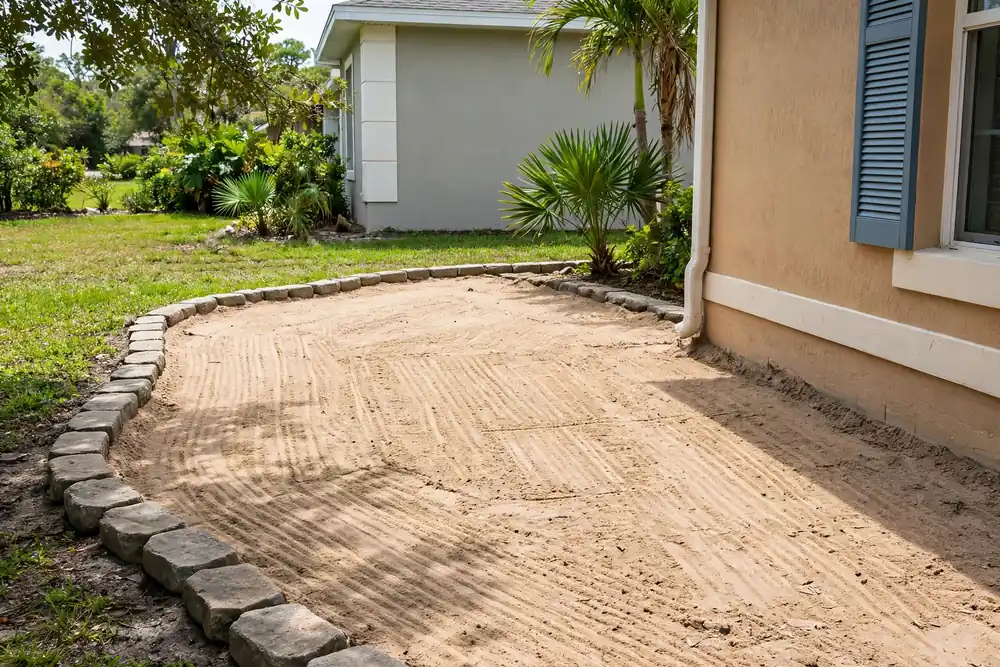
The job is not done when the last root ball leaves. An empty bed needs a little care before new plants go in.
Fill the holes with clean topsoil and rake the bed level. Sandy Florida soil drains fast, so mix a little compost across the whole bed, not only in the planting holes. Then add fresh mulch. It holds moisture, keeps weeds down, and makes the bed look finished right away. See how long mulch lasts in Florida so you know when to top it up.
What to plant next
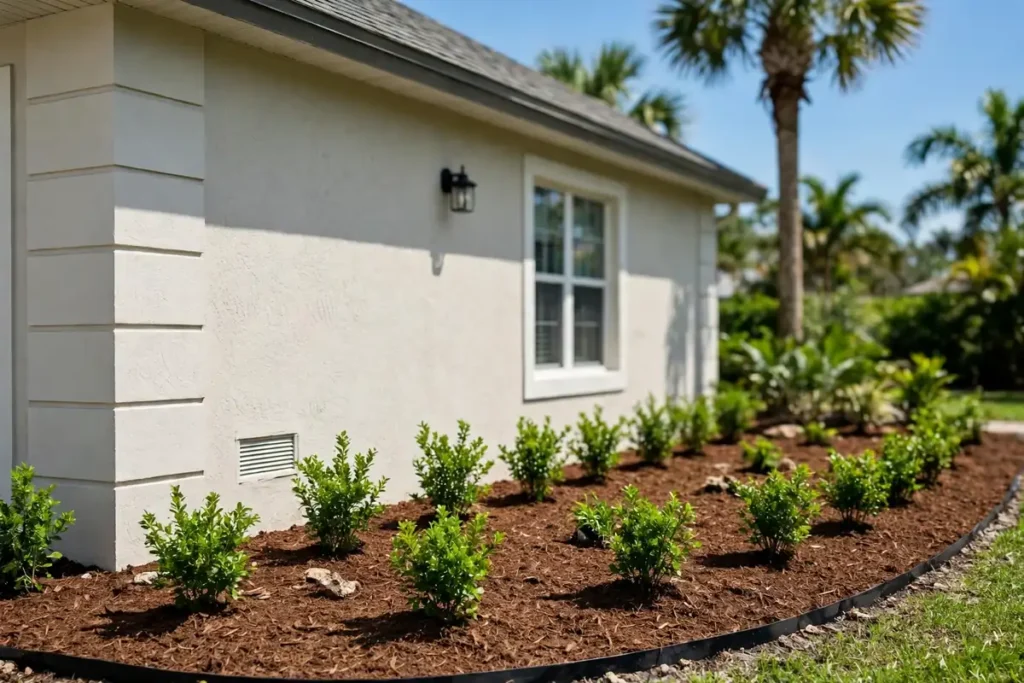
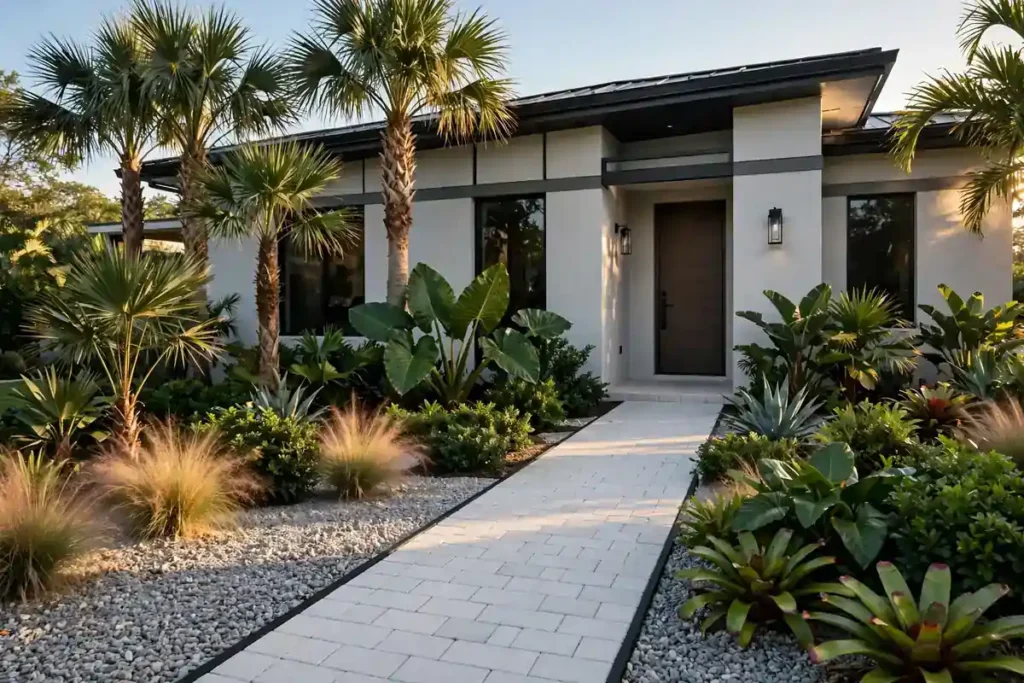
Pick plants that fit the spot: sun, shade, salt air, and how much water the bed gets. The UF/IFAS Florida-Friendly Landscaping program recommends native shrubs that handle Florida heat with little care once they settle in. Good choices for a Palm Coast bed include firebush, coontie, Simpson’s stopper, and muhly grass. Firebush brings hummingbirds. Coontie stays low and neat. Simpson’s stopper works as a screen. Muhly grass adds soft texture and fall color.
Water new shrubs on a regular schedule until their roots grow out into the surrounding soil. UF/IFAS guidance puts that at about 20 to 28 weeks for most new shrubs. After that, these natives need far less water. One caution: coontie is poisonous to pets that chew plants, so skip it if you have a dog that chews.
If the old shrubs were your screen from the street, do not leave the bed bare. Our list of plants that add privacy shows Florida options that grow into a screen without constant trimming.
Shrub Removal in Palm Coast
Palm Coast yards add a few local twists. Our sandy soil digs easier than clay, which helps on small jobs. But sand also lets root balls fall apart as you lift them, so crews dig a wider circle here than they would in heavier soil.
Salt air near the coast and summer storms shape what you plant next. Pick salt-tolerant shrubs for beds near the beach. New plantings also fall under St. Johns River Water Management District watering rules, so water on your allowed days and early in the morning.
Check your HOA rules before you change a front bed. Some Palm Coast neighborhoods ask for approval before you remove foundation shrubs or plant something new.
How to Get a Fair Quote
Get two or three written quotes and compare the same scope. Ask each company the same questions: does the price include root removal, stump grinding, haul-away, and cleanup? How many shrubs does it cover?
A fair quote answers all of that in writing. The cheapest bid is rarely the cheapest job once the missing pieces are added back.
If you want the old shrubs out and the bed ready for something better, call Dreamscapes Florida at (386) 237-2983 or request a free estimate. We serve Palm Coast, Flagler Beach, Bunnell, Ormond Beach, and St. Augustine, and we will give you a clear written quote before any work starts.
Frequently Asked Questions
Most homeowners pay $150 to $650 per shrub, with a national average of $400 (Angi, September 2026). Small shrubs cost far less, and large overgrown shrubs cost more. The final price depends on size, roots, access, and whether the quote includes haul-away and stump work.
A single large or overgrown shrub often runs $150 to $650 (Angi, September 2026). A full bed of several large shrubs can run $380 to $1,170 for the whole job, roots and hauling included (Lawn Love, 2026). Get a written quote, since access and root depth move the price.
Yes, if the shrubs are small and shallow-rooted. You need loppers, a spade, a mattock, and a way to haul the debris. Call 811 at least two full business days before you dig. Hire a pro for large, deep-rooted, or overgrown shrubs, or any shrub near a house, fence, or pool.
Cutting to ground level is cheaper, but many shrubs grow back from roots left in the soil. Privet, holly, yew, and boxwood all resprout. If you plan to replant the bed, pull the full root ball out. If the bed will be paved or covered, cutting to grade may be enough.
Yes, if the roots stay in the ground. Shrubs such as privet and holly send up new shoots from leftover roots within a season. Full root removal stops regrowth. If shoots appear, cut them off at once and dig out the root piece they came from.
Pick Florida-Friendly natives that fit the sun and soil in the bed. UF/IFAS recommends firebush, coontie, Simpson’s stopper, and muhly grass for Florida yards. Water new shrubs on a regular schedule for about 20 to 28 weeks until their roots grow out, then cut back.