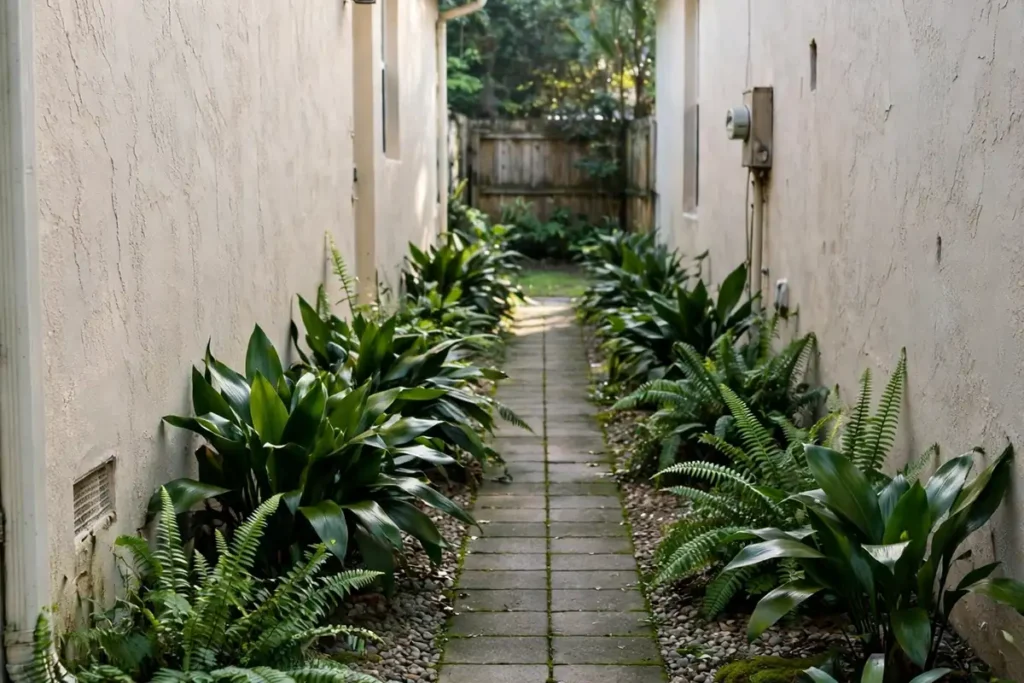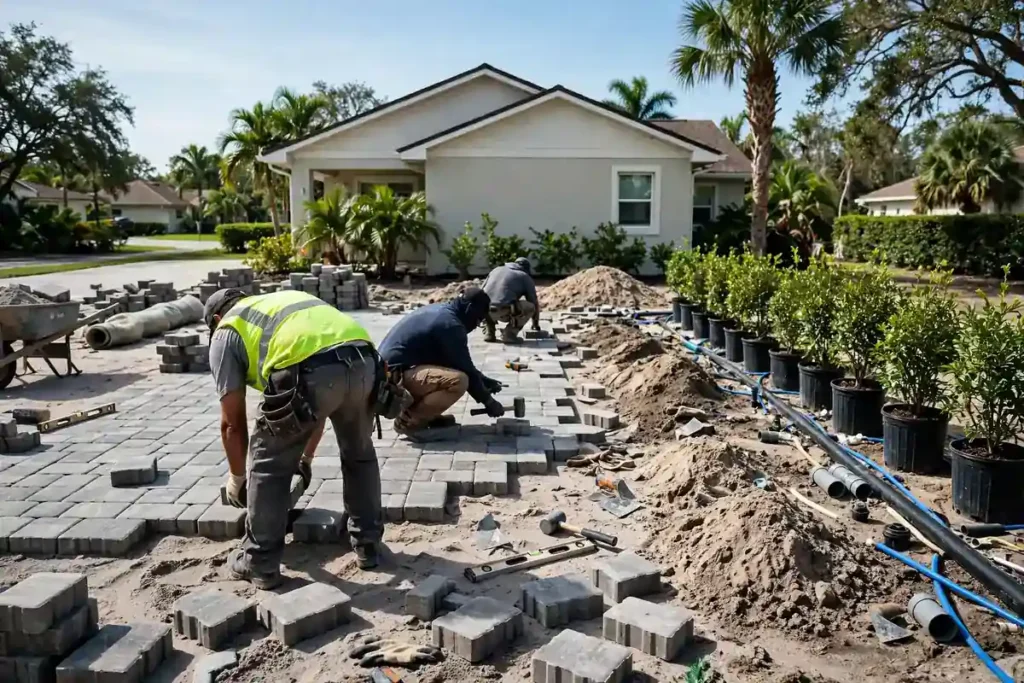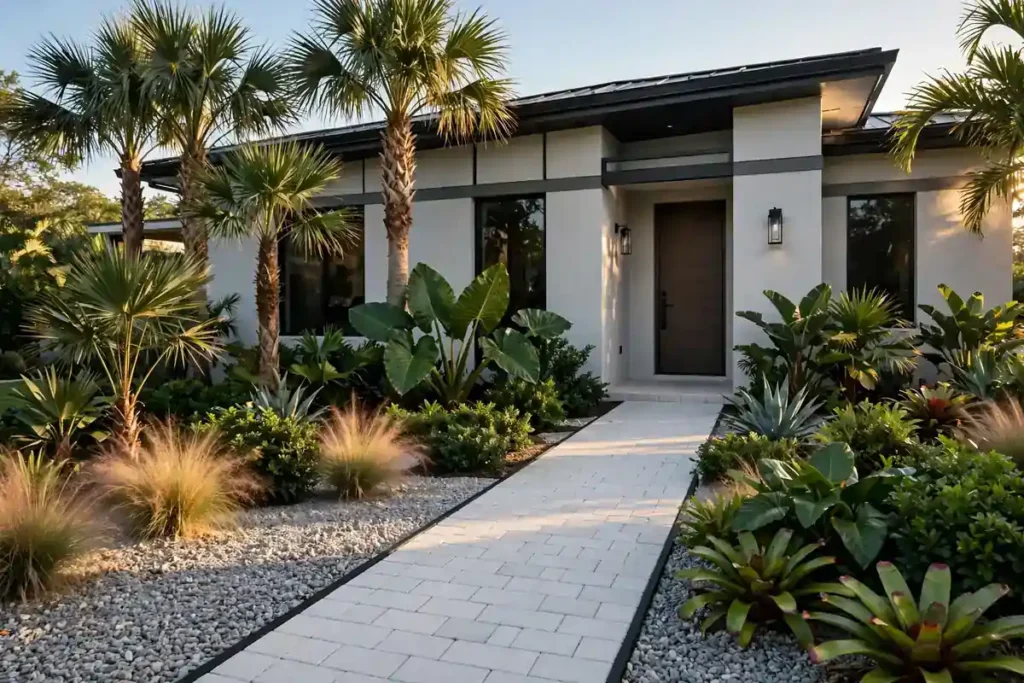
The main types of landscaping styles are tropical, modern, coastal, Florida native, cottage, Mediterranean, Japanese or Zen, formal, and xeriscape. In Florida, the best style is one that handles heat, sandy soil, and storms with the upkeep you are willing to do.
Use this guide to compare the nine styles side by side, then read the Florida reality check under each one. That check tells you which plants hold up in Palm Coast heat and sand, how much care the style needs, and how it stands up to summer storms.
Landscaping Styles at a Glance
Start with this quick comparison. Upkeep and water use are rated low, medium, or high for a typical Palm Coast yard.
| Style | Look | Upkeep | Water use | Best for |
|---|---|---|---|---|
| Tropical | Bold leaves, palms, layered green | Medium | Medium | Shaded lots, pool areas |
| Modern | Clean lines, few plants, wide pavers | Low | Low | New homes, small lots |
| Coastal | Salt-tolerant plants, shell paths | Low | Low | Beachside homes |
| Florida Native | Local plants, natural layers | Low | Low | Wildlife, low water bills |
| Cottage | Loose flowers, layered beds | High | Medium | Front yards, keen gardeners |
| Mediterranean | Gravel, terracotta, silver leaves | Low | Low | Sunny, dry spots |
| Japanese / Zen | Raked gravel, stone, calm lines | Medium | Low | Small courtyards, quiet corners |
| Formal | Symmetry, clipped hedges | High | Medium | Front entries, classic homes |
| Xeriscape | Mulch, grouped plants, low water | Low | Low | Sunny yards, water savings |
Formal vs Natural: The Two Ends of Every Style
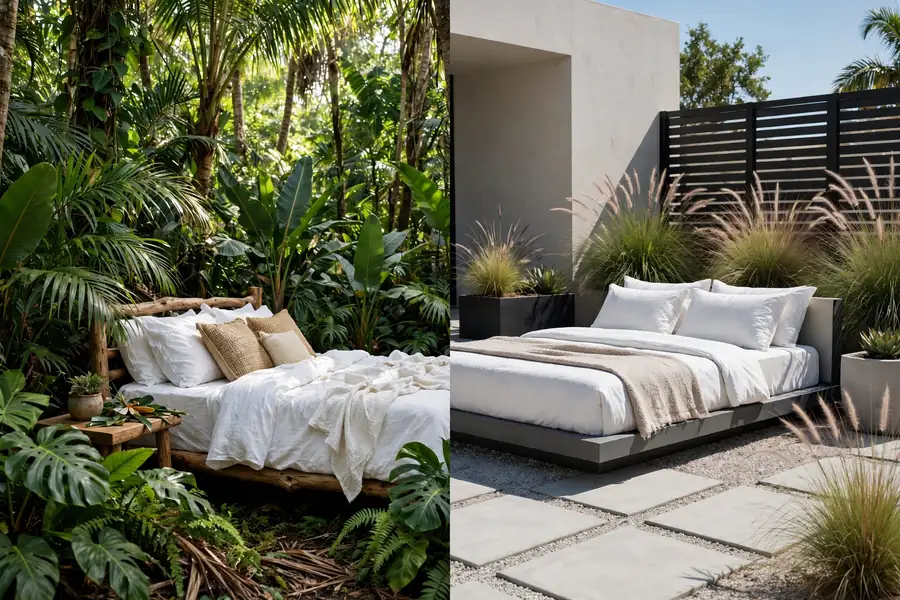
Every style sits somewhere on a line from formal to natural. The University of Wisconsin-Madison Extension describes this scale as running from geometric-structural yards, where straight lines rule and plants play a minor role, to natural yards, where natural elements dominate and no obvious human-made form shows. (University of Wisconsin-Madison Extension)
Formal yards use straight paths, clipped shrubs, and matching pairs on each side of a focal point. Natural yards use curves, layered plants, and looser edges that look like they grew that way. Most Palm Coast yards sit in between. You can have a straight walkway with soft, flowing beds beside it, or a curved bed edged with a crisp row of shrubs. Knowing where you sit on this line makes every other choice easier, from plants to pavers.
Tropical
Tropical style is bold leaves, tall palms, and layers of green that make a yard feel like a private retreat. Think banana-like leaves, ginger, hibiscus, and palms of different heights planted close together. In addition, paths are often curved, and beds are thick with plants so little bare soil shows.
Florida reality check: Palm Coast gets freezes some winters, so build the backbone from cold-hardy palms such as sabal and windmill palms, then add tender color in pots you can move. Give tropical beds rich mulch and regular water in dry spells, and plan for storm cleanup, since big leaves shred in high wind. For the full plant list, see our guide to tropical landscape design.
Modern and Contemporary
Modern style is clean lines, a small set of plant types, and wide open surfaces. For example, concrete or large-format pavers form the base, with ornamental grasses, agave, and a few sculptural plants for shape. Color comes from the hardscape and one or two accent plants, not from a crowd of flowers.
Florida reality check: pick heat-tolerant grasses and succulents that can take full sun and sandy soil, and choose light-colored hardscape, which stays cooler underfoot than dark stone. Keep beds simple so upkeep stays low, and leave room for summer rain to drain off the pavers. See our pages on modern landscape design and mid-century modern landscaping for deeper plant lists.
Coastal
Coastal style is relaxed and light: salt-tolerant plants, a sea oats look, shell or gravel paths, and wide views. It suits beachside homes and anyone who wants a yard that feels like a walk to the shore. In addition, furniture is simple, colors are sandy and pale, and plants bend with the wind rather than fight it.
Florida reality check: salt spray matters near the beach, so plant salt-tolerant types closest to the ocean and shield softer plants behind them. Shell and gravel paths drain fast in summer storms but need topping up now and then. Our salt-tolerant plants list covers the best picks for Flagler County.
Florida Native and Florida-Friendly
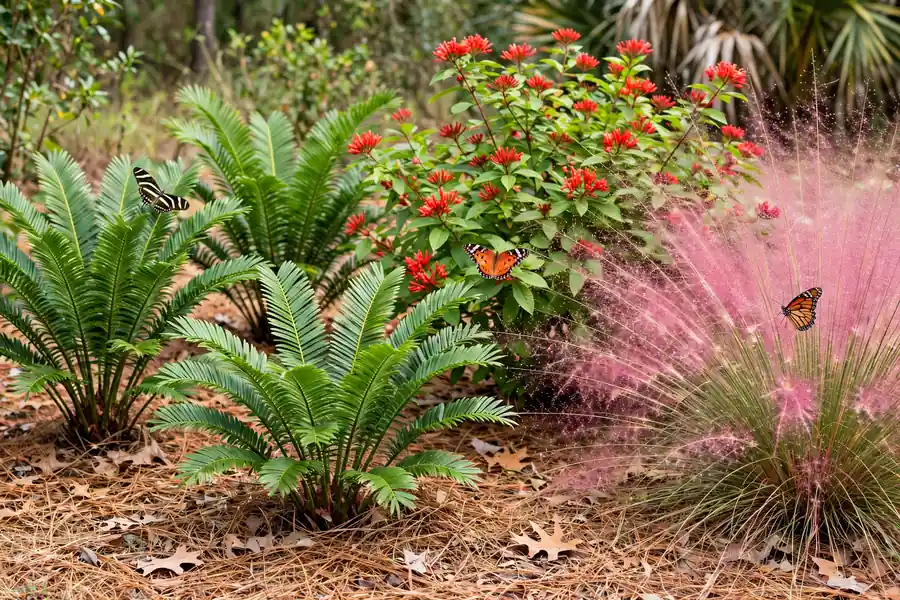
Native style uses plants that belong in Florida: coontie, firebush, muhly grass, and other local types that feed birds and butterflies. In addition, beds look natural and layered, water needs stay low once plants settle in, and fertilizer needs drop too. It is a good fit for owners who want a living yard, not a lawn to fuss over.
Florida reality check: the nine Florida-Friendly Landscaping principles from UF/IFAS sum up the method: right plant, right place; water efficiently; fertilize appropriately; mulch; attract wildlife; manage yard pests responsibly; recycle yard waste; reduce stormwater runoff; and protect the waterfront. (UF/IFAS Gardening Solutions) One more point helps many owners: Florida law says HOA documents may not prohibit an owner from using Florida-friendly landscaping on his or her land. (Florida Statutes 720.3075(4)) For wildlife value, pair this style with a pollinator-friendly garden.
Cottage and English Garden
Cottage style is loose, flowering, and layered: roses, daisies, and climbing vines spilling over paths and fences. It looks a little wild on purpose, with plants packed close and color in every season. In contrast, English garden style is its tidier cousin, with the same flower-rich feel in a more planned frame.
Florida reality check: swap cool-climate perennials for heat-tolerant bloomers such as pentas, vinca, and salvia, which flower through our long summers. Give beds good drainage, since summer rain rots roots that sit wet. Our English garden ideas page shows how to shape this look for a Florida lot.
Mediterranean
Mediterranean style is gravel, terracotta pots, silver-leaf plants, and sun-warmed walls. For example, olive-like trees, lavender, and rosemary give it a dry, old-world feel, and paths are often light gravel or stone. It suits sunny front yards and homes with stucco walls.
Florida reality check: drainage matters more here than in a true Mediterranean climate, since our summers are humid, not dry. Pick plants that handle heavy rain as well as heat, and raise beds slightly so roots never sit in water. Pea gravel landscaping fits this style well and drains fast in storms.
Japanese and Zen
Japanese and Zen style is calm: raked gravel, stone lanterns or basins, a few clipped shrubs, and open space. Every element has a place, and the yard is meant for quiet looking as much as walking. As a result, it works well in small courtyards and shaded corners.
Florida reality check: moss rarely works in our sun, so use low ground covers such as mondo grass or beach sunflower to get the same soft, green carpet. Keep gravel beds weed-free with a firm edge, and place stones where they catch shade. See our Zen garden ideas for layouts that suit small lots.
Formal
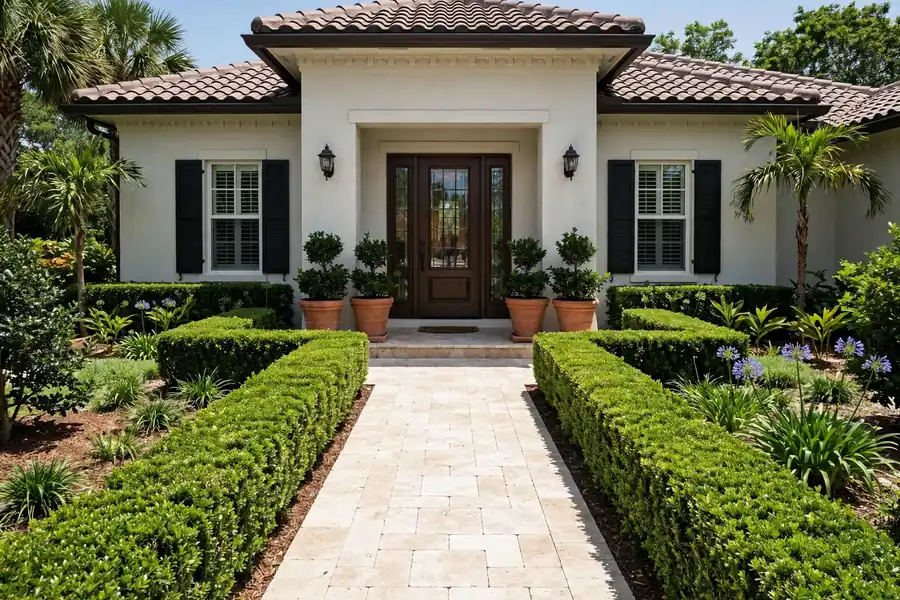
Formal style is symmetry: clipped hedges, straight paths, matching planters, and a clear focal point such as a fountain or statue. It suits classic homes and front entries where a tidy first impression matters. In addition, every plant is shaped, and nothing is left to chance.
Florida reality check: fast growth means more trimming, since hedges here can need shaping several times in summer. Budget for that upkeep, or keep the formal area small, such as the front entry only, and let the backyard relax. The basics behind this style are covered in our principles of landscape design.
Xeriscape (Water-Wise)
Xeriscape means low water by design: mulch, plants grouped by water need, and lawn only where you use it. However, it is not bare dirt. A good xeriscape yard is full of plants, just plants that sip rather than gulp.
Florida reality check: xeriscape here is green, not desert. Use muhly grass, coontie, and native shrubs with pine straw mulch, and group thirsty plants near downspouts where rain already collects. Our xeriscaping ideas page has real tips from local work.
How to Choose the Right Style for Your Home
Start with the house. A stucco home with a tile roof suits Mediterranean or tropical, while a clean-lined new build suits modern. Then check the lot: sun and shade, size, and how much upkeep you truly want to do. A small lot suits a simple style with few plant types, while a large lot can carry layers and zones.
Check HOA rules early, since some communities limit plant height, mulch color, or lawn size. Plan hardscape lines first, since paths and patios are the hardest part to change later, then fill in plants. And remember the front yard can be formal while the backyard stays relaxed. Most Palm Coast homes look best when the two share one repeat element, such as the same paver color or one plant used in both areas.
Landscape Design in Palm Coast
We have designed yards across Flagler County since 2015, and we build each one around plants that hold up in Palm Coast heat, sand, and storms. We design yards in the style you like, from tropical and coastal to modern and native. We serve Palm Coast, Flagler Beach, Bunnell, Ormond Beach, and St. Augustine. Call us at (386) 237-2983 or request a free estimate to talk about landscape design for your home.
Frequently Asked Questions
The main types are tropical, modern, coastal, Florida native, cottage, Mediterranean, Japanese or Zen, formal, and xeriscape. Each has its own look, plant palette, and upkeep level. Tropical is lush and layered, modern is clean and simple, and xeriscape is built for low water use.
Styles built on heat- and storm-tolerant plants do best: tropical with cold-hardy palms, coastal, Florida native, and Florida-friendly xeriscape. The right pick depends on your sun, soil, and how much upkeep you want. Check salt spray near the beach and drainage on low lots before you plant.
Xeriscape and Florida native styles usually need the least water, fertilizer, and trimming once plants are established. Mulch and grouped plants do most of the work. Formal styles need the most trimming, since hedges must be shaped often in our fast growing season.
Formal landscaping uses straight lines, symmetry, and clipped shrubs with a clear focal point. Informal or natural landscaping uses curves, layered plants, and looser edges that look less planned. Most yards sit in between, with a straight path beside soft, flowing beds.
Yes. Many homes use a cleaner style out front and a relaxed one in the backyard. Keep one shared element to tie them together, such as the same paver color or one plant repeated in both areas. That shared thread keeps the mix looking planned rather than random.
Match the style to your home’s architecture, then check sun, shade, lot size, HOA rules, and how much upkeep you want. Plan hardscape lines first, since paths and patios are hard to change later, then fill in plants. Start small if you are unsure.