If you want to know how to make St. Augustine grass thicker, start with five moves: mow it higher, feed it lightly with slow-release nitrogen in the growing season, water deeply but less often, fix the pests or shade that are thinning it, and fill bare spots with plugs or sod. St. Augustine spreads by runners and cannot be grown from seed, so overseeding will not fill it in.
We work on thin St. Augustine lawns all over Palm Coast and Flagler County, and most of them are thin for a fixable reason. The grass is often cut too short, fed too much or too little, watered too often, or starved of sun. This guide shows how to find the cause first, then what to do about it this season, using the numbers from UF/IFAS for Florida lawns.
First, Find Out Why Your Lawn Is Thin
Before you feed or water more, find out why the lawn is thin. Feeding a lawn that is thin because of chinch bugs or shade will not fix it, and it can make disease worse. Walk the lawn and match what you see to the likely cause.
| What you see | Likely cause | What to do |
|---|---|---|
| Thin, patchy areas in shade | Too little sun | Trim the canopy or switch to a shade-tolerant cultivar |
| Thin patches in hot, sunny areas | Southern chinch bugs | Confirm with a coffee-can float test, then treat |
| Brown rings or patches | Large patch disease | Cut back excess water and nitrogen |
| Gray spots on the blades | Gray leaf spot | Cut back excess water and nitrogen |
| Spongy feel underfoot | Thatch buildup | Check thatch depth and dethatch if needed |
| Thin all over | Mowing too low or underfed | Raise the mowing height and feed lightly |
Two checks help most. If sunny patches turn yellow and spread in summer heat, check for southern chinch bugs, the main pest of St. Augustine. A coffee-can float test can confirm them. Read our guide to chinch bugs in Florida for the signs and the fix.
If the lawn feels spongy underfoot, thatch may be blocking water and air from reaching the roots. Our post on dethatching St. Augustine grass explains how to check it. Once you know the cause, the rest of this guide covers the care that thickens the lawn.
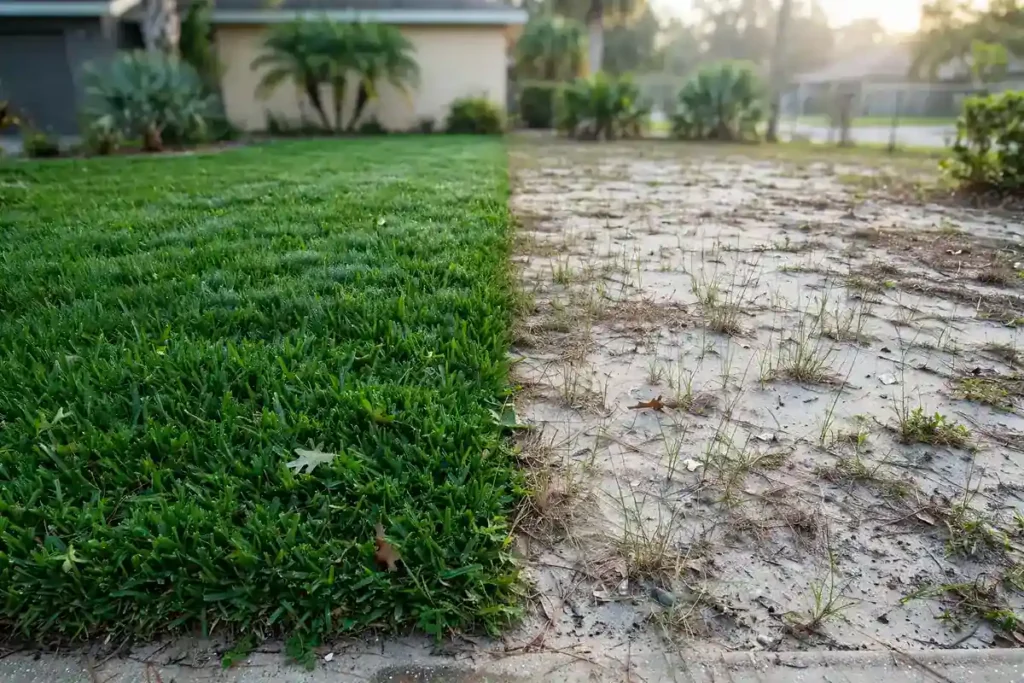
Also check two simple things before you treat anything. Count the hours of direct sun on the thin area, and measure your actual mowing height with a ruler. Many thin lawns turn out to be a shade problem or a mower set one notch too low, and both are cheaper to fix than any product.
Why Overseeding Does Not Work for St. Augustine
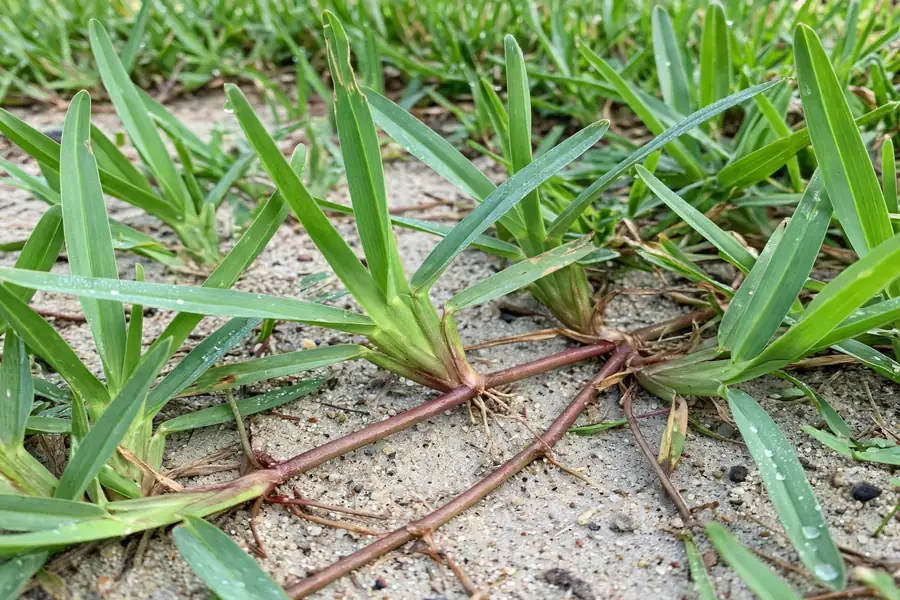
St. Augustinegrass is established by vegetative propagation only. That means sod, plugs, or sprigs. It does not grow from seed, so a bag of seed spread over a thin lawn will not grow into St. Augustine.
Instead, St. Augustine spreads by runners called stolons. These runners creep along the ground, root at the nodes, and send up new blades. Every thickening step in this guide works by helping those runners grow: taller grass, light feeding, deep watering, and plugs that give runners new starting points.
So ignore advice that tells you to overseed St. Augustine. It comes from guides written for northern grasses that do grow from seed. For a Florida lawn, plugs or sod are the way to add grass, and good care is the way to make runners fill the gaps.
Mow Higher Than You Think
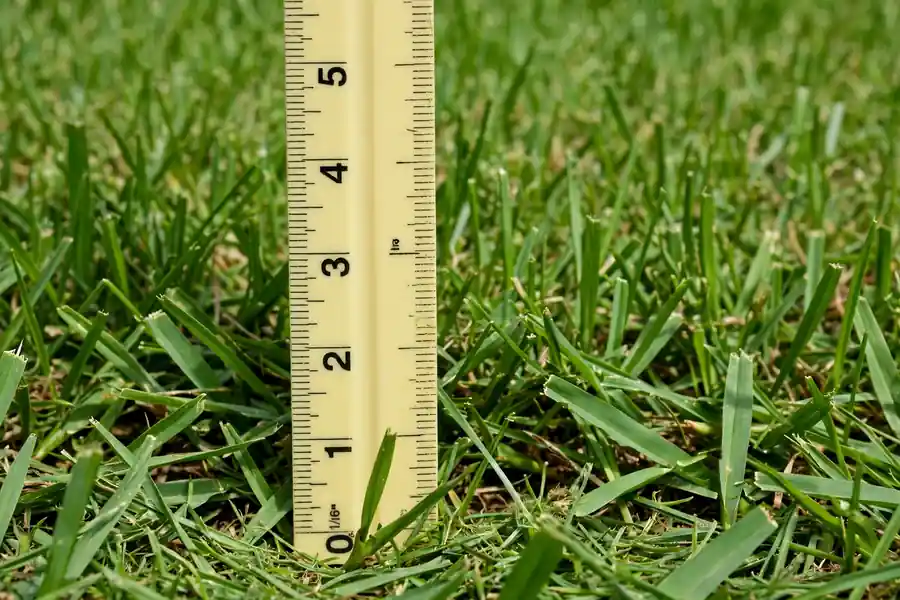
Mowing height is the fastest change you can make. UF/IFAS recommends these heights:
- Standard cultivars: 3.5 to 4 inches
- Dwarf cultivars: 2.5 inches
- Palmetto (semi-dwarf): 3 to 4 inches
- Seville: 2 to 2.5 inches
If you do not know your cultivar, 3.5 to 4 inches is a safe starting point, and your lawn company can confirm the type for you. Taller blades shade the soil, which crowds out weeds, and they feed deeper roots. Short grass has short roots, and short roots make a thin lawn.
Raise the deck one notch at a time if the lawn is now cut short, and never cut off more than one-third of the blade at once. Keep the blade sharp. A dull blade tears the wide St. Augustine blades and leaves brown tips that look like disease. Mow often enough that you never break the one-third rule, even in the fast growth of summer.
Leave short clippings on the lawn when you mow. They break down fast and return a little nitrogen to the soil, which helps the grass fill in. Bag only when the grass is wet and clumping, or when disease is present, so you do not spread it across the lawn.
Feed It the Right Amount
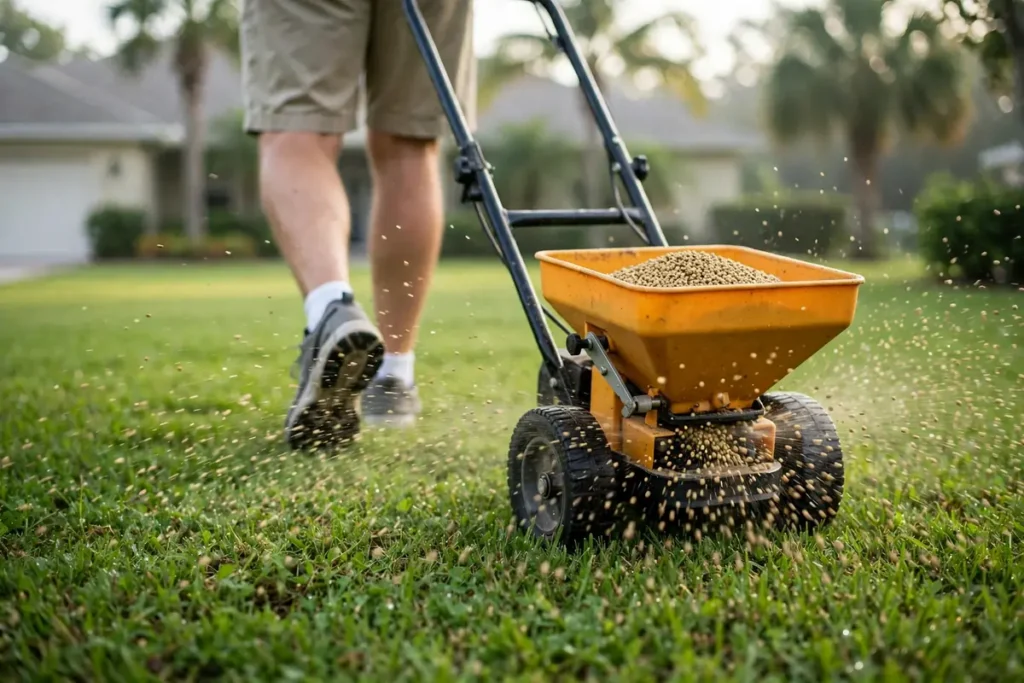
For North Florida, UF/IFAS recommends 2 to 4 pounds of nitrogen per 1,000 square feet per year, split into 2 to 6 feedings from spring green-up through fall. Use slow-release nitrogen so the grass gets a steady supply instead of a fast flush of weak growth.
Do not feed early. A feeding before the last late frost can push tender growth that frost then damages. Wait for steady green-up, then feed lightly through the growing season. In summer, timing and local rules matter, so follow our Florida lawn fertilizer schedule.
More is not better. Too much nitrogen invites chinch bugs and disease, and excess nitrogen and water can worsen large patch and gray leaf spot. A light, steady program grows dense grass. A heavy program grows problems. Our guide on how to keep your lawn green all year covers the full routine beyond feeding.
If you are unsure what your lawn needs, get a soil test through your county extension office before you buy fertilizer. It tells you what the soil already has, so you feed only what is missing instead of guessing.
Water Deeply, Not Daily
Water deeply and less often. UF/IFAS says to water when blades fold, wilt, or turn blue-gray, or when footprints stay visible after you walk on the lawn. Apply 1/2 to 3/4 inch of water each time you water.
Daily light watering keeps roots near the surface, and shallow roots make a thin lawn that wilts fast. Deep watering pulls roots down into our sandy soil, where they can find water between rains and summer storms.
Watch the lawn, not the calendar. Rain counts. If a summer storm soaks the lawn, skip the next watering. For more detail on depth and timing, read how much water a lawn really needs.
Fill Bare Spots With Plugs or Sod
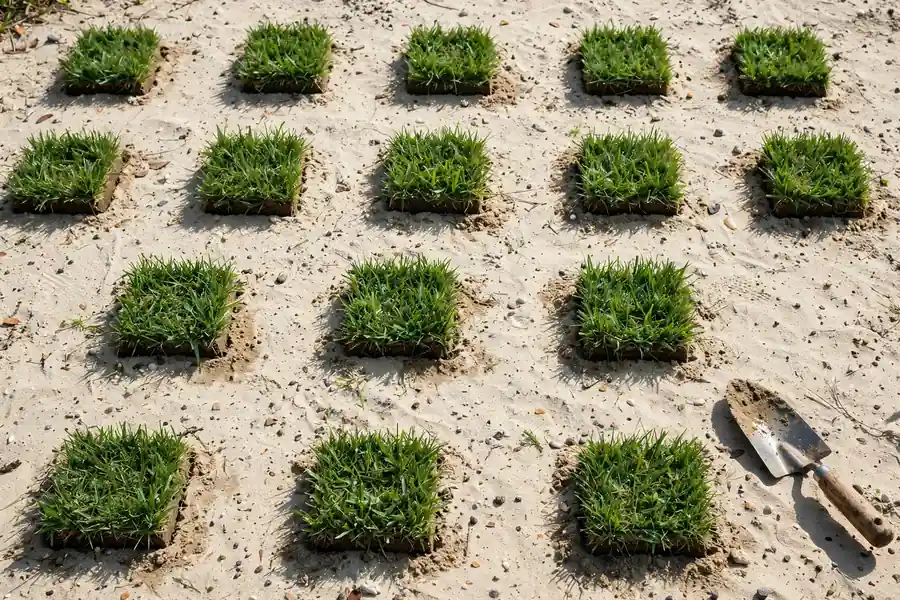
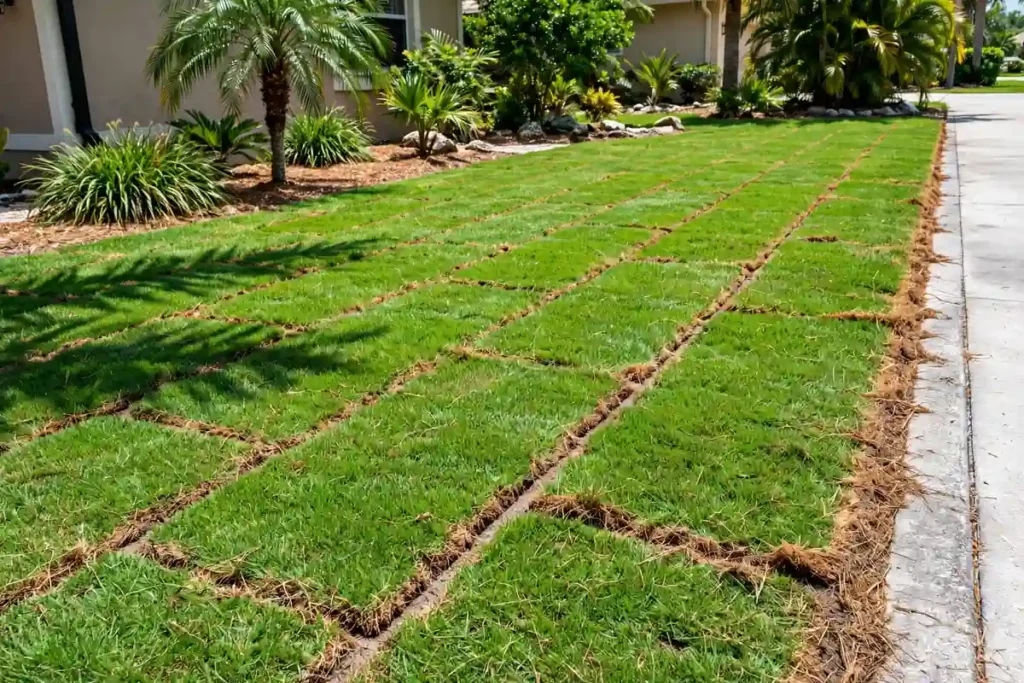
Plugs are the cheapest way to add St. Augustine to bare spots. Plant them in a grid across the bare area, water them in, and let the runners spread from each plug. They take patience, but each plug becomes a new patch of grass that grows outward.
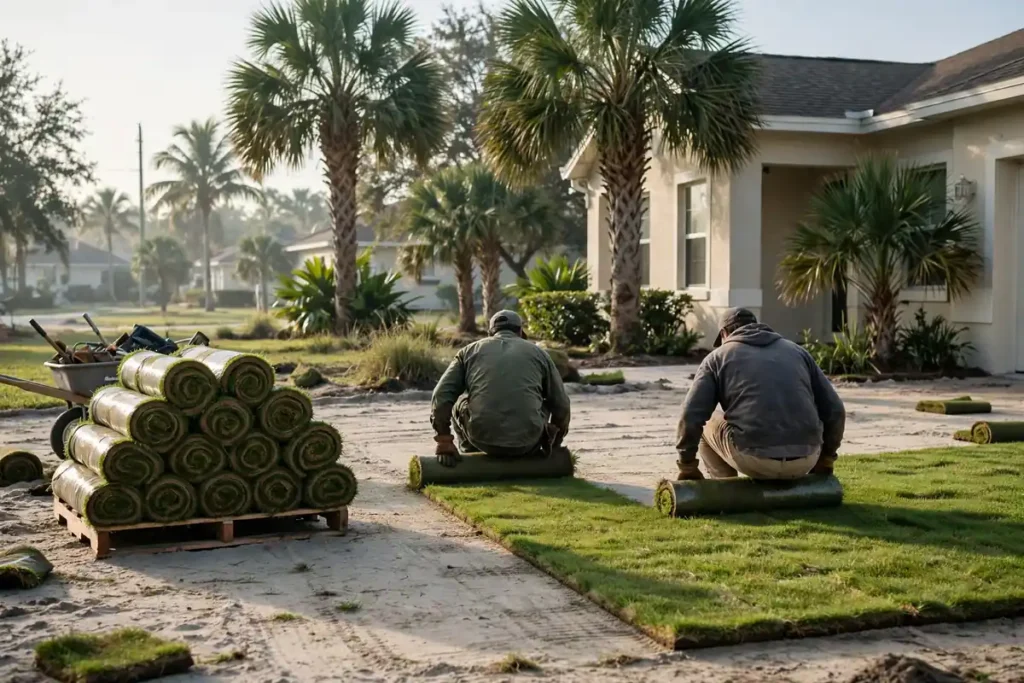
Sod gives fast results. Lay it over bare areas where you want cover now, and it roots into the soil below. Sod costs more than plugs, so see our guide to sod installation cost for Florida pricing before you decide how much area to sod.
Timing matters. Plant plugs or lay sod in late spring to summer, when runners grow fastest in warm weather. See the best time to install sod in Florida for the full seasonal breakdown. Plugs planted in cool weather sit still, and sod laid then roots slowly. Warm soil and steady rain do half the work for you.
Shade: Pick the Right Cultivar
Shade is the hardest cause to fix, because no care routine can replace sunlight. Floratam does not persist well with less than 6 hours of sun each day. If your lawn is thin under oaks, the cultivar may be the problem, not your care.
Palmetto, Seville, CitraBlue, and ProVista rate very good for shade, and Bitterblue rates good. If a shady area keeps failing, replant it with one of these instead of fighting Floratam in the dark. Our comparison of the best grass for Florida lawns covers each type.
Also let in more light. Trim tree canopies to open gaps for sun, and keep shrubs from shading the lawn edge. Even one or two extra hours of sun can help a shade-tolerant type fill in.
How Long Does It Take to Thicken?
Runners fill small gaps within a growing season when mowing, feeding, and watering are right. Bigger bare areas take longer, because runners must travel farther. Plugs speed the job by giving runners more starting points.
Judge progress by the gaps, not by the calendar. If the edges of bare spots are creeping inward through summer, the plan is working. Keep the height up and the feeding light, and let the runners do the work.
Three things slow runners down: heavy shade, an active pest problem, and mowing too short. Fix those first, or the gaps will keep reopening no matter how much you feed. Once the cause is handled, steady care through the warm months does the rest.
Get a Thicker Lawn in Palm Coast
Dreamscapes Florida thickens thin St. Augustine lawns with the right cultivar, plugs or sod, and care plans built for Flagler County. We serve Palm Coast, Flagler Beach, Bunnell, Ormond Beach, and St. Augustine.
If your lawn is thin and you want it full, start with our sod installation and lawn maintenance services, or call (386) 237-2983 for a free estimate.
Frequently Asked Questions
No. St. Augustine does not grow from seed. It is established by sod, plugs, or sprigs only, and it spreads by runners called stolons. To fill a thin lawn, plant plugs or lay sod in bare areas, then help the runners spread with taller mowing, light feeding, and deep watering.
Cut standard cultivars at 3.5 to 4 inches, dwarf cultivars at 2.5 inches, Palmetto at 3 to 4 inches, and Seville at 2 to 2.5 inches. If you do not know your cultivar, 3.5 to 4 inches is a safe starting point. Never cut off more than one-third of the blade at once.
Warm weather, the right mowing height, light feeding with slow-release nitrogen, and deep watering all help runners grow faster. Planting plugs in bare areas also speeds things up, because each plug gives runners a new starting point. Plugs and sod grow fastest in late spring and summer.
Floratam, the most common type, does not persist well with less than 6 hours of sun each day. If your lawn is thin under trees, the cultivar may be the problem. Switch to a shade-tolerant type such as Palmetto, Seville, CitraBlue, or ProVista, and trim tree canopies to let in more light.
It depends on plug spacing and the season, and no fixed timeline applies. Plugs fill in fastest in late spring and summer, when runners grow fastest in warm weather. Small gaps can close within a growing season, while bigger bare areas take longer for runners to cover.
Light, timed feeding helps. For North Florida, UF/IFAS recommends 2 to 4 pounds of nitrogen per 1,000 square feet per year, split into 2 to 6 feedings from spring green-up through fall. Too much nitrogen backfires, because it invites chinch bugs and disease and can worsen large patch and gray leaf spot.