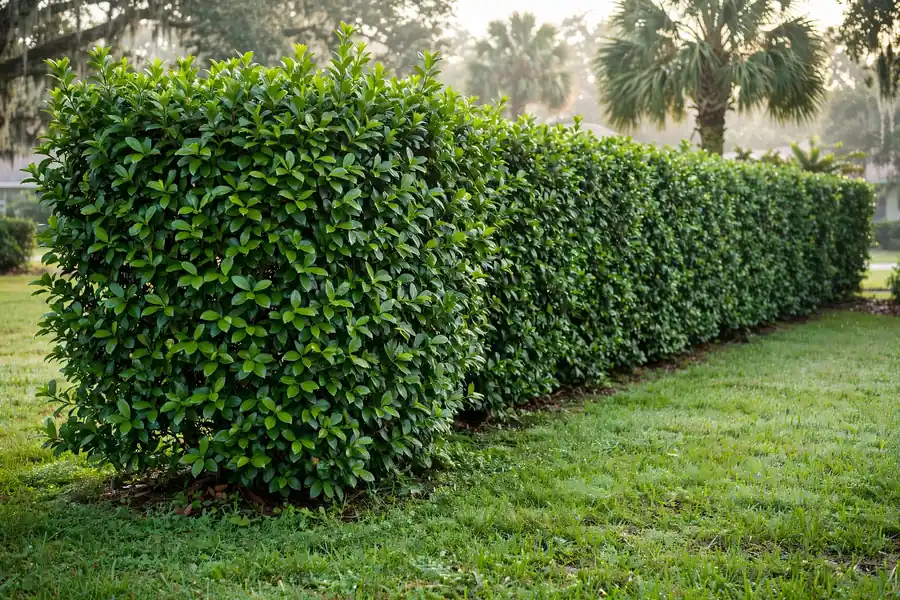
A viburnum hedge is one of the most reliable evergreen screens in Florida. In Palm Coast, sweet viburnum gives the fastest privacy, native Walter’s viburnum gives a finer, lower-care hedge, and Awabuki needs a sheltered spot because it prefers warmer areas. Plant about 4 to 5 feet apart and trim wider at the bottom than the top.
This guide compares the three viburnums Palm Coast homeowners actually plant, with the spacing, growth, and trimming rules that keep a hedge full to the ground.
Why Viburnum Works as a Florida Hedge
Viburnum stays green all year, grows dense, and takes sun to part shade. Once established, it handles dry spells well in our sandy Northeast Florida soil. Sweet viburnum is approved by Florida-Friendly Landscaping and is not listed as a problem species, so it will not take over your yard. If you are planning a screen, start with the plants that add privacy to your yard and see where a viburnum hedge fits beside drought-tolerant landscaping beds along the same fence line.
Three Viburnums Palm Coast Homeowners Choose From
Palm Coast nurseries carry three viburnums for hedges. They look alike at first, but they grow at different speeds and take cold very differently.
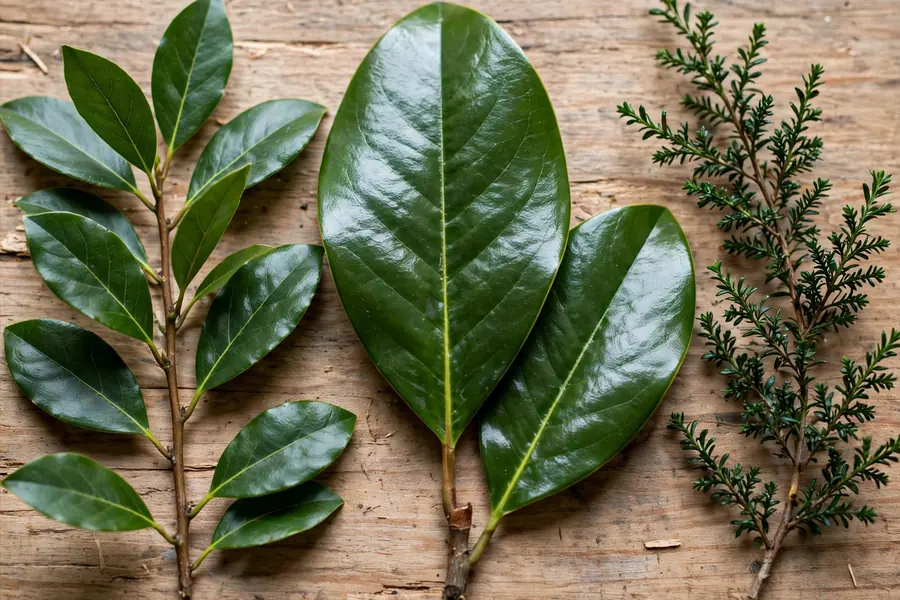
Sweet Viburnum (Viburnum odoratissimum)
Sweet viburnum comes from Asia but is well adapted to Florida, and UF/IFAS does not call it invasive. It grows in Zones 8B to 10A and can reach 30 feet tall if you never prune it. That speed is the point and the price: UF/IFAS says it needs considerable maintenance and regular pruning to stay a hedge, not a small tree. In spring it carries clusters of small, sweet-smelling white flowers. Pick it for the fastest tall privacy screen in full sun, if you are ready to trim it on a schedule.
Awabuki or Mirror-Leaf Viburnum (V. odoratissimum var. awabuki)
Awabuki viburnum, also called mirror-leaf viburnum, is a form of sweet viburnum with much larger, glossier leaves. It reads as a bolder screen than sweet viburnum. UF/IFAS EDIS lists it for Zones 9A to 11, and UF/IFAS Nassau County says it is best suited to Central and South Florida. Palm Coast sits at the cool edge of its range, so plant it in a sheltered spot, away from low frost pockets. Give it room: the big leaves need airflow.
Walter’s Viburnum (Viburnum obovatum), the Native Choice
Walter’s viburnum is the native choice. It grows wild across the Southeast, stays evergreen in Zones 7 to 10, and can reach up to 20 feet tall, though most homeowners keep it pruned shorter. Its small, fine, dense leaves shear well into a formal hedge, and UF/IFAS notes it can be clipped as a fine-textured hedge or tall screen. It grows best in part shade, so it suits a fence with afternoon shade. Dwarf forms such as ‘Mrs. Schiller’s Delight’ grow slowly and work as low hedges or foundation plants. In North Florida winters it may drop some leaves for a short time, then leaf out again.
Viburnum Comparison at a Glance
| Type | Mature size if unpruned | Growth | Light | Cold fit for Palm Coast | Upkeep |
|---|---|---|---|---|---|
| Sweet viburnum | Up to 30 feet | Fast | Sun to part shade | Zones 8B to 10A | Regular pruning |
| Awabuki viburnum | Large shrub | Fast | Sun to part shade | Zones 9A to 11, needs shelter | Protect from frost |
| Walter’s viburnum | Up to 20 feet | Slower, finer | Part shade best | Zones 7 to 10 | Lower care, shears well |
How Far Apart to Plant a Viburnum Hedge
For a sweet viburnum hedge, Rockledge Gardens lists spacing of about 4 to 5.5 feet between plants for a hedge 4 to 10 or more feet tall. That gap lets the branches meet and close the screen. Plant closer, near 4 feet, and the hedge fills in sooner, but you buy more plants and they crowd sooner, which means more trimming. Plant wider, near 5.5 feet, and you save money up front but wait longer for a solid screen. Check the nursery tag for dwarf types, which can go closer.
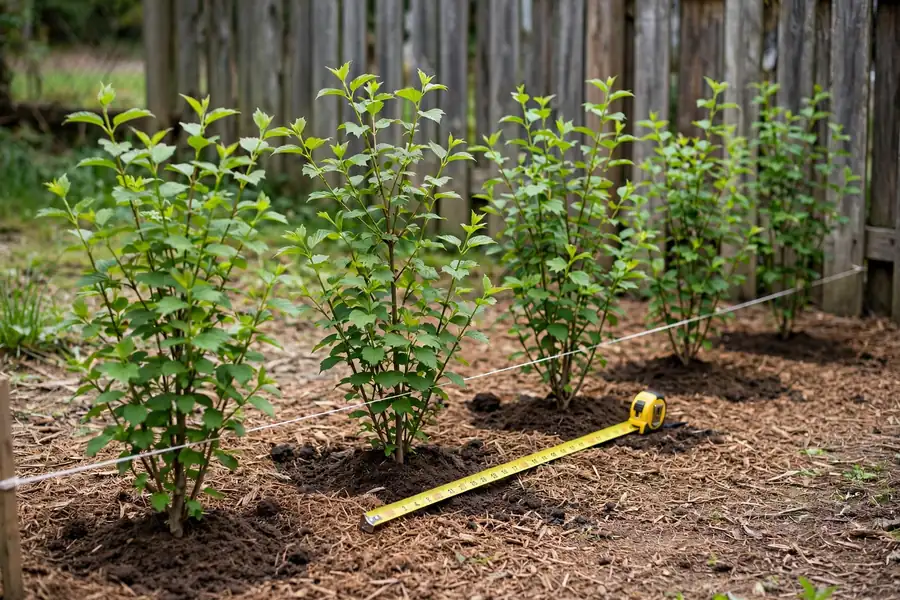
Before you dig, mark the line with stakes and string so the row stays straight. Then call Sunshine 811 at least two full business days ahead. The service is free, and it keeps you off buried lines. A straight hedge also frames fence line landscaping ideas well.
How to Plant a Viburnum Hedge
Planting is simple, but depth matters more than anything else.
- Mark the line with stakes and string, then space the plants 4 to 5 feet apart.
- Dig each hole wide, about twice the width of the pot, but no deeper than the root ball.
- Set the plant at the same depth it grew in the pot. Planting too deep is the most common mistake, and it starves the roots.
- Backfill with the native soil you dug out and firm it gently.
- Water the plant in well, then spread mulch 2 to 3 inches deep around the base, kept off the stems.
For more detail on depth and first-season watering, see our guide on how to transplant shrubs. The best time to plant is in the cooler months, when roots can settle before summer heat.
How Fast Does a Viburnum Hedge Grow?
Sweet viburnum is a fast grower, and the first pick for quick privacy. With steady water and sun, a sweet viburnum hedge can close into a solid screen in 2 to 3 seasons. Walter’s grows more slowly and stays easier to keep small, which suits a homeowner who wants less trimming. Dwarf Walter’s forms grow slowly, so they take the longest to fill a screen.
Trimming a Viburnum Hedge So It Stays Full
A viburnum hedge stays full when you trim it so the base is wider than the top. That shape lets sunlight reach the lower branches. UF/IFAS Charlotte County gives the same rule: prune so the top is narrow and the base is wide, so all parts get sun equally. Light trims through the growing season beat one hard cut, because the plant keeps its leaves and fills in between cuts.
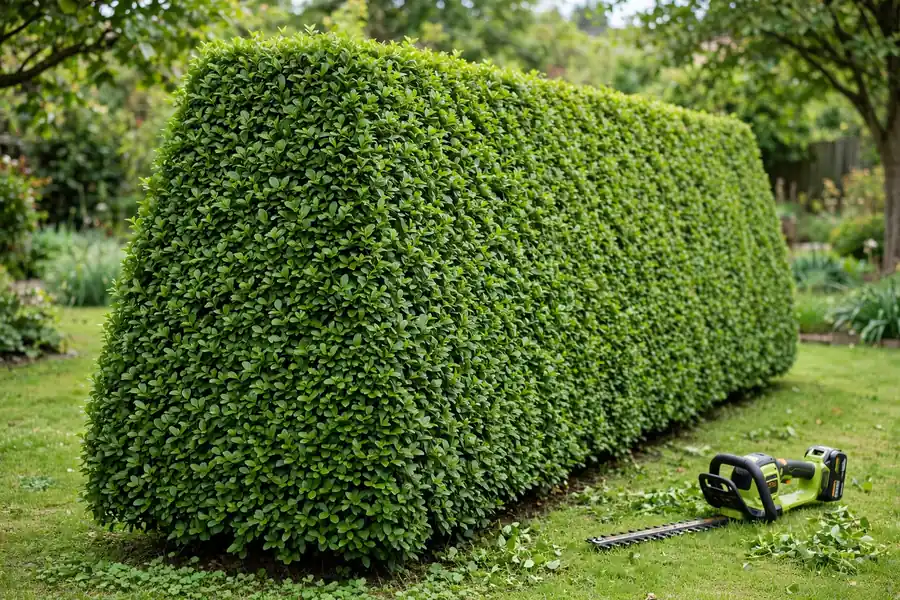
Never shear the top flat and wide while the base stays narrow: the bottom goes bare and never comes back. If an old hedge is already leggy and bare at the base, read why is my hedge turning brown for renewal pruning first.
Pests and Problems to Watch
Two problems show up most on viburnum in Florida. Chilli thrips feed on new growth, and viburnum is a listed host plant for them. The tiny insects attack young leaves and buds, which come out curled, scarred, and bronze. Downy and powdery mildew can coat leaves with white growth, but UF/IFAS notes they are not often fatal. Confirm what you are seeing before you treat anything. Take a sample or a clear photo to the Flagler County Extension office and ask before you treat. Never spray on a schedule, and follow the label on any product you do use.
Viburnum vs Podocarpus vs Clusia
The right hedge depends on your yard, not on which plant is best in general.
| Hedge | Best pick when | Trade-off |
|---|---|---|
| Viburnum | Fastest screen, or a native hedge | Sweet needs regular trimming; Awabuki needs shelter |
| Podocarpus | Shade and low trimming | Slower to fill in |
| Clusia | Warm, sheltered spot; thick, glossy leaves | Cold snaps can damage it |
Viburnum is the pick for a fast screen, or a native screen with Walter’s. Podocarpus is the pick for shade and low trimming. Clusia works only in warm, sheltered spots in Palm Coast, where a cold snap can damage it. For the full picture, read our podocarpus hedge guide and our clusia hedge guide. If you want something softer than a hedge, tall ornamental grasses for privacy can fill the gaps while a young hedge grows.
Hedge Planting and Trimming in Palm Coast
A viburnum hedge is a good fit for Palm Coast when you match the type to the spot: sweet viburnum for fast sun privacy, Walter’s for a native hedge in part shade, and Awabuki only where frost will not settle. Get the spacing right at planting, keep the base wider than the top when you trim, and the hedge will stay full to the ground for years. If you would rather skip the digging and the trimming schedule, we can help. Dreamscapes Florida plants viburnum and other privacy hedges, sets the spacing for the mature size, and trims on a schedule. If an old hedge has outgrown its spot, see our shrub removal cost guide first. We serve Palm Coast, Flagler Beach, Bunnell, Ormond Beach, and St. Augustine with landscape installation and lawn maintenance across Flagler County. Call Dreamscapes Florida at (386) 237-2983 or request a free estimate and we will walk your yard with you.
Frequently Asked Questions
In Palm Coast, sweet viburnum is the fastest privacy hedge, and native Walter’s viburnum is a finer, lower-care choice that shears well. Awabuki grows best in Central and South Florida, so give it a sheltered spot here. All three stay evergreen in most Palm Coast winters.
Sweet viburnum is usually planted about 4 to 5 feet apart for a hedge. Closer spacing fills in sooner but costs more. Check the tag for dwarf types, which can go closer. Rockledge Gardens lists about 4 to 5.5 feet apart for a hedge 4 to 10 or more feet tall.
Sweet viburnum is a fast grower, which is why UF/IFAS says it needs regular pruning. Walter’s viburnum grows slower and stays easier to keep small, and dwarf forms grow slowly. Expect a sweet viburnum hedge to close into a solid screen in 2 to 3 seasons, and give Walter’s more time.
Walter’s viburnum is native to Florida and the Southeast. Sweet viburnum and Awabuki come from Asia, but UF/IFAS does not consider them a problem species. Sweet viburnum is also approved by Florida-Friendly Landscaping as a woody ornamental for Florida yards.
Walter’s viburnum grows best in partial shade, and sweet viburnum takes sun to part shade. For deep shade under oaks, podocarpus is often the better hedge. Give any viburnum at least a few hours of sun, or the growth turns thin and leggy.
Chilli thrips feed on young viburnum leaves and buds and can cause curled, scarred new growth. Confirm the pest with the Flagler County Extension office before you treat. Do not spray on a guess, and never use a product name or rate you cannot verify on the label.