A gravel driveway in Florida costs about $1,800 on average, with most homeowners paying $500 to $3,500, according to Angi (October 2026). A well-built one lasts 15 to 20 years. Gravel drains fast in summer storms, but it needs a deep base and firm edging, or rain will wash it into ruts.
We build gravel driveways across Palm Coast and Flagler County. The drives that last have a real base, a slight crown, and edging that holds the stone in place. The ones that fail are stone poured straight onto bare sand.
What Does a Gravel Driveway Cost in Florida?
Gravel is the cheapest driveway surface you can buy. Angi puts the 2026 national average at $1,800, with most projects landing between $500 and $3,500. The per-square-foot range runs $1 to $10, and the spread comes down to gravel type, size, and site prep. These are national averages, not Dreamscapes pricing. Local quotes vary.
HomeGuide (2026) prices a full professional build at $4 to $10 per square foot, including excavation, base work, and labor. A simple top-up on a sound base costs far less. The table below uses Angi (October 2026) figures, which include labor.
| Driveway size | What it fits | Typical cost with labor |
|---|---|---|
| 200 to 300 sq ft | Single car | $250 to $900 |
| 400 to 600 sq ft | Double car | $800 to $2,200 |
| 1,000 sq ft or more | Large or circular drive | $1,000 to $5,000 |
Material alone runs $10 to $50 per ton, according to Angi. Grading adds $1 to $3 per square foot, according to HomeGuide. Measure the full footprint before you price it. If you plan to widen the drive later, read our guide to a driveway extension first.
Which Gravel Works Best on a Driveway?
The stone you pick decides how the drive feels under tires and how long it holds its shape. Angular crushed stone locks together. Rounded stone rolls. That one difference explains most gravel driveway problems.
| Gravel type | How it behaves | Best use |
|---|---|---|
| #57 crushed stone (3/4 to 1 inch) | Angular pieces lock together and drain well | Top surface |
| Crusher run (stone mixed with dust) | Packs down almost solid | Base layer |
| Crushed concrete | Packs firm and costs less than new stone | Base or budget surface |
| Pea gravel (rounded) | Rolls and shifts under tires | Avoid on driveways |
| Crushed shell | Packs firm, light color | Only where allowed |
For most Florida drives, #57 crushed stone on top with crusher run below is the safest pick. Crushed concrete works well as a base and as a budget surface. Pea gravel looks soft in a garden bed, but on a driveway it migrates with every car that passes. Save it for beds and paths. Our pea gravel landscaping guide shows where it works best. Crushed shell shows up on some coastal Florida properties, but rules vary, so check with your HOA or city before you order it.
What Sits Under the Gravel (and Why It Decides Everything)
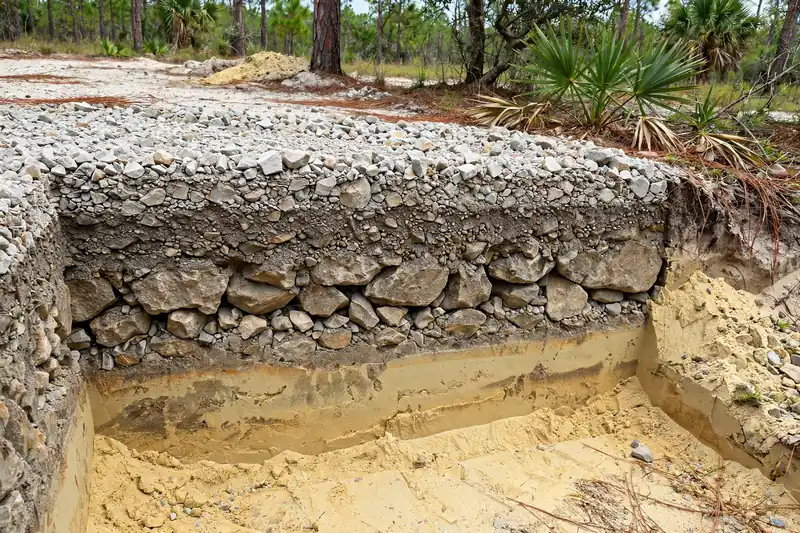
A gravel driveway is a layered build, not a pile of stone. The surface you see is only the top few inches. The base below carries the cars and stops ruts. Angi (July 2026) recommends digging out 12 to 18 inches of soil for the layers.
| Layer | Material | Depth | Job |
|---|---|---|---|
| Surface | #57 crushed stone | 4 to 6 inches | The part you drive on |
| Base | Larger crushed stone and crusher run | 6 to 8 inches | Carries the load and drains water |
| Separation | Geotextile fabric on compacted soil | Thin sheet | Stops stone sinking |
The full build runs 10 to 14 inches deep, and each layer gets compacted before the next one goes down. Skipping compaction is the most common cause of early failure, because loose base ruts under the first heavy rain. On sandy Flagler County soil, the fabric layer matters even more. Without it, stone presses into sand and the drive thins out within a season or two.
Call 811 before any digging so buried lines get marked. A single-car drive should run 10 to 12 feet wide, and a two-car drive 20 to 24 feet wide, according to Angi.
How Florida Rain Treats a Gravel Driveway
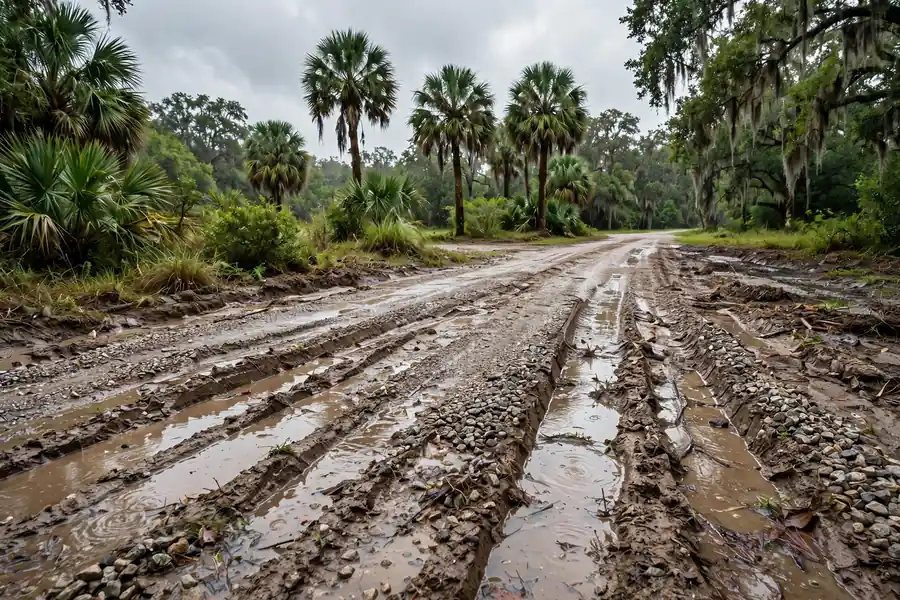
Florida rain is the real test of a gravel driveway. A summer storm can drop inches of water in an hour, and loose stone moves. A drive with no crown, no slope, and no edging will wash out at the low end and rut where tires always track. The good news is that gravel drains better than any solid surface, as long as water has somewhere to go.
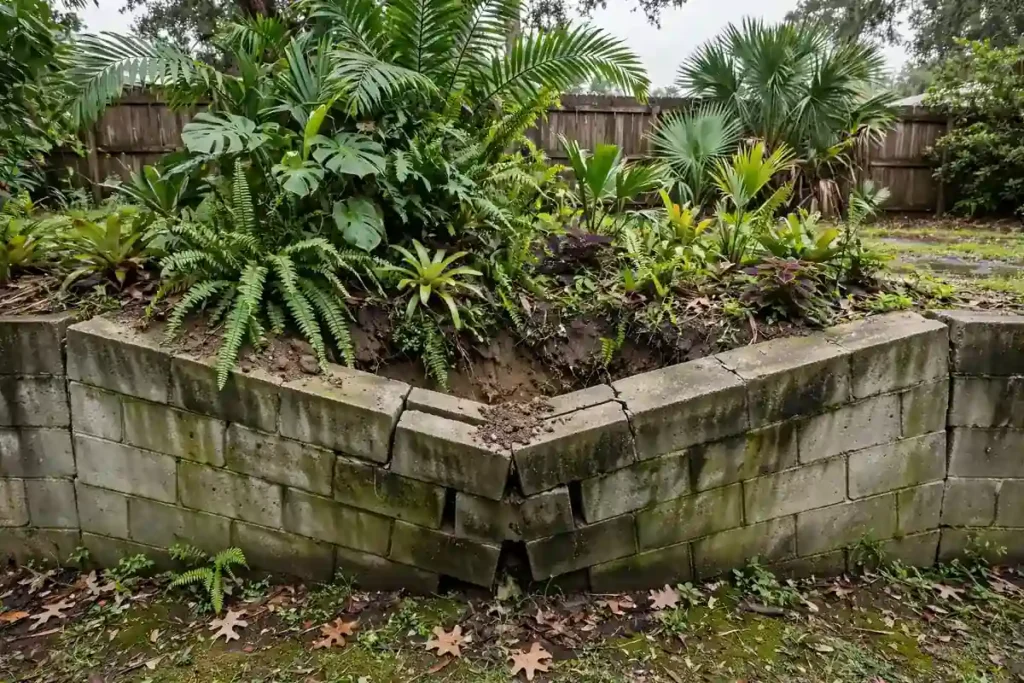
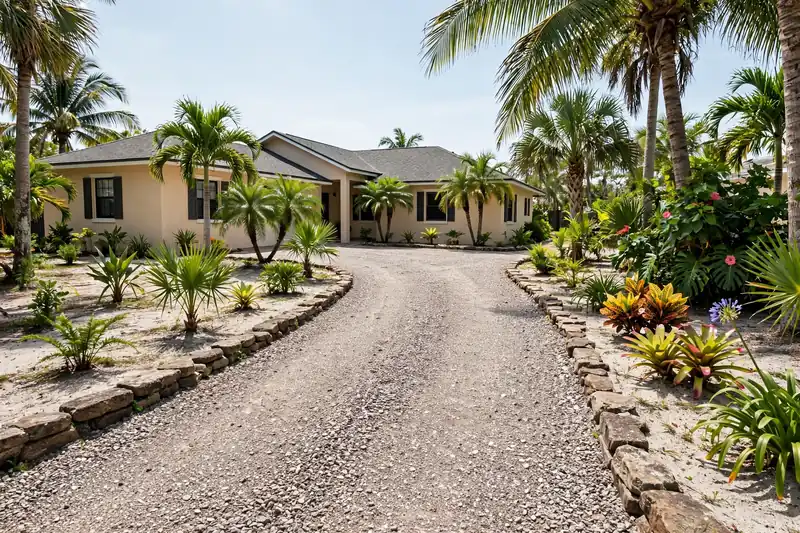
Shape the drive with a slight crown so water runs off to the sides instead of down the middle. Give the sides a clear path to a swale or a low spot in the yard, and keep gutters pointed away from the drive. Firm edging holds the stone in place, in stone, concrete, or steel.
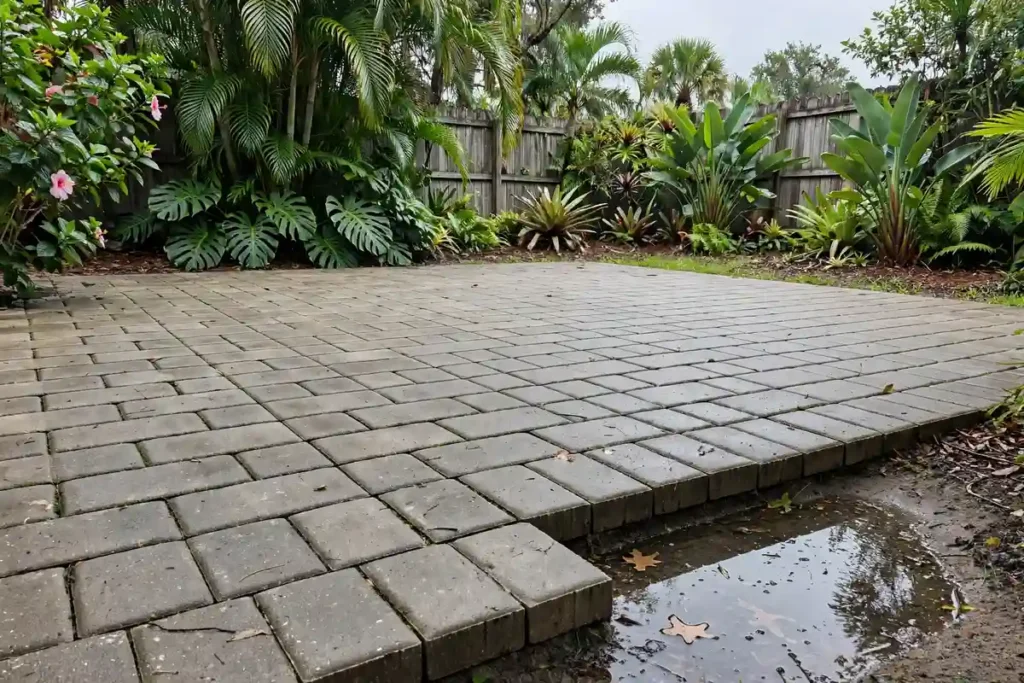
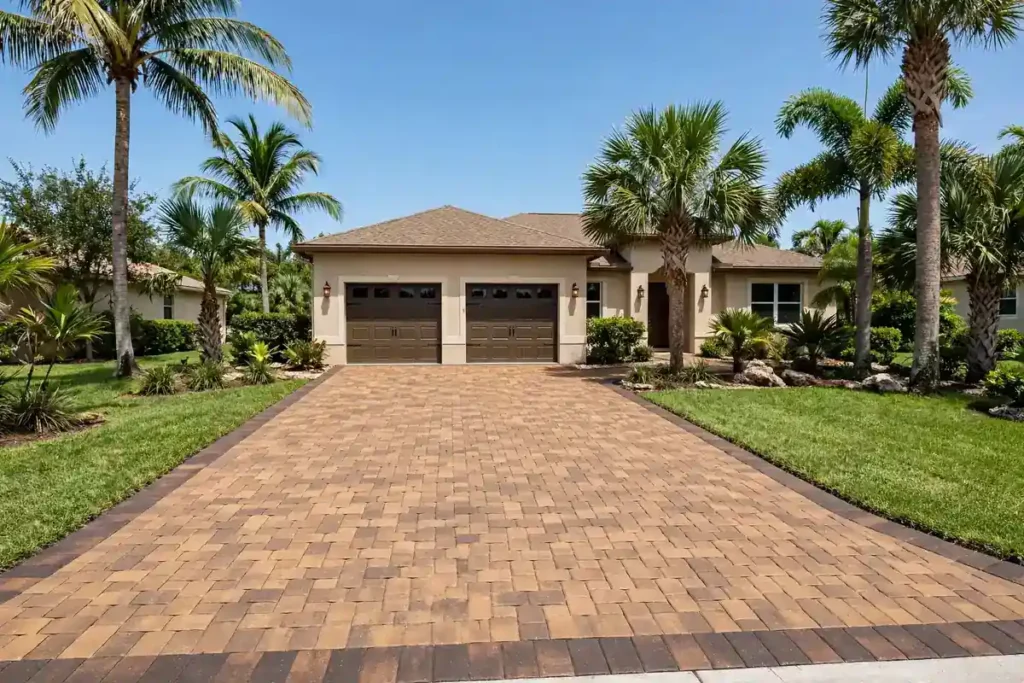
A paver apron at the street is the detail most homeowners skip, and it saves the most stone. Without it, every car that turns in drags gravel onto the road, and every storm washes more out. With a short paved apron, tires grip a solid surface at the entry, and the gravel stays put. If you want a solid surface that still lets water through, permeable pavers sit between loose gravel and solid pavers.
The Honest Pros of a Gravel Driveway
Gravel earns its place for clear reasons. It costs less than any other permanent driveway surface and goes in faster than a paver or concrete drive. Water drains through it, so you will not see puddles after a storm. Repairs are simple. A rut gets raked level and topped up.
- Lowest upfront cost. No other driveway surface starts as cheap.
- Fast drainage. Rain passes through the stone instead of pooling.
- Easy spot repairs. Rake, regrade, and top up. Most fixes take an afternoon.
- No cracking. Gravel flexes with the ground, so it does not split in heat or shifting soil.
- Natural look. Loose stone suits wooded lots, ranch homes, and long rural drives.
The Honest Cons of a Gravel Driveway
Gravel asks for more attention than a solid surface, and you should know that before you buy. Stone migrates. Tires push it to the edges, feet track it into the garage, and storms carry it toward the street. Ruts show up where cars always park in the same spot. Weeds sprout in the stone, and dry spells can kick up dust.
- It moves. Expect to rake stone back into place and top up every few years.
- Ruts and potholes. They form fast on a thin base and where cars follow the same track.
- Weeds. Seeds land from above, so fabric below will not stop them. Pull them early.
- Dust. Dry weeks can leave a fine coat on cars parked near the drive.
- Steep ground. Gravel washes out fast on a slope, so it suits flat or gentle ground best.
If you want a surface you can set and mostly forget, pavers earn their higher price. Our paver driveway cost guide has the numbers to compare the two.
How Long Does a Gravel Driveway Last?
A well-built gravel driveway lasts 15 to 20 years before major rework. The base and the drainage decide the number. A drive with a compacted base, a crown, and firm edging holds its shape for years. Stone poured straight onto sand can rut and wash out within two to three years.
Top up the surface every two to three years with fresh stone. That single habit does more for lifespan than any other step. It replaces stone lost to tires and rain and keeps the surface level. A drive that never gets fresh stone thins out, and the base starts to show through.
Real Upkeep: What You Do Each Year
Gravel upkeep is simple work, but it is real work. A short routine through the year keeps the drive in shape.
- Rake monthly in heavy-use spots. Pull stone back from the edges and level the tracks.
- Regrade after big storms. Fill ruts while the ground is still soft.
- Top up every two to three years with one to two inches of fresh stone.
- Pull weeds early. Small weeds come out by hand. Big ones need a spot treatment.
- Keep edging tight. Reset edging that has shifted so stone stays on the drive.
- Point gutters away. Roof water aimed at the drive will carve a channel through it.
Most of this takes an hour or two. Hire out a badly rutted drive, because that needs a blade and a base check, not just fresh stone.
Gravel Driveway vs Pavers: Which One Fits Your Home?
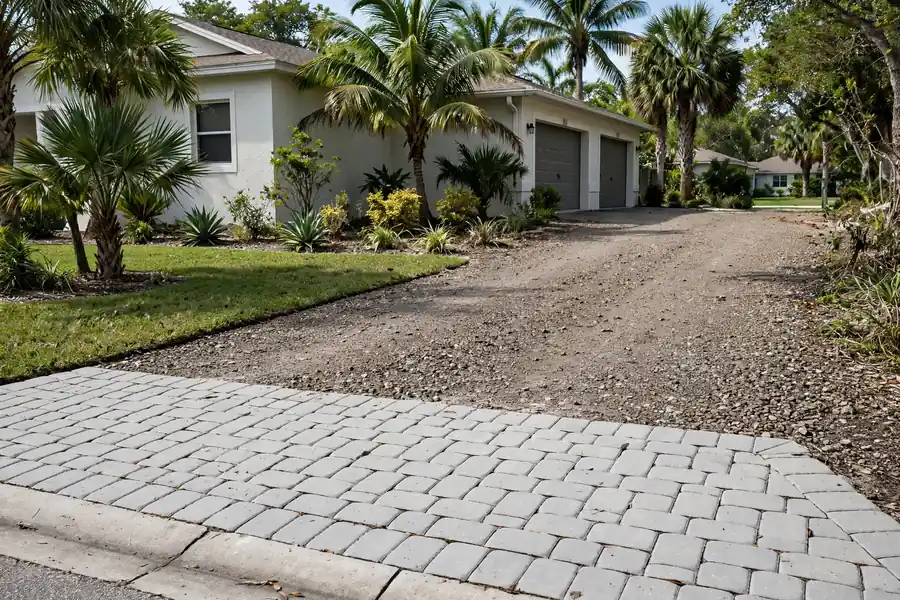
The choice comes down to budget, ground, and how much upkeep you accept. Gravel wins on price and drainage. Pavers win on looks and on the years between repairs.
| Gravel driveway | Pavers | |
|---|---|---|
| Upfront cost | Lowest, $1 to $10 per sq ft (Angi, 2026) | Higher |
| Upkeep | Rake, regrade, top up every 2 to 3 years | Occasional re-sanding |
| Drainage | Excellent, water passes through | Good with permeable pavers |
| Look | Loose and natural | Neat and finished |
| Best for | Long drives, tight budgets, flat lots | Front drives, steep ground, clean look |
Pick gravel when the drive is long, the ground is flat, and the budget matters most. Pick pavers when the drive sits at the front of the house, the ground slopes, or you want a surface that stays neat with little work. A mix works too: gravel for a long drive or parking pad, pavers for the apron at the street.
Gravel Driveways in Palm Coast: What to Check First
Palm Coast ground is sandy, and sand swallows stone. That is why the fabric layer and compacted base matter more here than in clay soil. Summer storms hit hard and fast, so the crown and drainage path need to be right from day one. Near the coast, pick edging that stands up to salt air.
Before you order stone, check two things. First, ask your HOA or city whether loose gravel is allowed at the street, and whether a paved apron is required. Some neighborhoods limit loose stone near the road, and a short apron solves it. Second, look at how water already moves across your lot. If the yard holds water after rain, fix the drainage first, or the new drive will rut in the same low spots. Gravel also dresses up beds, paths, and parking pads. See our gravel landscaping ideas.
If you want a gravel driveway that holds up through Florida storms, we can help. We build gravel drives, parking pads, and paver aprons across Palm Coast, Flagler Beach, Bunnell, Ormond Beach, and St. Augustine. See our hardscape services, or ask us for a free estimate. You can also call us at (386) 237-2983.
Frequently Asked Questions
A gravel driveway costs about $1,800 on average in 2026, with most homeowners paying $500 to $3,500, according to Angi (October 2026). The per-square-foot range runs $1 to $10. Size, gravel type, and site prep set the final number. These are national averages. Local quotes vary, so get a price for your own lot before you decide.
#57 crushed stone is the best top layer for most driveways. Its angular pieces, three quarters to one inch across, lock together under tires and drain well. Crusher run makes the best base because it packs down almost solid. Avoid pea gravel on a driveway. Its rounded shape rolls and shifts, so the surface never stays firm.
Build a gravel driveway 10 to 14 inches deep in total. Lay four to six inches of #57 crushed stone on top, over six to eight inches of larger stone and crusher run as the base. Dig out 12 to 18 inches of soil first, and compact each layer before the next one goes down. A thin drive ruts fast.
A well-built gravel driveway lasts 15 to 20 years before it needs major rework. The base and the drainage decide the number. Top up the surface every two to three years with fresh stone, and rake ruts level after big storms. A drive with stone poured straight onto sand can rut and wash out within two to three years.
Yes. Edging keeps the stone on the drive and off the lawn and street. Stone, concrete, or steel edging all work, and a short paver apron at the street helps even more. Without edging, tires push stone outward with every turn, and rain carries it further. Reset any edging that shifts so the border stays tight.
Yes. Gravel is the cheapest driveway surface you can buy. Angi puts the 2026 national average at $1,800, with most projects between $500 and $3,500. Pavers cost more upfront but need less upkeep over the years. Pick gravel for a long drive or a tight budget, and pavers for a front drive that should stay neat with little work.