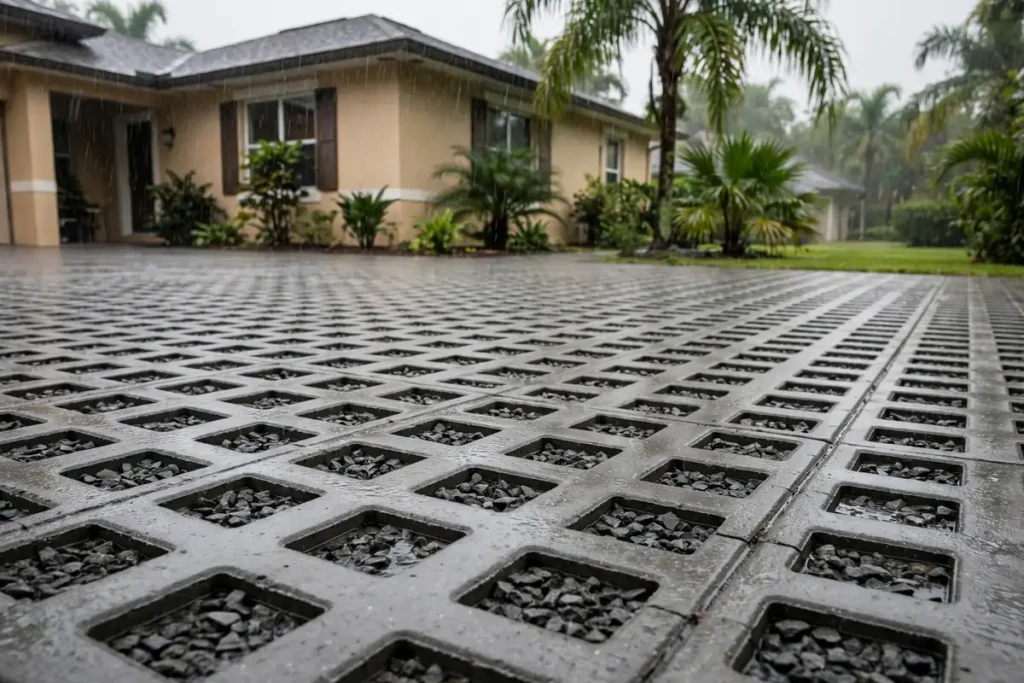
Permeable pavers have wide joints filled with small stone, so rain drains straight through into a deep, open stone base instead of running off the surface. They usually cost about $10 to $30 per square foot installed, which is more than regular pavers, and they need the joints swept and topped up to keep draining well. They make sense where runoff or puddles are a real problem on your property. If your driveway or patio sends water toward the house, the street, or a neighbor’s yard after every summer storm, permeable pavers are worth a serious look.
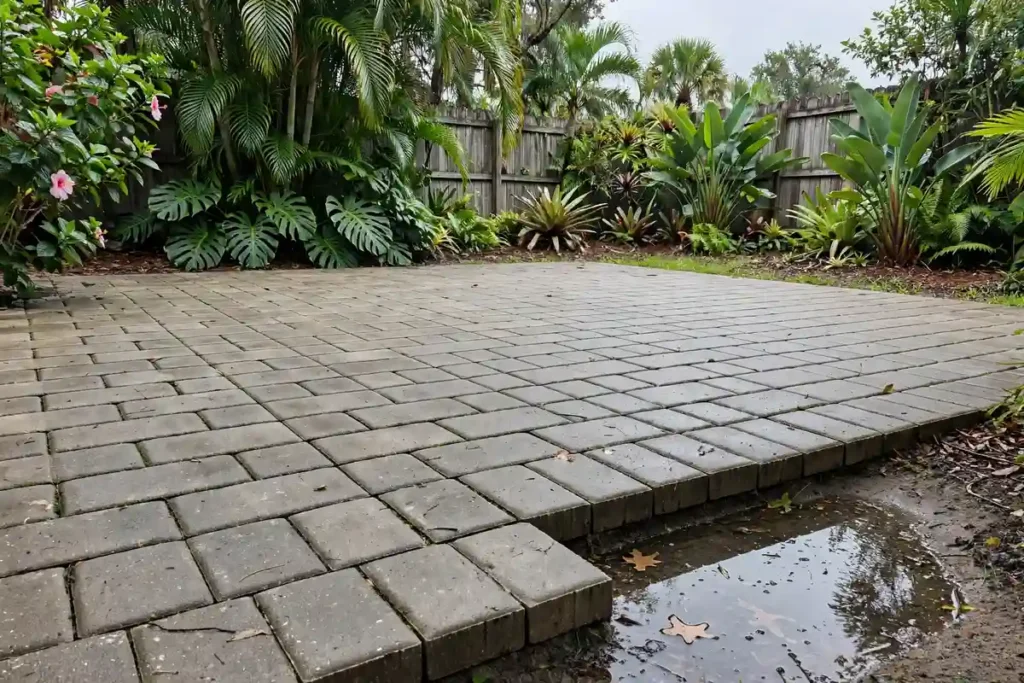
We build patios and driveways across Flagler County, and we see the same pattern every rainy season. A solid slab or a tightly jointed paver patio sheds water fast. That water has to go somewhere. In a flat Palm Coast yard with sandy soil, it often ends up pooled at the edge of the patio or washing mulch out of the beds. Permeable pavers change that path. They let the rain pass through the surface and into the ground below, which cuts runoff at the source.
How Permeable Pavers Work
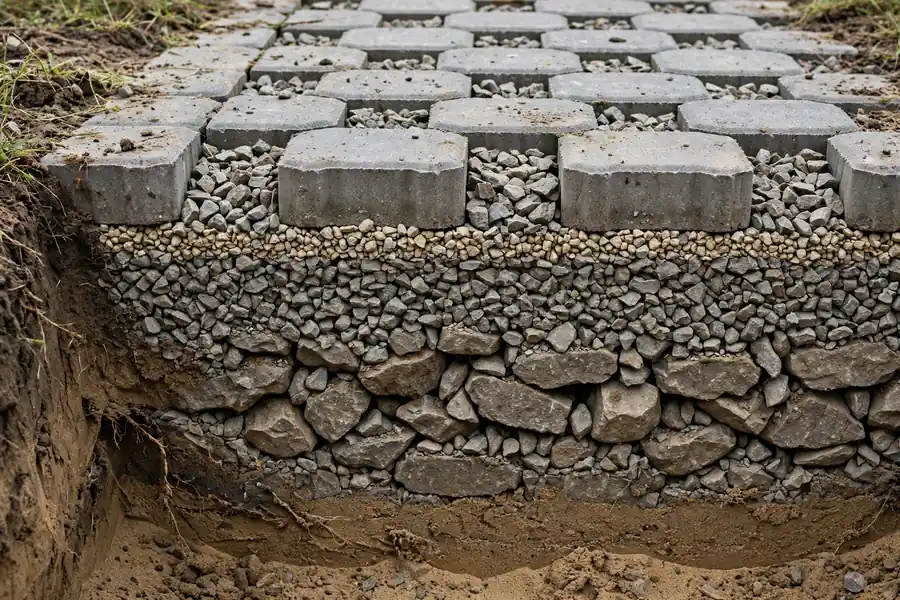
A permeable paver system looks like a normal paver patio from above, but the layers below it are different. The pavers sit with wider joints than regular pavers, and those joints are filled with No. 8 stone, a small washed stone that leaves gaps for water to pass through. Below the pavers sits a base of No. 57 crushed stone over a subbase of No. 2 crushed stone. Both layers are open graded, which means the stones are sized so plenty of empty space stays between them.
That empty space is what does the work. The base has about 30 to 40 percent void space, and about 2.5 to 3 inches of base stores about 1 inch of water, according to the Interlocking Concrete Pavement Institute (ICPI). Rain falls on the pavers, drops through the stone-filled joints, and fills the voids in the base. From there, the water soaks into the ground below, or it is held in the base and released slowly. Either way, far less water runs off the surface than it would from a solid patio or driveway.
The key point is that the whole system has to work together. The joints, the base, and the subbase all stay open so water can move down. If any layer gets clogged with sand, soil, or fine debris, the system drains more slowly. That is why the upkeep in this guide matters as much as the build itself. For the standard paver base used under regular pavers, see our guide on how to install pavers.
Permeable Pavers vs Regular Pavers
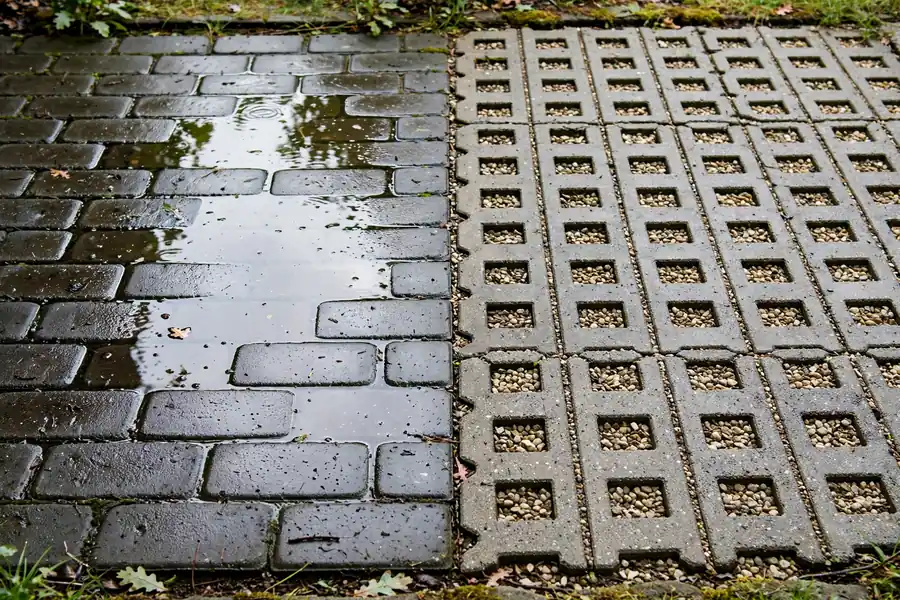
The table below sums up the main differences at a glance.
| Feature | Permeable | Regular |
|---|---|---|
| Joints | Wide joints filled with No. 8 stone | Narrow joints filled with sand or polymeric sand |
| Base | Deep, open-graded stone base (No. 57 over No. 2) | Compacted aggregate base with sand bedding |
| Drainage | Rain drains through the surface into the base | Rain runs off the surface to drains or the yard |
| Cost | Higher, about $10 to $30 per square foot installed | Lower, since the base is shallower and the joints are simpler |
| Maintenance | Joints need sweeping and stone top-ups to keep draining | Joints need sand top-ups and weed control |
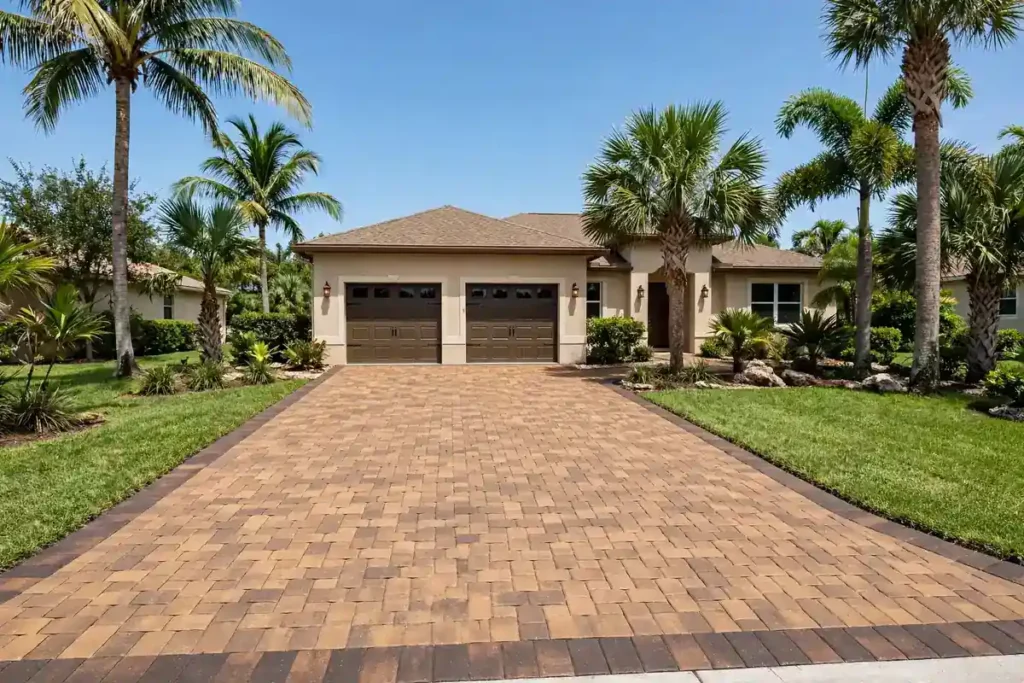
Regular pavers still make sense for many yards. They cost less, they come in a wider range of looks, and they work fine where runoff is not a problem. Permeable pavers earn their higher price only when drainage is part of the job. If you are weighing materials for a patio, our comparison of pavers vs concrete covers how the two surfaces differ in cost, feel, and upkeep.
How Much Do Permeable Pavers Cost?
The figures below are national averages from Angi, not Dreamscapes pricing. Local quotes in Palm Coast vary with site work, access, and base depth, so treat these numbers as a planning range and get a written quote for your property.
Angi reports that permeable paver installation averages about $9,511, with most homeowners spending $5,867 to $13,209. Projects typically cost $10 to $30 per square foot installed. Cost also varies by type. Permeable interlocking pavers run $10 to $40 or more per square foot, concrete grid pavers run $6 to $18, plastic grid pavers run $5 to $10, pervious concrete runs $8 to $16, and porous asphalt runs $7 to $15.
Two things drive the higher price. First, the base is deeper than a regular paver base, so the job needs more excavation and more stone. Second, the stone layers must be open graded and placed in the right order, which takes more care than a standard compacted base. A bigger patio or driveway also needs a deeper base to store more water, which adds stone and labor. For driveway-specific pricing detail, see our post on paver driveway cost.
Pros and Cons in a Florida Yard
The main benefit is less runoff and less puddling. Rain that soaks through the pavers never becomes a sheet of water racing across your patio or driveway. That helps in a Florida summer, when a single afternoon storm can drop a lot of rain in a short time and overwhelm a yard that has nowhere for the water to go.
There is a water quality benefit too. Permeable pavement filters pollutants such as nitrogen out of runoff before the water reaches nearby waterways, and the water that soaks in helps replace groundwater, according to UF/IFAS News. That matters in Flagler County, where runoff from yards and driveways flows toward canals and the Intracoastal Waterway.
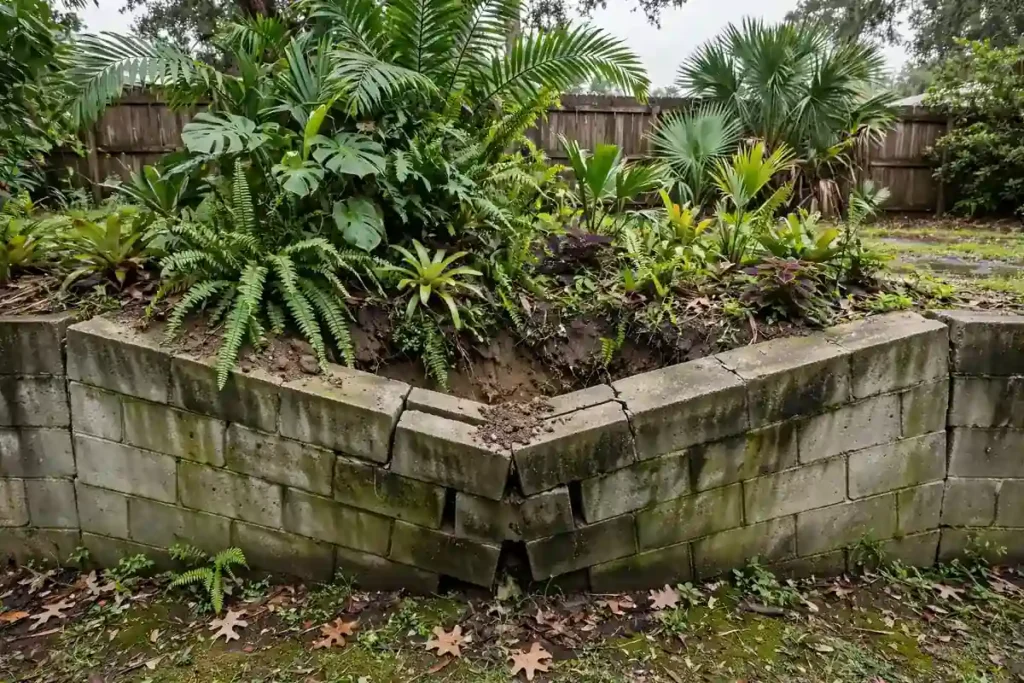
The downsides are real, and an honest guide has to name them. Permeable pavers cost more than regular pavers, and they need joint upkeep to keep draining. They are also not a fix for a yard that holds water because the soil itself drains poorly. If your yard stays soggy for days after rain, the problem may be grading or soil, not the patio surface. A site check decides which fix fits, and our guide to standing water in your yard explains how to tell the difference.
How to Maintain Permeable Pavers
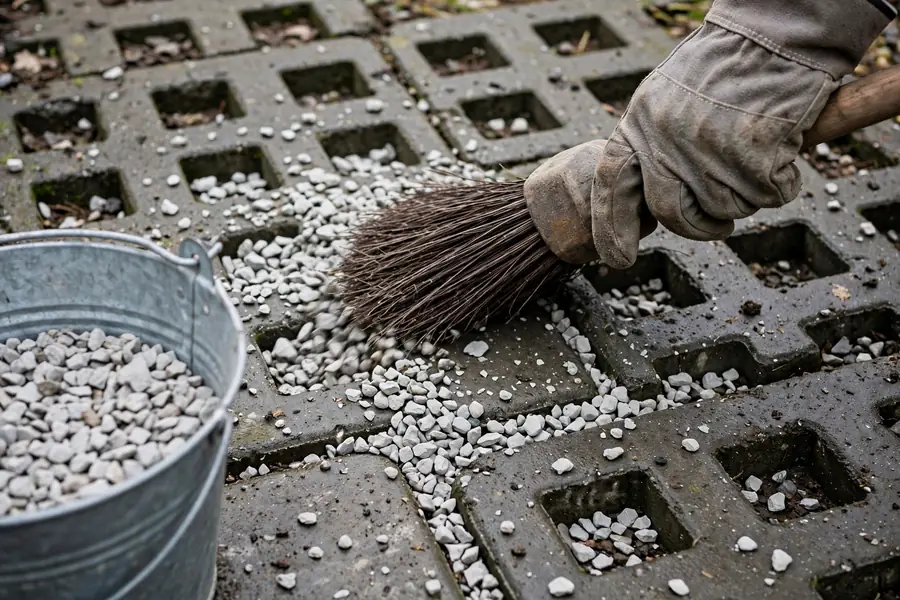
Upkeep is simple, but it has to happen on a schedule. The Urban Drainage and Flood Control District recommends sweeping permeable paving 1 to 2 times a year with a regenerative air sweeper. For a homeowner, the practical version is this: keep leaves, mulch, and soil off the surface, and have the surface vacuum swept once or twice a year by a pro with the right equipment. A normal leaf blower moves debris around, but it does not pull fine dirt out of the joints.
Watch the joint stone level. When the washed No. 9 aggregate in the joints drops more than half an inch below the paver surface, top it up with fresh washed stone. Never use sand in permeable joints. Sand fills the gaps that water needs to pass through, and once it packs in, the surface stops draining the way it should.
There is an easy test you can run yourself. Pour about 1 gallon of water over about 30 seconds onto the pavers. If the water travels 10 feet or more across the surface instead of soaking in, the joints need attention. Also keep mulch and soil from washing onto the pavers from nearby beds, since fine material is the fastest way to clog the joints.
Are Permeable Pavers Worth It?
They are worth it when drainage is the problem you are trying to solve. A driveway that sheds water onto the house foundation, a patio that floods a low corner of the yard, or a walkway that stays slick with standing water after storms are all good cases. Homeowners who want less runoff leaving their property also get real value from the system, as long as they accept the joint upkeep that comes with it.
They may not be worth it on a tight budget, or when a simpler fix solves the same problem for less money. A French drain can move water away from a trouble spot without rebuilding the whole patio, and a rain garden can catch runoff from a roof or driveway at a lower cost. Compare the options before you commit: our guides to French drain vs dry creek bed, rain garden design, and fixing a muddy backyard lay out each fix and when it fits.
One more caution. We cannot promise permit, impervious-surface, or stormwater credits for your home from permeable pavers. Rules vary by city and by HOA, and they change. Check with your city or HOA before you build, so you know exactly what applies to your property.
Permeable Pavers in Palm Coast
We have built patios and driveways in Palm Coast since 2015, and our approach starts with water, not pavers. We check how water moves across your property first: where it pools, where it runs, and how the soil drains. Then we build the right surface for that yard, whether that means permeable pavers with a deep stone base or standard pavers with a standard base. The wrong base under the right pavers still gives you puddles.
If runoff or puddles are a problem at your home, talk to us before you pick a surface. We serve Palm Coast, Flagler Beach, Bunnell, Ormond Beach, and St. Augustine. See our hardscape services for patios, driveways, and walkways, or call (386) 237-2983 to request a free estimate.
Frequently Asked Questions
Permeable pavers typically cost $10 to $30 per square foot installed, according to Angi, with most projects landing between about $5,867 and $13,209. The national average is about $9,511. Your final price depends on the paver type, the base depth, and the site work your yard needs, so local quotes vary.
They are worth it where runoff or puddling is a real problem and you will keep up with joint maintenance. Driveways and patios that shed water toward the house or a neighbor are strong cases. For some yards, a French drain or a rain garden fixes drainage for less money, so compare options first.
Rain runs through wide joints filled with small No. 8 stone into a deep, open-graded stone base. The base has about 30 to 40 percent void space, so it holds water while it soaks into the ground below. About 2.5 to 3 inches of base stores about 1 inch of water, which cuts runoff from the surface.
Yes. Sweep leaves, mulch, and soil off the surface, and have it vacuum swept with a regenerative air sweeper 1 to 2 times a year. Top up the joint stone with washed No. 9 aggregate when it drops more than half an inch below the paver surface. Without this upkeep, the joints clog and drainage slows.
No. Permeable paver joints use small washed stone, not sand. Sand fills the gaps that water needs to pass through and packs tight over time, which stops the surface from draining. If sand gets into the joints, it must be removed and replaced with washed stone to restore drainage.
Yes, permeable pavers work for driveways when the base is designed for vehicle loads. A driveway base runs deeper than a patio base, which adds cost. Ask for the base depth in writing, compare it with a standard paver driveway quote, and confirm the installer will top up the joints as part of upkeep.