In the rock vs mulch debate, mulch wins for most Florida planting beds. Mulch keeps roots cooler, holds moisture in sandy soil, and feeds the soil as it breaks down. Rock lasts longer, but it holds heat, adds nothing to the soil, and does not stop weeds well. UF/IFAS advises rock only on paths, dry creek beds, and under downspouts.
This guide uses Florida research rather than generic advice. In Flagler County yards we see the same pattern: beds that thrive under mulch, and rock beds that struggle in full sun.
Rock vs Mulch at a Glance
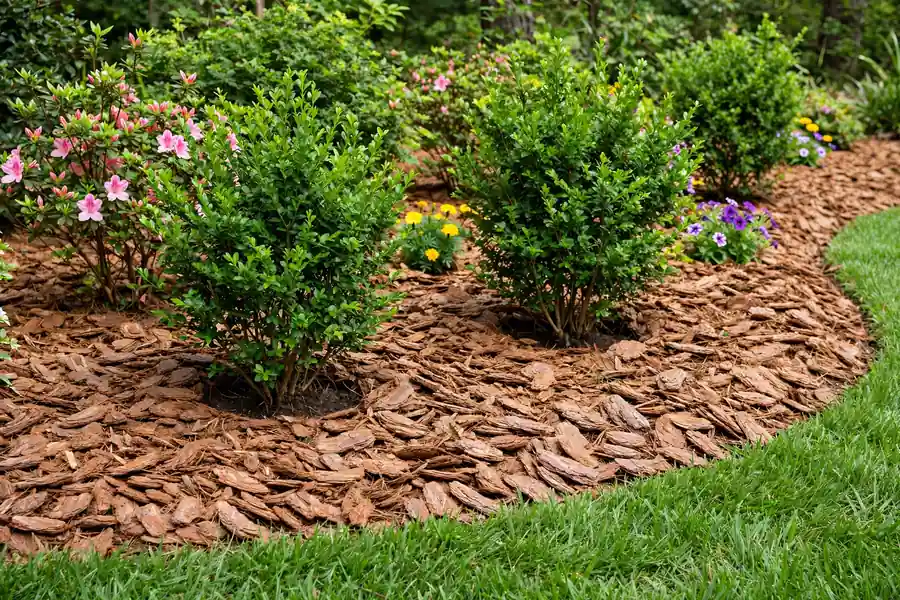
The short version is simple: mulch works with Florida plants, and rock works where plants do not need to grow.
| Feature | Organic mulch | Rock |
|---|---|---|
| Heat | Keeps soil cooler in summer and warmer in winter | Holds heat and raises ground temperature |
| Moisture | Holds moisture in sandy soil | Adds no water-holding capacity |
| Soil health | Feeds soil with nutrients as it breaks down | Adds nothing to soil health |
| Weeds | Suppresses weeds at 2 to 3 inches deep | Does not suppress weeds well, even with a barrier |
| Upkeep | Needs topping off every year or two | Stays in place for years; still needs edging and weeding |
| Cost up front | Lower cost to install | Higher cost to install |
| Cost over time | Repeat cost with each top-off | Mostly a one-time cost |
| Best uses | Planting beds, around trees and shrubs | Paths, dry creek beds, downspouts, foundation strip |
The pattern is clear: mulch helps plants grow, while rock mostly sits there. These points come from UF/IFAS and Clemson Cooperative Extension research, covered in the next section.
What Florida Research Says
UF/IFAS Gardening Solutions does not recommend inorganic mulch for garden beds. That group includes rock, gravel, shell, and rubber. Rock adds no nutrients or water-holding capacity to the soil, does not suppress weeds well, and does not moderate soil temperature the way organic mulch does.
UF/IFAS Gardening Solutions advises using rock sparingly instead, on paths, dry creek beds, and under downspouts. Where you do use rock, lay landscape fabric under it so it does not sink into sandy soil.
UF/IFAS Extension Orange County states that a rock yard is not Florida-Friendly. Rocks increase heat, and that heat can stress plants and raise pest and disease pressure. Weeds still grow even with a weed barrier in place. The recommended mix is organic mulch such as pine bark or pine straw, plus living plants, with only limited rock.
Clemson Cooperative Extension HGIC draws the same line: organic mulch retains moisture, keeps soil cooler in summer and warmer in winter, and adds nutrients as it breaks down, while rock retains heat, raises ground temperature, and offers no benefit for plant growth or soil health.
Why Mulch Usually Wins in Planting Beds
Mulch wins in planting beds because it does work rock cannot do. It shades the soil and keeps roots cooler through long, hot summers. It slows water loss from sandy soil, so plants stress less between rains. As it breaks down, it feeds the soil and builds the soft, dark layer roots love.
Weed control is another win. A fresh layer about 3 inches deep blocks light from weed seeds and makes weeds that appear easy to pull. Around established plants, 2 to 3 inches is the right range. Keep mulch off trunks and stems so bark stays dry and pests stay out.
Mulch also guards against erosion in summer storms. Rain hits the mulch layer first instead of bare sand, so soil stays in the bed instead of washing onto the lawn or drive. To learn how often to refresh it, read how long mulch lasts. If you are weighing mulch types, see our post on rubber mulch vs wood mulch.
Where Rock Makes Sense in Florida
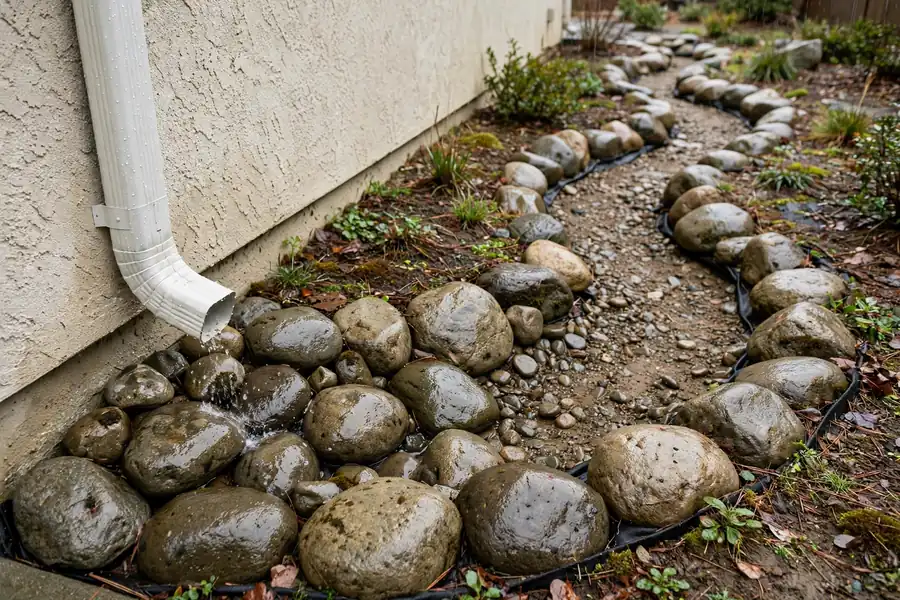
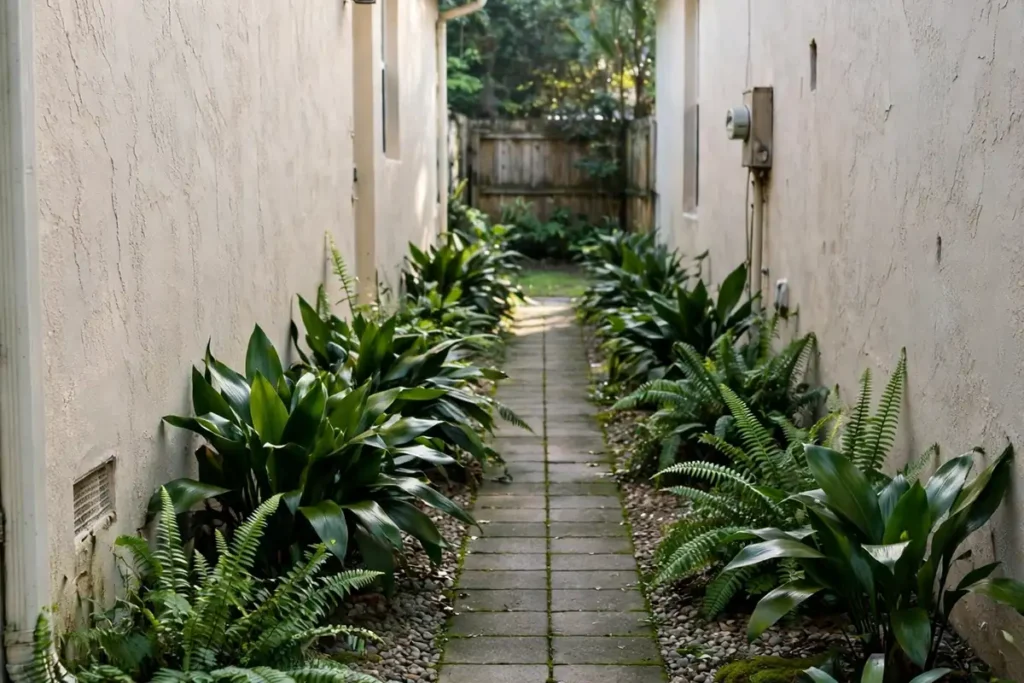
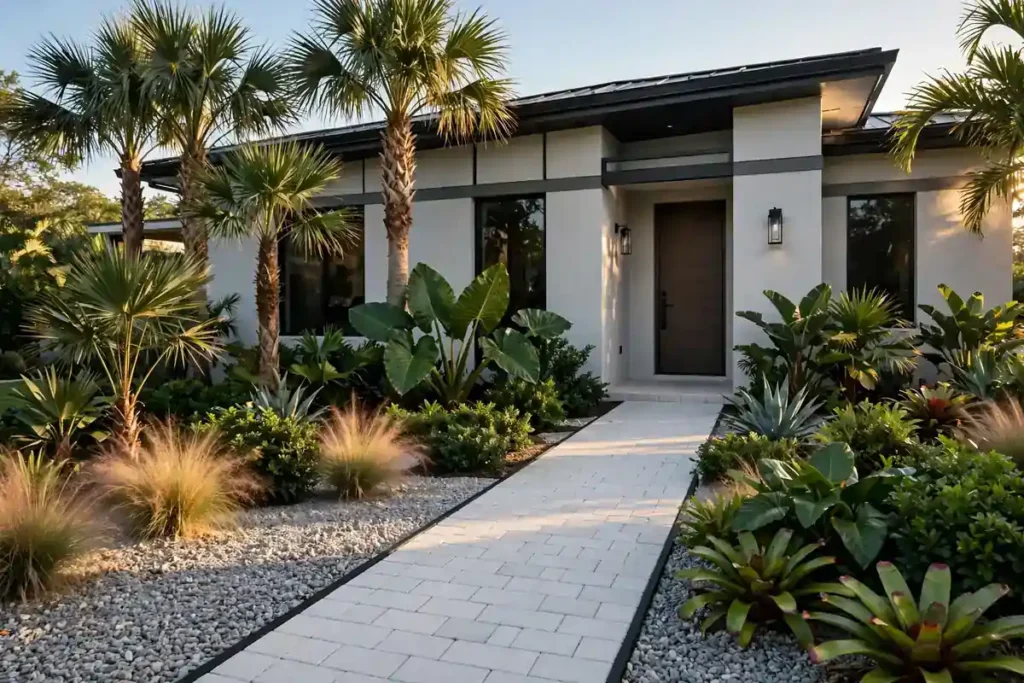
Rock earns its place where plants do not grow and water needs to move. Paths are the clearest case: rock drains fast, holds its shape under foot traffic, and needs no watering or feeding.
Dry creek beds are another strong use: a shallow rock channel moves storm water across a yard without carving a gully in the lawn. Rock also works under downspouts, where it takes the force of falling water and spreads it out. See our guide to dry creek bed landscaping for shaping ideas.
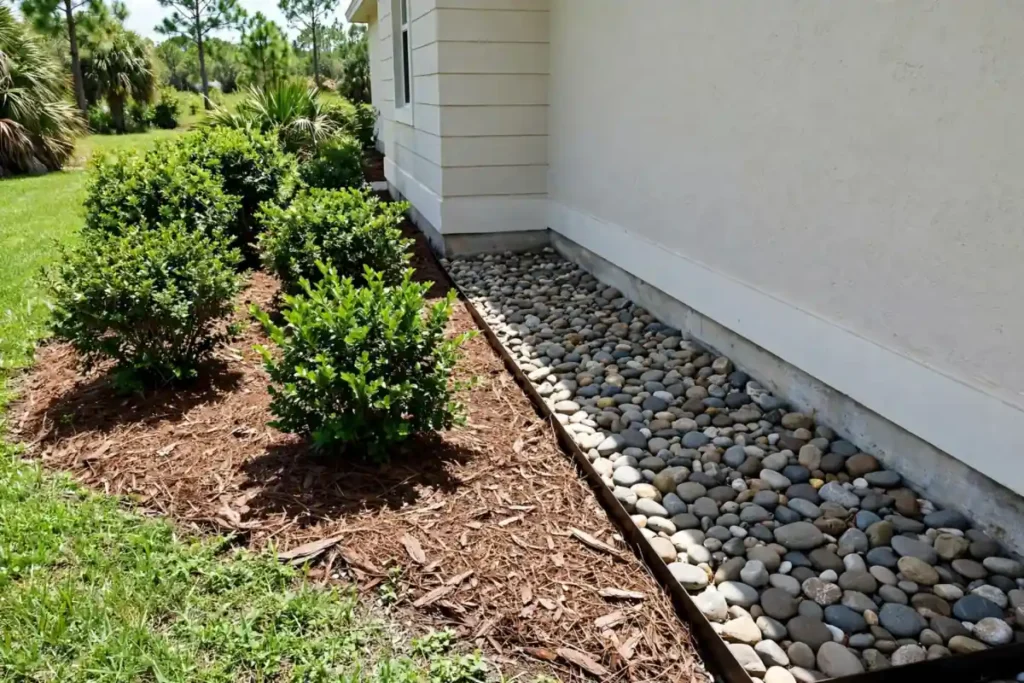
A narrow rock strip along the foundation is the one bed-like spot where rock can beat wood mulch. UF/IFAS Extension Orange County notes that woody mulch near walls may attract insect pests, so a small rock border there makes sense. Our pea gravel landscaping post shows how small stone looks in Florida yards.
Wherever you use rock in sand, lay landscape fabric first. Without it, stone sinks into the sand and leaves a thin, patchy layer that is hard to fix.
Cost: Up Front vs Over Time
Rock costs more to install than mulch: stone costs more per load, and it takes more labor to haul and place. Mulch costs less up front and goes down fast.
Over time the picture shifts. Mulch needs topping off every year or two, so you pay for it again and again. Rock stays in place for years and rarely needs replacing. For a fuller look at stone styles, see our gravel landscaping ideas post.
A simple 10-year way to think about it: weigh one rock install against mulch installs repeated across the decade. Rock can come out ahead in spots where it belongs, such as paths. In planting beds, though, the lower mulch cost buys healthier plants, and that is the point of a bed. Size, stone type, and access change every job, so get a local quote for exact figures.
Common Mistakes With Rock and Mulch
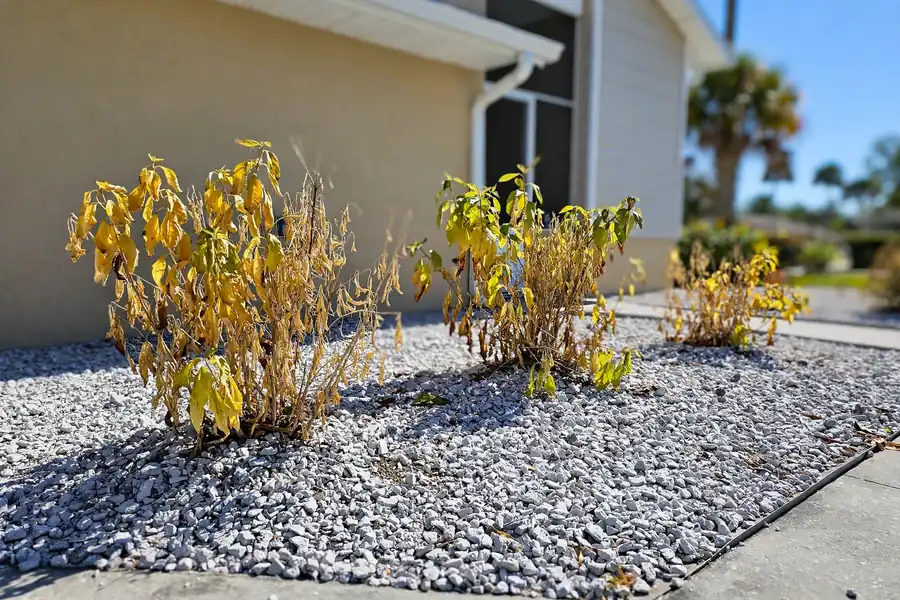
Most rock and mulch problems come from the right material in the wrong place, or one skipped step. Avoid these five mistakes.
- Rock around thirsty plants in full sun. The stone holds heat, the soil dries fast, and the plants stress.
- No fabric under rock in sand. The stone sinks and the bed ends up thin and patchy.
- Mulch piled against trunks or siding. Bark stays wet, pests move in, and rot can follow. Keep mulch pulled back from trunks and walls.
- Mixing rock into planting beds. Once stone mixes with soil, it is hard to remove later, and it blocks future planting.
- Rock washing onto the lawn. Loose stone near a slope or downspout can end up in the grass and damage mower blades.
Edges stop most of these problems before they start: a solid edge holds mulch in the bed and rock on the path. If you are costing out edges, our landscape curbing cost post gives you the basics.
A Simple Plan for a Palm Coast Yard
Here is the plan we use for most Palm Coast yards: mulch where plants grow, rock where water and feet move.
Use mulch in:
- Planting beds
- Around trees and shrubs
- Anywhere you want soil to improve over time
Use rock on:
- Walkways
- Downspout splash areas
- Dry creek beds
- A narrow strip along the foundation
Edge both materials so neither drifts into the lawn. For beds that need even less water, our xeriscaping ideas post shows water-wise planting to pair with this plan.
Bed Refresh and Installation in Palm Coast
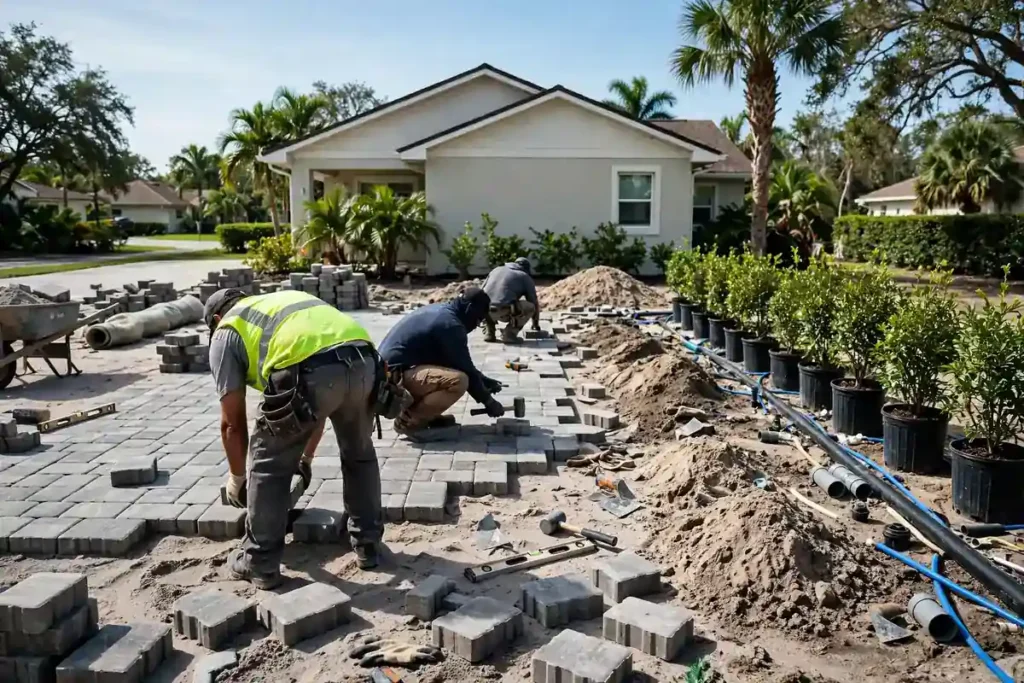
Dreamscapes Florida has refreshed beds across Flagler County since 2015. We put mulch where plants grow and rock where it earns its place. If your beds need a refresh, see our landscape installation page or request a free estimate. Call us at (386) 237-2983. We serve Palm Coast, Flagler Beach, Bunnell, Ormond Beach, and St. Augustine.
Frequently Asked Questions
For planting beds, mulch is better. It keeps roots cooler, holds moisture in sandy soil, and feeds the soil as it breaks down. Rock lasts longer but holds heat and adds nothing to the soil. Use rock on paths, dry creek beds, and under downspouts, where plants do not need to grow.
Yes. Rock holds heat and raises ground temperature, which can stress plants in full sun. UF/IFAS notes that rock yards increase heat and that the extra heat can raise pest and disease pressure. Mulch does the opposite: it shades the soil and keeps roots cooler through summer.
No. UF/IFAS says rock does not suppress weeds well, and weeds still grow even with a weed barrier underneath. Mulch kept 2 to 3 inches deep blocks light from weed seeds and makes weeds easier to pull. For the best weed control, keep mulch at full depth and pull weeds while they are small.
Rock costs more to install but rarely needs replacing. Mulch costs less up front but needs topping off every year or two. Over 10 years the totals can come close in spots where rock belongs, such as paths. In planting beds, mulch still wins because it keeps plants healthier.
Use both, in different spots. A narrow rock strip along the foundation can help, since wood mulch near walls may attract insect pests. Beyond that strip, use mulch in the planting beds, where it keeps roots cool, holds moisture, and builds soil. Keep mulch pulled back from trunks and siding.
No. UF/IFAS Extension says a rock yard is not Florida-Friendly. Rocks increase heat, stress plants, and can raise pest and disease pressure, while weeds grow even with a barrier. The Florida-Friendly approach is organic mulch such as pine bark or pine straw, plus living plants, with only limited rock.