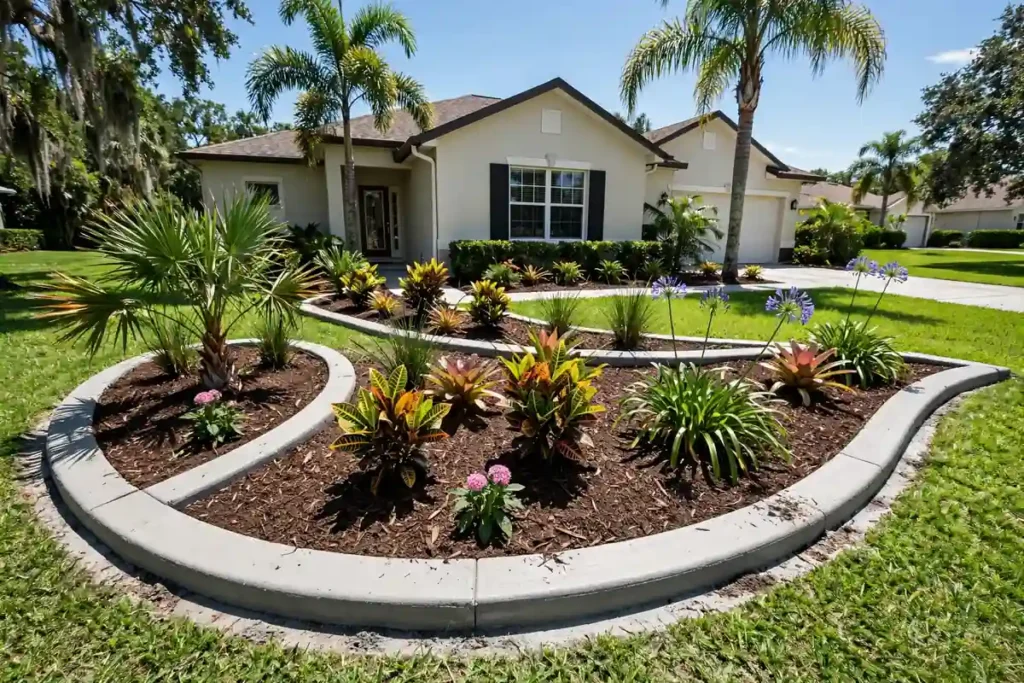
Plastic edging pops out of the ground. Brick borders shift. Metal strips bend under the mower. Continuous concrete curbing solves all of it in one pour — a permanent, machine-extruded border that keeps mulch in, grass out, and your beds looking sharp for decades. So what does it cost in Florida? Here’s the full price breakdown: per-foot rates, costs by style, real project examples, and the factors that move your quote up or down.
How Much Does Landscape Curbing Cost?
In Florida, professionally installed concrete landscape curbing typically costs $8–$18 per linear foot, including materials and labor. Basic gray curbing in a simple profile sits at the low end; stamped, colored, and patterned styles sit at the high end. Here’s what that means for real project sizes:
Tree ring (15 linear feet): $150–$300
Single flower bed (50 linear feet): $400–$900
Front-yard beds (100 linear feet): $800–$1,800
Full property beds (200 linear feet): $1,600–$3,600
Driveway + beds package (300 linear feet): $2,400–$5,400
Most installers have a minimum job charge (often $400–$600) because the curbing machine, truck, and crew cost the same to mobilize for 40 feet as for 140. That’s why small add-ons — a tree ring or mailbox bed added to a bigger job — cost far less per foot than a standalone small project.
Landscape Curbing Cost by Style
The profile you choose changes both the look and the price. These are the four styles Florida homeowners pick most:
Mower’s Edge Curbing ($8–$11 per foot)
The most popular residential style. One side sits low and flat so your mower wheel rides right on the concrete — you mow over the edge and skip the string trimmer entirely. Clean, practical, and the most affordable profile because it uses the least concrete. Best for: lawn-to-bed borders where you want zero-trim maintenance.
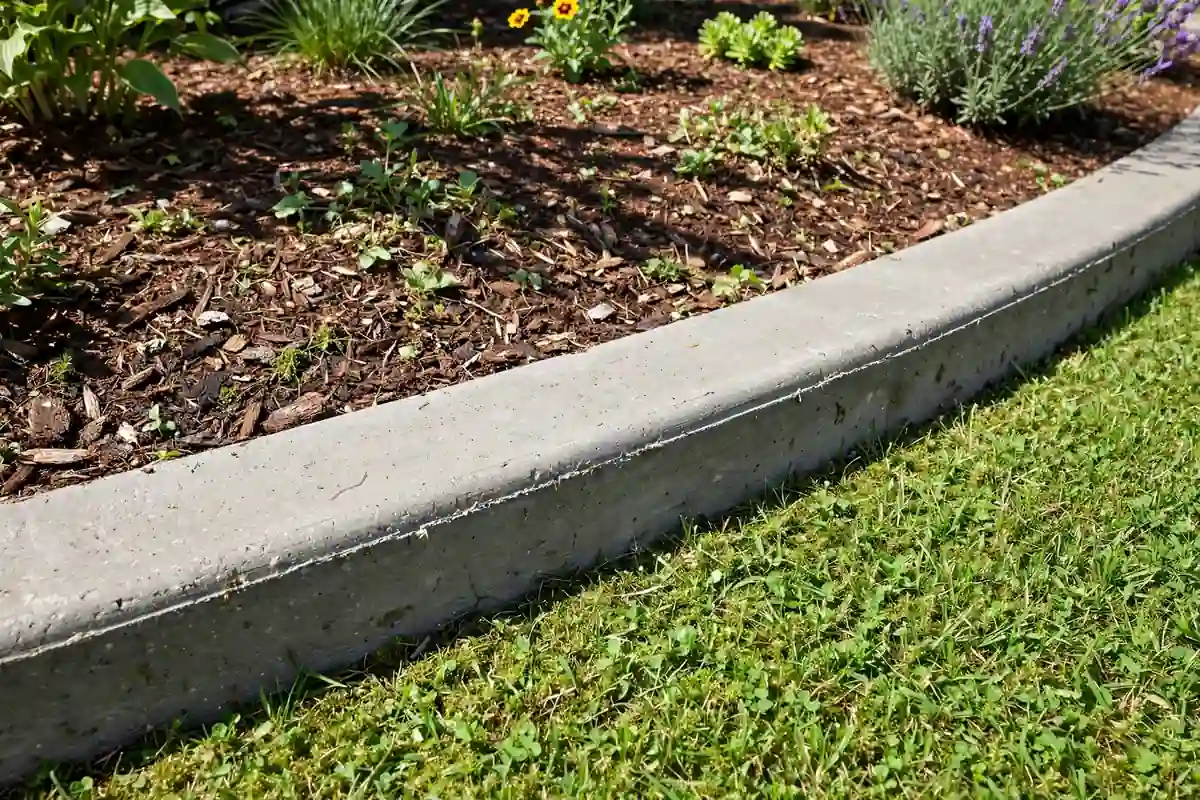
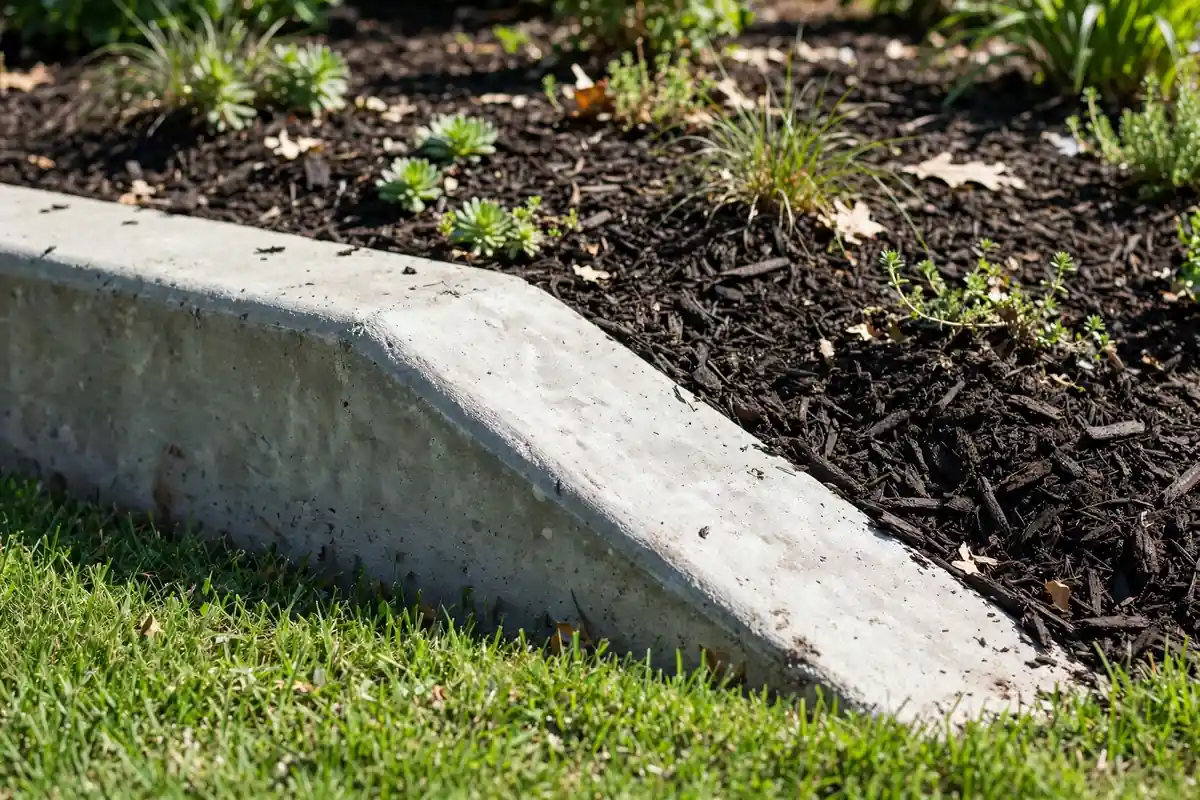
Slant Style Curbing ($9–$13 per foot)
An angled profile that’s taller at the back (against the bed) and slopes down toward the lawn. The slant holds mulch and rock in the bed better than any other style — the slope acts like a ramp that stops material from washing out in Florida downpours. It also takes stamped patterns beautifully. Best for: mulched beds on any slope, and rock beds.
Curb Style Curbing ($10–$15 per foot)
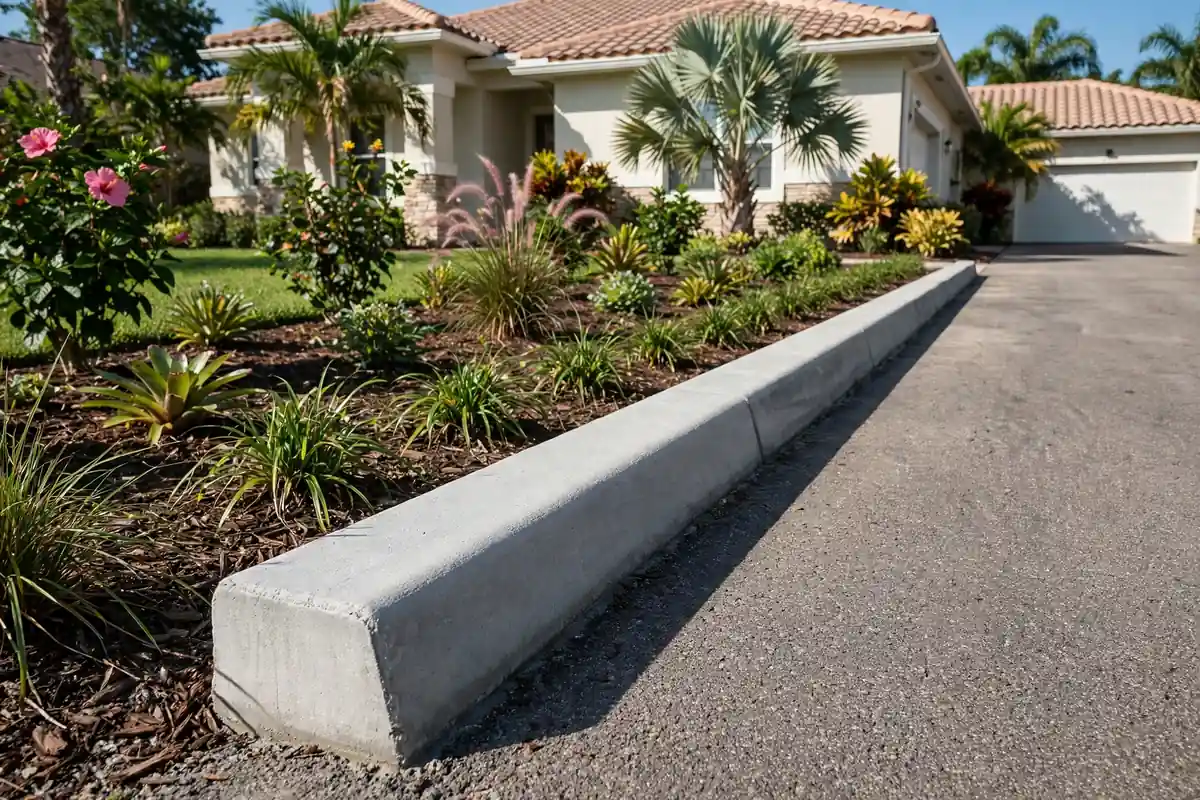
The upright, squared-off profile — think a miniature street curb. It’s the strongest style and the one to choose where vehicles or foot traffic meet the edge: driveway borders, parking pads, and commercial-looking front entries. The vertical face also gives the crispest, most formal line. Best for: driveways and formal landscapes.
Stamped & Colored Curbing ($13–$18 per foot)
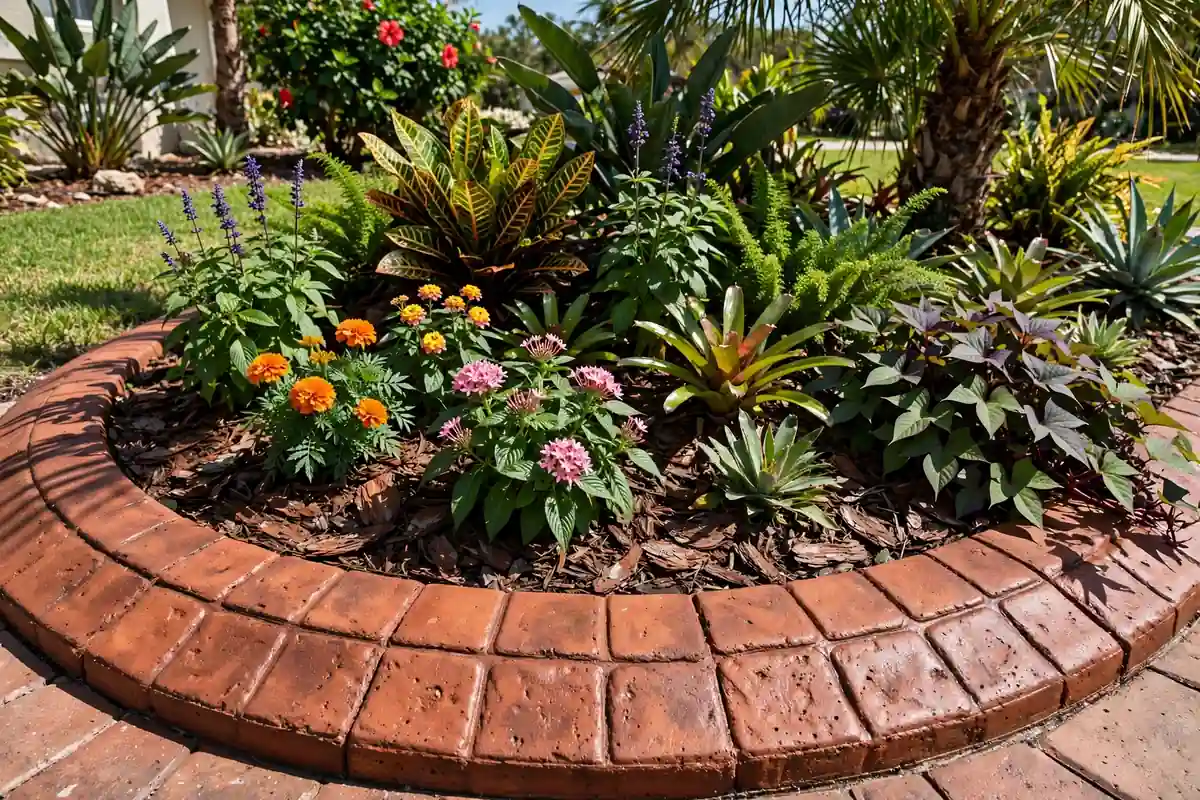
Any profile above, upgraded with integral color and a stamped pattern — brick, stone, slate, or wood-grain textures are the favorites. This is curbing as a design feature, not just a border: it can match your pavers, your home’s trim color, or mimic natural stone at a fraction of stone’s cost. The stamping and color add labor and materials, hence the premium. Best for: front yards and anywhere curb appeal is the point.
Curbing vs Edging: What’s the Difference?
Homeowners use the words interchangeably, but they’re different products. Edging is a strip material installed in a trench — metal edging, plastic edging, or landscape timbers. It costs $1–$6 per foot in materials, works fine for a season or three, then shifts, heaves, or cracks. Curbing is continuous concrete extruded on-site by a machine into whatever curves your beds follow. No joints to separate, no strips to pop out, nothing to re-install every few years. Edging is cheaper on day one; curbing is cheaper per year of service — a well-installed concrete curb lasts 20+ years with zero maintenance beyond an occasional rinse.
What Affects the Cost of Landscape Curbing?
Project length. The biggest factor. Per-foot prices drop as footage rises because setup and machine time spread across more feet — 200 feet rarely costs double what 100 feet does.
Style and finish. Plain gray in a basic profile is the floor price. Color adds $1–$3/foot; stamping adds $2–$4/foot; both together reach the top of the range.
Curves and complexity. Gentle curves are the machine’s home turf. Tight circles, sharp angles, steps, and multi-level beds slow the pour and raise labor.
Site prep. Existing edging removal, root cutting, grading, and sod removal along the curb line add time. A clean, accessible bed line is the cheapest job to run.
Reinforcement. In Florida’s sandy soil, quality installers run a steel cable or fiber mesh through the curb for crack resistance — it adds a little cost and a lot of lifespan. Ask whether your quote includes it; a cheap quote without reinforcement is no bargain.
Is Landscape Curbing Worth It in Florida?
Florida is actually the best case for curbing in the country. St. Augustine grass spreads by aggressive above-ground runners that invade beds relentlessly — a solid concrete border is one of the few things that stops them cold. Our sandy soil lets strip edging sink and shift within a couple of seasons, while a continuous curb floats as one unit. Summer downpours wash mulch out of unbordered beds weekly; a slant-style curb holds it in. And because there’s no freeze-thaw cycle here, Florida curbing avoids the cracking that limits its life up north. For beds around a pool cage, lanai, or deck landscaping, it’s usually the last border you’ll ever buy.
Frequently Asked Questions
How much does landscape curbing cost per linear foot?
In Florida, $8–$18 per linear foot installed for continuous concrete curbing. Basic gray mower’s-edge runs $8–$11/foot; stamped and colored styles run $13–$18/foot.
How long does concrete landscape curbing last?
20 years or more in Florida. There’s no freeze-thaw damage here, and reinforced curbing resists cracking and root pressure for decades with no real maintenance.
Can landscape curbing be installed in curves?
Yes — curves are its specialty. The extrusion machine follows any line your beds take, from gentle sweeps to full tree rings, with no joints or cuts.
Does curbing stop grass from growing into flower beds?
It’s the most effective barrier available. St. Augustine runners can’t cross or undercut a continuous concrete curb the way they defeat plastic and metal edging.
How long does installation take?
Most residential jobs (100–200 feet) are finished in a single day, including prep and cleanup. The curb is walkable in 24 hours; keep mowers off it for about a week.
Is stamped curbing worth the extra cost?
If the curb is visible from the street, usually yes — stamped and colored curbing reads as stone or brick from the road and measurably lifts curb appeal, for roughly $3–$5 more per foot than plain gray.
Get a Curbing Quote for Your Yard
Every yard’s footage, curves, and prep are different — which is why honest curbing quotes are measured, not guessed. DreamScapes installs continuous concrete curbing across Palm Coast and Flagler County, with steel-cable reinforcement standard in every run. Call (386) 237-2983 or visit dreamscapesflorida.com for a free on-site measure and quote.