

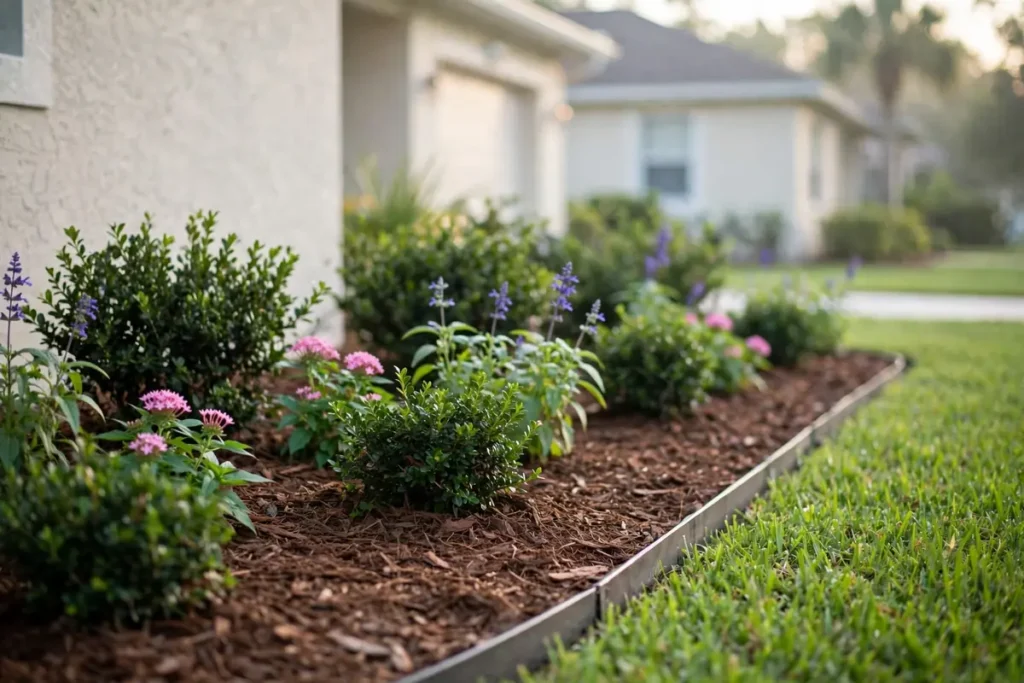
In Florida, most mulch lasts 6 months to 3 years. Pine straw breaks down fastest and needs topping off every 6 to 12 months. Pine bark lasts 2 to 3 years, and melaleuca can go longer. Dyed mulch often loses its color within a year in full sun. Add more whenever the layer drops below 2 inches.
Those numbers are shorter than what you will read on most national sites, and there is a good reason. A bag that promises to “last all season” was probably tested somewhere with a real winter. Here in Palm Coast, heat, humidity, and summer downpours keep mulch breaking down all year. Fungi, insects, and rain never take a season off, so the layer you spread in March is noticeably thinner by October.
Mulch Lifespan in Florida, by Type
This is what we typically see in beds across Flagler County. Shady beds hold mulch longer. Beds in full sun, on slopes, or under a downspout wear out faster.
| Mulch Type | How Long It Lasts in a Florida Bed | How Often to Top Off |
|---|---|---|
| Pine straw | 6 to 12 months | Spring and fall |
| Pine bark mini nuggets | 1 to 2 years | Once a year |
| Pine bark nuggets | 2 to 3 years | Every 1 to 2 years |
| Melaleuca | 2 to 3 years or more | About every 2 years |
| Eucalyptus | 1 to 2 years | Once a year |
| Shredded hardwood | 1 to 2 years | Once a year |
| Dyed (colored) mulch | Color fades in 6 to 12 months; wood lasts 1 to 2 years | Once a year for color |
| Rubber mulch | Does not break down | Rake and level as needed |
| Rock and shell | Does not break down | Rake and clear debris yearly |
The research backs this up. In a two-year UF/IFAS study of landscape mulches, pine bark kept about two-thirds of its original depth, melaleuca settled the least, and pine straw settled to almost nothing. Longer life is only one factor, though. If you are still deciding what to buy, our rubber mulch vs wood mulch comparison explains which types work best in Florida beds and why rubber belongs on the playground.
Mulch Runs on Two Clocks: Color and Coverage
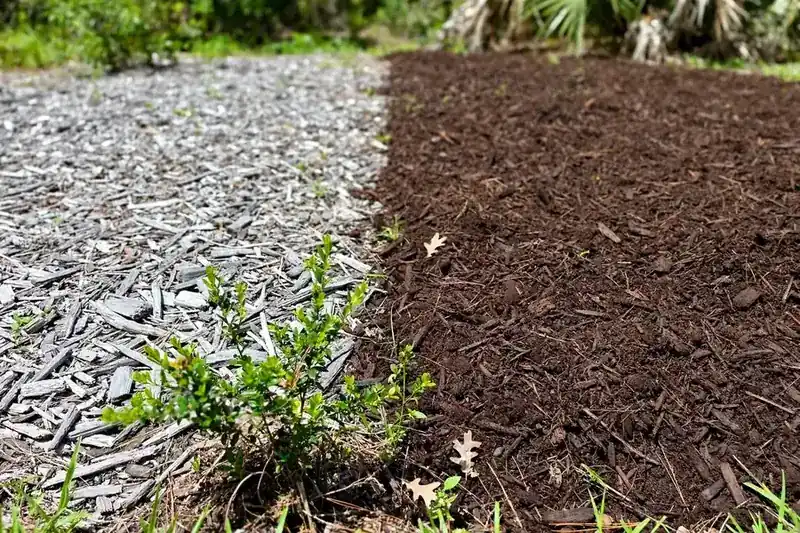
Most homeowners replace mulch when it turns gray. That is the color clock, and in Florida it runs fast. Strong sun bleaches brown bark to a silver gray within a few months, and dyed red and black mulch fade the same way. But faded mulch still works. A gray layer blocks weeds and holds moisture just as well as a fresh brown one.
The clock that matters is coverage. Mulch only does its job when there is enough of it. Once the layer drops under 2 inches, weeds push through and sandy soil dries out between watering days. That is a real problem in Flagler County, where St. Johns River Water Management District rules limit most homes to watering twice a week during daylight saving time and once a week in winter. A full layer of mulch makes each of those watering days last longer.
So if the only complaint is color, you may not need new mulch at all. A light raking turns up darker material from underneath, and a thin top dressing of fresh mulch costs far less than a full refill.
The 2-Inch Check
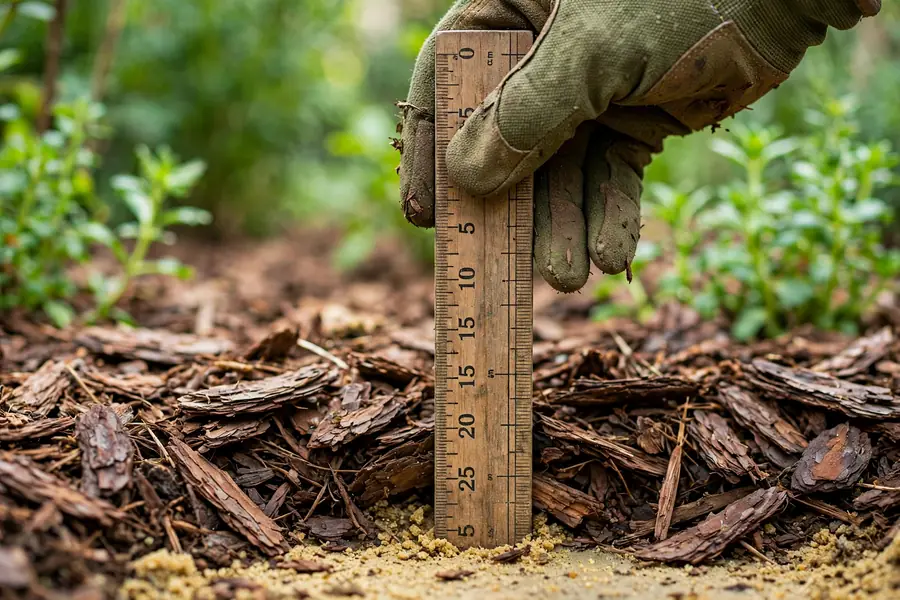
Here is the quick test we use on every maintenance visit. Push a ruler or a thin stick straight down through the mulch until it hits soil. Check three or four spots in each bed, because mulch wears unevenly. If it reads 2 inches or more, leave it alone. If it reads less, top it off back to 3 inches.
Do not go deeper than 3 inches. A thick blanket sheds rain and irrigation before it reaches the roots. Piled against trunks, it holds moisture that leads to rot. UF/IFAS recommends keeping mulch about a foot back from tree trunks and a couple of inches away from smaller plants.
Signs Your Mulch Needs Attention
Bare soil showing through. This is the clearest sign. Thin spots usually show up first along walkways, under drip lines of the roof, and anywhere people or pets cut across a bed.
A hard, matted crust. Pine straw and finely shredded hardwood can mat into a layer that water runs off instead of soaking in. Break it up with a rake before you add anything on top.
Weeds coming up through the bed. A few weeds are normal. A steady crop means the layer is too thin to block light from reaching the soil.
Mulch in the lawn or the street. After a summer storm, this usually points to an edging problem, not a mulch problem. A solid border like metal landscape edging keeps beds in place much better than a cut edge in sand.
Tiny black specks on your siding or car. This is artillery fungus, which grows in hardwood mulch during our wet season and shoots sticky spores onto nearby surfaces. No fungicide clears it out of the mulch. UF/IFAS Extension recommends switching to pine bark nuggets or pine straw instead.
A bright yellow, foamy blob. This is slime mold, sometimes called dog vomit fungus. It looks alarming but it does not harm plants. Rake it apart and let it dry out.
Top Off or Replace?
Most of the time, top off. UF/IFAS advises adding a thin new layer on top rather than stripping out the old mulch, because feeder roots grow up into that bottom layer and pulling it out damages them. The old mulch is also slowly turning into organic matter, which is exactly what our sandy soil is missing.
A full removal makes sense only in a few cases: the bed has artillery fungus, mulch has been piled into volcanoes around trees, weeds have rooted into the mulch itself, you are switching to rock, or you are pulling out rubber mulch. In those beds, clear it down to the soil and start fresh.
How to Make Mulch Last Longer
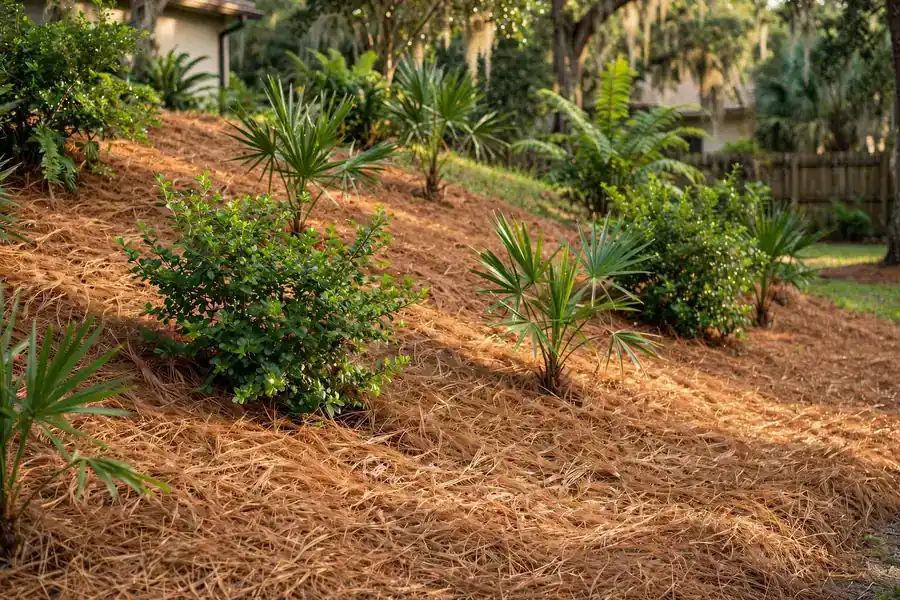
You cannot stop mulch from breaking down, but you can slow how fast you lose it. These habits make the biggest difference in Florida yards:
- Match the mulch to the spot. Use melaleuca or pine bark nuggets in large beds where you want fewer refills. Use pine straw on slopes, where the needles knit together and stay put.
- Stop the washouts. Add downspout extensions and redirect runoff away from beds. Our guide to erosion control landscaping covers fixes for yards where water keeps carrying mulch away.
- Water the roots, not the mulch. Spray heads that blast beds push mulch around and keep the top layer soggy. Drip lines under the mulch, like those in an underground garden irrigation system, keep it in place and use less water.
- Rake twice a year. A light raking breaks up crust, evens out thin spots, and lets air and water move through.
- Time your top-offs. Refresh beds in late winter before spring growth, and again in fall after the rainy season ends. The fall top-off pairs well with the steps in our guide to winterizing a Florida garden.
Does Bagged Mulch Go Bad?
Bagged mulch keeps well for months if you store it dry and off the ground. The problem is bags left sitting in the sun and rain. Wet mulch packed in plastic can turn sour and smell like vinegar or ammonia. Sour mulch can burn tender plants. If a bag smells off, spread it out on a tarp or driveway for a few days before it goes near your beds.
Skip the Bags: Mulch Refresh in Palm Coast
Hauling and spreading mulch twice a year is hot, heavy work in Florida. Dreamscapes Florida can add a mulch refresh to your lawn maintenance plan for homes in Palm Coast, Flagler Beach, Bunnell, Ormond Beach, and St. Augustine. For new beds, our landscape installation team preps the soil, sets the edging, and picks a mulch that fits the plants and the sun in that spot. Call (386) 237-2983 or request a free estimate.
Frequently Asked Questions
Most Florida beds need a top-off once or twice a year, not a full replacement. Pine straw needs fresh material every 6 to 12 months. Pine bark and melaleuca can go 2 years or more. Check the depth and add mulch when it drops below 2 inches.
Rock, shell, and rubber last the longest because they do not break down, but they do not improve the soil and are not recommended for planting beds. Among organic mulches, melaleuca and pine bark nuggets last the longest in Florida.
Usually no. Add a thin layer of fresh mulch on top. Old mulch protects roots and slowly adds organic matter to sandy soil. Remove it only if it is diseased, piled too deep, full of rooted weeds, or you are changing materials.
Sunlight bleaches the color out of wood mulch, often within a few months in Florida. Gray mulch still blocks weeds and holds moisture. Rake it lightly to bring darker mulch to the surface, or add a thin top layer for color.
No. The dye usually fades within 6 to 12 months in full sun, and the wood underneath breaks down at the same rate as plain hardwood mulch. You pay more for color that does not last as long as the mulch itself.
Keep mulch 2 to 3 inches deep in most beds. Use about 1 inch around seedlings and small herbs. Never go past 3 inches, and keep mulch about a foot away from tree trunks.