You can hide an outdoor AC unit with a slatted screen, low plants, or a gravel bed, as long as you keep at least 2 feet of open space on every side and about 5 feet open above it. The U.S. Department of Energy says to trim foliage back at least 2 feet so air can move around the condenser.
That one rule shapes every idea in this guide. A condenser pulls air in through its sides and pushes hot air out the top. Block that flow, and the system works harder, cools less, and wears out sooner.
The Clearance Rule Comes First
Before you buy a single plant or board, learn the space your unit needs. The U.S. Department of Energy advises homeowners to trim foliage back at least 2 feet around the condenser so air can move freely. Most manufacturer manuals call for 2 to 3 feet of open space on every side, plus around 5 feet open above the unit. Your own manual has the final word.
Service access matters just as much as airflow. A technician needs room to open the access panel, check the wiring, and clean the coils. Keep a clear path to the side where the electrical panel and refrigerant lines connect.
Measure the Zone Before You Plant or Build
Grab a tape measure and mark the boundary. Measure 2 feet out from each side of the cabinet and mark the line with paint or small flags. Then add a little extra, because plants grow fast in Florida.
Plant for the size on the tag, not the size in the pot. A shrub that grows 4 feet wide needs its center 4 feet from the cabinet: 2 feet of clearance plus half its mature width. The same math applies to ornamental grasses.
Check the space above the unit too. Low branches, a deck, or an awning within 5 feet will push hot air back down toward the unit. Shade from a tall tree is fine, because it comes from high above, not from a tight cover over the fan.
Idea 1: Start With a Pea Gravel Pad
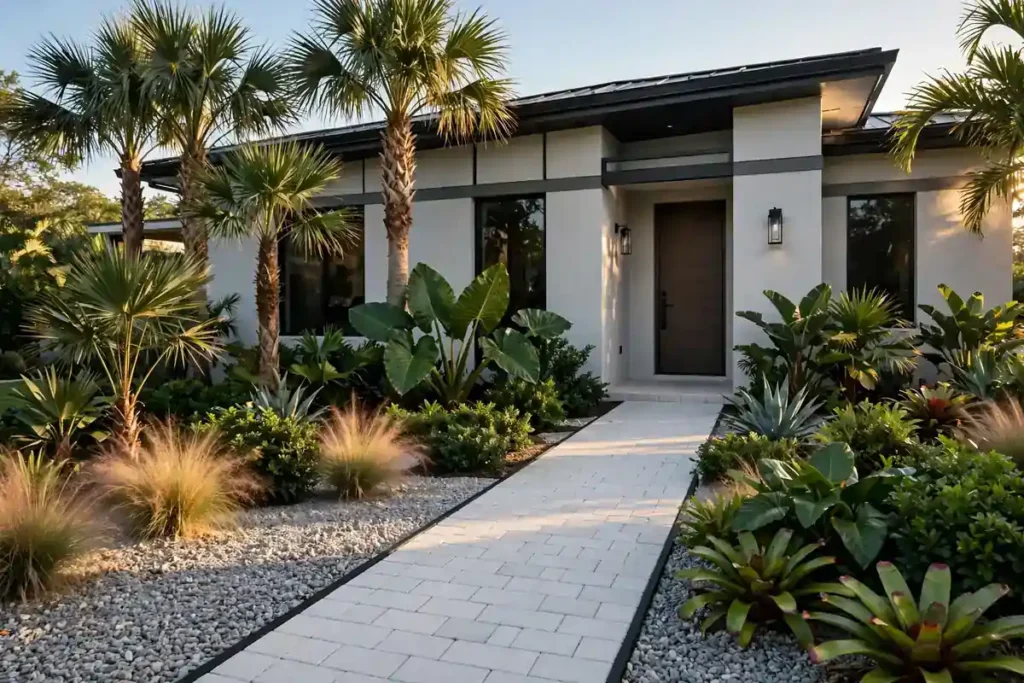
The simplest upgrade costs the least and helps the most. A border of pea gravel around the concrete pad keeps grass, weeds, and mulch away from the cabinet, and it drains fast after a summer storm.
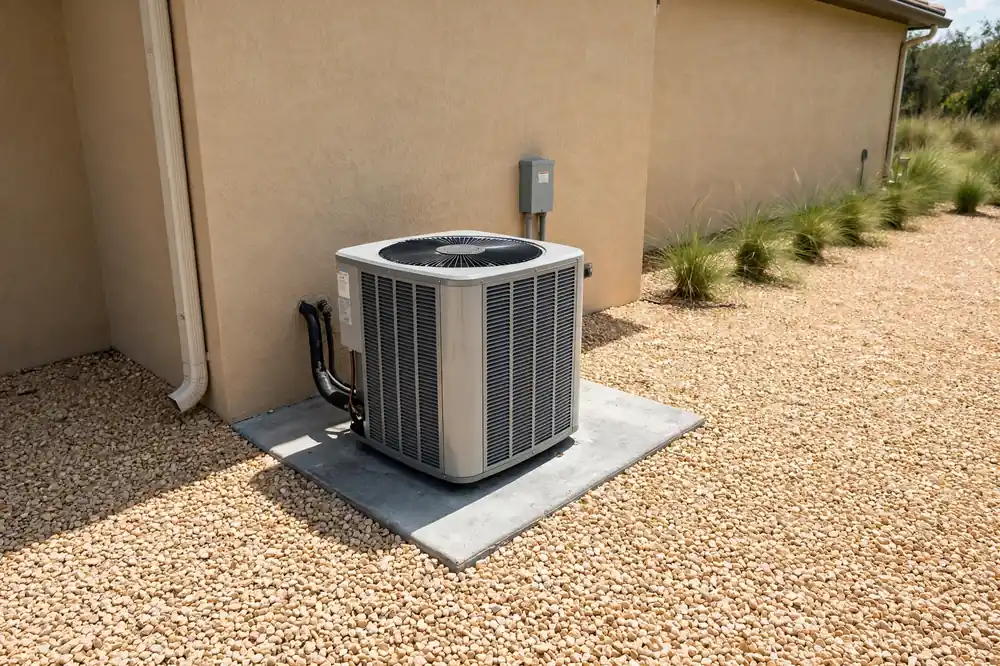
Extend the gravel at least 2 feet out from the pad on every side, so the gravel edge matches the clearance line. Hold it in place with a landscape edging strip. Pea gravel and small river rock both work. Skip light, fluffy mulch right next to the cabinet. The fan can pull loose chips into the coil fins.
Our guide to pea gravel landscaping covers stone sizes and edging. For the wider choice, read our rock vs mulch comparison. Gravel wins near equipment. Mulch wins in soft-soil beds.
Idea 2: Build a Slatted Screen, Not a Solid Wall
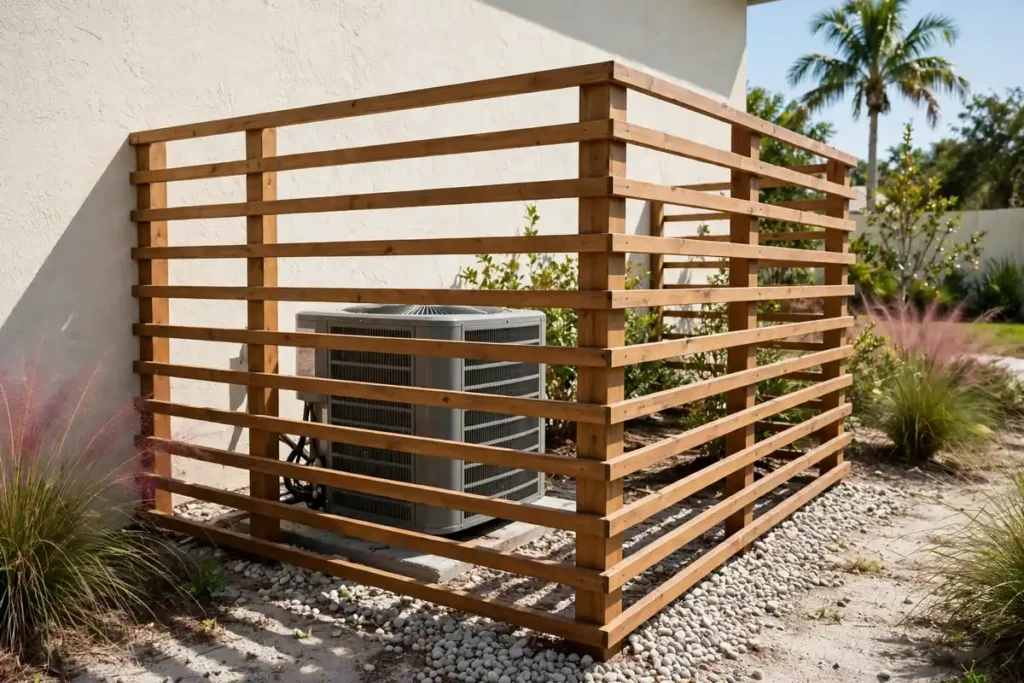
A slatted screen is the best way to hide an AC unit. Wide gaps between the boards let air pass through while breaking the line of sight from the patio or street. Build it from cedar, redwood, or composite board that stands up to Florida humidity, and paint or stain it to match your trim.
Set the screen at least 2 feet from the cabinet, and 3 feet from the service side. Leave the top open. A roof or lid traps hot air, and the fan will pull it straight back into the unit. Three sides are enough in most yards. Leave the fourth side open toward a fence or a part of the yard nobody sees.
Make the screen easy to move or open. Hinges on one panel or a lift-off section let a technician reach the unit in minutes. A screen fixed in place with screws will not survive the first service call.
Idea 3: Choose Florida Plants That Can Take the Heat
Plants hide a unit better than any fence when they are picked for the spot. The air near a condenser is hot, dry, and moving, so the plants around it must handle heat, full sun, and sandy soil without dropping leaves into the fins.
Three options work well in Flagler County beds. Muhly grass grows 2 to 3 feet tall, handles drought once established, and turns pink in fall. Coontie is a slow-growing native that stays 2 to 3 feet tall and tolerates salt and drought. Dwarf yaupon holly is a compact evergreen that holds its shape with little trimming. Plant each one outside the 2-foot ring, spaced for its mature width.
Firebush is another strong Florida native, but it grows 5 to 8 feet tall, so set it well back as a backdrop, not a front-row screen. If you want a fuller privacy planting, our guide to plants that add privacy to your yard lists taller options for other parts of the yard.
Avoid the plants that cause trouble. Vines climb into the cabinet, running bamboo spreads under the pad, and fast-growing shrubs close the clearance gap in a single season. If a plant sheds a lot, plant it somewhere else.
Idea 4: Add a Lattice Screen With a Gate
A lattice panel gives you the look of a fence with far more airflow than solid boards. The open grid breaks up the view of the unit while letting air move through. Vinyl lattice holds up well in humidity and never needs paint. Wood lattice looks warmer and can be stained to match the house.
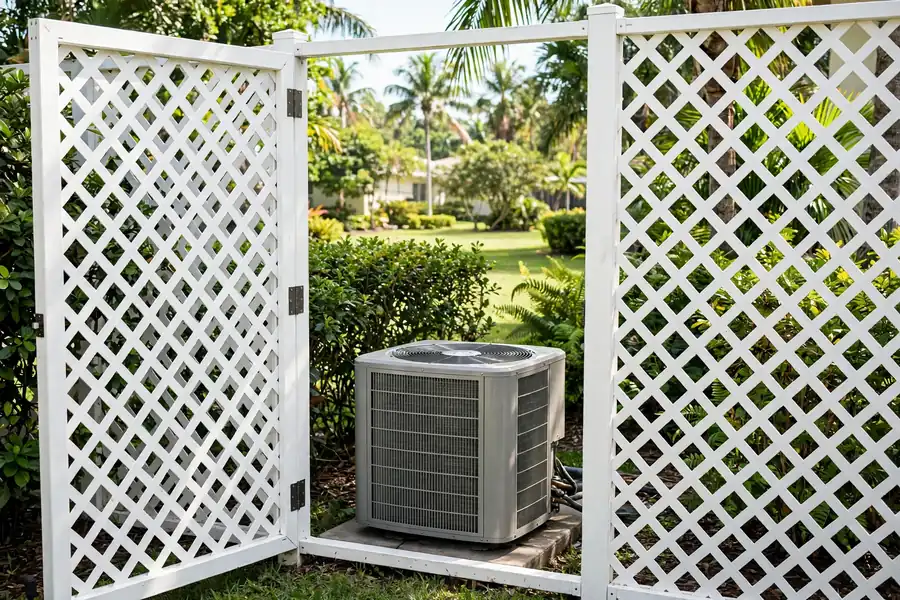
Build the lattice as a folding screen or mount one panel on hinges as a gate. The gate should open wide enough for a person and a tool bag, and latch shut so wind does not slam it into the unit. Keep the lattice at least 2 feet from the cabinet and leave the top open.
This setup works well on a side yard where the unit faces a neighbor’s fence or a walkway. For more side yard ideas, see our side yard landscaping ideas.
Idea 5: Use Pots and Movable Screens for Small Spaces
Not every yard has room for a bed or a built screen. Large pots give you the same hiding effect and you can move them. Set two or three tall planters on the street side of the unit, at least 2 feet from the cabinet, and fill them with a compact shrub or ornamental grass that likes full sun.
Pots have two extra perks. They keep roots away from the pad and the refrigerant lines, and you can pull them aside in seconds when a technician visits. Use heavy pots or add stone to the base so a summer storm does not tip them onto the unit.
What to Put Around an AC Unit, and What to Keep Away
Use this quick comparison when you shop for materials and plants.
| Choice | Why it works | Watch out for |
|---|---|---|
| Pea gravel or river rock | Keeps the base clean and dry, drains fast | Use edging so stone stays out of the lawn |
| Slatted wood screen | Hides the unit and lets air through | Keep it 2 feet back, leave the top open |
| Lattice panel | Light and airy, easy to hinge as a gate | Cheap lattice can warp in heat |
| Muhly grass or coontie | Florida tough, slow growing, neat in shape | Plant for mature size, outside the ring |
| Loose mulch | Best kept away from the unit | The fan can pull chips into the fins |
| Vines or running bamboo | Best kept away from the unit | They climb into the unit and spread under the pad |
Landscaping Around Pool Equipment
Pool pumps, filters, and heaters need the same treatment as an AC unit. They need air, dry ground, and a clear path for service. A pump that sits in a damp, boxed-in corner will rust faster and cost more to fix.
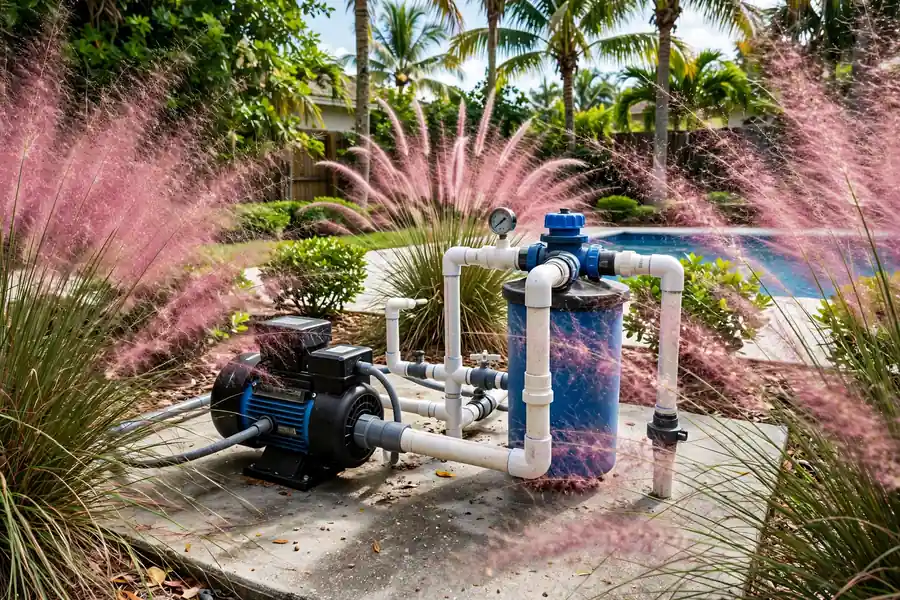
Screen pool equipment with tall ornamental grasses set well back from the pad. Muhly grass and other clumping grasses hide the equipment without forming a solid wall. Leave one side open and keep a stepping-stone path to the pad so nobody has to push through plants to reach a valve.
Use gravel under and around the equipment pad, just as you would around the AC unit. It drains fast and keeps weeds from growing into the pump. If your pool area needs a full plan, our rectangular pool landscape designs show how to tie it into the rest of the yard.
Mistakes That Cost Homeowners the Most
The most common mistake is planting too close. A shrub that looks tidy at the nursery can double in size by fall. When it touches the cabinet, airflow drops and the coil clogs with leaves. Measure for mature size and trim twice a year.
The second mistake is building a solid box around the unit. A fence with no gaps and a lid on top turns the condenser into an oven. The unit will run longer, use more power, and wear out sooner. If you already have a solid enclosure, remove the lid and replace one side with slats or lattice.
The third mistake is forgetting the drain and the disconnect. The condensate drain needs a clear path, and the electrical disconnect on the wall must stay reachable. Do not pile stone against it or plant in front of it. Check your HOA rules before you build, too. Many Flagler County communities limit fence height and screen styles in side yards.
Landscaping Around an AC Unit in Palm Coast
Palm Coast yards add a few local twists. Salt air near the coast dries out wood faster, so choose cedar, composite, or vinyl for screens and seal cut ends. Sandy soil drains fast, which suits gravel pads and muhly grass, but new shrubs need steady water until their roots settle in.
Summer storms drop branches and palm fronds across the yard. Check the clearance ring after every big storm and clear anything that landed near the unit.
Heat is the other local factor. The air coming off a condenser in July is hot enough to scorch a tender plant. That is why the Florida natives in this guide earn their place. They were built for this climate, and they keep looking good while the unit runs hard.
If you want the unit hidden and the airflow right, we can design the screen, the bed, and the gravel pad as one tidy project. Dreamscapes Florida has served Palm Coast, Flagler Beach, Bunnell, Ormond Beach, and St. Augustine since 2015. Call us at (386) 237-2983 or reach out through our landscape design page and contact page to plan your yard.
Frequently Asked Questions
Keep plants at least 2 feet from the condenser on every side. That is the minimum in the U.S. Department of Energy maintenance guidance. Most manufacturer manuals call for 2 to 3 feet around the sides and about 5 feet open above the unit. Always plant for the mature size, and check your unit’s manual for the exact numbers.
Yes, if the fence lets air through. Use slats or lattice, keep it at least 2 feet from the cabinet, and leave the top open so hot air can rise. Give the service side 3 feet of room and add a gate or hinged panel for a technician. A fence with a lid traps heat and hurts the system.
A slatted screen set 2 to 3 feet from the unit hides it from the patio while air keeps moving. Add a pea gravel pad around the base and low Florida plants like muhly grass or coontie outside the clearance ring. Hide the unit from the angle you see most, and leave the service side and the top open.
Yes, if the flowers are low, slow growing, and planted outside the 2-foot ring. Small perennials and compact shrubs work well when they are spaced for their mature size. Skip vines, fast growers, and heavy shedders, because they climb into the cabinet or drop leaves into the coil fins. Trim the bed twice a year.
No. A fitted cover blocks airflow and traps damp air against the cabinet, which can lead to rust and mold in Florida humidity. Your unit is built to sit outside in rain and sun. Keep the top clear, keep debris out of the coils, and trim plants back instead of covering the unit.
Use the same rules as the AC unit. Screen the pump and filter with tall clumping grasses set well back from the pad, and use gravel under the equipment so the area drains fast. Leave one side open with a stepping-stone path for service. Never box pool equipment in with a solid fence or a lid.