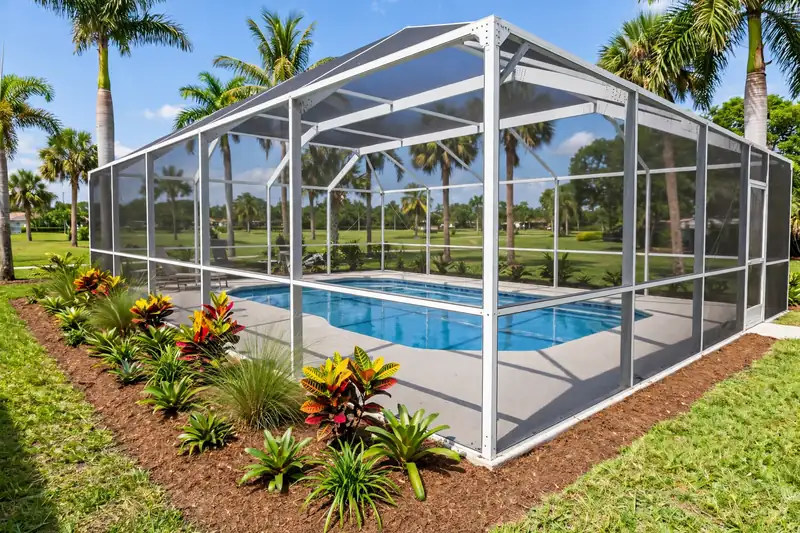
Good pool cage landscaping keeps plants, mulch, and water off the screen and frame while it makes the yard look finished. In Palm Coast, that means a clear setback strip, low-litter Florida plants, drip watering, and a gravel strip under the roof edge. The ideas below protect the cage first and add color second.
A pool cage changes how a yard works. The screen blocks some rain, the frame throws back heat, and every leaf on the roof washes down to one narrow strip of ground.
Start With the Setback, Not the Plants
Before you pick a single plant, decide where the bed starts. Keep a strip 2 to 3 feet wide between the screen and the first plant, filled with something simple: low groundcover, clean mulch, or a tidy stone edge. The strip gives you room to walk, blow out leaf litter, and reach the screen panels for repairs.
Trees need far more room. Iowa State University Extension recommends 4 to 6 feet from paving for small trees and 10 feet or more for large shade trees. The same spacing keeps branches off the screen in a summer storm.
Check your HOA rules before you plant near the cage. Many Palm Coast neighborhoods set their own limits on bed lines and plant heights. The deck inside the cage is a separate project, covered in our guide to rectangular pool landscape design.
The Drip Line: What Falls Off the Cage Roof
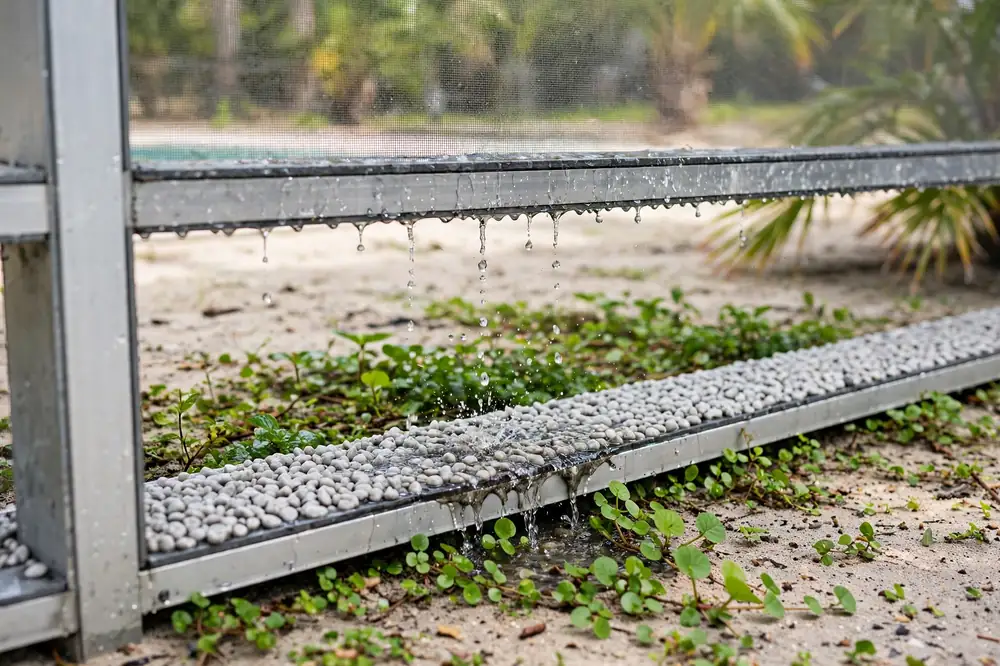
Rain does not fall evenly around a pool cage. It sheets off the roof edge and lands in one straight line, so the ground under the roof edge gets soaked in every storm. If that line runs through mulch, the mulch washes out and the soil turns to mud.
The fix is a gravel strip under the roof edge, about a foot wide, laid on soil that slopes gently away from the cage. The gravel breaks the fall of the water and lets it drain into the sandy soil. UF/IFAS notes that rocks belong in places like under a gutter and around a pool. See our pea gravel landscaping guide for how to lay a strip that stays neat.
Keep the strip clear of plants. Anything in the drip line gets pounded in every storm and drowns in wet summers.
Low-Litter Plants That Suit a Pool Cage
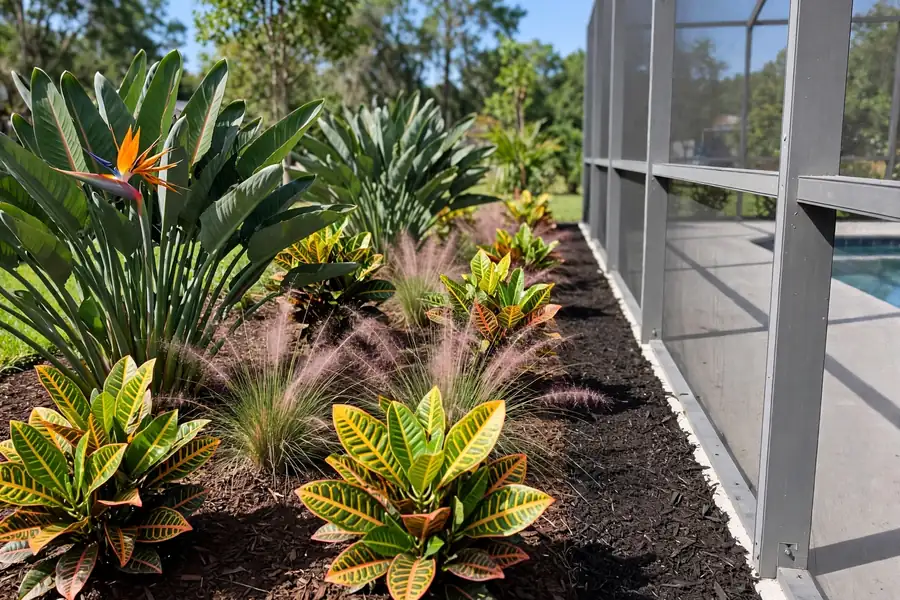
The best pool cage plants hold their leaves. Every leaf a plant drops either lands on the screen, blows through the door, or ends up in the pool. Pick plants that stay tidy through the year, and the cage stays clean with a fraction of the work.
UF/IFAS suggests bird of paradise, compact hibiscus, cordyline, variegated shell ginger, dwarf schefflera, and dwarf crotons for poolside planting in Florida. They take reflected heat from the frame and the odd splash, and none of them sheds in big seasonal waves. Add muhly grass for soft texture and coontie for shaded corners.
| Plant | Mature size | Leaf litter | Sun |
|---|---|---|---|
| Bird of paradise | 4 to 6 feet | Low | Full sun |
| Dwarf croton | 2 to 3 feet | Low | Full sun to part shade |
| Dwarf ixora | 2 to 3 feet | Low | Full sun |
| Muhly grass | About 3 feet | Low, cut back once a year | Full sun |
| Coontie | 2 to 3 feet | Very low | Part shade |
Near the coast, salt air narrows the list further. Our guide to coastal salt tolerant plants covers the picks that take salt spray without burning. Clusia and sabal palm both handle salt, wind, and heat.
Sunny Sides
The south and west sides take the hardest sun and the most reflected heat. Bird of paradise, croton, ixora, and muhly grass all take that heat and keep their color.
Shady Corners
The north side and the corners near the house stay shaded for much of the day. Coontie, cast iron plant, and bromeliads do well there. They need less water and hold their shape.
Build the Bed in Three Layers
The cleanest pool cage beds use three heights. Keep the lowest plants nearest the screen, put fuller mid-height plants in the middle, and save taller pieces for the outer edge and the corners. That shape keeps the view open from inside the pool and from the house.
Repeat the same few plants along the bed instead of planting one of everything. Three crotons spaced down the bed read as a design. Leave the corners for the tallest pieces and keep the straight runs low and tidy.
Mulch or Rock at the Cage Base?
Mulch and rock both work around a pool cage, but they work in different places. Mulch feeds the soil and holds moisture for the plants. Rock drains fast and never washes into the pool. Use mulch in the planting bed and rock in the drip strip and the setback strip.
| Finish | Best use | What to watch |
|---|---|---|
| Organic mulch | Inside the planting bed | Washes in heavy rain; refresh it each year |
| Pea gravel | Under the roof edge | Heats up in full sun; keep it out of the root zone |
| River rock | Accents and drainage spots | Heavy to move; weeds still grow through it |
UF/IFAS recommends mulch 2 to 3 inches deep in established beds, pulled away from the base of every plant. Never pile mulch against a stem, a trunk, or the cage frame. Our rock vs mulch guide compares both finishes for Florida yards.
Water Without Spraying the Screen
Spray heads are the quiet enemy of a pool cage. A head that throws water onto the aluminum frame leaves mineral spots, and constant wetting speeds up wear on the frame. Aim every spray head away from the cage.
Drip lines and soaker hoses are the better choice within 10 feet of the enclosure. They put water at the roots, keep the frame dry, and waste less water in our sandy soil. Water in the morning, and follow the current schedule from the St. Johns River Water Management District.
Light the Bed Without Blinding the Pool
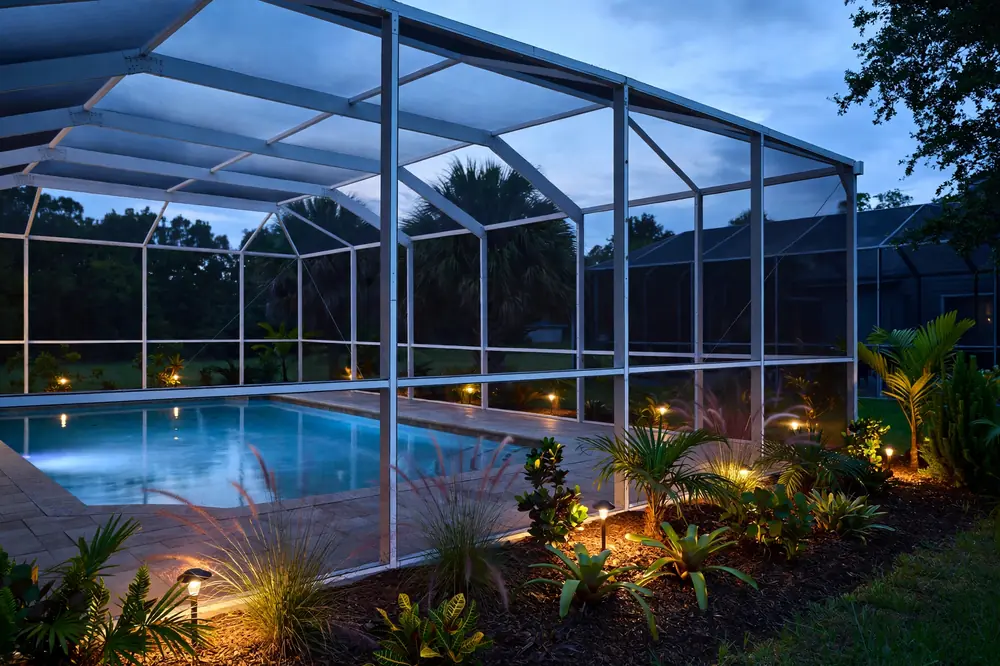
A pool cage looks its best at dusk when the bed is lit and the pool glows inside the screen. Low-voltage path lights set in the bed do the job well. Aim them down at the plants, not up at the screen and not across the pool. Light on the foliage makes the bed glow. Light on the mesh turns the screen into a bright wall.
Space the fixtures along the bed and keep them out of the setback strip, where feet and mowers pass. Use warm light, and keep the wiring buried in the bed, never clipped to the cage frame.
Privacy Without a Wall of Green
Privacy around a pool cage works best from the outer edge, not from the screen. A hedge of clusia or podocarpus set well back from the cage screens the neighbors without pressing on the mesh. A trellis on posts set outside the cage can carry a flowering vine, as long as the vine never touches the screen.
Keep the middle of the bed low so the view from inside the pool stays open. The same setback thinking applies to pool equipment. Hiding the pump and heater works like landscaping around AC unit jobs: screen it with plants set off the equipment, never tight against it.
What to Keep Away From the Screen
Some plants cause more trouble than they are worth near a cage. Ficus trees grow aerial roots that seek water and can push against footings and decking, so keep them out of the pool area. Queen palms drop heavy fruit clusters and dead fronds, and UF/IFAS lists the species as potentially invasive in Florida. Oleander is toxic in all its parts, so it has no place beside a family pool.
Live oak and southern magnolia drop leaves, flowers, and seed pods for much of the year, and that debris clogs screen mesh and lands in the pool. Bamboo spreads fast and drops leaves constantly.
Never let a vine climb the screen or the frame. Vines pull mesh loose, trap moisture against the aluminum, and hide damage. If the frame or the screen is damaged, call a screen enclosure company. Frame and screen repair is their work, not a landscaping job.
Pool Cage Landscaping in Palm Coast
Palm Coast sits in USDA Zone 9b with sandy soil, summer storms, and salt air near the coast. That mix suits tropical plants, but it punishes anything planted tight against a screen. The beds we build here keep the setback, use drip water, and pick plants that hold their leaves.
Flagler County yards run on the St. Johns River Water Management District watering schedule, so we design beds that look good on the allowed watering days. If you want a pool cage bed planned for your yard, call Dreamscapes Florida at (386) 237-2983 or request a free estimate. We serve Palm Coast, Flagler Beach, Bunnell, Ormond Beach, and St. Augustine.
Frequently Asked Questions
Keep planting beds 2 to 3 feet back from the screen and frame, and leave that strip simple so you can walk it and reach the panels. Small trees need 4 to 6 feet from paving, and large shade trees need 10 feet or more.
Bird of paradise, dwarf croton, dwarf ixora, muhly grass, coontie, and dwarf yaupon holly all suit a pool cage. They hold their leaves, take reflected heat, and stay compact. UF/IFAS also lists compact hibiscus, cordyline, and dwarf schefflera for poolside planting in Florida.
No. Keep mulch pulled back from the frame and from plant stems. UF/IFAS recommends mulch 2 to 3 inches deep in beds, with the base of each plant left bare. Use a gravel strip under the roof edge instead, where rain falls off the cage.
Lay a gravel strip about a foot wide under the roof edge, on soil that slopes gently away from the cage. The gravel breaks the fall of the water and lets it drain into the sandy soil. Keep plants out of the drip line.
Skip ficus, queen palm, oleander, live oak, southern magnolia, and bamboo near a cage. Ficus roots push against footings, queen palms drop heavy fruit and fronds, oleander is toxic, and oaks and magnolias drop debris for much of the year.
Yes. Low-voltage path lights in the bed work well when they aim down at the plants and stay out of the setback strip. Use warm light, bury the wiring in the bed, and never clip fixtures or wire to the cage frame.