When tree roots lift pavers, lift the raised pavers, look at the roots, and reset them, reroute the path, or add a root barrier. Do not cut large roots near the trunk without an arborist. A tree has only 4 to 7 major roots, and cutting one near the trunk can remove up to 25 percent of its root system.
That last fact is why we start with the tree, not the saw. A lifted patio looks like a paver problem, but it is really a tree problem and a paver problem at the same time. Fix only the pavers and the roots will lift them again. Cut the roots without thinking and you can hurt a tree you wanted to keep.
This post is about pavers pushed up, not pavers sinking down. Sinking has different causes and a different fix. We cover the safe fixes here, ranked from the gentlest on the tree to the hardest, so you can pick the one that fits your yard.
Why Tree Roots Push Up Pavers
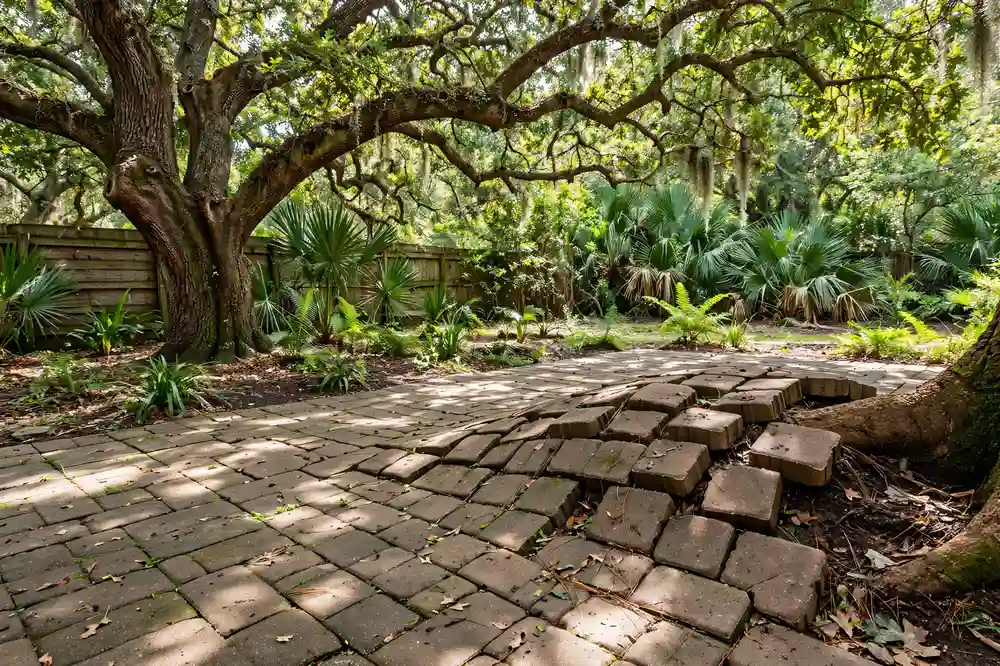
Roots do not set out to wreck your patio. They grow where they can find water, air, and room. When soil near pavement gets packed down, large roots stay near the surface instead of growing deep. The Morton Arboretum explains that roots often enter through a gap between soil and pavement, and once a root is under the pavers, it keeps getting thicker year after year.
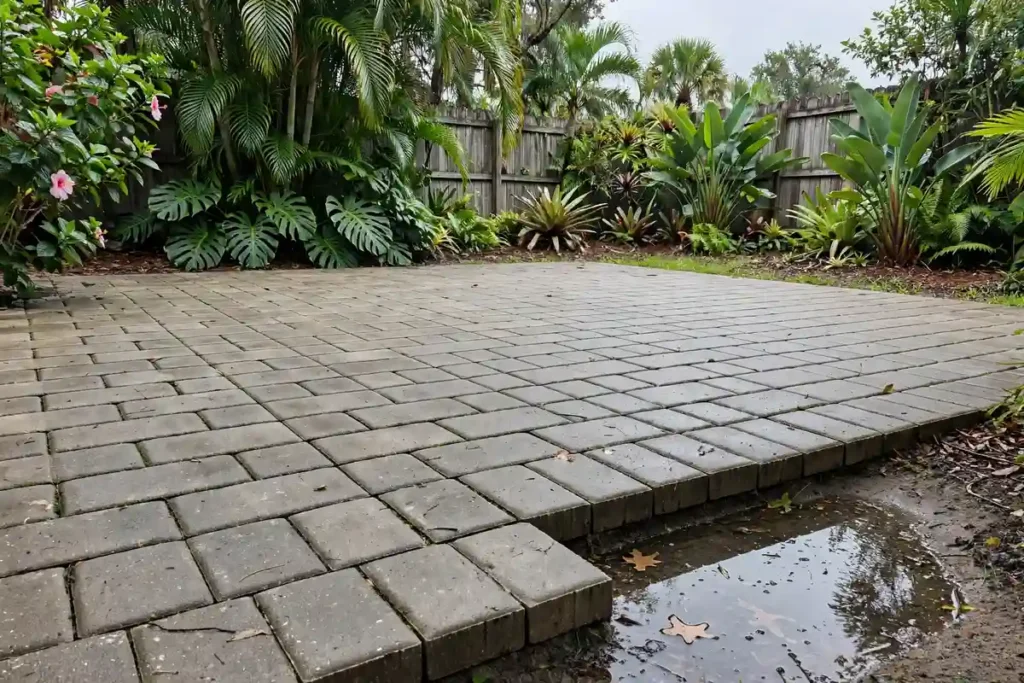
Pavers sit on a shallow base, so they have little room to absorb that growth. A thickening root presses up from below, and the pavers above it ride up into a hump. One lifted corner soon becomes a trip hazard, and water starts to pool on the low side.
Is It Safe to Cut the Roots?
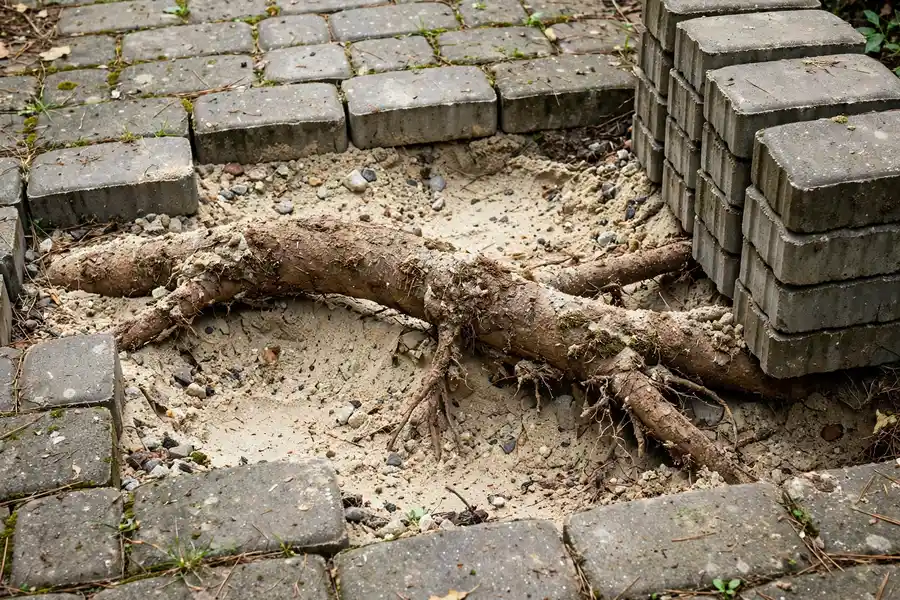
Florida yards see this often. Our sandy soil drains fast, and many shade trees here grow wide, shallow roots that spread past the canopy.
It depends on the size of the root and how close it is to the trunk. Small feeder roots are one thing. A large root near the trunk is another thing entirely, and that is where most damage happens.
A tree typically has only 4 to 7 major roots. Cutting one within a few feet of the trunk can remove up to 25 percent of its root system, according to the Morton Arboretum. Trees with cut roots are more stressed and more likely to blow over in storms, which matters a lot in Flagler County during hurricane season.
UF/IFAS gives a clear line to respect: cutting or damaging roots larger than about 1 inch in diameter on established trees could cause harm. You can read their guidance on tree roots from UF/IFAS Environmental Horticulture. So if the root lifting your pavers is thick and close to the trunk, do not cut it yourself. Call a certified arborist first.
We keep this rule simple on every job: if you need a saw for the root, you need an arborist for the decision. For the full set of root rules we follow around trees, see our guide to landscaping around trees.
Your Repair Options
Start with the gentlest fix that solves the problem. Work down this list only as far as you need to go. Each step adds more impact on the tree, so there is no reason to jump to cutting when resetting or rerouting will do the job.
Option 1: Lift and Reset the Pavers
This is the fix we use most often, and it is the kindest to the tree because no root gets cut at all. Lift the raised pavers plus one row around them, so you can see the full shape of the root and work cleanly. Keep the root in place. Then add base material and sand to bring the area level over the root where it is small enough to bridge, reset the pavers, and re-sand the joints.
Bridging only works for smaller roots. A thick root that keeps growing will lift the same spot again, so be honest about what you see once the pavers are up. If the root is large, move to the options below instead of forcing a reset that will fail. For the resetting method, see our guide to fix sunken pavers, and finish the joints with polymeric sand for pavers, settled to within 1/8 inch of the surface.
Option 2: Reroute or Reshape the Hardscape
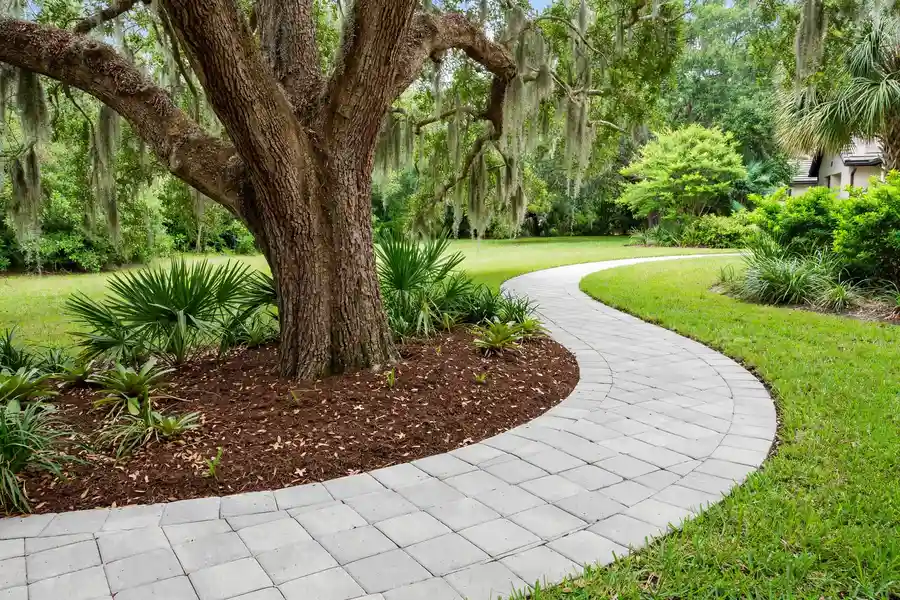
Sometimes the best fix is to give the tree more room. Curve the walkway around the trunk instead of running it straight through the root zone. Pull a patio edge back a few feet so the paving no longer sits on top of the largest roots. The Morton Arboretum lists relocating pavement farther from the tree as a common remedy for mature trees.
Rerouting costs more than a simple reset because you are changing the shape of the hardscape, not just leveling it. But it ends the yearly battle with the same root. A curved path can also look better than a straight one, since it follows the natural shape of the yard.
If the lifted area is part of a driveway, get the full picture before you reshape anything. See our breakdown of paver driveway cost so you can weigh a partial reshape against a larger rebuild.
Option 3: Add a Root Barrier
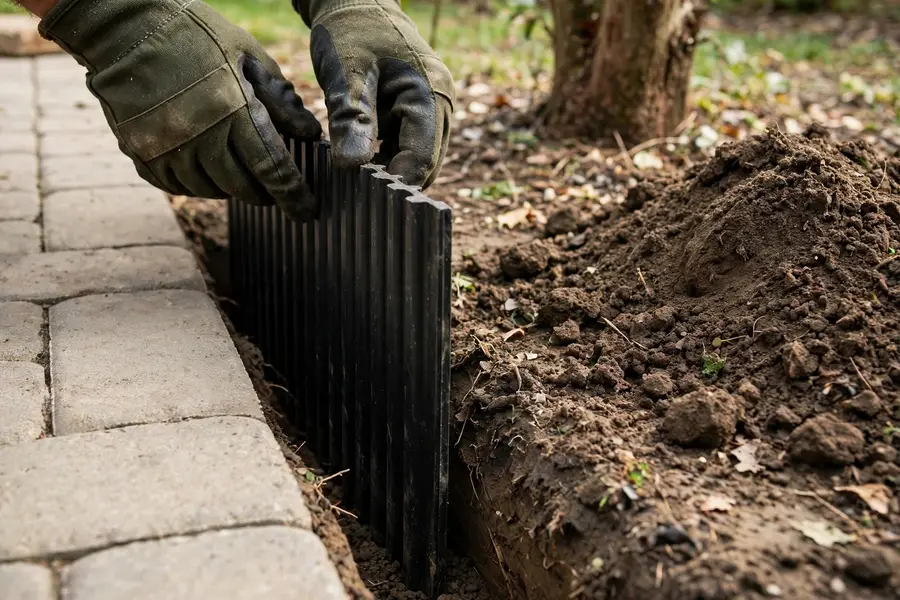
A root barrier is a vertical panel set into a narrow trench along the paver edge, between the tree and the paving. It guides roots downward or away from the paved area so they do not grow back underneath it. The Morton Arboretum notes that barriers are often added after roots are pruned, and they are a common part of a lasting repair.
A barrier is not a wall you can set and forget. It must sit deep enough to do its job, and it must run far enough along the edge that roots cannot simply grow around its ends. We name no brands here because the right panel depends on your soil, your tree, and how deep the trench can go without hitting other roots.
Before you dig any trench, contact Sunshine 811 at least two full business days ahead. The service is free, and it marks buried lines so your repair does not create a bigger problem. This step applies to any option that involves digging, not just barriers.
Option 4: Root Pruning by an Arborist
Root pruning is the last resort, not the first move. A certified arborist decides which roots, if any, the tree can lose, and that person makes the cuts. Never cut a large root near the trunk on your own. The 1 inch rule from UF/IFAS and the 25 percent figure from the Morton Arboretum both point the same way: big roots near the trunk carry a big share of the tree.
After major root loss, the tree needs help to recover. Give it extra water in summer dry spells, and consider crown thinning, which the Morton Arboretum lists as part of care after major root loss. Thinning the crown reduces the load the smaller root system must support while it regrows.
Pruning also pairs well with a barrier. Once the arborist approves a cut, a barrier along the paver edge helps keep new roots from growing straight back under the reset pavers.
Pavers vs Concrete Around Trees
Trees make pavers the smarter choice in most yards. Pavers can be lifted and reset one section at a time when roots grow, while concrete usually cracks and has to be broken out and poured again. That difference alone can save you a full replacement down the road.
Resetting a section of pavers is also a smaller, cleaner job than replacing a cracked slab. You keep most of the patio and fix only the lifted area. For a fuller comparison, see our guide to pavers vs concrete.
How to Prevent Tree Roots Lifting Pavers on New Hardscape
New hardscape gives you the chance to avoid this problem from the start. The Morton Arboretum recommends leaving at least 4 feet between the trunk and the pavement, choosing smaller trees near paved areas, or installing root barriers.
Tree choice matters most when the planting spot is tight. A small maturing tree near a walkway causes far less trouble than a large shade tree planted in the same spot. See our picks for the best trees to plant in Palm Coast yards, and if your space is small, our list of trees for small yards will help you pick one that fits.
Build the base right, too. Walkways need a 4 to 6 inch base, driveways need 8 to 12 inches, and the base must be compacted in layers of 3 to 4 inches, according to Unilock base preparation guidance. A thin or poorly compacted base lets even a small root lift pavers fast. For the full build, see our guide to how to install pavers.
Paver Repair Around Trees in Palm Coast
We have reset lifted pavers, reshaped patios around trees, and worked with arborists across Flagler County since 2015. We look at the tree first, then pick the fix that keeps tree and patio in good shape.
If roots are lifting your patio, walkway, or driveway in Palm Coast, Flagler Beach, Bunnell, Ormond Beach, or St. Augustine, we can help. Take a look at our hardscape services and request a free estimate, or call us at (386) 237-2983. We will tell you honestly whether a reset, a reroute, a barrier, or an arborist visit is the right next step.
Frequently Asked Questions
Small roots may be fine, but do not cut large roots near the trunk yourself. UF/IFAS warns that cutting roots over about 1 inch can harm established trees, and the Morton Arboretum notes one major root can be up to 25 percent of the root system. Have a certified arborist check the root first.
Cutting roots may not kill a tree right away, but it weakens it. Trees with cut roots face more stress and are more likely to blow over in storms, according to the Morton Arboretum. After major root loss, give the tree extra water in dry spells and ask an arborist about crown thinning to help it recover.
Lift the raised pavers and one row around them, look at the root, then reset the pavers level over it, reroute the edge away from the tree, or add a root barrier. Only an arborist should prune a large root. Finish by re-sanding the joints with polymeric sand to within 1/8 inch of the surface so the repair locks tight.
Yes, root barriers are a common way to keep roots from growing back under pavement, according to the Morton Arboretum, and they are often added after roots are pruned. A vertical barrier along the paver edge guides roots downward or away. Before digging the trench, contact Sunshine 811 at least two full business days ahead.
The Morton Arboretum suggests at least 4 feet between the trunk and the pavement. Where space is tight, choose a smaller tree near paved areas or install a root barrier instead. Giving the tree room at planting time is far cheaper than reshaping a patio later after roots have already lifted the pavers.
Yes, pavers are usually better near trees because they can be lifted and reset one section at a time when roots grow. Concrete tends to crack under root pressure and must be broken out and poured again. Resetting only the lifted pavers keeps most of the patio intact and costs less than a full slab replacement.