To move a shrub and keep it alive, dig it up with a wide root ball, replant it the same day at the same depth, and water the root ball often through the first growing season. In Palm Coast, the best time is late fall through early spring, when cooler air cuts heat stress.
Homeowners move shrubs for simple reasons: a shrub outgrows its spot, blocks a walkway, or stands in the way of a project. A healthy shrub is worth saving, and most survive a careful move.
When to Move a Shrub in Florida
In Northeast Florida, the best window runs from November through February, when cooler air cuts water demand and roots can settle before summer heat. Early spring, from February through April, is the second best window, as long as you move the shrub before new growth takes off.
UF/IFAS Extension says the worst time to plant shrubs in Florida is when the weather is both hot and dry. A shrub moved in June or July must rebuild roots while the sun pulls water from its leaves all day. Move on a cloudy day or late afternoon, and have the new hole ready before you dig the shrub up.
Pick the New Spot First
Do not dig up a shrub until you know where it is going. A second bad spot only means a second move, and most shrubs will not survive two moves in one year. Match the light first, and check drainage with a test hole about a foot deep. If water still stands after a few hours, the spot stays too wet. Leave room for the mature size, and keep the shrub clear of the house foundation and walkways.
Before you dig, call Sunshine 811 at least two full business days ahead. Florida law requires notice before digging so utility companies can mark buried lines, and weekends and holidays do not count. The call is free. If the new spot sits near a tree, give the shrub its own space so tree roots do not steal its water, as our guide to landscaping around trees shows. If the spot runs along a fence, our fence line landscaping ideas can help you plan the spacing.
What You Need Before You Dig
Gather your tools the day before: a sharp spade, a pointed shovel, a tarp, burlap, twine, a wheelbarrow, a garden hose, and mulch. Loppers cut thick roots cleanly, and hand pruners handle small roots. Water the shrub deeply two days before the move, so moist soil holds together around the roots and the root ball stays in one piece. Dry soil falls away and leaves roots bare, which is the fastest way to lose a shrub.
How Big a Root Ball to Take
The root ball is the mass of soil and roots you carry with the shrub. Most shrub roots grow in the top 8 inches of soil and spread about one and a half times as wide as the branches. A good rule is to make the root ball about two thirds as wide as the spread of the shrub, so a 3-foot shrub needs a root ball about 2 feet across.
| Shrub height | Root ball diameter | Root ball depth |
|---|---|---|
| 1 foot | 10 inches | 8 inches |
| 2 feet | 12 inches | 9 inches |
| 3 feet | 16 inches | 11 inches |
| 4 feet | 20 inches | 13 inches |
| 5 feet | 24 inches | 15 inches |
UF/IFAS guidance adds a depth rule. For root balls under 20 inches across, the depth should be at least 65 percent of the diameter. For wider root balls, it should be at least 60 percent. Measure the root ball before you dig the new hole.
Root Prune Ahead of Time When You Can
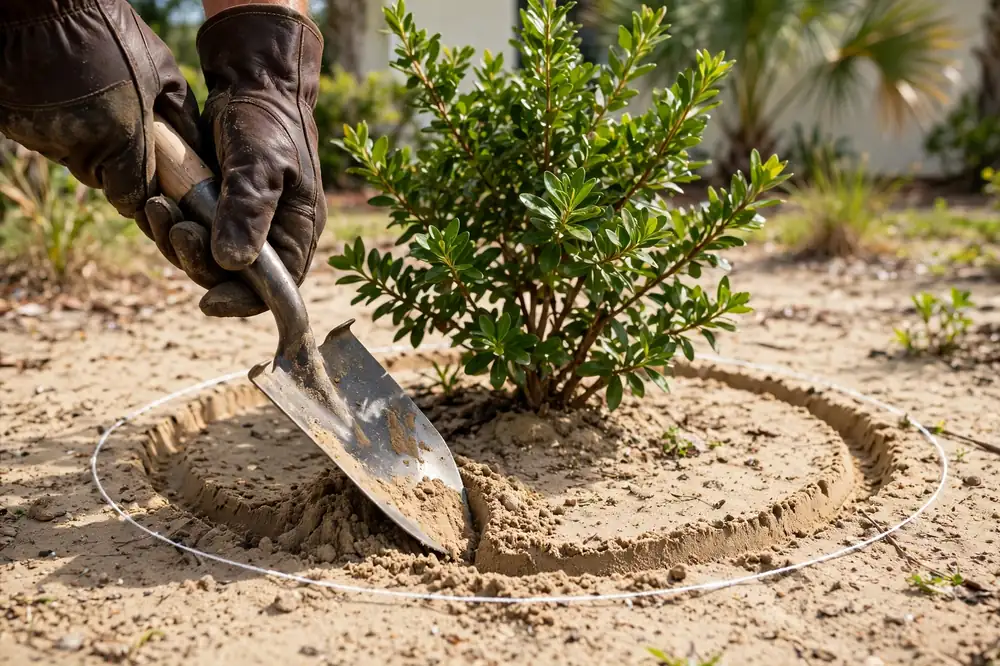
If you know months ahead that a shrub must move, root prune three to six months before the move. Cut the roots in a circle about 6 inches inside the planned root ball, then fill the cut with soil and water it. The shrub grows new feeder roots close to the stem, so it keeps more roots when you dig it up. For shrubs in place for years, dig a trench 8 to 12 inches wide and 12 inches deep on the root ball line.
Dig the New Hole First
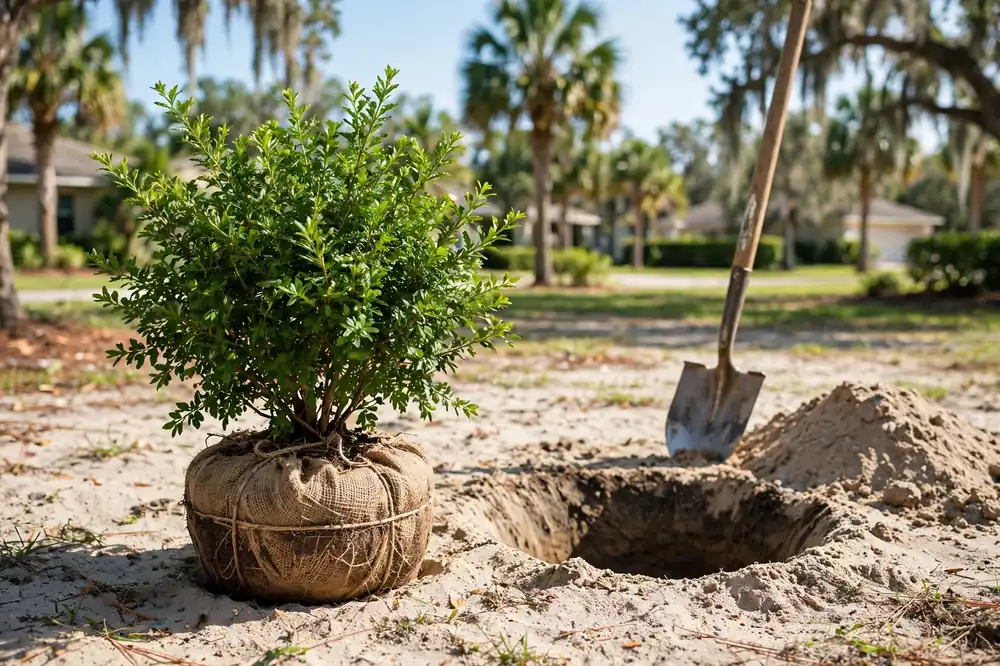
Dig the new hole before you touch the shrub, so the plant goes straight from the ground into its new home. UF/IFAS Extension says to dig the hole at least one and a half to two times as wide as the root ball, and about 90 percent as deep as the root ball is tall. Keep the top of the root ball 1 to 2 inches above the ground, since planting too deep starves roots of air. Old planting advice says it well: plant them high and they will not die, plant them low and they will not grow. Break up the sides of the hole so roots can push into the native soil, and do not add fertilizer.
How to Dig Up the Shrub
Tie the branches together loosely with twine so they do not snap while you work. Mark a circle at the root ball size you planned, using string or a garden hose. Cut straight down around the circle with a sharp spade, then dig a trench just outside that line, cutting roots cleanly as you meet them.
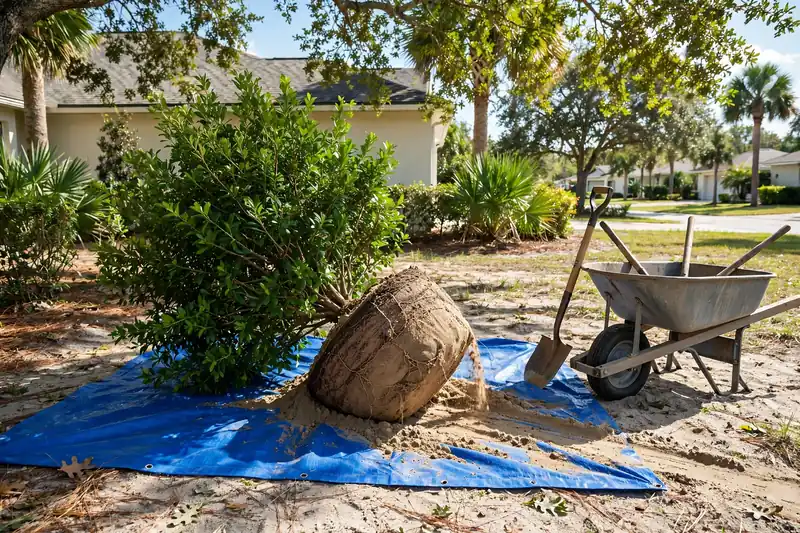
Slide the spade under the root ball and cut the roots underneath, then lean the shrub to one side and slide a tarp or burlap under it. Carry the shrub on the tarp or in a wheelbarrow, and never drag it by its branches. If the plant is a palm, stop here: palms follow different rules, as our guide on how to plant a palm tree explains.
Set the Shrub at the Right Depth
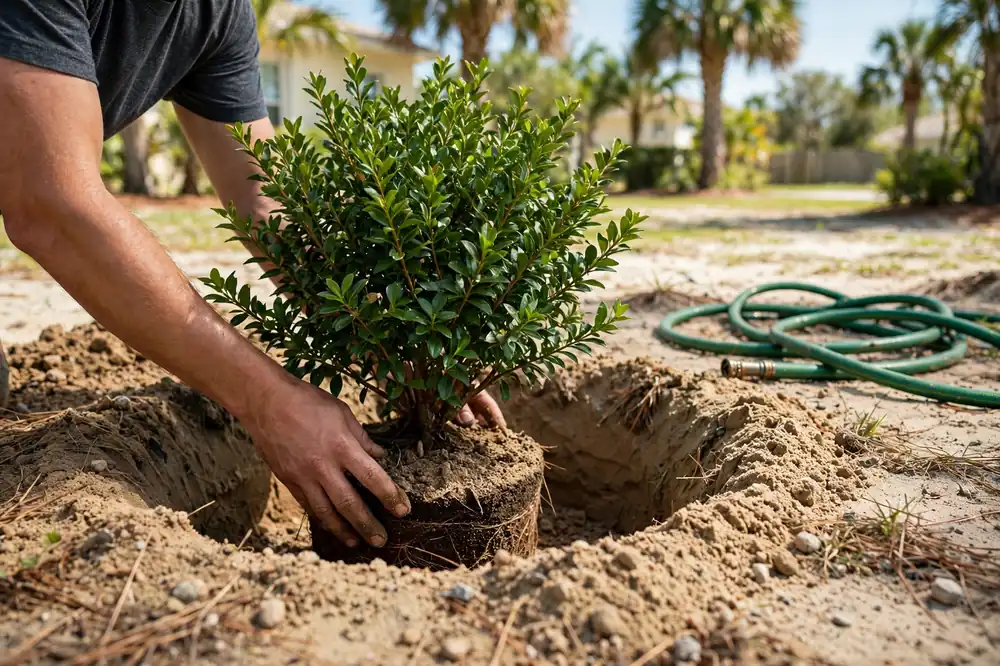
Lower the shrub into the hole and check the depth before you fill anything in. The top of the root ball should sit 1 to 2 inches above the ground, with the root flare visible above the soil line. Turn the shrub so its best side faces the view you see most, then remove the burlap from under the root ball. Fill with the soil you dug out, a few inches at a time, and water as you fill so the soil settles around the roots.
Water and Mulch After the Move
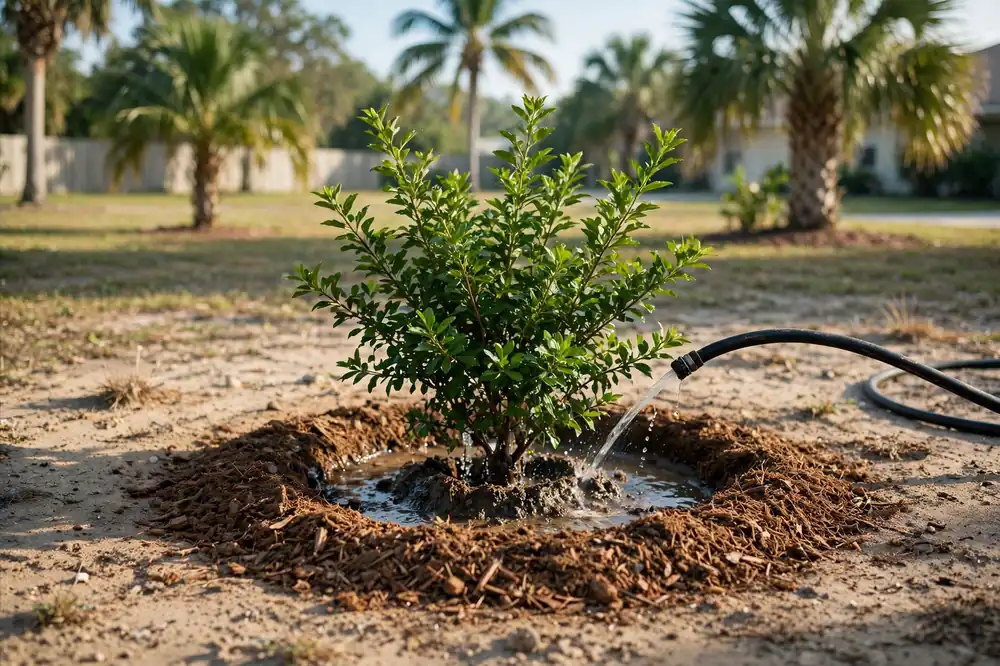
Water the shrub well the moment it is in the ground, directly on top of the root ball and the soil a few inches around it. UF/IFAS guidance for Central and South Florida says a shrub from a 3-gallon pot needs water about every four days to establish, and about every two days for faster growth. Skip watering when the root ball already feels wet, since soggy soil starves roots of air.
Spread a 2 to 3 inch layer of mulch around the shrub, but keep it a few inches away from the stem. Mulch holds moisture, keeps the soil cooler, and blocks weeds. Our guide on how long mulch lasts covers the common types used in Florida yards.
What Transplant Shock Looks Like
Some wilting and leaf drop after a move is normal. The shrub lost roots in the dig, and the roots left behind cannot pull in as much water as the leaves demand. UF/IFAS figures put shrub establishment at about 5 to 7 months in Florida, or about 20 to 28 weeks. Keep watering on schedule even after the shrub looks better, since new leaves alone do not mean the roots have recovered.
Do not fertilize a moved shrub right away. Wait at least four to six weeks, and only feed once you see new growth. If your shrub is a hedge plant and the browning spreads, read our guide on why a hedge turns brown to sort out the cause.
Mistakes That Kill a Moved Shrub
Most failed transplants trace back to a short list of errors.
| Mistake | What goes wrong | Do this instead |
|---|---|---|
| Moving in summer heat | Roots cannot keep up with water loss from leaves | Move between November and April |
| Planting too deep | Roots lose air and the stem rots | Keep the root ball 1 to 2 inches above grade |
| Letting roots dry out | Fine feeder roots die fast in sun and wind | Wrap the root ball and replant the same day |
| Taking too small a root ball | The shrub keeps too few roots to support its top growth | Take a root ball about two thirds as wide as the shrub |
| Watering on a fixed schedule | Soggy soil starves roots of air | Check the root ball and skip watering when it is wet |
| Fertilizing right away | New leaves outgrow what damaged roots can feed | Wait four to six weeks until new growth shows |
Transplanting Shrubs in Palm Coast
Palm Coast yards add a few local twists. Our sandy soil drains fast, so a moved shrub dries out sooner than it would in heavier soil, and you should check the root ball by hand. Summer storms can topple a newly moved shrub, so stake it loosely if a storm is forecast in the first few weeks. Flagler County winters are mild, so a shrub moved in late fall has months of cool weather to grow roots before summer heat arrives.
Moving a shrub takes patience, but the steps are simple: pick the right season, take a wide root ball, plant high, and water on a steady schedule. A shrub that survives its first Florida summer in the new spot is usually home for good.
If the shrub is large, old, or close to a house, fence, or buried line, the move may need more hands and equipment than a weekend job allows. Our landscape installation team moves shrubs, trees, and full beds across Palm Coast, Flagler Beach, Bunnell, Ormond Beach, and St. Augustine. Call Dreamscapes Florida at (386) 237-2983 or reach us through our contact page and we will help you plan the move.
Frequently Asked Questions
Move shrubs in Florida between November and February, when cooler air cuts water demand and roots can settle before summer heat. Early spring, from February through April, is the next best window. Avoid hot, dry summer months, since a shrub moved then must rebuild roots while the sun pulls water from its leaves all day.
Take a root ball about two thirds as wide as the spread of the shrub. A 3-foot shrub needs a root ball about 2 feet across. UF/IFAS guidance says root balls under 20 inches wide should be at least 65 percent as deep as they are wide. A bigger root ball keeps more roots, so the shrub settles faster.
Water the bush deeply two days before the move and dig the new hole first, so the plant spends little time out of the ground. Tie the branches up, cut a wide root ball with a sharp spade, and wrap it in burlap. Replant the same day at the same depth, then water well.
Expect wilting and leaf drop in the first few weeks after the move. That is normal while the shrub rebuilds roots. UF/IFAS figures put shrub establishment at about 5 to 7 months in Florida, or about 20 to 28 weeks. Keep watering on schedule after the shrub looks better, since new leaves alone do not mean the roots have recovered.
Trim and tie the branches so they do not snap while you dig, but do not cut the shrub back hard. Keeping the leaves helps the plant make food for new roots. If you have three to six months, root prune instead: cut the roots in a circle inside the root ball so feeder roots grow close to the stem.
Water the shrub well right after planting, then follow the UF/IFAS schedule for Central and South Florida: about every four days for a shrub near 3-gallon size while it establishes, and about every two days for faster growth. Water directly on the root ball and skip watering when it already feels wet, since soggy soil starves roots of air.