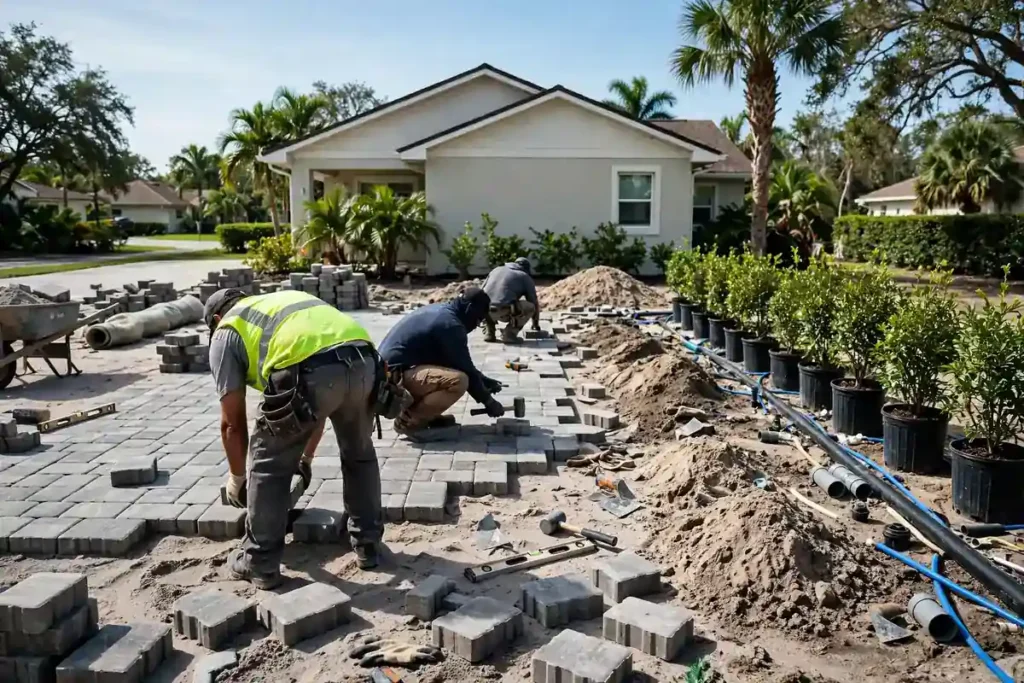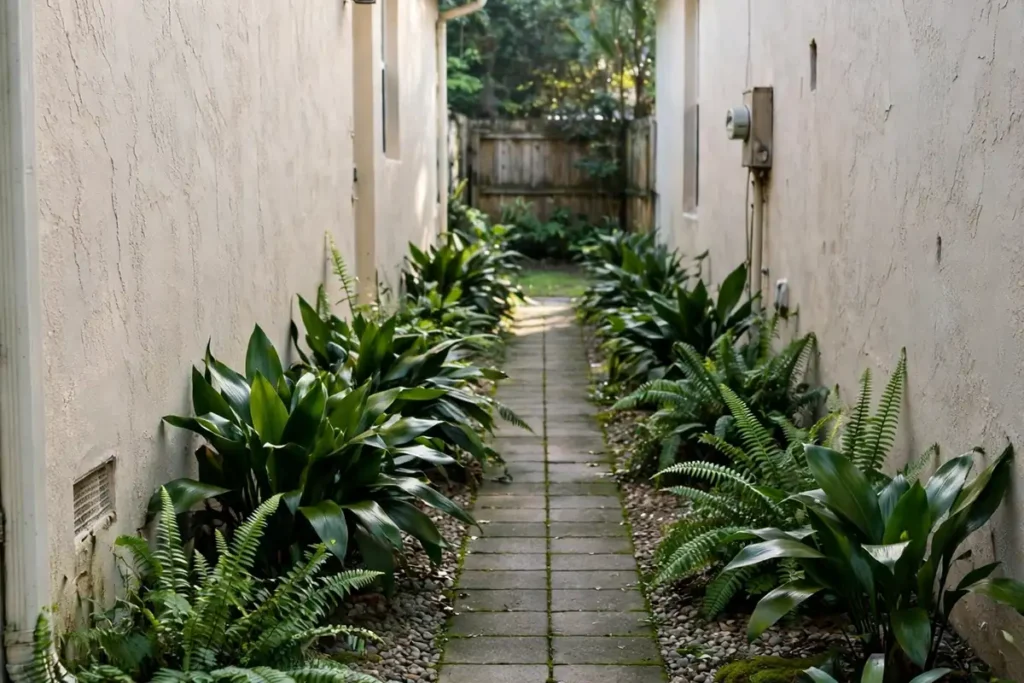
The best side yard landscaping ideas are a simple path, shade-tolerant plants or ground cover in place of grass, a small garden bed, and drainage that keeps water moving. A paver, stepping stone, or gravel path gives you a clean way through. Plants that love shade fill the bare strip. A bed adds color. Good drainage keeps it dry.
Side yards in Palm Coast are hard to love. Homes sit close together, so one side may get almost no direct sun. Summer storms dump water fast, and the sandy soil washes out. The strip turns muddy, bare, or both. We see these same problems on Flagler County lots every week, and the fixes below work with them, not against them.
Start Here: The 4 Problems in Most Florida Side Yards
Before you pick plants or pavers, name the problem. Most Florida side yards share the same four issues. Each one shapes what you should build.
| Problem | What it looks like | What it means for your design |
|---|---|---|
| Shade from close houses | One side stays dark most of the day | Plant shade lovers here. Skip grass. |
| Water runoff and side swales | Storm water runs down the strip | Keep the flow line open. Never dam it. |
| Bare soil where grass will not grow | Thin patches turn to mud after rain | Use ground cover, mulch, or gravel. |
| Foot traffic and access | You walk here with cans and mowers | Build a path wide enough to use. |
Walk your side yard after a summer storm. You will see where water runs, where it pools, and which spots stay dark. That short walk tells you more than any plant list. Build for what you see, and the strip will stay neat with less work.
This article stays on the strip itself. For planting along a fence, see our fence line landscaping ideas.
The rest of this guide follows that order: path, plants, garden, drainage, budget, and water.
Side Yard Path Ideas
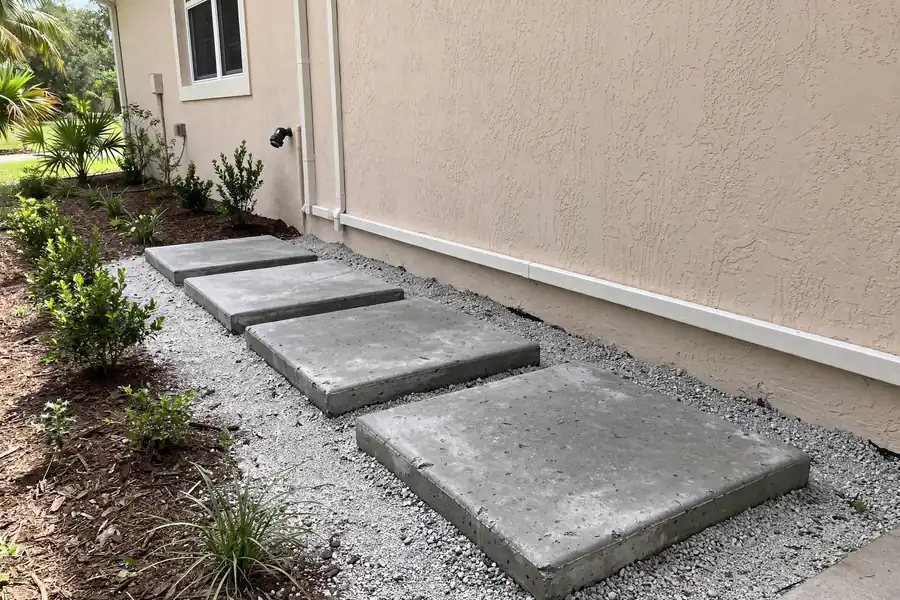
A path turns a side yard from a muddy shortcut into a space you can use. It keeps feet and wheels off wet soil. It also marks the route, so plants and beds stay clear.
Pavers make a firm, level path. They suit the main route to the back gate. Lay them tight, with a slight slope away from the house, so water sheets off instead of pooling near the wall.
Stepping stones set in gravel cost less and drain well. Space them for a normal stride. Fill the gaps with pea gravel so weeds stay down and water sinks through. For more on this material, see our guide to pea gravel landscaping.
A full pea gravel path is the simplest option. It drains fast in summer storms. Edge it with steel or stone edging so gravel stays in place and does not drift into beds. For more path styles, see our garden pathway and walkway designs.
Flagstone gives a natural look. Wide, flat pieces sit well in sand. Set them level so mower wheels and trash cans roll smooth.
Aim for about 3 feet of clear width. That fits a trash can and a mower with room to spare. Measure gates and the tightest spot before you build, so the path does not pinch.
Keep paths permeable or sloped. A solid path that dams water will push runoff toward the house or the neighbor. Gravel, spaced stones, and sloped pavers all let water keep moving.
Edge gravel paths well. Steel edging stays neat and holds a straight line. Stone edging looks softer and suits cottage-style homes. Check edging after big storms, since sandy soil shifts. A quick rake levels gravel after heavy rain and keeps the path smooth.
Plants That Grow in a Narrow, Shady Side Yard
Grass thins out in side yards for three plain reasons. Shade starves it. Feet wear it down. Runoff drowns it or dries it out. You can fight that cycle, or you can plant what already likes the spot.
Cast iron plant takes deep shade and asks for little. Its tough leaves hold up near walls and foot traffic. Coontie is a Florida native with a palm-like look, and it handles shade and sandy soil well. Holly fern gives soft fronds and likes damp shade. Liriope forms grass-like clumps that edge a path well, with small flower spikes in season. Mondo grass stays low and fills gaps as ground cover. Firespike suits part shade and adds red blooms that draw hummingbirds.
Keep plants 18 to 24 inches off the house wall. That gap lets air move, keeps walls dry, and leaves room for paint and repairs. It also stops wet leaves and roots from sitting against stucco.
Mix heights for a full look. Put low ground cover in front and taller shrubs behind. That mix looks neat from the street and the back gate. Water new plants well until roots take hold. After that, most of these picks need little care beyond mulch and a yearly trim. For more shade plant ideas, see our shade garden guide.
Turn the Side Yard Into a Small Garden
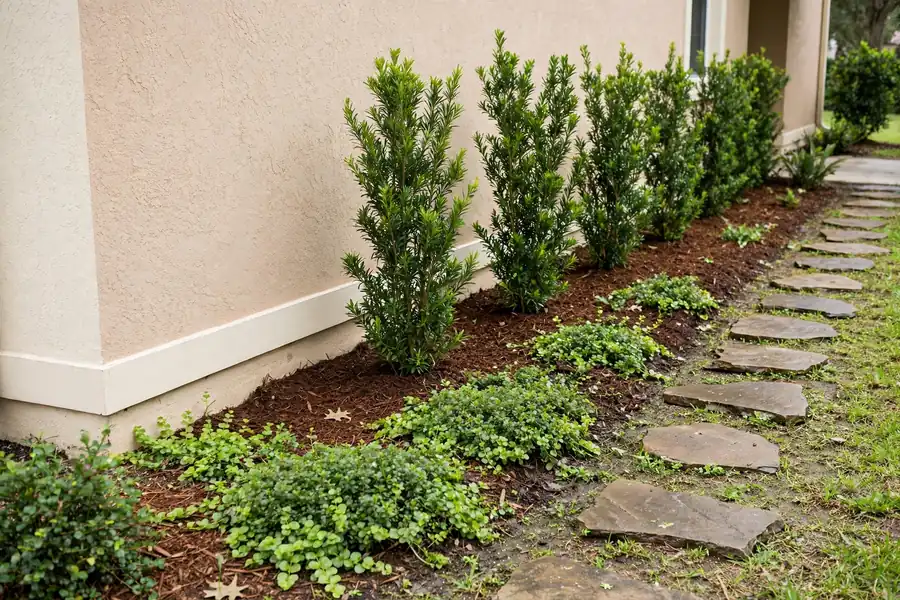
Choose the sunnier side for the bed. A narrow raised bed or an in-ground bed both work. Raised beds warm fast and drain well in sandy soil. In-ground beds cost less and suit long strips.
Layer the planting. Low ground cover goes in front. Upright shrubs go behind. That mix looks full from the street and the back gate, and it hides bare soil fast.
Set containers on gravel where the bed cannot fit. Pots let you grow herbs and color in the tightest spots. Gravel under pots drains fast and stops mud from splashing the wall.
If the strip gets 6 or more hours of sun, try a small herb or butterfly strip. Herbs like basil and rosemary love sun and heat. Butterfly plants draw color and life to a strip you once ignored.
Keep beds out of the swale flow line. Water must pass, even in a storm. Top beds with 2 to 3 inches of mulch. Mulch holds moisture, cools roots, and keeps weeds down. To plan upkeep, see how long mulch lasts.
Work With the Swale, Not Against It
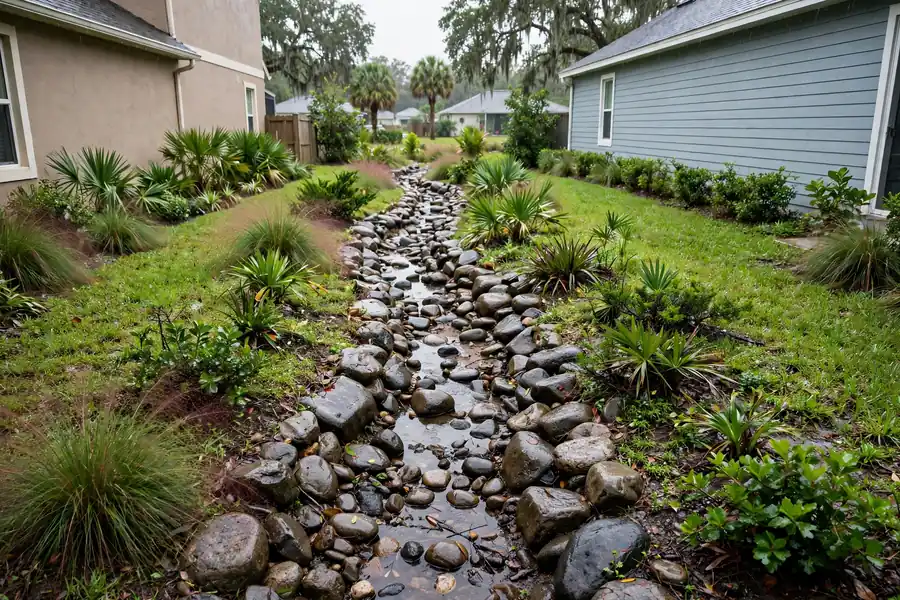
In Palm Coast, a side yard swale is a shallow dip that carries storm water between homes. It moves water away from houses and toward the street or a drain. Most lots share one with a neighbor, so what you build here affects more than your own yard.
The City of Palm Coast says no major swale changes should be made without city approval, so drainage for neighbors is not disrupted. Homeowners may remove obstructions or high spots that block water flow. See the City of Palm Coast Swale FAQs for the full guidance.
Work with the low line. A dry creek bed of river rock follows the swale and looks planned, not messy. River rock slows water without stopping it. Keep beds, borders, and edging out of the flow path. A border across the swale will dam water and flood the strip or the neighbor. For the creek bed itself, see our dry creek bed landscaping ideas.
If the strip stays muddy after storms, the fix starts with flow, not plants. See our guide to fix a muddy backyard for steps that apply here too.
Low-Budget Side Yard Ideas
You can fix a side yard for little money. Start with what matters most: a dry path and covered soil.
- Mulch and stepping stones: cover bare soil and step dry.
- Gravel with a few containers: instant color and fast drainage.
- A strip of tough ground cover: liriope or mondo grass fills in with time.
- Reused pavers or edging: leftovers from other projects edge beds and paths.
Do the path first. Add plants next. Finish with mulch. That order gives you a clean strip at each step, even if you pause between steps.
Buy plants small. Young plants cost less and catch up fast in Florida heat with steady water. Split one bag of mulch across the worst bare patch first, then cover the rest as budget allows.
Start small and add on. A path this month and plants next month still beat a bare strip all year. Small steps keep the project fun and the yard neat.
Water the Side Yard the Smart Way
Spray heads waste water in narrow spaces. They hit walls and windows. Wind blows the spray off target. The strip stays wet in the wrong spots and dry in the right ones.
Drip lines fix that. Run drip tubing under mulch for beds. Water goes to roots, not walls. Zones stay small, so each bed gets what it needs. For setup steps, see our guide to a drip irrigation system.
Run drip in the morning. Check emitters once a season for clogs from sand. Cap lines you do not use.
Side Yard Makeovers in Palm Coast
Dreamscapes Florida designs and builds side yards that drain, look clean, and are easy to walk through. We have served Palm Coast since 2015, and we know these narrow Flagler County lots well.
We build paths, shade beds, garden strips, and swale-friendly drainage for homes in Palm Coast, Flagler Beach, Bunnell, Ormond Beach, and St. Augustine. See our landscape design and irrigation services, or call (386) 237-2983 for a free estimate.
Frequently Asked Questions
A path of pavers or stepping stones, shade-tolerant plants or ground cover, and gravel or mulch where grass will not grow. Add a screen for bins and keep the route wide enough to walk and wheel a trash can. Leave the drainage line open so water keeps moving. A bed or containers add color without crowding the strip.
Spread mulch or gravel, lay stepping stones, and add a few tough plants like liriope or mondo grass. That covers bare soil, gives you a dry path, and costs less than pavers or a full bed. Cost depends on the size of the strip and the materials you pick. Reuse pavers or edging from other projects to cut costs.
Yes. Use a bed or containers on the sunnier side of the house. Pick plants for the light the strip gets. Herbs and butterfly plants need 6 or more hours of sun. Keep beds out of the drainage path so water can pass. Mulch 2 to 3 inches to hold moisture and cut weeds.
Shade from close homes, foot traffic, and runoff all work against grass. One side may get almost no direct sun, and feet wear thin spots bare. Storm water can drown roots or wash soil away. Ground cover, mulch, or gravel suits these strips better. Shade plants like liriope and mondo grass fill the space and need less care.
Only if they do not block water flow. A swale carries water between homes, so anything that dams it can flood your yard or a neighbor. The City of Palm Coast says no major swale changes should be made without city approval. Homeowners may remove obstructions or high spots that block flow. River rock along the low line is safer.
Cast iron plant, coontie, holly fern, liriope, and mondo grass all grow in Florida shade. They handle sandy soil and humid summers with little care. Firespike suits part shade and adds red blooms. Keep plants 18 to 24 inches off the house wall so air moves and walls stay dry. Group low cover in front and taller shrubs behind.