Landscape construction is the building phase of an outdoor project. It turns a landscape design into a finished yard. Crews grade the ground, fix drainage, build hardscape such as patios and retaining walls, run irrigation and lighting lines, then plant trees, shrubs, and sod.
Design is the plan. Construction is the build. Maintenance is the upkeep that follows. If you are planning a new yard in Palm Coast or Flagler County, it helps to know what landscape construction includes, how it differs from regular landscaping, and what happens at each step. This guide walks through the process in the order the work actually happens, including the Florida steps many homeowners do not expect.
Landscape Construction vs Landscaping vs Maintenance
People use the words landscaping and landscape construction as if they mean the same thing. They do not. Landscaping is the broad term for all outdoor work. Landscape construction is one part of it: the building part. Maintenance is the care that keeps the finished yard looking good. The table below shows how the three differ.
| Phase | What it includes | When it happens | Who does it |
|---|---|---|---|
| Landscape construction | Building and installing: grading, drainage, patios, walls, irrigation, lighting, planting | After the design is approved, before the yard is finished | A landscape construction company or contractor crew |
| Landscaping (general term) | Any outdoor work, from design to planting to mowing | Any stage of a yard’s life | Homeowners, gardeners, or landscaping companies |
| Maintenance | Mowing, trimming, fertilizing, irrigation checks, seasonal cleanups | Ongoing, after construction ends | A lawn care or maintenance crew |
A project can include all three. You hire a designer for the plan, a construction crew for the build, and a maintenance crew for the care after. Knowing which phase you are in helps you hire the right help and ask the right questions. For a closer look at two often confused terms, see our guide to landscaping vs hardscaping.
Hard and Soft Landscape Construction
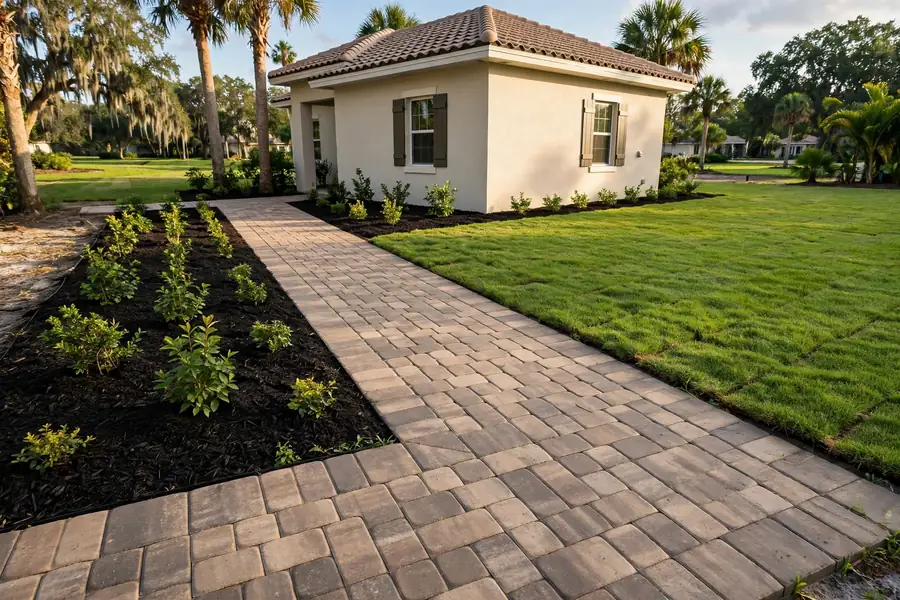
Every landscape construction project has two parts: hard and soft. The hard part is built from solid materials. It includes patios, walkways, retaining walls, borders, and drainage systems. The soft part is living. It includes soil prep, sod, trees, shrubs, planting beds, and mulch. Hardscape usually comes first because it shapes the yard. Softscape follows once the ground, drainage, and irrigation are ready.
The two parts work together. A patio needs beds around it to look finished. New plants need the drainage and irrigation that the hard phase puts in place. For a fuller look at both sides, read our guide to what is hardscape and softscape. One common question fits here: is landscaping considered construction? The answer is yes when the work involves building, grading, or structures. Planting a few shrubs is gardening. Building a retaining wall or regrading a yard is construction.
The Landscape Construction Process, Step by Step
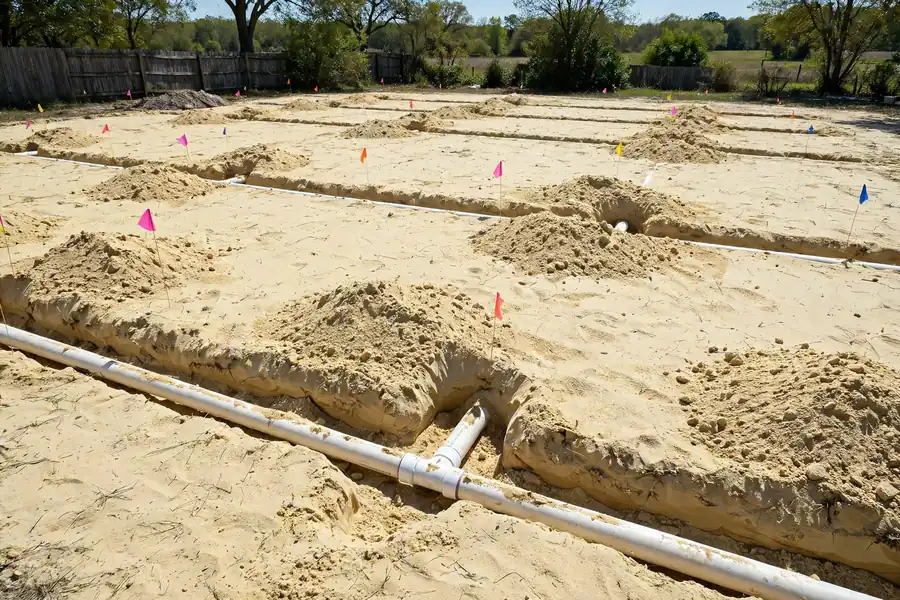
Most residential projects follow the same order. Steps may overlap, but the sequence matters. Irrigation goes in before planting. Hardscape goes in before sod. Here is how a typical project moves from first visit to final walkthrough.
- Consultation and site visit. We walk the property with you, talk about how you use the yard, and note sun, shade, drainage, and soil. This visit sets the scope for everything that follows.
- Design. The plan puts your ideas on paper: patios, beds, trees, irrigation zones, and lighting. You approve the layout and materials before any building starts.
- Permits and approvals. Some work needs city approval. Walls, structures, and drainage changes often do, while simple planting usually does not. We check what your project needs before work begins.
- Site prep. Crews clear the area, remove old plants or grass, and grade the ground so water drains away from the house. Drainage work happens here, not after planting.
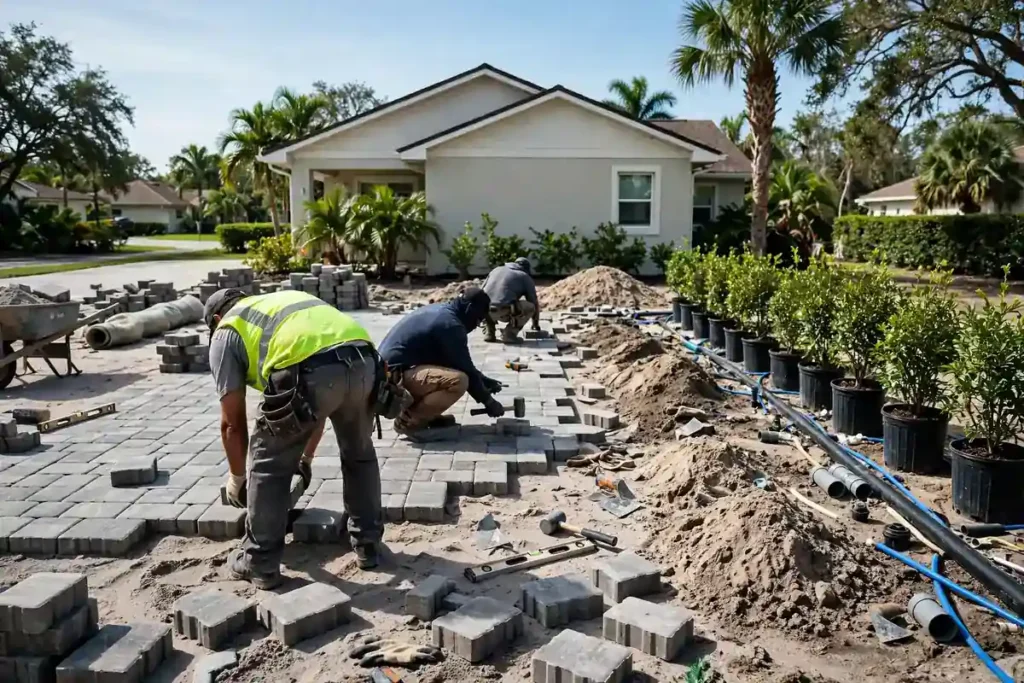
- Hardscape. Patios, walkways, retaining walls, and borders go in next. This is the heaviest work, so it happens while the yard is still open and easy to access.
- Irrigation and lighting lines. Pipes and wires go into trenches before any planting. This order protects the lines and keeps new plants from being dug up later.
- Soil prep and planting. Crews improve the soil, then plant trees, shrubs, and beds. Plants go in after the hard work is done so they are not damaged by equipment.
- Sod. Sod goes down near the end, once grading, hardscape, and irrigation are complete. Fresh sod roots fastest when the ground under it is finished and level.
- Final walkthrough and care plan. We walk the finished yard with you, check every detail, and hand you a care plan for watering and early maintenance.
Cost depends on size, materials, and scope. This guide does not price your project, but for a general sense of pricing, see how much landscaping costs.
What Makes Landscape Construction Different in Florida
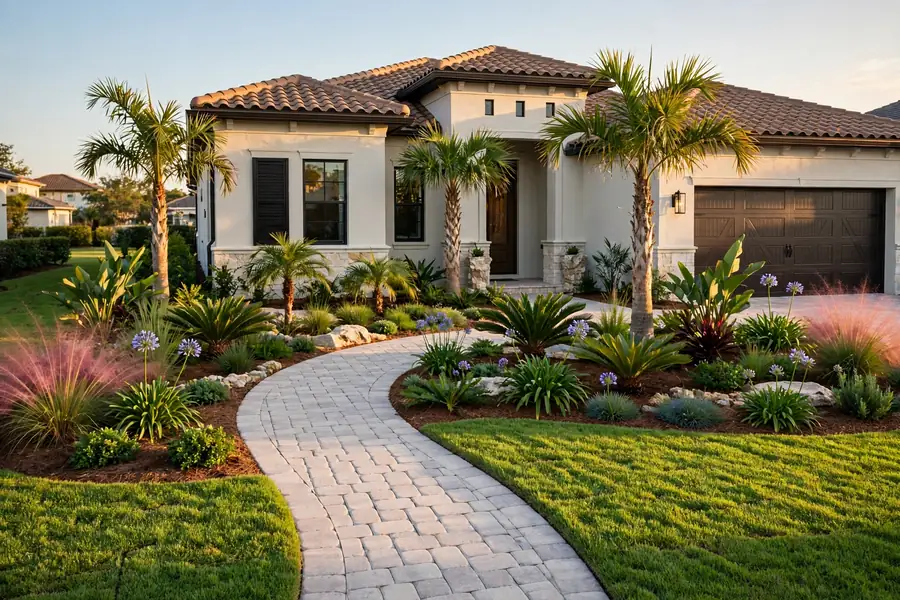
Florida yards add steps that homeowners in other states rarely face. Our sandy soil shifts and settles, so grading and compaction matter more here. A patio base that works up north can sink in Palm Coast sand if it is not built for it. Drainage needs extra care too. Many Palm Coast lots drain through side swales, and the City of Palm Coast says no major swale modifications should be made without city approval. Permit records also show stormwater review on wall permits, so walls and drainage changes can add a review step.
Irrigation order matters as well. Lines go in before planting, and new plants need steady water to root. Under St. Johns River Water Management District rules, new landscaping may be irrigated any day for the first 30 days, then every other day for the next 30 days. That establishment window is why timing your project around planting season helps. Salt air and summer storms shape material choices too. Fixtures, fasteners, and plant choices must hold up to coastal air and heavy rain. Building a new home? See our guide to landscape design for new construction homes for how the process works on a fresh lot.
Landscape construction combines hardscape, softscape, and systems such as irrigation, drainage, and lighting, as Yellowstone Landscape explains. In Palm Coast, the City swale FAQ and local watering restrictions shape how that work is done.
How Long Does a Landscape Construction Project Take?
Small projects move fast. A few new beds or a small planting job can take days. A full yard with a patio, walls, irrigation, and sod usually takes weeks. Permits add time when they are required, and weather can push a schedule too. Summer storms in Flagler County can pause grading or planting for a day or two. A written schedule from your contractor should show each phase and leave room for inspections. For local pricing context, see our guide to landscaping cost in Palm Coast.
How to Choose a Landscape Construction Company
Ask six questions before you hire. Is the company licensed and insured? Does it have local experience with Florida soil and drainage? Will you get a written scope that lists each phase and material? Does the plan include a drainage plan, not just plants and pavers? Is there a warranty on the work? Can it share references from nearby projects? A clear answer to each question is a good sign. Vague answers are a warning.
Local experience matters most in Palm Coast, where sandy soil and swale rules catch out-of-area crews by surprise. We have built landscapes here since 2015, and we plan drainage and irrigation around Flagler County conditions from the start. If you are weighing the DIY route, read our comparison of DIY vs professional landscaping before you decide.
Landscape Construction in Palm Coast
Dreamscapes Florida designs and builds complete landscapes, from grading and drainage to pavers, irrigation, sod, and plants. We have served Palm Coast since 2015, and we handle the full build, not just one part of it. Learn more about our landscape installation and landscape design services, or call (386) 237-2983 for a free estimate. We serve Palm Coast, Flagler Beach, Bunnell, Ormond Beach, and St. Augustine.
Frequently Asked Questions
Landscape construction is the building phase of a yard project. It turns a design into a finished outdoor space through grading and drainage, hardscape such as patios and walls, irrigation and lighting lines, and planting. It covers both man-made materials and living plants, and it ends with a finished yard ready for regular maintenance.
Yes, when the work involves building, grading, or installing systems. Building a patio, a retaining wall, or an irrigation system counts as construction. Routine work such as mowing, trimming, and fertilizing is maintenance, not construction. The difference is whether you are building something new or caring for what already exists.
Soft landscape construction is the living part of a build. It includes soil preparation, sod, trees, shrubs, ground cover, planting beds, and mulch. It comes after grading, drainage, and hardscape are in place, so new plants are not damaged by heavy work. Good soil prep is what helps softscape root and thrive.
Design is the plan, and construction is the build. A designer draws the layout, picks materials, and plans beds, patios, and irrigation zones. A construction crew then grades the ground, builds the hardscape, runs the lines, and plants the yard. You need the plan first, then the crew that builds it.
It depends on the work. Simple planting jobs usually do not need a permit. Walls, structures, and drainage changes often do, and Palm Coast reviews stormwater on some wall permits. Major swale changes need city approval. Check with the city or ask your contractor before work starts.
Irrigation comes first. Lines and heads go into trenches before trees, shrubs, and sod go in. This order keeps pipes safe from digging and lets crews test coverage before plants are in the way. Planting first would mean digging up new plants to run lines later.