Reviewed November 2026
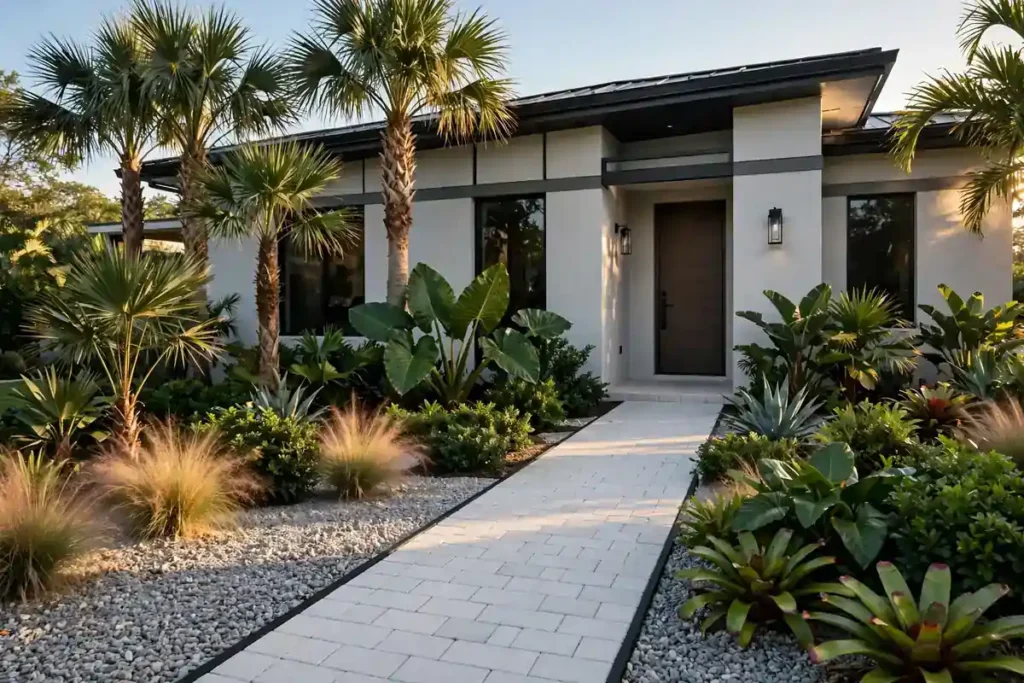
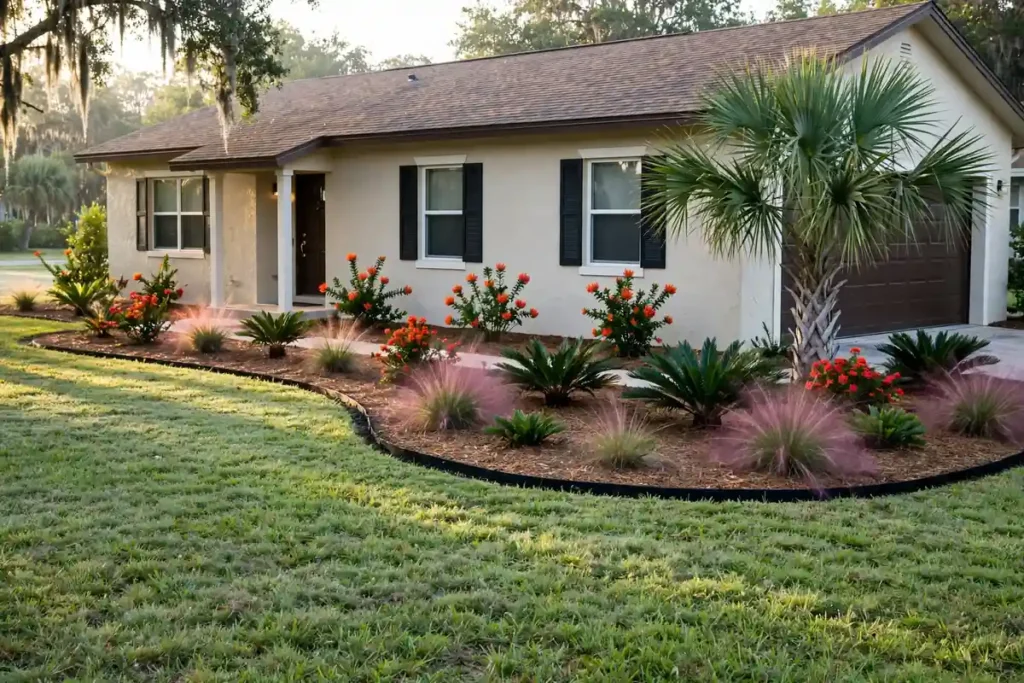
Florida-Friendly Landscaping is a UF/IFAS program built on nine science-based principles that help a yard use less water, fertilizer, and pesticide while still looking good. It includes lawns and non-native plants that fit the site, and it works for small yards, canal lots, and HOA neighborhoods alike.
Below, each principle comes with one Palm Coast step you can take this month.
What Is Florida-Friendly Landscaping?
Florida law defines it as quality landscapes that conserve water, protect the environment, adapt to local conditions, and stand up to drought. That definition comes from Florida Statutes section 373.185. The UF/IFAS program turns the law into practice. Its three goals are to conserve water, preserve natural resources, and reduce water pollution.
The program started under the name Florida Yards and Neighborhoods, and many homeowners still know it by that name. A Florida-Friendly yard can hold a lawn, flower beds, and non-native plants.
Three ideas about it are wrong.
- It is not natives only. UF/IFAS says native and non-native plants and turfgrass all fit, as long as they match site conditions.
- It is not no lawn. Turfgrass fits when it suits the site.
- It is not unkempt. UF/IFAS is clear that poorly kept, unkempt landscapes are not Florida-Friendly.
Read the principles in full in the UF/IFAS guide EP440.
The 9 Principles at a Glance
- Right plant, right place
- Water efficiently
- Fertilize appropriately
- Mulch
- Attract wildlife
- Manage yard pests responsibly
- Recycle yard waste
- Reduce stormwater runoff
- Protect the waterfront
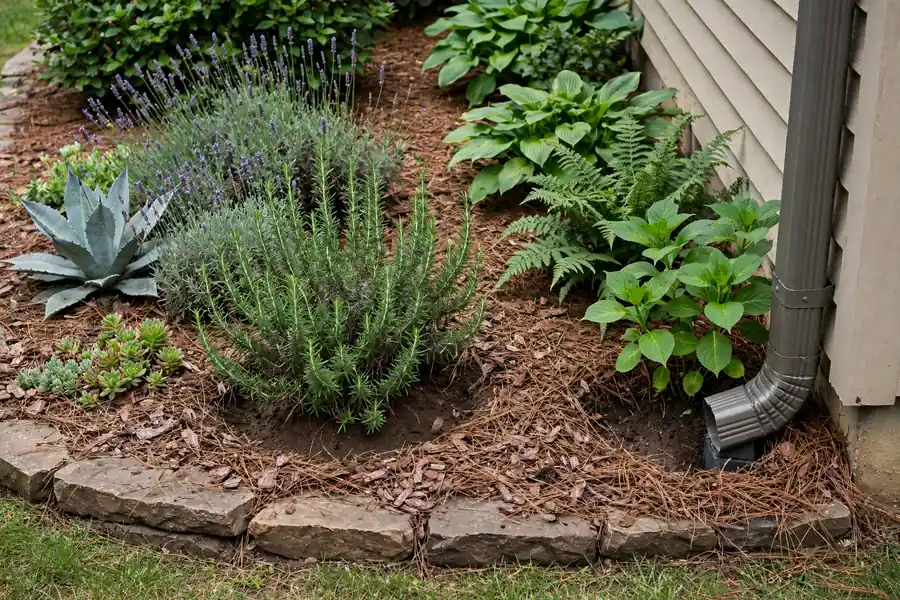
1. Right Plant, Right Place
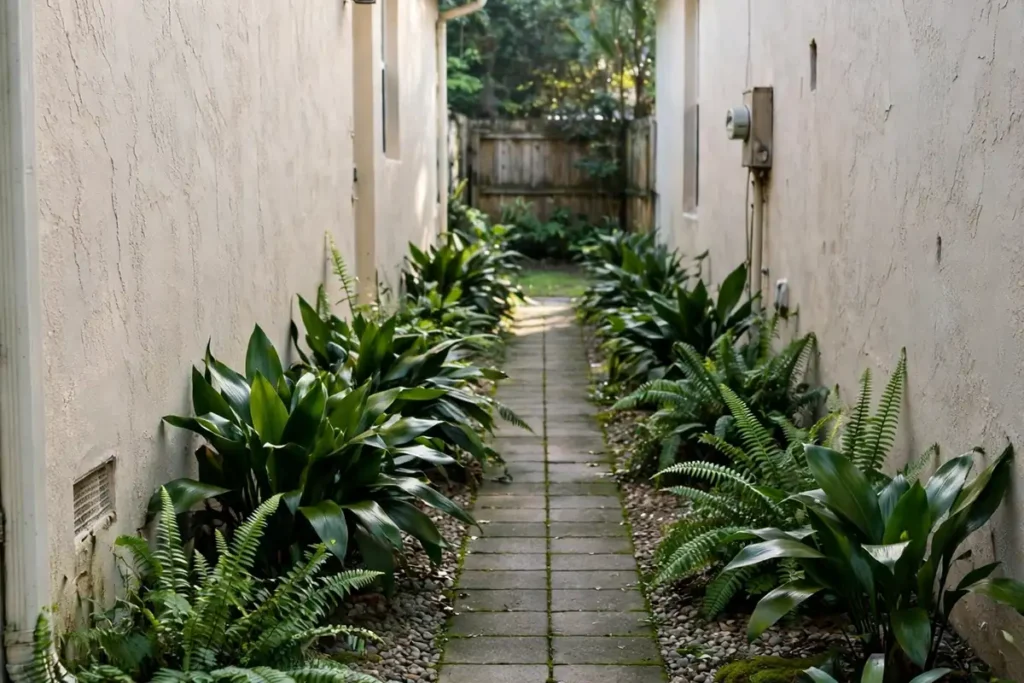
Right plant, right place means you match each plant to the sun, soil, salt, and size of its spot before you plant it. A plant in the wrong spot needs extra water and feed to survive. Palm Coast yards sit in Zone 9b on sandy soil, and salt rides in on the wind near Flagler Beach. Pick plants that already like those conditions.
Group plants with the same water need together, a habit called hydrozoning. Our guide to drought-tolerant landscaping shows how to group plants by water need in a Palm Coast yard, and our salt-tolerant plants guide covers the coastal edge. UF/IFAS puts it plainly in guide EP440. The right plant in the right place cuts the need for extra water, fertilizer, and pesticide from the start.
2. Water Efficiently
Water efficiently means you water only when the lawn shows stress, and you water early in the morning. Look for blades that fold and footprints that stay.
Palm Coast follows St. Johns River Water Management District (SJRWMD) rules. During daylight saving time, odd-numbered addresses water Wednesday and Saturday, and even-numbered addresses Thursday and Sunday. In winter it drops to one day a week, odd addresses Saturday and even addresses Sunday. Never water between 10 a.m. and 4 p.m., and keep it to one hour per zone.
SJRWMD also notes that healthy Florida lawns need no more than two days of water a week in the hot, dry season, and less when rain is steady. Our guide to how much water a lawn needs explains how deep to water, and our xeriscaping ideas show low-water design.
3. Fertilize Appropriately
Fertilize appropriately means you feed lightly and let a soil test decide before you add phosphorus. Slow-release nitrogen feeds the grass over weeks instead of one fast flush, so less of it washes away. Feed in the cool of the morning and water it in lightly, so granules reach the soil instead of sitting on blades. Many Northeast Florida counties, including neighboring Volusia, ban fertilizer with nitrogen or phosphorus from June 1 through September 30.
That blackout is not confirmed as Palm Coast or Flagler County law, so check your own ordinance first. Our Florida lawn fertilizer schedule lays out the month-by-month timing for Northeast Florida, including the summer window.
4. Mulch
Mulch holds soil moisture, blocks weeds, and feeds the soil as it breaks down. Spread 2 to 3 inches and pull it back from stems and trunks, since mulch piled against bark holds moisture and invites rot. Pine bark and pine straw both suit Palm Coast beds, and both break down into soil over time. In Palm Coast heat, bare soil dries out fast, so a covered bed is the cheapest way to cut watering.
Refresh thin spots each spring before the heat arrives. Our guides to how long mulch lasts and rock vs mulch compare types and help you pick the right cover for each bed.
5. Attract Wildlife
Attract wildlife by layering plants, so birds and pollinators find food and shelter at every height. Mix a small tree or tall shrub, mid-level shrubs, and low nectar plants like firebush, muhly grass, and coontie in one bed. Add a shallow dish of water and keep it fresh. A birdbath or a small fountain works too, and moving water stays fresh longer.
A yard that feeds wildlife needs fewer sprays, since birds and helpful insects eat the pests for you. UF/IFAS notes in guide EP440 that attracting wildlife is one of the nine principles, and a layered yard is how you do it.
6. Manage Yard Pests Responsibly
Manage yard pests responsibly by finding the pest before you treat anything. A brown patch, a chewed blade, and a thinning spot can look alike. Spot-treat only the damaged area, and accept a little damage while helpful insects and healthy grass catch up.
Heavy sprays kill the good bugs too, and the pests come back first. UF/IFAS lists managing yard pests responsibly as one of the nine principles, and its first step is always a correct ID. Our guides to chinch bugs, sod webworms and armyworms, and brown patch show how to spot each problem in St. Augustine grass before you reach for a product.
7. Recycle Yard Waste
Recycle yard waste by leaving grass clippings on the lawn and composting leaves and small trimmings. Clippings break down fast in Florida heat and feed the soil, so the lawn needs less fertilizer. A mower with a mulching blade chops clippings fine, so they vanish into the turf in a day or two.
Rake leaves into a compost pile, and use the finished compost to top up beds. Keep woody stems out of the pile unless you shred them first, since thick stems rot slowly. Our guide to composting grass clippings shows the simple setup that works in a Palm Coast yard.
8. Reduce Stormwater Runoff
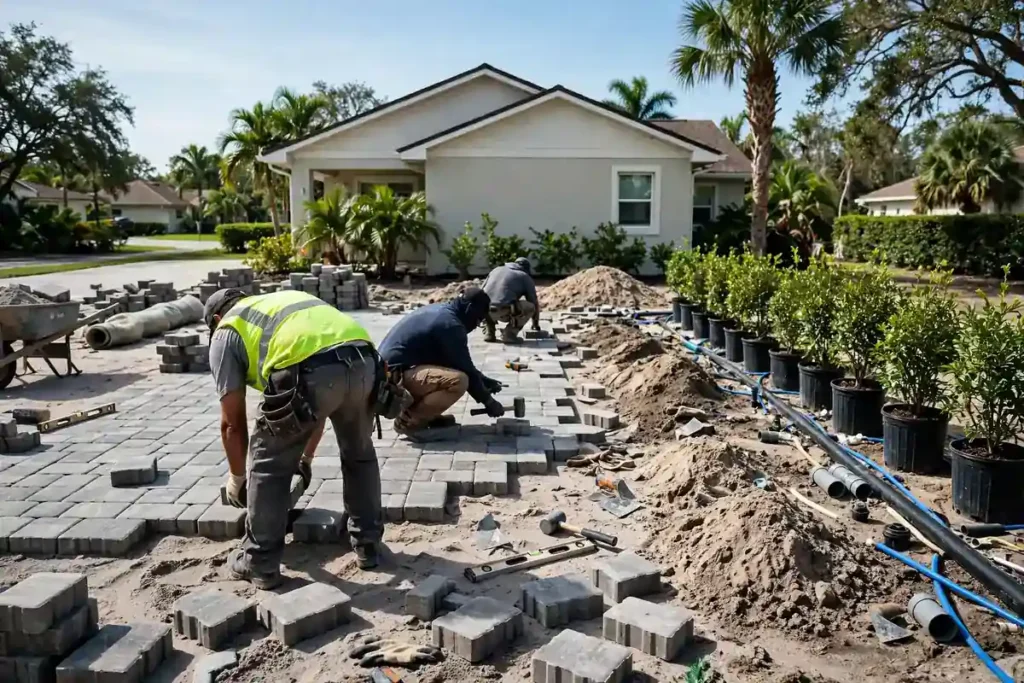
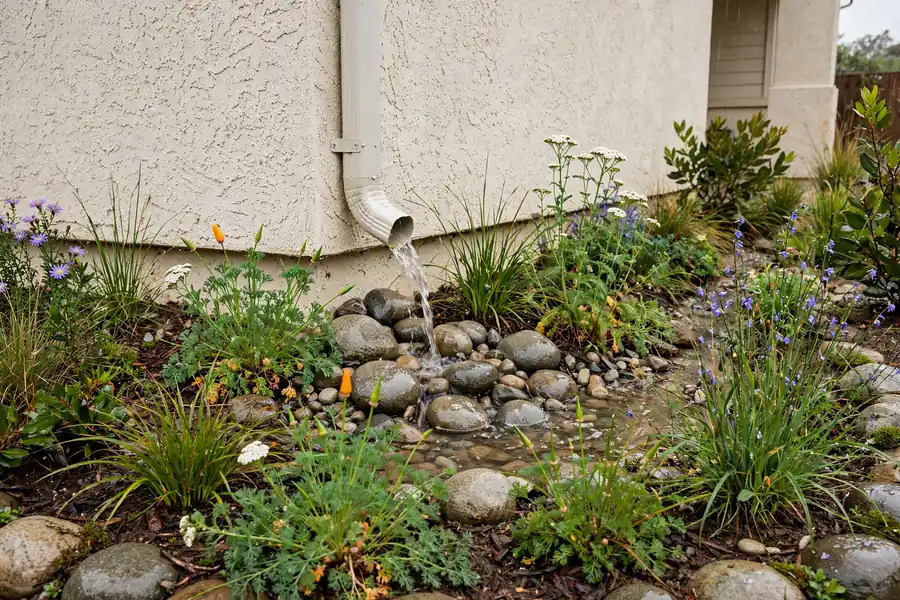
Reduce stormwater runoff by slowing rain down and letting it soak in where it falls. A rain garden holds roof water in a shallow planted basin, and permeable pavers let water pass through instead of running off. Point gutters into beds instead of onto the driveway.
Flagler County sits in the St. Johns River Lower Basin, so runoff from a Palm Coast yard flows toward the St. Johns River system. Our guide to building a rain garden shows the right size and depth for a Florida yard, and our permeable pavers guide covers patios and walkways that drain.
9. Protect the Waterfront
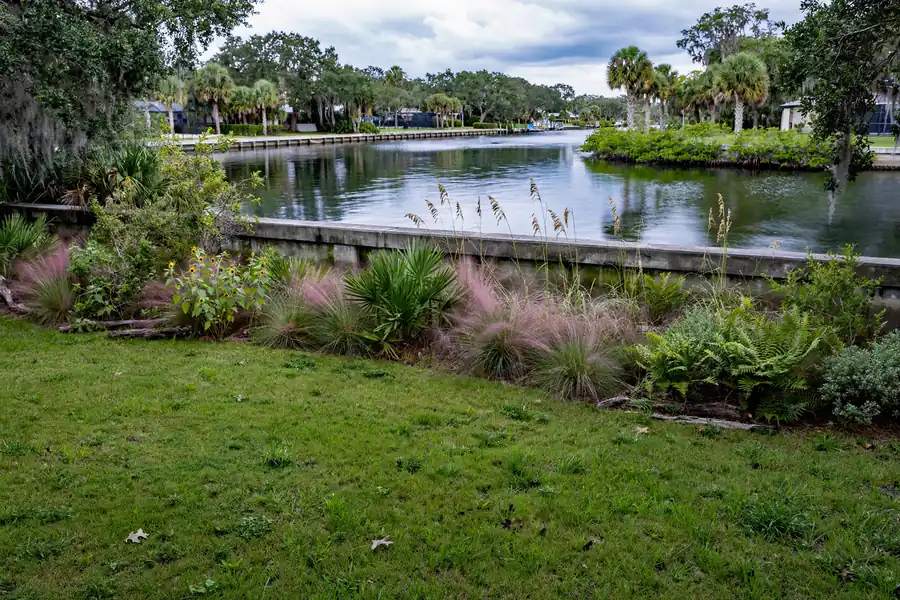
Protect the waterfront if your lot backs onto a canal or the Intracoastal. Keep a strip along the seawall or bank free of fertilizer, and plant native grasses and low shrubs between the lawn and the water. The buffer catches runoff, holds the bank in place, and keeps fertilizer out of the water.
Florida law defines this style of landscaping as quality landscapes that conserve water and protect the environment. A planted buffer is that idea in plain sight. Our waterfront landscaping guide shows the buffer widths and plants that suit canal lots in Palm Coast and Flagler County.
Is Florida-Friendly Landscaping Allowed in an HOA?
Florida law, in Florida Statutes section 720.3075, says HOA documents may not prohibit a homeowner from using Florida-Friendly landscaping, but your HOA can still require design review before you plant. Submit your plan first, and read our HOA landscaping violation guide for the steps if your yard is already flagged.
Start This Month With a Simple Florida-Friendly Checklist
Pick one row a week.
| Principle | One action this month | Read more |
|---|---|---|
| Right plant, right place | Move one struggling plant to a spot that fits its sun and soil | drought-tolerant landscaping |
| Water efficiently | Reset the timer to your SJRWMD days | how much water a lawn needs |
| Fertilize appropriately | Test the soil before you feed | Florida lawn fertilizer schedule |
| Mulch | Top up beds to 2 to 3 inches and pull mulch back from stems | how long mulch lasts |
| Attract wildlife | Add one nectar plant and a water dish | See Principle 5 above |
| Manage yard pests responsibly | Check the lawn weekly and spot-treat only what you can name | chinch bugs |
| Recycle yard waste | Leave clippings on the lawn and start a leaf compost pile | composting grass clippings |
| Reduce stormwater runoff | Point one downspout into a bed or a rain garden | rain garden |
| Protect the waterfront | Leave a no-fertilizer strip along the seawall | waterfront landscaping |
Florida-Friendly Landscape Design in Palm Coast
Dreamscapes Florida designs and installs Florida-Friendly yards across Palm Coast that fit HOA review, follow local watering days, and still look finished. We have built yards in Flagler County since 2015.
See our landscape design and landscape installation services, or ask for a free estimate to start. We also care for the yard after it goes in, with lawn maintenance that keeps beds and turf on schedule. Call Dreamscapes Florida at (386) 237-2983. We serve Palm Coast, Flagler Beach, Bunnell, Ormond Beach, and St. Augustine.
Frequently Asked Questions
A UF/IFAS program built on nine science-based principles that help a yard use less water, fertilizer, and pesticide. It includes lawns and non-native plants that suit the site, so it is not a natives-only or no-grass style. The goal is a yard that looks good and protects local waterways.
Right plant, right place. Water efficiently. Fertilize appropriately. Mulch. Attract wildlife. Manage yard pests responsibly. Recycle yard waste. Reduce stormwater runoff. And protect the waterfront. Each principle stands alone, and together they cover the whole yard from soil to shoreline in every season.
No. UF/IFAS says turfgrass fits a Florida-Friendly yard when it matches the site. Keep lawn where you walk and play, and plant beds where grass struggles in shade, salt, or wet soil. The aim is the right ground cover for each spot.
Florida law says HOA documents may not prohibit it, but your HOA can still require design review. Submit your plan first. A tidy, well-kept design passes review far more easily than a rough one. Our HOA violation guide explains the details.
Under SJRWMD rules, during daylight saving time odd-numbered addresses water Wednesday and Saturday, and even-numbered addresses Thursday and Sunday. In winter it drops to one day, odd addresses Saturday and even addresses Sunday. Never water between 10 a.m. and 4 p.m., and keep it to one hour per zone.
Pick one principle a month. Fix sprinkler timing first, then mulch the beds, leave grass clippings on the lawn, and replace plants that fight their spot with ones suited to sun, soil, and salt. Small steps add up, and a year from now the yard will use less water and less feed.