A rain garden is a shallow, planted low spot that catches runoff from roofs and paving and lets it soak into the ground. In Florida, place it at least 10 feet from the house and 25 feet from a septic tank or well, dig it 4 to 8 inches deep, and choose plants that handle both wet and dry spells.
We build rain gardens across Flagler County, and Palm Coast lots suit them well. Our sandy soil drains fast, but summer storms still send sheets of water off roofs and driveways. A rain garden gives that water a place to go, and it looks like a garden bed, not a drain.
What a Rain Garden Does
The University of Florida’s IFAS Extension describes a rain garden as a low section of the landscape planted with native or Florida-Friendly plants. It holds rainwater for a short time so the water can filter into the soil instead of running off. That means less puddling after a storm, less runoff headed for the street, and a bed that feeds birds and butterflies. It also needs less watering than a lawn once plants settle in, since it sits where water already collects. Read the UF/IFAS guide to rain gardens for the full background.
A rain garden is not a pond. It should drain within a day, and it should look like a planted bed with a shallow dip in the middle. If your whole yard stays wet for days, our guide to fix a muddy backyard covers the wider drainage fixes first.
Florida Rain Garden Rules of Thumb
Florida guidance from UF/IFAS puts the key numbers in one place. Keep this table handy while you plan.
| Item | Guideline | Source |
|---|---|---|
| Distance from the house | At least 10 feet | UF/IFAS Gardening Solutions |
| Distance from a septic tank or well | At least 25 feet | UF/IFAS Gardening Solutions |
| Sun and roots | Full sun, away from tree roots | UF/IFAS Extension Duval County |
| Depth | 4 to 8 inches; deeper gardens can breed mosquitoes | UF/IFAS Gardening Solutions |
| Percolation test | Water must soak in within 24 hours | UF/IFAS Rain Garden Manual (Hillsborough County) |
| Before digging | Call 811 (Sunshine State One Call) | UF/IFAS Rain Garden Manual (Hillsborough County) |
| Typical size | 100 to 300 square feet | UF/IFAS Rain Garden Manual (Hillsborough County) |
The rest of this guide walks through each step in order, from picking the spot to watering the new plants.
Step 1: Pick the Right Spot
Start where the water already goes. Watch your yard during a heavy rain, or right after one. The best spot sits downhill of the house, where a downspout empties or water already puddles, and where it can catch runoff from paving too.
Skip three places. Do not put a rain garden in a shared swale, over buried utilities, or right against the house. A shared swale moves water for the whole street, and Palm Coast says no major swale changes without city approval. See the City of Palm Coast swale FAQs, and our notes on a side yard swale for how swales work on Palm Coast lots.
If you are not sure whether your wet spot suits a rain garden, our guide to standing water in your yard can help you tell a drainage problem from a good garden site.
Step 2: Do a Simple Percolation Test
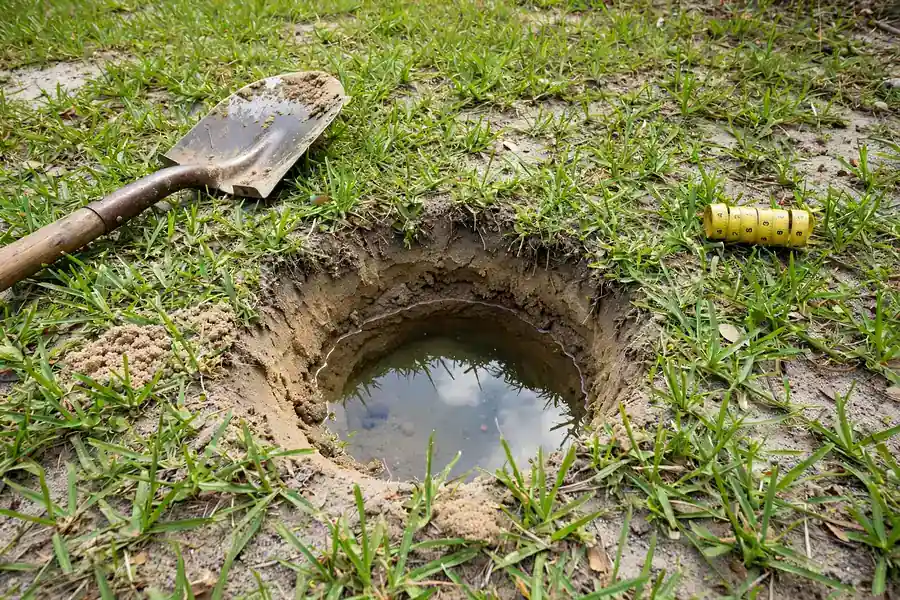
A rain garden only works if water soaks in. The Hillsborough County manual from UF/IFAS gives a simple test. Dig a hole about 6 inches deep in the spot you picked, and fill it with water.
Watch the clock. If the water soaks in within 24 hours, the spot can work. If it takes longer, the soil holds water too long, and that spot is not right for a rain garden. Try a higher spot, or look at a drain-based fix instead. The last section of this guide covers those options.
Step 3: Size It for Sandy Soil
Size starts with the drainage area. That is the roof or paved area that drains to one downspout. With four downspouts that split a roof evenly, each one takes about 25% of the roof.
Suppose one downspout drains 1,000 square feet of roof, and the garden will sit within 30 feet of that downspout at 6 to 7 inches deep. Multiply 1,000 by 0.15. The garden comes out to 150 square feet, right in the typical range.
| Garden depth | Size factor (within 30 feet of the downspout) | Size factor (farther than 30 feet) |
|---|---|---|
| 3 to 5 inches | 0.19 | 0.03 |
| 6 to 7 inches | 0.15 | 0.03 |
| 8 inches | 0.08 | 0.03 |
Multiply your drainage area by the factor for your depth. If the result runs over 300 square feet, split the work into two smaller gardens instead of one big one. Two small gardens also give you more planting options.
Step 4: Set the Depth by Slope
Slope sets the depth. A flat spot needs a shallow garden, and a steeper spot needs a deeper one to hold the same water. Measure the slope with a string and a level before you dig.
Drive a stake at the top of the slope and one at the bottom. Tie a string between them, level it, and measure how far the ground drops below the string. Divide the drop by the distance between the stakes. A drop of 1 foot over 25 feet is a 4% slope.
| Slope | Garden depth |
|---|---|
| Under 4% | 3 to 5 inches |
| 5 to 7% | 6 to 7 inches |
| 8 to 12% | 8 inches |
| Over 12% | Pick another site or call a pro |
If your slope runs over 12%, do not force a rain garden there. Pick a flatter spot, or call us for a drainage plan.
Step 5: Dig, Level, and Build the Berm
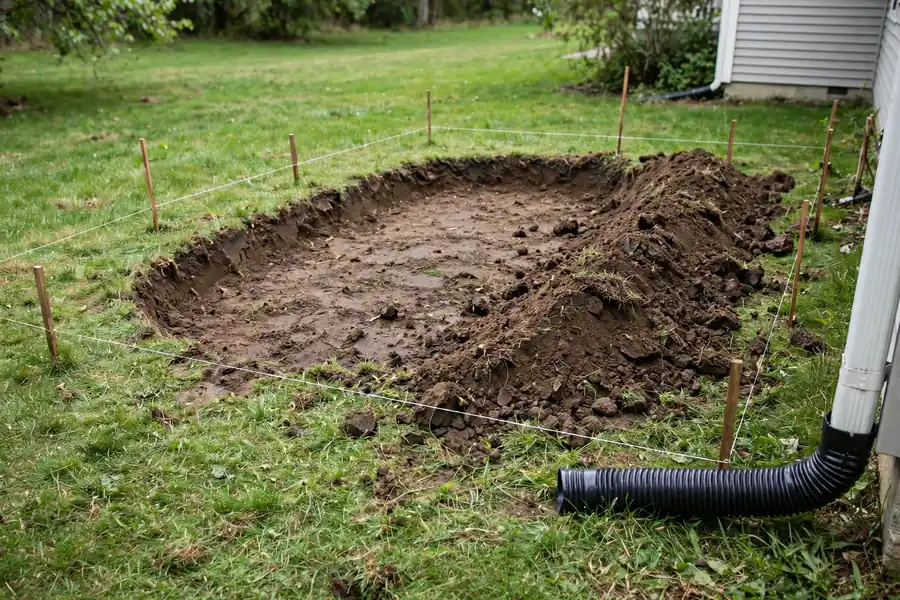
Call 811 before you dig. Sunshine State One Call marks buried lines so you do not hit a utility. Wait for the marks, then start.
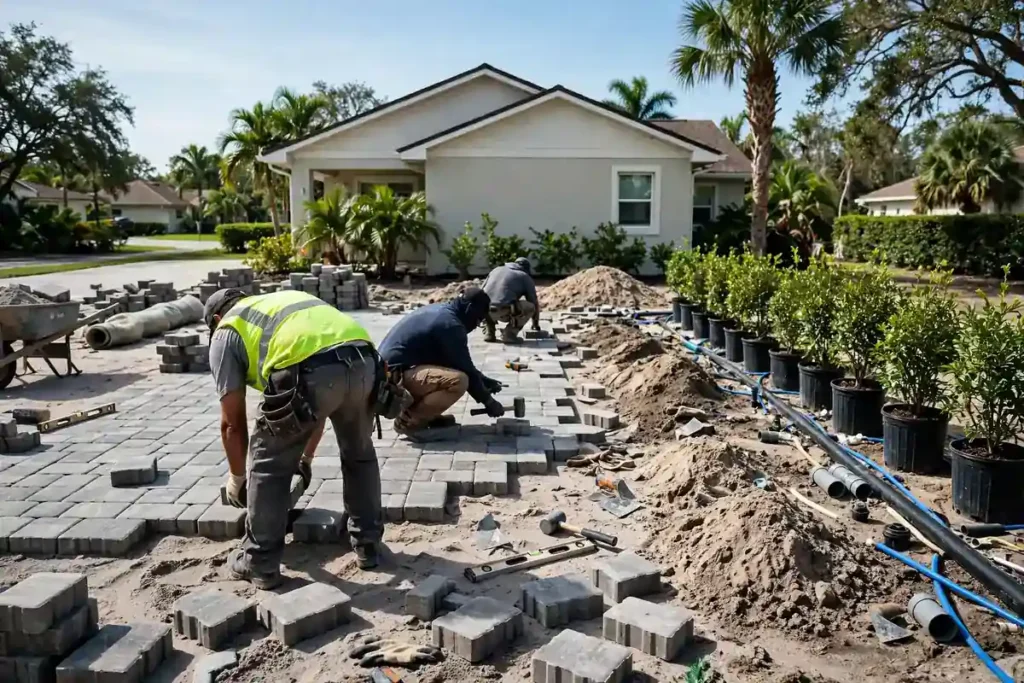
Dig from the uphill end toward the downhill end, and keep the bottom level. A level bottom spreads water evenly so one corner does not stay wet. Pile the soil you remove into a low berm on the downhill side. The berm holds water in the garden during a storm.
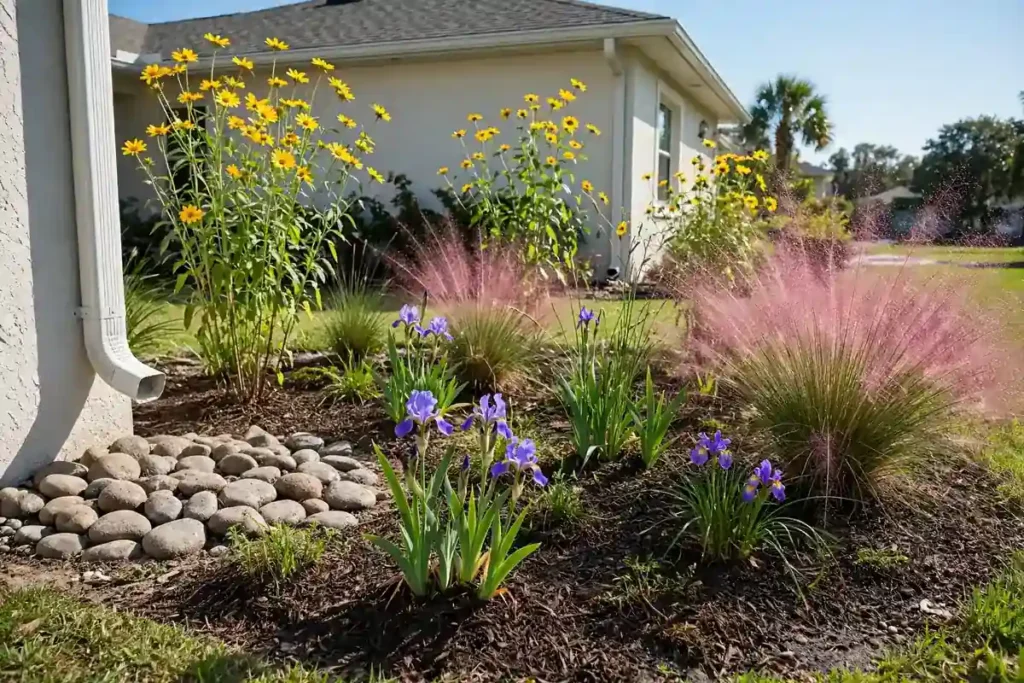
Finish the inlet with a rock splash pad where the downspout enters. The rocks slow the water so it does not carve a channel through your new bed. A short downspout extension can carry water to the pad if the downspout ends too far away.
Step 6: Plant in Zones
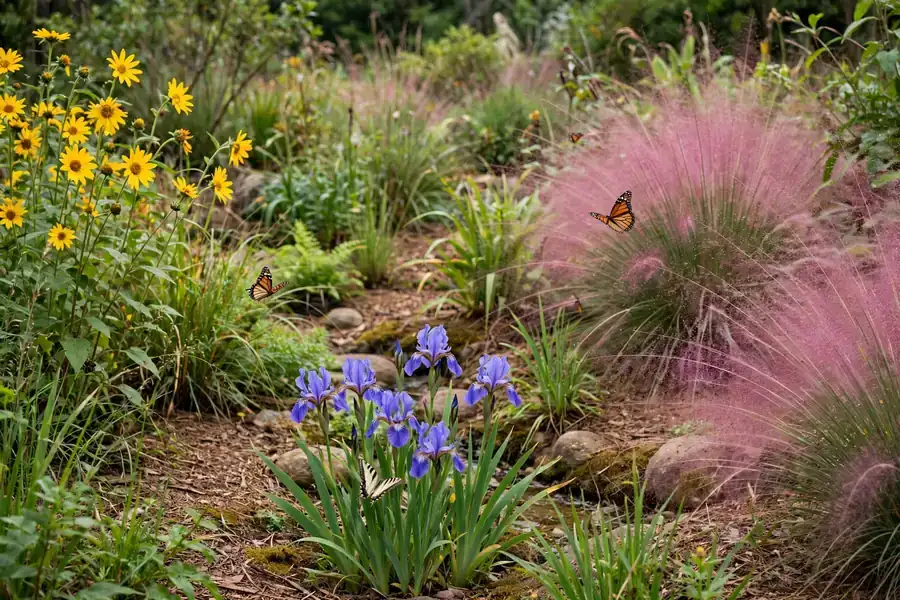
Plant in zones that match how wet each part stays. The center stays wet the longest, so it gets the thirstiest plants. The edges and the berm dry out faster, so they get plants that like it drier.
For the wet center, try blue flag iris, swamp sunflower, Fakahatchee grass, and buttonbush. These plants stand in water after a storm and keep growing through dry weeks.
For the edges and the berm, plant muhly grass, wax myrtle, Virginia willow, and African iris. Space grasses about 1 foot apart so they fill in without crowding each other.
Every plant in a rain garden must handle both wet and dry spells. That is the one rule that matters most. A bed full of these plants also makes a fine pollinator-friendly garden, with blooms for bees and butterflies through much of the year.
Step 7: Mulch and Water Until Established
Spread large chip hardwood mulch 2 to 3 inches deep. Big chips stay put in a storm, while fine mulch floats away. Keep mulch off plant stems so crowns can breathe.
Water until roots establish. Under St. Johns River Water Management District rules, you may water new landscaping on any day for the first 30 days, then every second day for the next 30 days, using only the water the plants need to establish. Do not water between 10 am and 4 pm. See the City of Bunnell watering restrictions page for the full rule.
After the first season, the garden should run on rainfall in most years. Top up mulch as it breaks down, and check our notes on how long mulch lasts to plan the next round.
When a Rain Garden Is Not Enough
A rain garden fits many Palm Coast yards, but not every wet spot. Skip it when the soil will not drain within 24 hours, when water sits near the foundation, or when a big roof sends more water than a 300-square-foot garden can hold. Flooding swales need a different fix too.
In those cases, a drain-based fix moves water where a garden cannot. Compare French drain vs dry creek bed to see which fits your yard, or read our dry creek bed landscaping guide for a rock-lined channel that carries water on the surface.
Rain Gardens and Drainage Design in Palm Coast
We design and build rain gardens that fit Palm Coast lots, sandy soil, and swale rules. Our landscape design team picks the spot, sizes the basin, and chooses plants that handle Flagler County wet seasons and dry spells. Our landscape installation crew digs, berms, and plants the garden for you.
We serve Palm Coast, Flagler Beach, Bunnell, Ormond Beach, and St. Augustine. Call us at (386) 237-2983 or request a free estimate and tell us where water pools in your yard.
Frequently Asked Questions
Most rain gardens are 4 to 8 inches deep, and slope sets the depth. Use 3 to 5 inches on slopes under 4%, 6 to 7 inches on slopes of 5 to 7%, and 8 inches on slopes of 8 to 12%. Deeper gardens hold water too long, and UF/IFAS warns they can become mosquito breeding sites.
Place a rain garden at least 10 feet from the house, so water soaking in does not reach the foundation. Keep it at least 25 feet from a septic tank or well. Pick a spot in full sun, away from tree roots, and downhill of the house where water already collects.
Most home rain gardens run 100 to 300 square feet. The size depends on the roof or paved area draining to it and on your soil. Sandy soil drains fast, so it needs a smaller garden. Multiply the drainage area by the size factor for your depth, and split gardens over 300 square feet into two.
Not when they are built right. A rain garden should drain within 24 hours, so water does not sit for long. Keep the basin 4 to 8 inches deep and pick a spot that passes the percolation test. UF/IFAS warns that deeper gardens that hold water can become mosquito breeding sites.
Choose plants that handle both wet and dry spells. For the wet center, blue flag iris, swamp sunflower, Fakahatchee grass, and buttonbush work well. For the drier edges and berm, try muhly grass, wax myrtle, Virginia willow, and African iris. Native and Florida-Friendly plants suit this mix best.
Do not block a shared swale with a rain garden. Swales move water for the whole street, and Palm Coast says no major swale changes without city approval. Instead, place the garden on your own lot, downhill of the house, where water already collects after a storm.