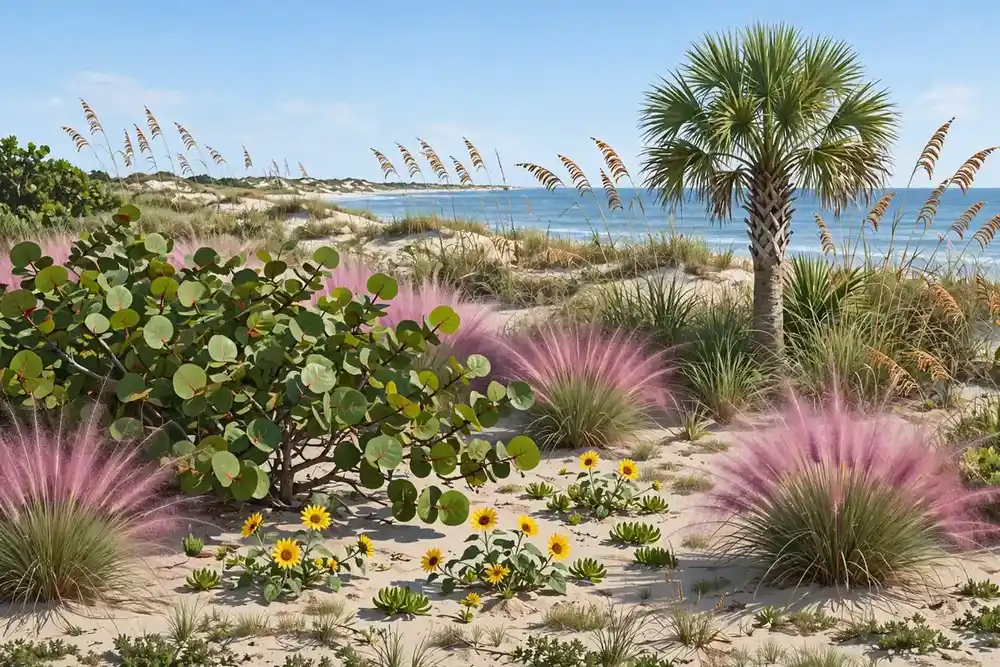
Salt tolerant plants Florida homeowners need are the ones that can take salt spray, sandy soil, and steady wind without turning brown. Sea oats, sea grape, cocoplum, muhly grass, and cabbage palm all fit that test in Palm Coast, and they look good while they do it.
A coastal yard near Palm Coast asks more from plants than an inland yard does. Salt lands on leaves with every sea breeze, sand drains fast and holds few nutrients, and wind dries leaves and bends stems day after day. Plants that grew well inland often fail here in one season. The fix is not more water or more fertilizer. The fix is the right plant in the right spot, and we have planned yards this way across Northeast Florida since 2015.
Why a Beachside Yard in Palm Coast Fails Without the Right Plants
Salt spray is the first test. Wind lifts tiny salt drops off the sea and sets them on leaves. Salt pulls water out of leaf cells, so leaf edges turn brown and dry. Young leaves suffer first, and a plant that gets hit every day never has time to recover.
Sandy soil is the second test. Sand drains in minutes, so water and nutrients pass through before roots can use them. A plant with shallow roots dries out fast, and a plant that needs rich soil starves in sand, even with regular watering. Wind is the third test. It bends stems, strips moisture from leaves, and carries sand that wears leaf surfaces.
First, Find Your Spot on the Coast: Front, Middle, or Sheltered
Not every coastal yard gets the same salt. The frontal zone sits closest to the water, where sand shifts and spray hits hard. Only the toughest grasses and vines belong here. They hold sand, bend with wind, and take direct spray without complaint.
The transition zone sits a step back, behind the first dune or the first row of tough plants. Salt still reaches it, but the worst spray is broken by what stands in front. More shrubs, flowers, and palms grow well here, as long as they can take some salt and wind. The protected zone sits farther inland, behind homes, fences, and thick planting. Walk your yard and find which zone each bed sits in before you buy a single plant.
Tough Plants for the Sand Right by the Water
Sea oats lead the list for the frontal zone. This dune grass traps blowing sand with its tall seed heads, and its roots knit loose sand into a firm dune. Railroad vine spreads fast over open sand. Its thick leaves take direct spray, and its stems root as they run, so it covers bare sand in a single season. Beach sunflower adds color in the same spot, with bright yellow flowers that open through much of the year.
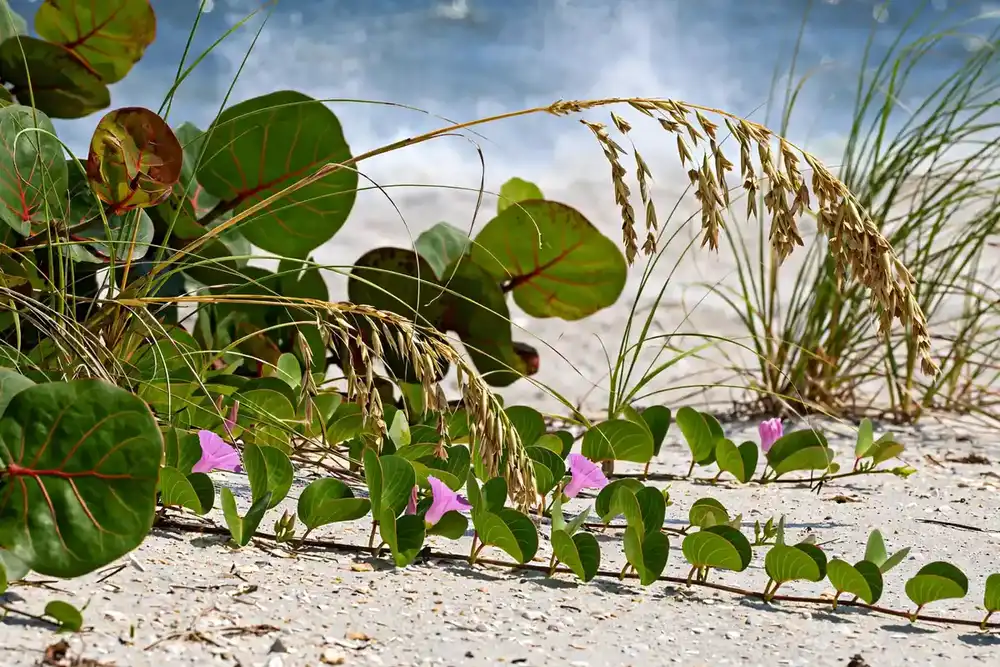
Sea grape and cocoplum give the frontal zone its shape. Sea grape grows as a large shrub or small tree, with round leaves that turn red in sun and purple fruit that birds love. Cocoplum forms a dense, glossy hedge that blocks wind and hides a fence or a wall. Both take salt spray that would burn most shrubs. Cabbage palm stands above them all. It is the Florida state tree, and it takes salt, wind, and storms better than almost any palm.
Plants That Do Well a Few Steps Back from the Dunes
The transition zone is where a coastal yard starts to feel like a garden. Wax myrtle grows fast here as a loose shrub or small tree, with soft green leaves and a light scent. Muhly grass is the show plant of this zone. In fall it sends up clouds of pink plumes that catch the light and move in the wind. Plant it in groups of three or five, not in single plants, so the color reads from the street.
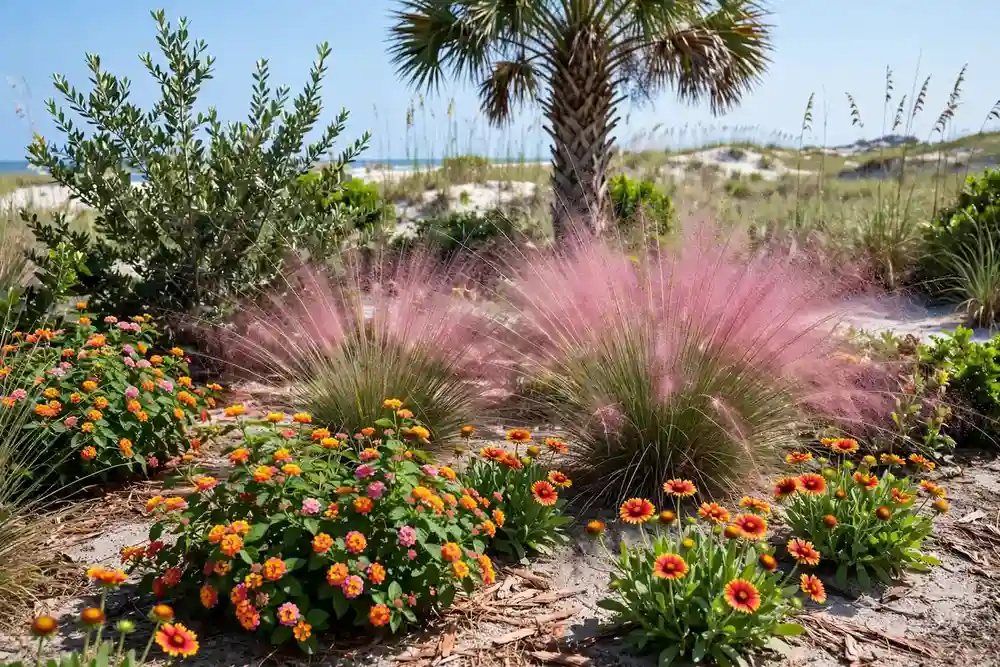
Lantana and blanket flower add long color with little care. Lantana blooms in warm colors and draws butterflies all season. Blanket flower opens red and yellow blooms that suit full sun and sandy soil. Indian hawthorn rounds out the zone with neat evergreen growth and spring flowers, and it stays compact enough for beds near a walk or a patio. Sabal palm also grows well here, and our guide to how to plant a palm tree covers spacing, depth, and first-year watering for palms in sandy soil.
Shrubs and Low Plants That Hold the Ground Together
Shrubs do more than fill space in a coastal yard. They break wind, shade soil, and hold sand with their roots. Sea grape works as a shrub here too, pruned low to form a thick hedge along a property line. Galberry is another strong choice, with small dark leaves and black berries that birds eat.
Groundcovers tie the whole planting together. Beach sunflower spreads low and blooms through the warm months. Blanket flower fills gaps between shrubs with color. Railroad vine covers slopes and bare sand where nothing else will grow.
A Lawn That Can Take Salt Spray
Many coastal homeowners want a lawn, and that is fair. Grass gives kids and pets a place to play, and it cools the yard in summer. The trick is to pick a lawn grass that can take salt, then care for it in a way that suits sand.
Salt-tolerant St. Augustine varieties are the best fit for most Palm Coast coastal yards. They form a thick mat that holds sand, and they recover from salt damage better than most other lawn grasses. Plant them in the protected or transition zone, not on the open dune, where no lawn grass will last. Water deeply and less often, so roots grow down into cooler sand, and feed lightly, since heavy feeding pushes soft growth that salt burns fast. If your lawn looks thin, read our guide to a thicker St. Augustine lawn.
How to Lay Out a Coastal Yard So Wind Works for You
A coastal yard needs layers. The toughest plants stand in front, closest to the water. The next layer stands behind them, a little taller and a little less tough. The most tender plants sit farthest back, in the shelter of the house or the thickest planting. Wind hits the first layer, slows, and drops its salt before it reaches the back.
Plant in clumps, not in single plants in a straight line. A clump of five sea oats or three wax myrtles breaks wind better than five single plants spread apart. Put wind-tolerant trees on the leeward side, the side away from the sea wind, where they can grow tall without taking the full force of a storm. Sabal palm and cabbage palm suit that spot, and they shade a patio without blocking the sea view. For more on placing trees so they frame a yard without crowding it, see our guide to landscaping around trees.
Rock, Sand, and Paths That Fit a Dune Look
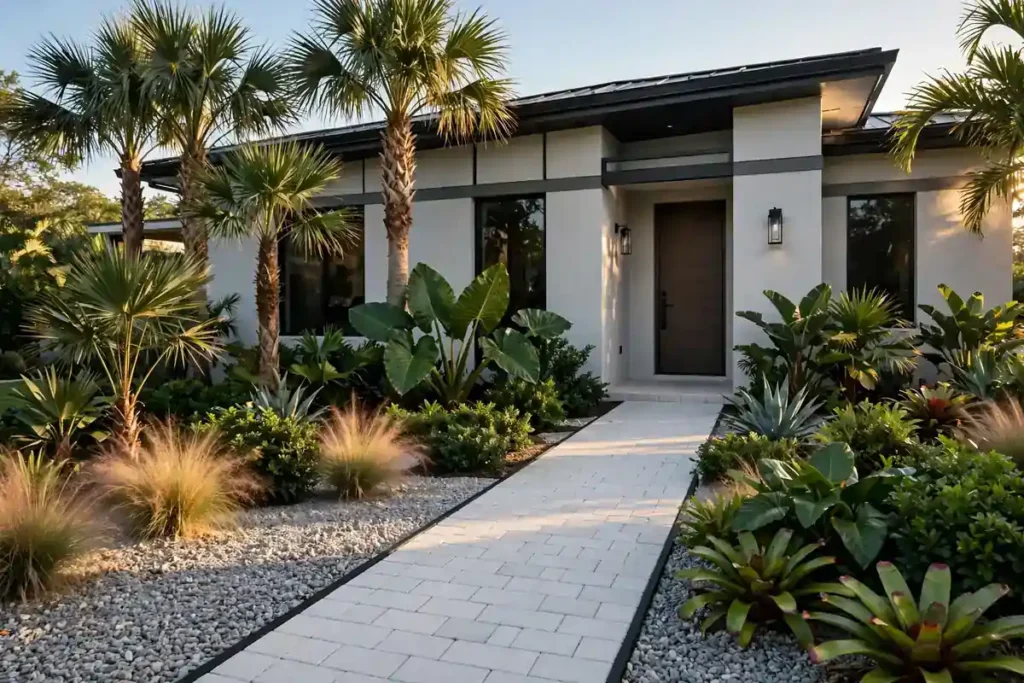
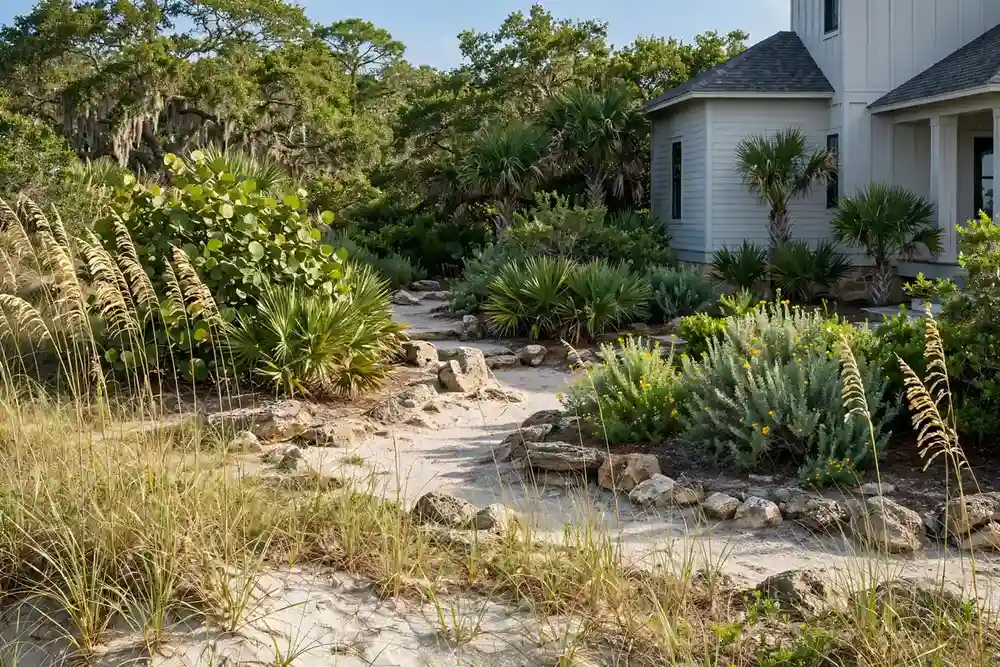
Hard features should look like they belong on the coast. Natural rock in low groups reads like a dune edge. A sandy path with a stone border reads like a walk to the beach.
Use rock where mulch would wash away. On a slope or near a downspout, stone stays put through heavy rain while mulch floats off. If you are weighing rock or mulch around coastal beds, think about water first. Rock suits the driest, windiest spots. Mulch suits sheltered beds where it can hold moisture and feed the soil as it breaks down. Many coastal yards use both, rock in front and mulch behind.
Simple Care That Keeps Salt Damage Down
Coastal care is simple, but it has to be steady. After a storm, rinse salt off leaves with fresh water from a hose. A quick rinse saves leaves that would otherwise brown and drop. Prune dead, salt-burnt leaves as soon as you see them. Dead leaves invite pests and disease, and they make a plant look worse than it is. Cut back to live wood, and let new growth fill the gap.
Add compost to poor sandy soil before you plant, and top it up each year. Compost holds water, feeds soil life, and gives roots something to hold. A two-inch layer worked into the top few inches of sand changes the soil more than any bag of fertilizer. Mulch over the top, and see our guide to how long mulch lasts in Florida.
Mistakes That Cost Coastal Homeowners the Most
The most common mistake is planting inland favorites right by the water. Azaleas, roses, and many garden shrubs look fine in a pot, then burn in the first month of salt wind. Save those plants for the protected zone, or skip them and pick a coastal plant that will thrive instead.
The second mistake is skipping the soil work. Sand needs compost before planting, not after. Plants set in raw sand dry out between waterings and never build strong roots. A little compost at planting time pays for itself in the first summer. The third mistake is planting mangroves in a yard. Mangroves protect coasts in the wild, but they are protected by law in Florida. Never plant them, cut them, or trim them in a home yard. Plant authorized salt-tolerant species like cocoplum and sea grape instead, and leave mangrove care to the agencies that manage them.
Coastal Yards in Palm Coast: When to Ask for Help
A small coastal bed is a fine weekend project. A full coastal yard is a bigger job, with zones to map, wind to plan for, and soil to build.
If you want help with a coastal yard, reach out for landscape design help for your Palm Coast home. We serve Palm Coast, Flagler Beach, Bunnell, Ormond Beach, and St. Augustine. Call us at (386) 237-2983 and tell us where your yard sits on the coast. We will help you build a yard that takes salt, wind, and sand in its stride.
Frequently Asked Questions
Salt spray, sandy soil, and constant wind make coastal yards hard places to grow. Salt dries leaf edges, sand drains fast and holds few nutrients, and wind strips moisture from leaves. Only plants that grew to take those stresses will thrive near the beach in Palm Coast.
Choose dune grasses and tough shrubs: sea oats, beach sunflower, railroad vine, sea grape, cocoplum, and cabbage palm. They take direct ocean exposure, hold sand with their roots, and bend with wind instead of breaking.
Many inland ornamentals, such as azaleas and roses, struggle with salt and burn in the frontal zone. Use coastal plants instead. In a protected zone farther inland, you can grow some ornamentals such as azaleas and camellias, as long as the soil is improved and the wind is broken.
Plant dense groundcovers such as sea oats and railroad vine on dunes to hold sand in place. Add low rock groups or coir logs at the edges of slopes where water runs fast. Keep foot traffic on paths, since bare sand blows away fast.
Mangroves protect coasts in the wild, but they are protected by law in Florida. Do not plant, cut, or trim them in a home yard. Instead, plant authorized salt-tolerant species such as cocoplum and sea grape to buffer wind and hold soil.
Plant in fall through early spring, when the air is cooler and rain is steadier. Roots grow well before summer heat arrives, so plants face their first hot season with a strong root system. Water deeply after planting, and mulch the bed to hold moisture in sandy soil.