In Northeast Florida, fertilize warm-season lawns in mid-April and again in early fall, after September 30. Skip nitrogen and phosphorus from June 1 through September 30, when local summer fertilizer rules apply, and use an iron-only product if the lawn needs color. Most St. Augustine lawns need 2 to 4 pounds of nitrogen per 1,000 square feet per year.
Most fertilizer calendars online are written for lawns up north, where grass wakes up in April and goes dormant in October. Following one of those in Palm Coast can burn your lawn, feed weeds, break local rules, and waste money. Here is a simple calendar built for our grass, our sandy soil, and the rules in our area.
Your Northeast Florida Lawn Calendar
This schedule fits St. Augustine, Zoysia, Bahia, and Bermuda lawns in Flagler, Volusia, and St. Johns counties. Adjust slightly for a warm or cool year.
| Month | What to Do | What to Skip |
|---|---|---|
| January | Mow less often. Keep leaves off the lawn. | No fertilizer. The grass is barely growing. |
| February | Apply pre-emergent weed control for summer weeds like crabgrass. | No nitrogen yet. A late freeze can still hit. |
| March | Start mowing regularly as the grass greens up. | No fertilizer. Let the grass wake up on its own. |
| April | First feeding in mid-April with a slow-release lawn fertilizer. | Avoid weed and feed on St. Augustine in hot weather. |
| May | Optional second feeding for high-maintenance lawns, before June 1. | Do not fertilize right before heavy rain. |
| June to September | Iron-only product for color if needed. Watch for chinch bugs. | No nitrogen or phosphorus under local summer rules. |
| October | Fall feeding in early October to help the lawn store energy for winter. | Do not wait until late fall. |
| November to December | Mow higher and water less as growth slows. | No fertilizer. Extra nitrogen now invites disease. |
Why the Summer Fertilizer Rules Matter
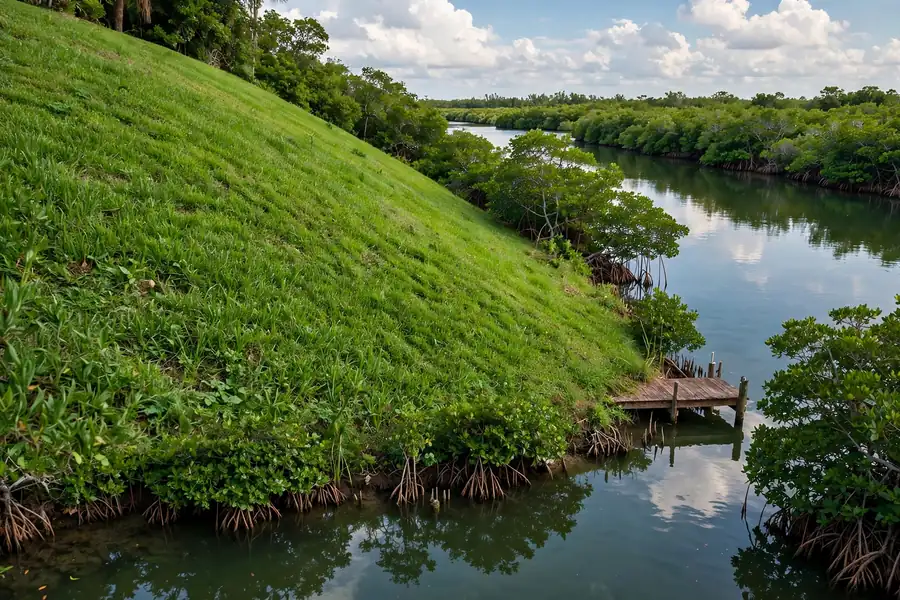
Our summer rain washes extra fertilizer off lawns and into storm drains, canals, and the Intracoastal. Nitrogen and phosphorus in the water feed algae blooms that harm fish and other wildlife. That is why many Florida counties limit fertilizer in the rainy season.
In Volusia County, which includes Ormond Beach and Daytona Beach, fertilizer with nitrogen or phosphorus cannot be applied from June 1 through September 30. The rest of the year, at least 50 percent of the nitrogen must be slow-release. Phosphorus is not allowed at all unless a soil test shows your lawn needs it. Fertilizer cannot be used within 15 feet of any water body, or when 2 or more inches of rain are expected within 24 hours.
Rules can differ by city and county, and they do change. If you live in Palm Coast, Bunnell, or elsewhere in Flagler County, check your local ordinance before you buy. Our team follows the same June 1 to September 30 summer window across our whole service area, because it protects local waterways and the lawn does fine without summer nitrogen.
How Much Fertilizer Does Your Grass Need?
Different grasses need different amounts of nitrogen each year. These are the UF/IFAS recommendations for North Florida, in pounds of nitrogen per 1,000 square feet per year.
| Grass Type | Nitrogen per Year | Feedings per Year (Typical) |
|---|---|---|
| St. Augustine | 2 to 4 lbs | 2 to 3 |
| Zoysia | 2 to 3 lbs | 2 |
| Bahia | 2 to 3 lbs | 1 to 2 |
| Bermuda | 3 to 5 lbs | 3 |
| Centipede | 1 to 2 lbs | 1 |
Use the lower number for a lawn you want to keep low-maintenance and the higher number for a lawn that gets more care. More is not better. Too much nitrogen on St. Augustine leads to thick, soft growth that chinch bugs love, and it can make fungus worse.
How to Read the Fertilizer Bag
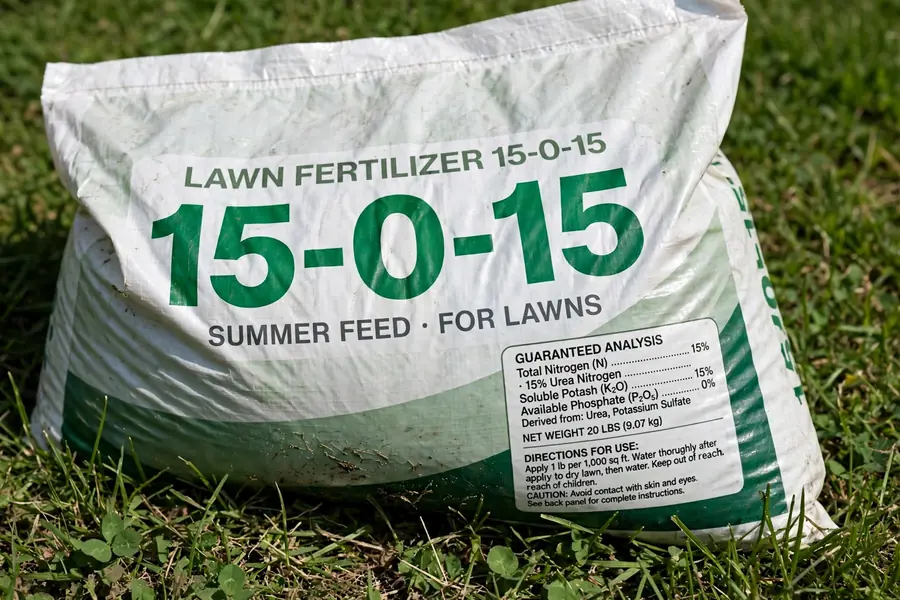
Every bag shows three numbers, like 15-0-15. They stand for the percentage of nitrogen, phosphorus, and potassium. For Florida lawns, look for these things:
- Low or zero phosphorus. The middle number should be 0 or 2 or less. Most Florida soils already have enough.
- Slow-release nitrogen. UF/IFAS recommends at least 30 percent slow-release nitrogen. Volusia County requires at least 50 percent. The label lists it as slow-release or water-insoluble nitrogen.
- Potassium. A high last number helps Florida grass handle heat, drought, and stress.
- Iron and manganese. These help keep St. Augustine green, especially in soil with a higher pH.
How Much to Spread: A Simple Example
UF/IFAS advises no more than 1 pound of nitrogen per 1,000 square feet in a single feeding when the product has at least 30 percent slow-release nitrogen, and half a pound when it has less.
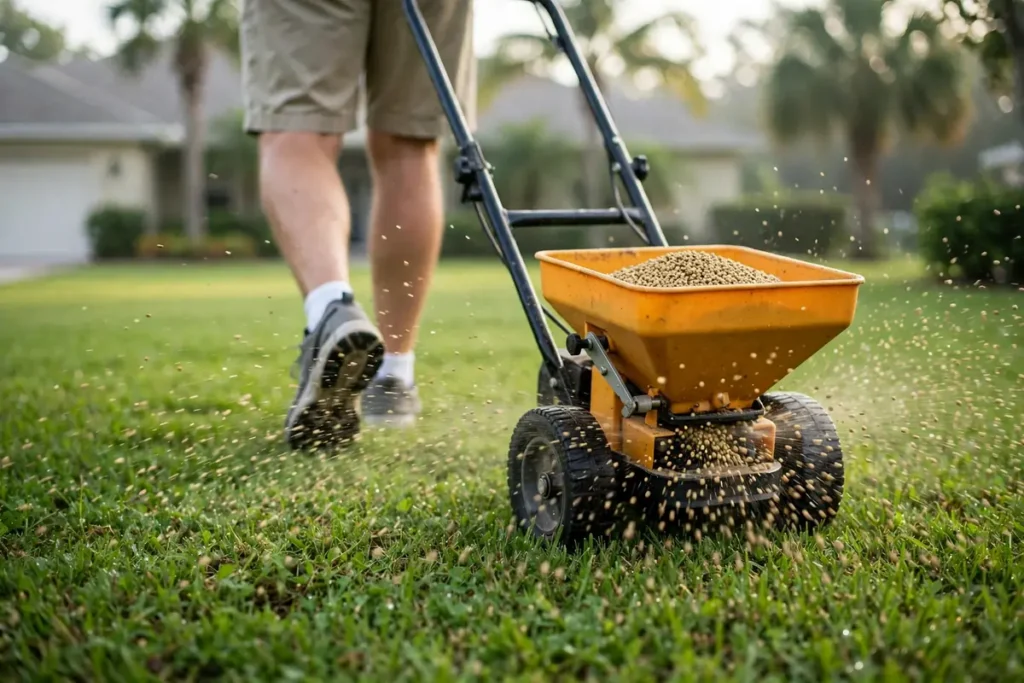
Here is the math for a 15-0-15 fertilizer. It is 15 percent nitrogen, so divide 1 by 0.15. That equals about 6.7 pounds of product per 1,000 square feet for a full 1-pound feeding. For a 5,000-square-foot lawn, you would spread about 33 pounds. Set your spreader to the rate on the bag, and sweep any granules off the driveway and sidewalk back onto the grass.
Special Cases
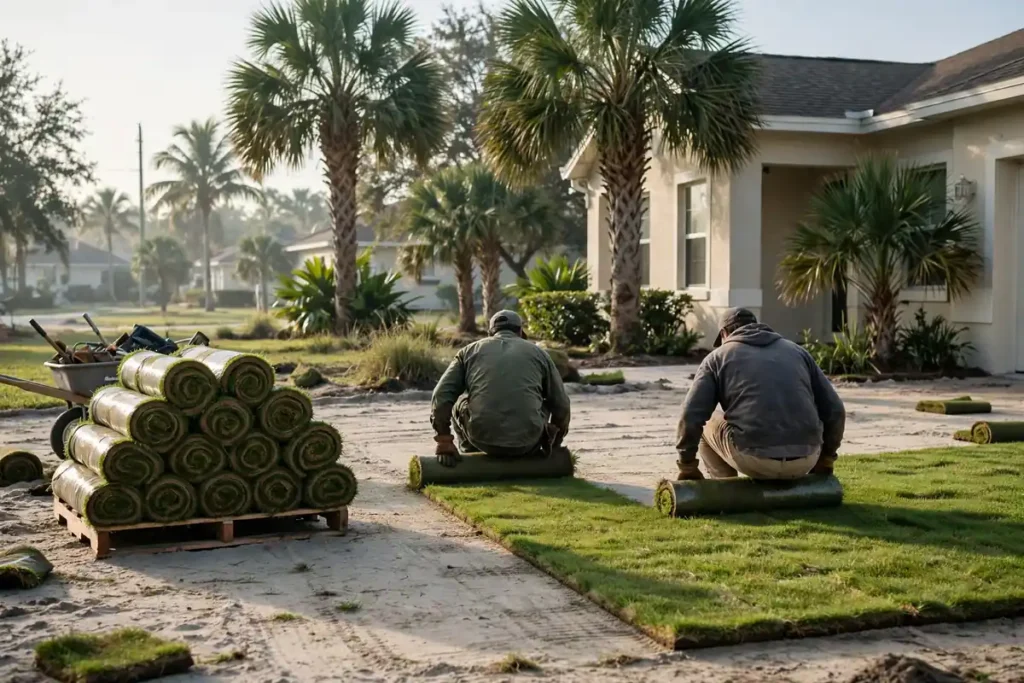
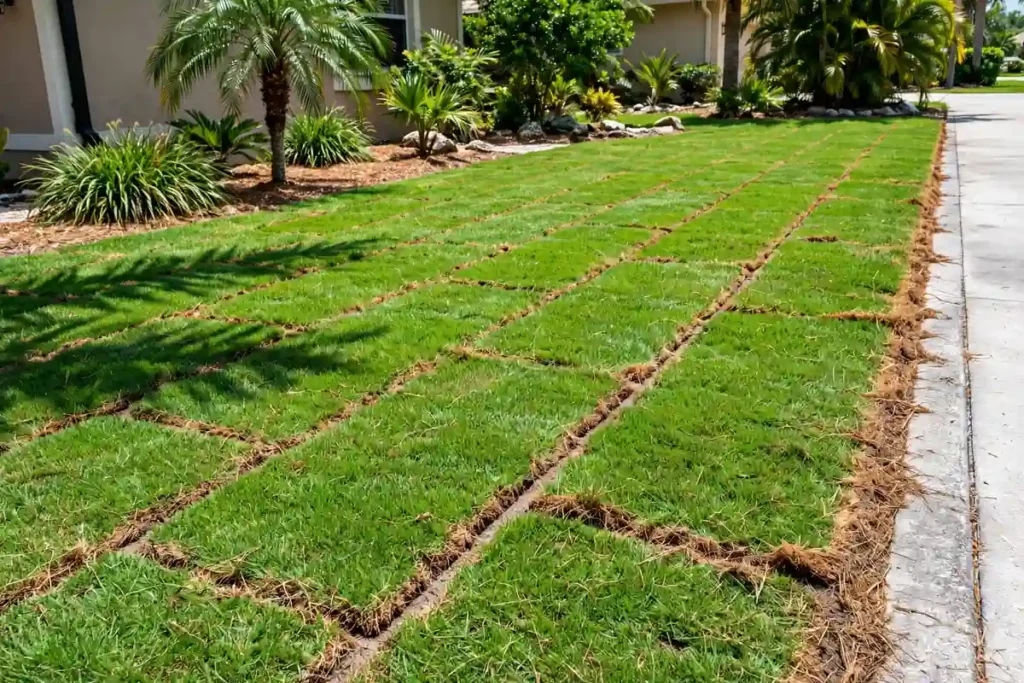
New sod. Do not fertilize for at least 30 days. A University of Florida study found that feeding new St. Augustine sod right away did not help it green up and doubled the nitrogen lost into the soil.
Weed and feed. These combination products often damage St. Augustine, especially in hot weather. It is usually better to treat weeds and feed the lawn separately. Our guide to crabgrass in St. Augustine grass explains which weed control products are safe and why February timing matters.
Shady lawns. Grass in shade grows slower and needs less fertilizer. Use the low end of the range.
Shrubs, palms, and beds. Lawn fertilizer is not the right food for landscape plants, and palms in particular need a special blend. See our garden fertilizer guide for beds and shrubs.
Signs Your Lawn Is Getting Too Much or Too Little
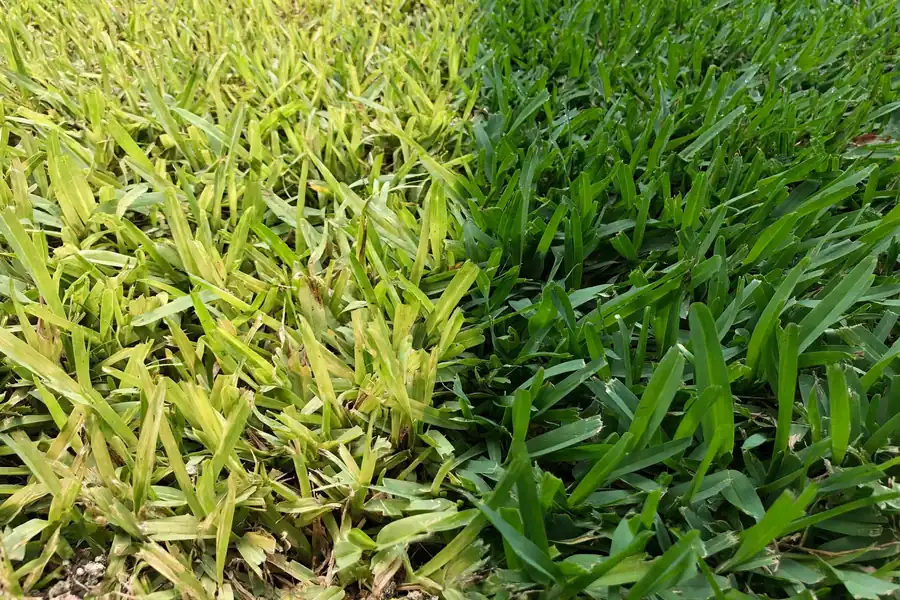
A lawn that needs food turns pale green or yellow across the whole yard, grows slowly in summer, and lets weeds fill in thin spots. A lawn getting too much grows fast and soft, needs mowing constantly, and develops more fungus and insect problems. If only some spots are yellow, fertilizer is probably not the issue. Check for pests, poor watering, or disease first.
Feeding is only one part of a healthy lawn. Our guide to lawn care in spring and summer covers mowing and watering, and our steps to winterize your garden help you prepare beds and lawn for the cooler months.
Let Us Handle Your Lawn Feeding
Getting the products, timing, and local rules right every year takes time. Dreamscapes Florida includes seasonal fertilization in our lawn maintenance plans for homes in Palm Coast, Flagler Beach, Bunnell, Ormond Beach, and St. Augustine. We use slow-release, low-phosphorus products, follow the summer window, and adjust the plan to your grass type and shade. Call (386) 237-2983 or request a free estimate.
Frequently Asked Questions
In Northeast Florida, fertilize warm-season lawns in mid-April and again in early October. Skip nitrogen and phosphorus from June 1 through September 30 where local summer rules apply.
Most St. Augustine lawns do well with two to three feedings a year, for a total of 2 to 4 pounds of nitrogen per 1,000 square feet. Use slow-release fertilizer and do not apply more than 1 pound of nitrogen per 1,000 square feet at a time.
Many Florida counties, including Volusia, ban fertilizer with nitrogen or phosphorus from June 1 through September 30. You can use an iron-only product during summer to keep the grass green.
Look for a slow-release fertilizer with little or no phosphorus and a good amount of potassium, such as a 15-0-15 or 16-0-8. Products with added iron help St. Augustine stay green.
No. Warm-season grass grows very little in winter, so it cannot use the nitrogen. Fertilizing in winter wastes money and can make the lawn more likely to get disease or freeze damage.
Light rain helps water fertilizer into the soil. Heavy rain washes it away. Do not fertilize when 2 or more inches of rain are expected in the next 24 hours or during a storm watch or warning.