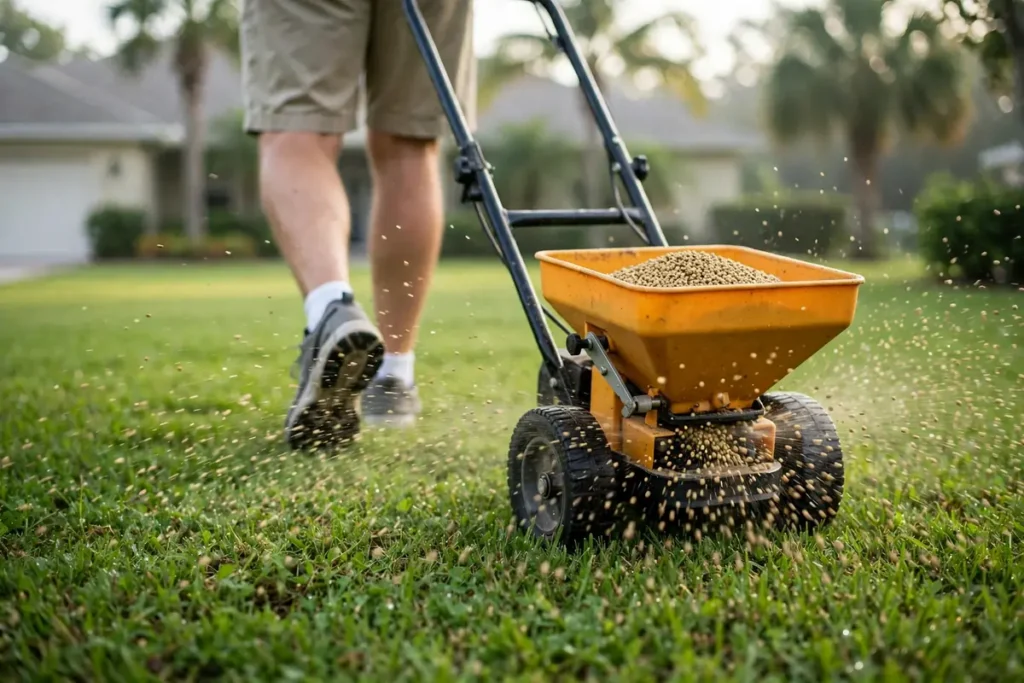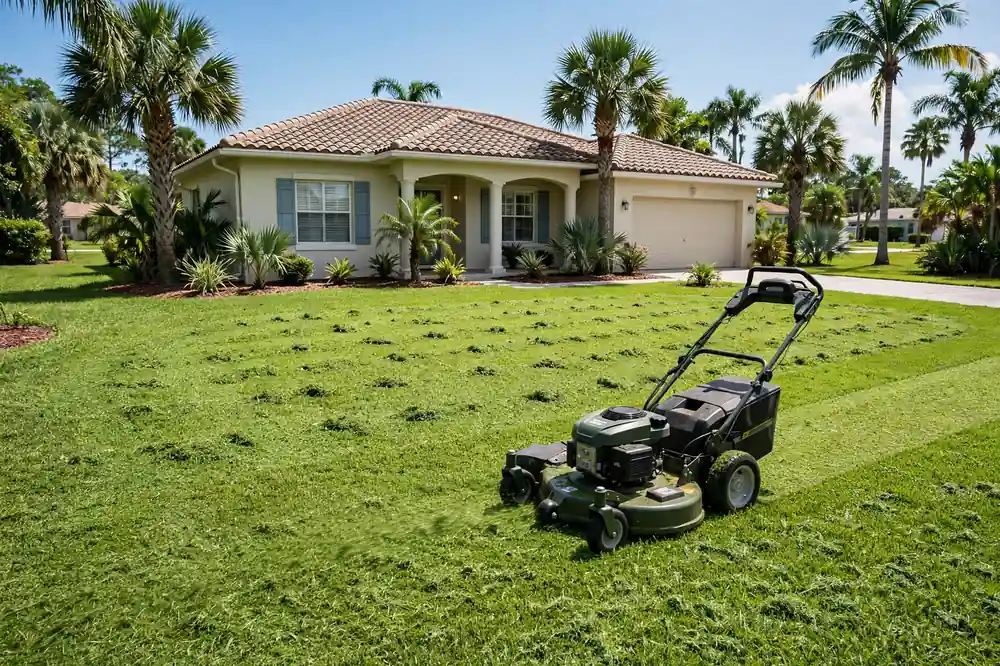
Composting grass clippings starts with a simple choice: leave them on the lawn, use them as mulch, or add them to a compost pile. In most Florida yards, leaving short clippings on the lawn works best. They break down fast, feed the soil, and hold moisture, so you buy less fertilizer and spend less time bagging.
Every mow in Palm Coast produces green material that most homeowners treat as trash. That pile is mostly water and plant food. When you bag it and put it at the curb, you throw away nutrients the grass just pulled from the soil, then you buy those same nutrients back in a bag. We have cared for lawns across Northeast Florida since 2015.
Your Mower Bag Is Throwing Away Free Fertilizer
Think about what happens after a normal mow. You cut the grass, fill two or three bags, drag them to the curb, and feel like the yard is clean. The lawn looks tidy for a day, but the soil just lost a free feeding.
Bagging also adds work to every mow: stopping to empty the bag, lifting heavy loads in the heat, and paying for yard waste pickup. In a Florida summer, when St. Augustine grass can need a cut every week, that adds up fast. Leaving short, dry clippings down skips all of it, and the lawn gets the benefit instead of the landfill.
What Grasscycling Really Means in a Florida Yard
Grasscycling means you mow and go. You cut the grass, the mower chops the clippings into small pieces, and those pieces stay on the lawn to break down. There is no bag to empty and no pile to haul.
Florida lawns suit this habit well. Warm soil and regular rain help microbes break clippings down fast, often in a week or two. St. Augustine and Bermuda grass both handle grasscycling well, and both are common across Palm Coast, Flagler Beach, and Bunnell.
Zoysia is the one common exception in Florida. Its clippings break down more slowly and can add to thatch, so collect them instead. If you are not sure which grass you have, ask our lawn maintenance team to check it on a visit.
What Is Actually Inside a Handful of Clippings?
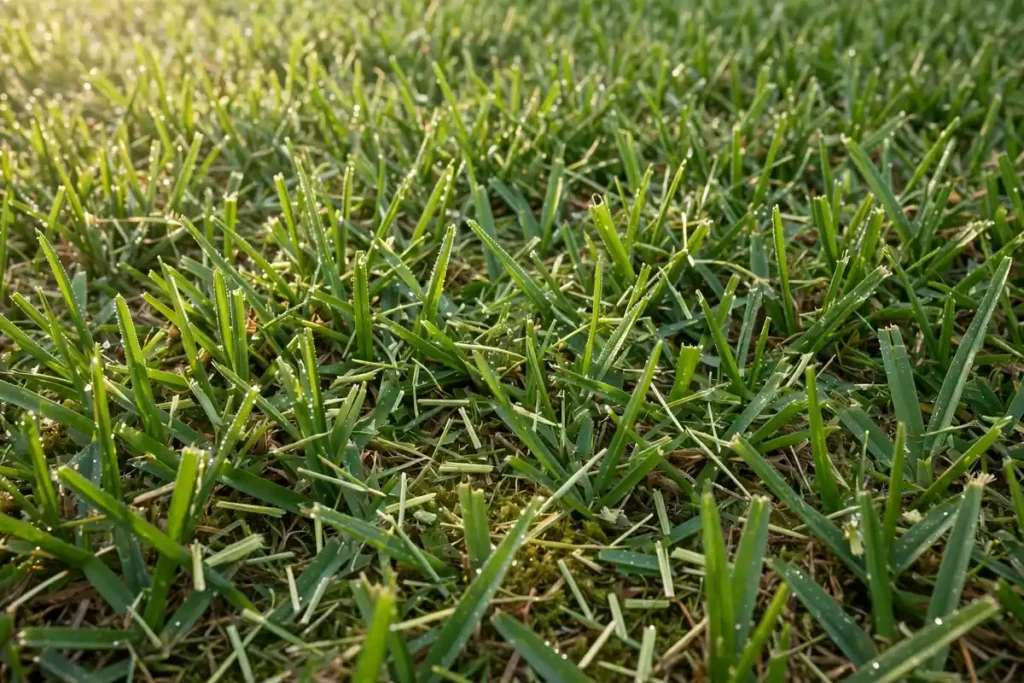
Fresh grass clippings are about 90 percent water. That explains why they work so well. The water helps them break down fast, and as they break down, they release nitrogen, phosphorus, and potassium back into the soil. Those three nutrients are the same ones listed on a fertilizer bag, and your lawn needs all three to grow thick, green blades.
The clippings also add organic matter to the soil. Sandy Florida soil drains fast and holds little food for roots. Organic matter acts like a sponge, holding water longer after rain or watering and giving soil microbes a place to live. Over a season, it helps the soil feed the lawn on its own.
How Much Fertilizer Can Clippings Replace?
Left on the lawn, clippings can supply about 1 to 2 fertilizer applications a year. That works out to roughly 25 to 50 percent of what a Florida lawn needs in a year. The exact amount depends on how often you mow and how healthy the lawn already is, but the direction is clear: you can cut back on store-bought fertilizer and still keep a green lawn.
That saving matters for more than your wallet. Less fertilizer means less chance of excess nutrients washing off the lawn in a summer downpour toward a storm drain or a waterway. Florida yards sit close to canals, ponds, and the coast, so what leaves your lawn can travel fast.
Do not stop fertilizing all at once. Think of clippings as part of your feeding plan, not a full replacement for it. If your lawn is thin or pale, it may still need a timed fertilizer application. Our guide to how to make St. Augustine grass thicker walks through mowing height, watering, and feeding together.
Mow Like This and the Clippings Will Vanish
Grasscycling only works when the clippings are short. Long clippings clump, smother the grass below, and look messy for days. Short clippings fall through the blades, dry fast, and disappear. The rule that makes this work is simple: never cut off more than one third of the blade length at a time.
That rule sets your mowing schedule. In the warm months, when St. Augustine grows fast, that often means mowing every week. If the grass has grown tall after rain, raise the mower deck for the first pass, then cut again a few days later at the normal height.
- Sharpen the mower blades. A sharp blade cuts clean and chops clippings fine. A dull blade tears the grass and throws out long, stringy pieces.
- Mow dry turf only. Wet clippings clump, stick to the mower deck, and mat on the lawn. Wait until the morning dew has dried, and skip mowing right after rain.
- Mow often enough to keep each cut light. Short clippings break down in days. Long ones sit on top and block light and air.
- Use a mulching blade or a mulching mower setting when you have one. It chops the clippings smaller and spreads them evenly, so they settle into the lawn instead of piling up in rows.
If you see clumps after a mow, rake them out lightly so they spread thin. A thick clump stays wet, blocks light, and can leave a pale patch under it.
When to Bag Instead of Leaving Clippings Down
Grasscycling fits most mows, but not every mow. Bag the clippings when the lawn is wet, when you had to cut off far more than one third of the blade, or when the lawn shows signs of disease, since diseased clippings can carry the problem to healthy grass.
Bag them too if the lawn is full of weeds that have gone to seed, since weed seeds in fresh clippings can sprout in beds or thin spots. The same rule applies after a weed treatment: check the product label before you reuse treated clippings. Collect zoysia clippings on a regular basis, because they break down slowly and can build up thatch. For St. Augustine and Bermuda, bagging is the exception, not the rule.
Turn Extra Clippings Into Mulch for Your Beds
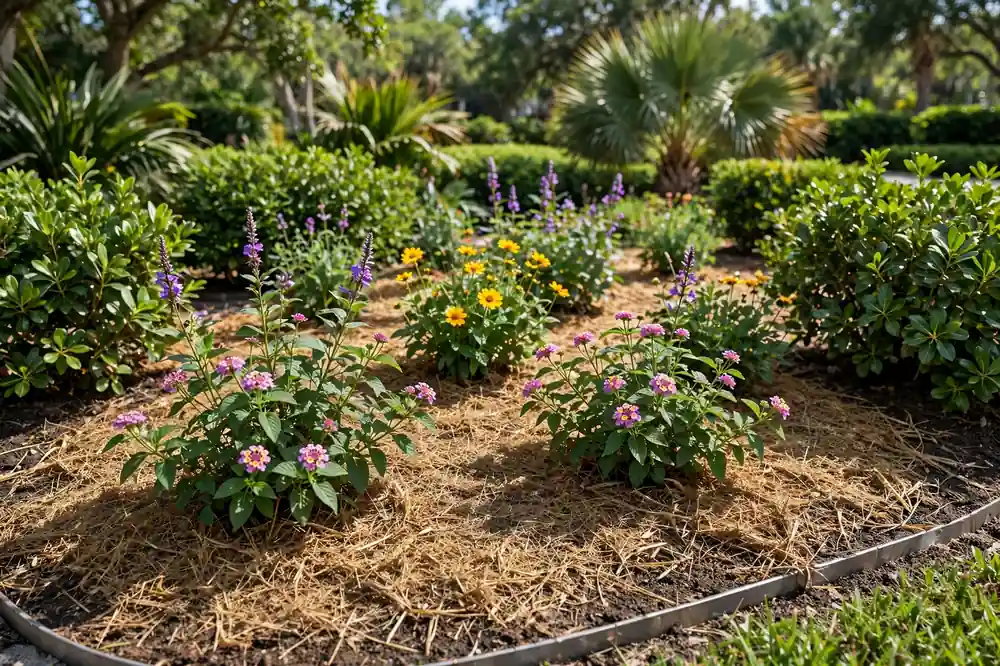
Some weeks you will have more clippings than the lawn can take, especially after a rainy spell. Those extra clippings make good mulch for garden beds. Mulch made from clippings holds soil moisture, blocks weeds, and feeds the soil as it breaks down.
Spread them thin, under 2 inches deep, and let them dry first. Fresh clippings are wet and heavy, so a thick layer mats together, blocks air, and can start to smell. Keep the mulch a few inches away from plant stems and tree trunks, where trapped moisture can cause rot.
Skip clippings from a weedy, treated, or diseased lawn. When in doubt, compost those clippings first, or bag them for yard waste pickup. If you are not sure how deep your mulch should be, our guide on how long mulch lasts in Florida covers the timing and depth.
Build a Compost Pile That Does Not Smell
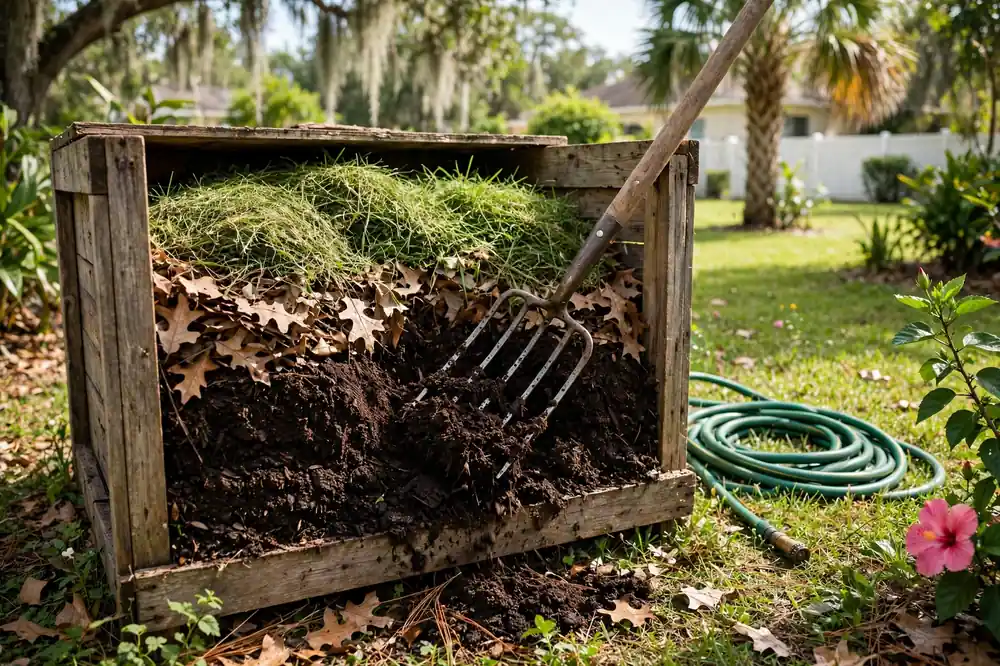
A compost pile turns clippings and dry leaves into dark, crumbly compost you can spread on beds and lawns. The pile needs two kinds of material: greens, which are wet and rich in nitrogen, and browns, which are dry and rich in carbon. Grass clippings are greens. Dry leaves, small twigs, and shredded wood are browns.
Layer them in thin bands, about 3 to 4 inches of greens, then a band of browns, then greens again. Aim for about a 1:30 green-to-brown ratio, so the pile has far more brown material than green by weight. That ratio keeps the pile from turning into a slimy, smelly mat, which is the most common mistake with grass clippings.
Pick a spot on level ground with good drainage, near a water source, and at least a couple of feet from any structure. A simple bin or a wire hoop about 3 feet across works well. Moisten each layer as you build it, so the pile feels like a wrung-out sponge, damp but not soggy. Turn the pile every few weeks with a pitchfork. In Florida heat, a well-built pile can turn into finished compost in about 3 to 6 months, when it looks like dark soil and smells earthy.
Will Clippings Cause Thatch on My Lawn?
This is the worry that stops many homeowners from trying grasscycling, and for most Florida lawns, the answer is no. Clippings do not cause thatch. Thatch is a tight layer of stems and roots that builds up at the soil surface, usually from over-fertilizing and over-watering.
Zoysia is the exception, because its stems are tough and its clippings break down slowly. If you have zoysia, collect the clippings and watch the thatch layer. For St. Augustine and Bermuda, the clippings break down before they can build up. If your lawn feels spongy underfoot or water pools on top instead of soaking in, the cause is more likely a thick thatch layer or compacted soil. Our guide to core aeration or liquid aeration explains which fix fits your lawn.
Why This Small Habit Helps More Than Your Lawn
Every bag of clippings at the curb is yard waste that has to be picked up, trucked, and handled. Keeping it at home cuts that load and keeps grass out of a landfill, where buried grass breaks down without air and releases greenhouse gas.
The habit also cuts what you buy. Fewer fertilizer bags, fewer yard waste bags, and less time spent hauling all add up over a year. Before you change how you handle clippings, check your local rules. Some cities and HOAs in Flagler County have rules about yard waste, clippings left on driveways and sidewalks, and compost pile placement. Blow or sweep clippings off hard surfaces back onto the lawn after every mow, so they do not wash into a storm drain.
A Simple Plan for Palm Coast Lawns
Start small and watch the lawn for two or three weeks. Mow often, cut off no more than one third of the blade, and leave the short, dry clippings down. If they disappear in a few days and the lawn looks green and even, the habit is working. If you see clumps, mow more often, sharpen the blade, or rake the clumps thin. Use the extra clippings in thin mulch layers on beds, and start a compost pile with dry leaves. Turn it every few weeks, keep it damp, and in about 3 to 6 months you will have compost to spread.
If the lawn is thin, patchy, or slow to fill in, clippings alone will not fix it. New sod can struggle in its first weeks for reasons that have nothing to do with feeding, and our guide on why new sod dies covers the watering and rooting mistakes that cause most of those losses. When you want help, our lawn maintenance team can walk the yard, check the grass type, the soil, and the watering, and set a mowing and feeding plan that fits your lawn. We serve Palm Coast, Flagler Beach, Bunnell, Ormond Beach, and St. Augustine. Call us at (386) 237-2983 for a free estimate.
Frequently Asked Questions
Yes, for most grasses. St. Augustine and Bermuda lawns handle grasscycling well, and the clippings break down fast in warm Florida soil, returning nutrients worth about 1 to 2 fertilizer applications a year. Collect clippings from zoysia lawns instead, since zoysia clippings break down slowly and can add to thatch.
No, not in most turfs. Thatch is mainly a tight layer of stems and roots that builds up from over-fertilizing and over-watering. Grass clippings are about 90 percent water and break down quickly, so they do not add to thatch. Zoysia is the exception, so collect its clippings.
Layer thin bands of clippings with dry leaves or small twigs in a bin or pile, aiming for about a 1:30 green-to-brown ratio. Keep the pile as damp as a wrung-out sponge, turn it every few weeks, and give it about 3 to 6 months. It is ready when it looks like dark soil and smells earthy.
Yes, they can. Do not leave clippings from a diseased lawn on the grass, and do not use clippings from a weedy lawn or a lawn that was just treated in garden beds. Check the product label after any weed treatment, and bag suspect clippings for yard waste pickup instead.
It saves time because there is no bagging, it returns nitrogen, phosphorus, and potassium to the soil, and it can supply about 25 to 50 percent of a lawn’s fertilizer needs. It also holds soil moisture, adds organic matter, and keeps yard waste out of landfills.
Short, dry clippings in warm Florida soil often break down in about one to two weeks. Long or wet clippings take much longer and can clump, so mow often, cut off no more than one third of the blade at a time, and rake out any clumps so they spread thin.