Yes. Drought tolerant landscaping Florida yards can stay green on far less water. Pick plants that handle dry sandy soil, group them by water need, mulch beds 2 to 3 inches deep, water deeply early in the morning once or twice a week, and shrink the thirsty lawn. Those five moves cut most Palm Coast watering way back.
Why Palm Coast Yards Dry Out So Fast
Palm Coast sits in Northeast Florida, where the sun is strong, summer rain comes in bursts, and the soil under most yards is sand. Sand drains fast. Water sinks past the roots in hours, and a shallow-rooted lawn can look stressed only a few dry days after a storm. That is why two yards on the same street can look so different in August.
A dry spell does not have to mean a brown yard. Native and well-adapted plants grew up in Florida sand, heat, and long gaps between rain. They store water in thick leaves, send roots deep, or simply slow down when rain is scarce. Build a yard around that kind of plant and you spend less time watering and less money on your water bill. Watch your yard for a week first, and note where the grass fades first.
Fix the Soil Before You Touch the Sprinkler
Most water problems in Palm Coast start under the surface. Sandy soil holds little water and few nutrients, so even good watering fails if the soil cannot hold what you give it. Compost fixes that. Work 2 to 3 inches of compost into the top 6 to 8 inches of a planting bed before you plant. Compost acts like a sponge in the sand, holding water near the roots longer.
Test your soil with your hands. Grab a handful of damp soil and squeeze it. If it falls apart the moment you open your hand, it is mostly sand and it needs compost. Top beds up with compost once a year. Never pile soil or mulch against a tree trunk or the stucco at the base of the house, and keep a few inches clear so air can move.
Five Plants That Already Know Florida Summers
The easiest way to cut watering is to plant things that do not ask for much. These five handle Palm Coast heat, sun, and dry spells once their roots settle in.
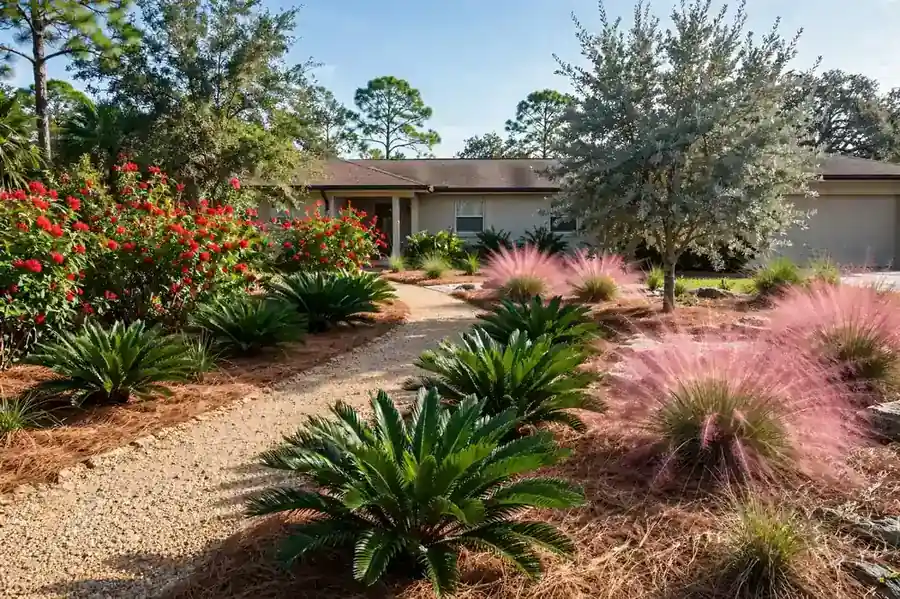
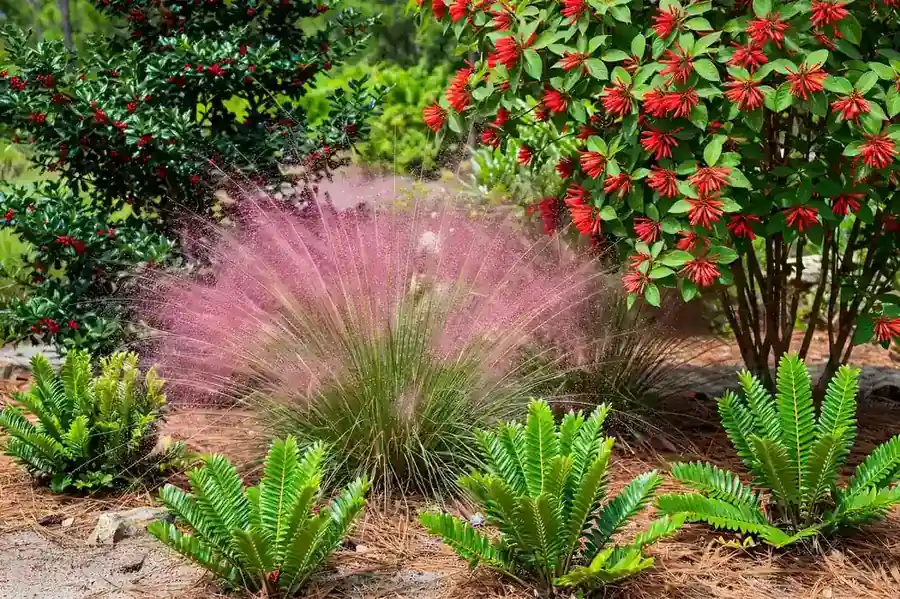
- Firebush. A fast shrub with red-orange flowers that hummingbirds love. It takes full sun to part shade and asks for little water once established. It can reach 5 to 8 feet tall.
- Muhly grass. A soft, airy grass that turns pink and purple in fall. Plant it in groups of three or five in sun and sandy soil.
- Coontie. A low, feathery native that stays green all year in sun or light shade. It grows slowly to about 2 to 3 feet tall. Its seeds are poisonous to pets, so skip it if a pet chews plants.
- Yaupon holly. A tough evergreen that handles drought, wind, and salt air. Female plants carry red berries in winter that feed birds. It works as a hedge or a small tree.
- Silver buttonwood. A shrub or small tree with soft silver-green leaves. It handles heat and salt, and it makes a strong accent near a walkway or patio.
New plants still need help in year one. Water them on a steady schedule for the first few months while roots grow out into the soil around them. After that, most of these plants can ride out normal dry spells on rain alone, with a deep drink only when leaves start to wilt. Plant at the start of the rainy season, usually in June, so summer storms do most of the early watering.
Layer them: low plants at the front of a bed, mid-height shrubs behind them, and a small tree for shade. A bed with afternoon shade loses far less water than one that bakes until sunset.
Give Your Lawn a Smaller Job
Lawn grass is the thirstiest thing in most Palm Coast yards. You do not have to give it up, but shrinking it is the fastest way to cut water use. Keep turf where you actually use it, for play and pets, and let the rest of the yard work harder with beds, paths, and groundcovers.
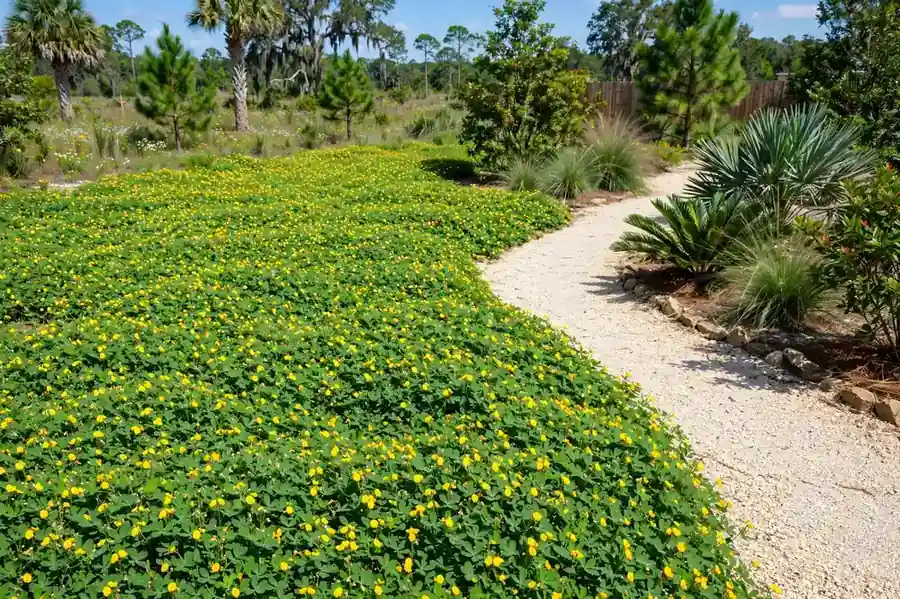
Two native groundcovers do the job well. Perennial peanut spreads into a dense green mat with small yellow flowers, and it needs far less water and mowing than turf once it fills in. Sunshine mimosa is another low, spreading native that handles sun and dry soil and blooms with soft pink puffs. Both take light foot traffic, so use them where grass always struggles, on slopes and strips.
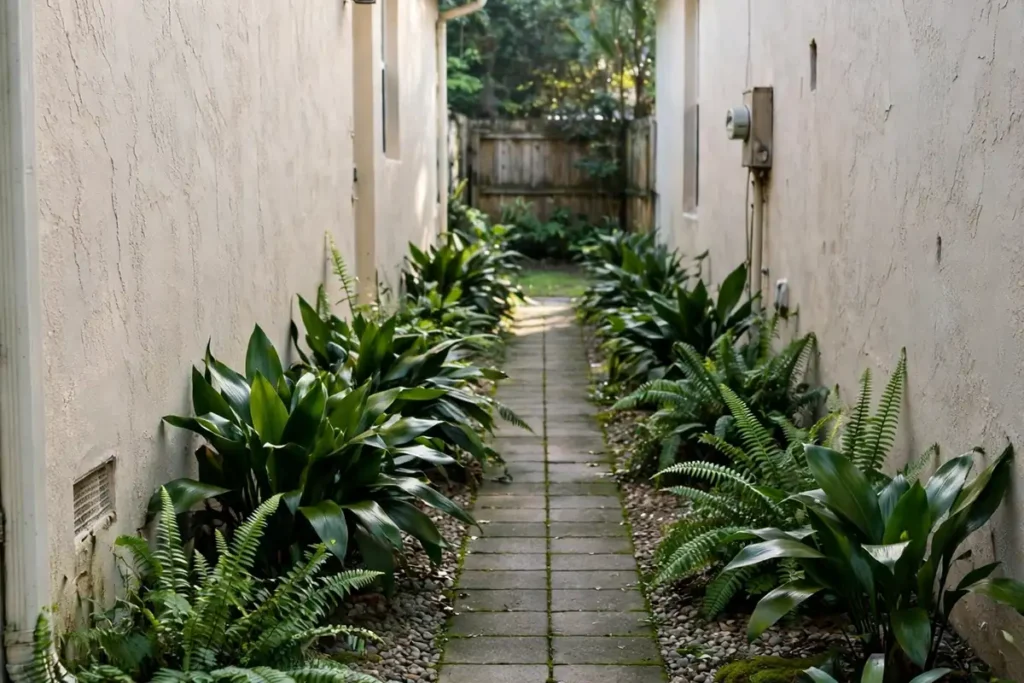
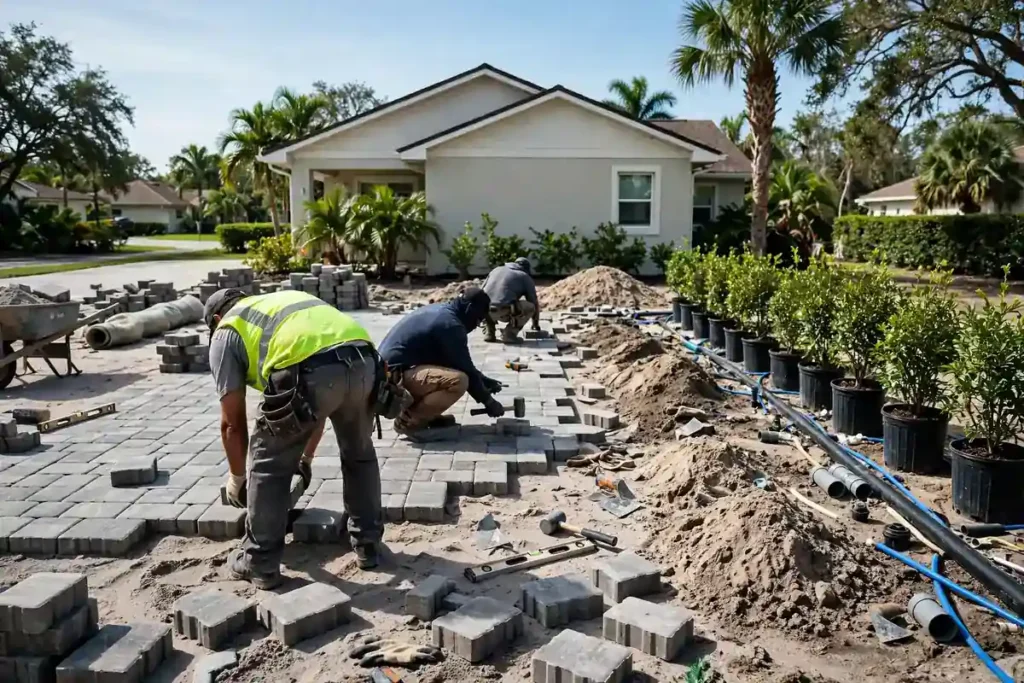
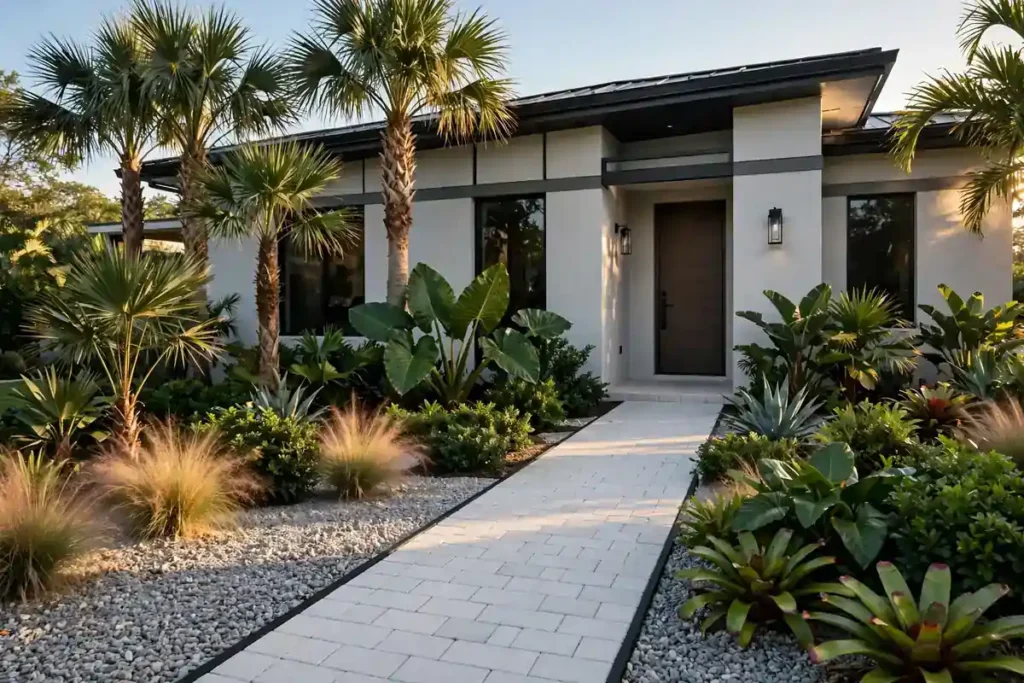
Gravel and stone have a place too. A gravel path or a dry creek bed of river rock breaks up a yard, drains rain where it falls, and needs no water at all. Permeable pavers that let rain soak in work the same way on a patio or walkway: rain passes through instead of running off, and the ground below stays damp longer. If you keep St. Augustine grass, water it deeply and rarely so roots grow down. Our guide to keeping St. Augustine grass thick with less water walks through the mowing and feeding habits that help.
Group Plants by Thirst, Not by Looks
Hydrozoning sounds technical, but it is simple: put plants with the same water needs in the same bed. Thirsty plants go together near a water source or a low spot that holds rain. Dry-loving natives go together in the sunny, fast-draining spots. Each zone then gets what it needs, and nothing gets watered just because it sits next to something thirsty.
Sketch three zones for your yard. Zone one is the high-water area: a small bed near the front door or new plantings in their first season. Zone two is the middle ground: established shrubs that like a drink in a dry spell. Zone three is the low-water area: firebush, muhly grass, coontie, and yaupon holly that live on rain once settled. This one change often saves more water than any new gadget. It also keeps plants healthier, since dry-loving natives rot in wet soil. Right plant, right place, right water: that is the whole idea, and UF/IFAS guidance says the same.
Water Deep, Water Early, Water Rarely
How you water matters as much as how much. Shallow daily watering trains roots to stay near the surface, where the soil dries first. Deep watering once or twice a week trains roots to grow down, where the soil stays damp longer. In a dry spell, deep roots are the difference between a yard that fades and a yard that holds on.
Water early in the morning, before the sun climbs. Early watering lets water soak in before heat and wind can steal it, and leaves dry quickly once the sun is up. Midday watering loses much of its water to evaporation before it ever reaches the roots. Evening watering leaves leaves wet overnight, which invites fungus in Florida humidity. Check your depth: push a screwdriver into the soil, and if it slides in easily to 6 inches, the water went deep enough.
Watch the plants, not the calendar. A lawn that springs back when you step on it has enough water, while grass that stays flat or shrubs that wilt in the morning are asking for a deep drink. Dry months ask for a lighter touch too. Raise the mowing height so grass shades its own roots, and never cut off more than a third of the blade at once. Aerate compacted areas so water sinks in instead of running off. Feed sparingly, since heavy feeding pushes soft growth that demands more water. Skip heavy pruning in a long dry stretch. If a shrub starts to fail, check the cause before you water more: why a hedge turns brown in a dry spell is often a mix of drought stress, poor drainage, or a planting spot that never suited it.
Let Drip Lines and Smart Controls Do the Work
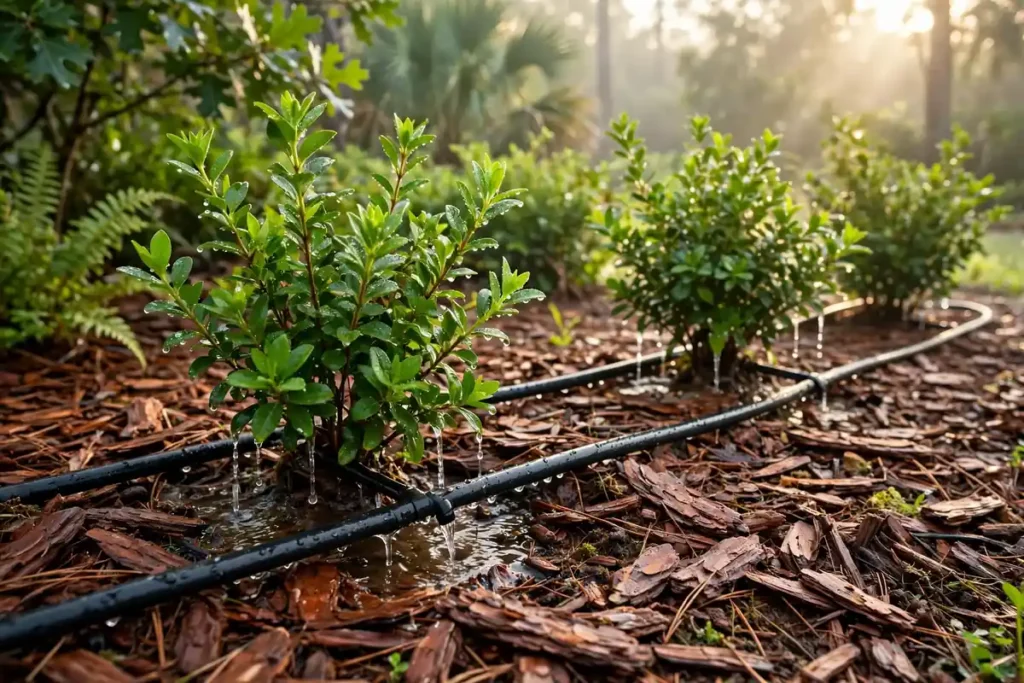
Sprinklers throw water into the air, where wind and heat take a share before it lands. Drip irrigation skips that waste. Thin lines with small emitters put water right at the base of each plant, drop by drop, so almost all of it reaches the roots. Beds, hedges, and new plantings all do better on drip than on a spray head, with separate zones for thirsty beds and dry beds.
A smart controller adds the second half of the system. It checks local rain and weather and skips a watering cycle when rain has already done the work. A rain sensor does the same job for a basic controller at a low cost. Either way, the yard stops watering itself in the rain, which is one of the most common ways water gets wasted in Florida.
If you keep sprinklers, tune them first. Aim heads at grass, not at the driveway or the street. Fix heads that mist instead of spray, since mist drifts away on the breeze. Water the lawn and the beds on separate zones, so a bed of muhly grass is not watered on the lawn’s timetable.
Mulch Like You Mean It
Mulch is the cheapest water saver in the yard. A 2 to 3 inch layer of organic mulch, such as pine bark or pine straw, shades the soil, slows evaporation, and keeps soil temperatures steady on hot days. It also feeds the soil as it breaks down and keeps weeds down, so less water is lost to weeds.
Spread it right. Keep mulch 2 to 3 inches deep, and pull it back a few inches from stems and trunks so air can move and rot cannot start. Never pile it into a volcano around a tree. Top it up once or twice a year, and check the depth in late spring. A mulched bed needs fewer watering sessions, since the soil under the mulch stays damp longer. If you want the full detail on timing and types, read how long mulch lasts in Florida heat before you buy a load.
A Palm Coast Yard That Looks Good on Less Water
A water-wise yard is not a bare yard. Firebush in flower, muhly grass catching the evening light, a thick mat of perennial peanut in bloom, and a shady corner under a yaupon holly can look lush all year while using a fraction of the water a wall-to-wall lawn demands. The trick is to stop fighting Palm Coast soil and start planting for it.
If you want help turning your yard into one that sips water instead of gulping it, we can help. We have designed and cared for landscapes in Palm Coast since 2015, and we know which plants hold up here. Call Dreamscapes Florida at (386) 237-2983 for landscape design and irrigation help in Palm Coast, Flagler Beach, Bunnell, Ormond Beach, and St. Augustine. Tell us about your yard, and we will plan a low-water design that still looks like a place you love coming home to.
One last note: planting a palm tree in sandy soil follows the same rules, a wide hole, compost in the backfill, mulch on top, and steady water until the roots settle. Get the start right and the plant will take care of itself for years.
Frequently Asked Questions
Florida natives like firebush, coontie, muhly grass, yaupon holly, and silver buttonwood need little water once their roots settle in. They grew up in Florida sand and heat, so they handle long gaps between rain far better than thirsty ornamentals.
Shrink the lawn to the areas you actually use, replace the rest with native groundcovers or gravel beds, switch beds to drip irrigation, and mulch 2 to 3 inches deep. Water what is left deeply once or twice a week instead of a little every day.
Yes. Water early in the morning and deeply, one or two times a week. Avoid midday watering, which loses much of its water to evaporation, and evening watering, which leaves leaves wet overnight and invites fungus in Florida humidity.
A 2 to 3 inch layer of organic mulch, such as pine bark or pine straw, shades the soil, slows evaporation, and keeps soil temperatures steady on hot days. It also feeds the soil as it breaks down and keeps weeds down, so less water is lost to weeds.
Yes. Native groundcovers like perennial peanut and sunshine mimosa can replace turf in sunny spots and need far less water and mowing once they fill in. Gravel gardens and permeable paver areas also cut lawn watering to zero in the spots they cover.
Through the first few months, until their roots grow out into the soil around them. Plant at the start of the rainy season, usually in June, so summer storms do most of the early watering. After that, most drought-tolerant plants live on rain alone, with a deep drink only when leaves start to wilt.