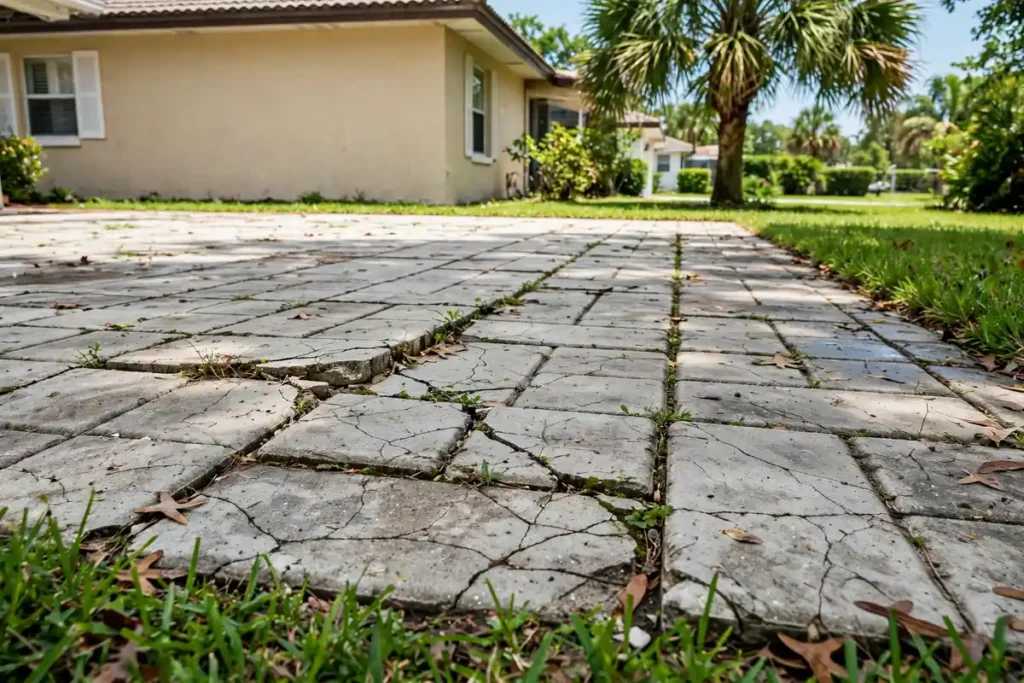
Pavers crack when the ground under them moves. In Palm Coast, that usually means sandy soil settling, rain washing out the base, a tree root pushing up from below, or a heavy load on a patio built for foot traffic. One cracked paver is a quick swap. Cracks across a whole area mean the base has failed.
This guide walks through the causes in order, shows how to tell a surface crack from a structural problem, and gives the steps to replace one paver, then when to call a pro and how to stop the rest from cracking.
Why Pavers Crack in Florida
Almost every crack starts underneath the paver. Florida makes that worse: loose sand, a high water table, and summer rain that can wash fine material out from under the surface.
Settlement in Sandy Soil and a Thin Base
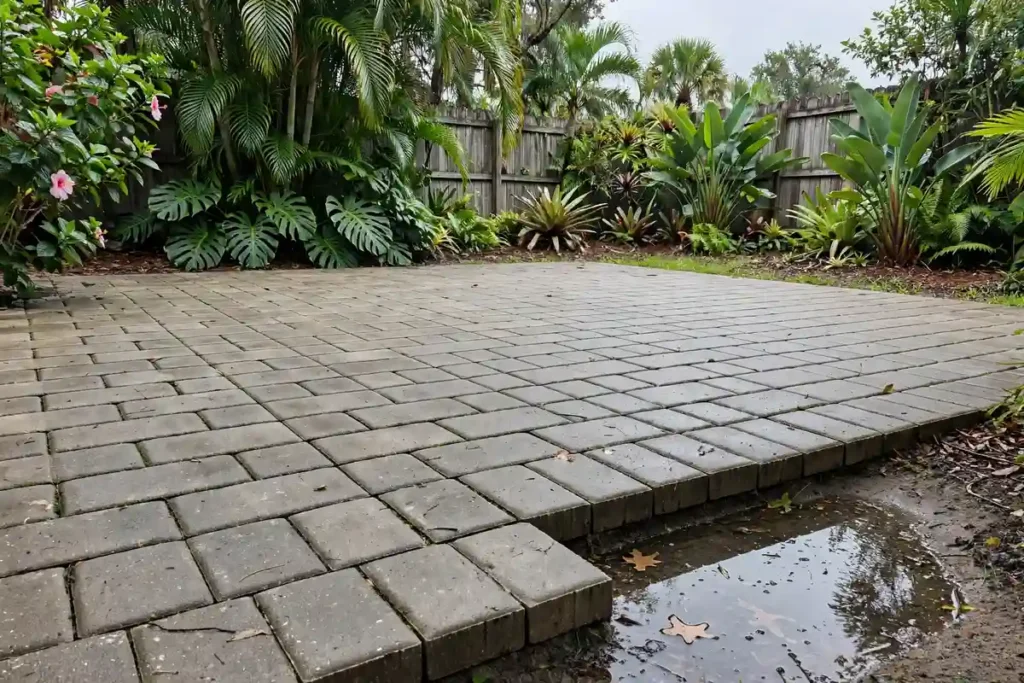
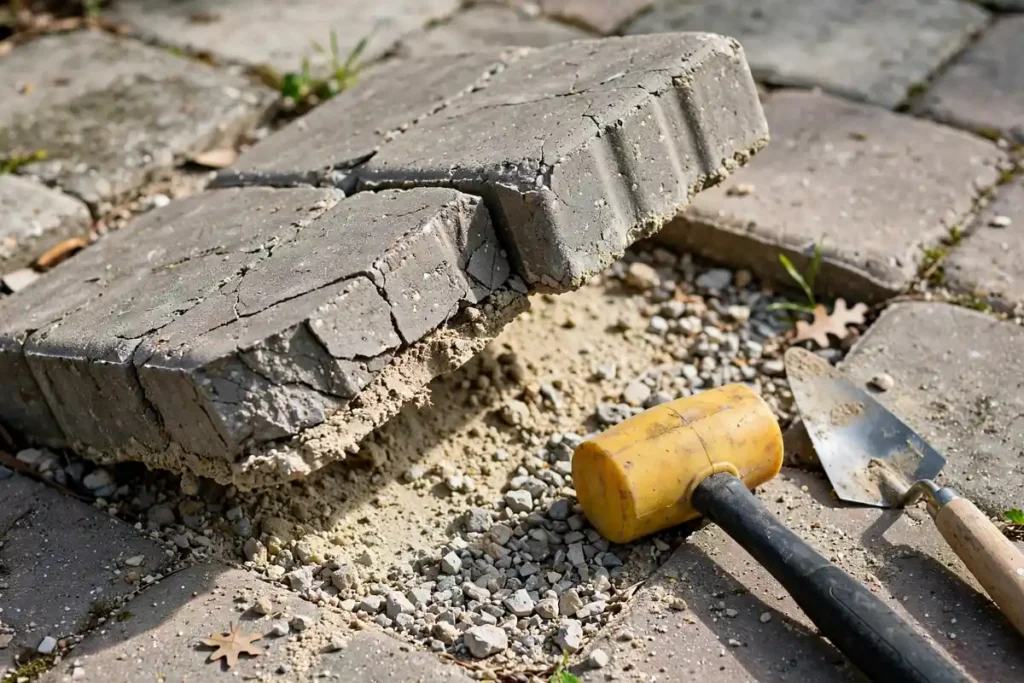
Palm Coast sits on flatwoods sand. Myakka and Smyrna soils hold groundwater close to the surface, with the seasonal high water mark about a foot and a half below grade, according to the NRCS soil survey. That wet sand compacts unevenly, so one paver sinks while its neighbor stays put. The joint opens, the edge takes the load, and the paver cracks.
A thin base makes it worse. The industry standard, ICPI Tech Spec 2, calls for about 6 inches of compacted base under a residential driveway on well-drained soil, and 2 to 4 inches more on wet or weak soil. A patio built to the well-drained number on damp ground is thinner than the soil needs from day one.
Water Washing Out the Base
South Florida gets about 50 to 60 inches of rain a year, much of it in the summer wet season, often 7 to 10 inches a month from June through September. Runoff from a roof or a low spot in the yard can wash bedding sand and fine base material out through the joints. The loss is slow, so the surface can look fine for years until one heavy season opens a void and the paver above it cracks under a normal step.
Tree Roots Lifting Pavers
A root does not need to be big to crack a paver. It grows into the bedding sand, lifts one corner, and the paver rocks. Every step flexes it until it splits. Roots are the first suspect when cracks follow a line toward a tree. Our guide on tree roots lifting pavers shows how to fix it without killing the tree.
Heavy Loads on a Patio Not Built for Them
Patios are built for foot traffic. A delivery truck, a dumpster, or a car on a patio edge puts a point load on pavers never meant to carry it. The base under that spot compresses, the pavers tip, and the edges chip or crack. Driveways use a deeper base for this reason.
Failed Edge Restraint
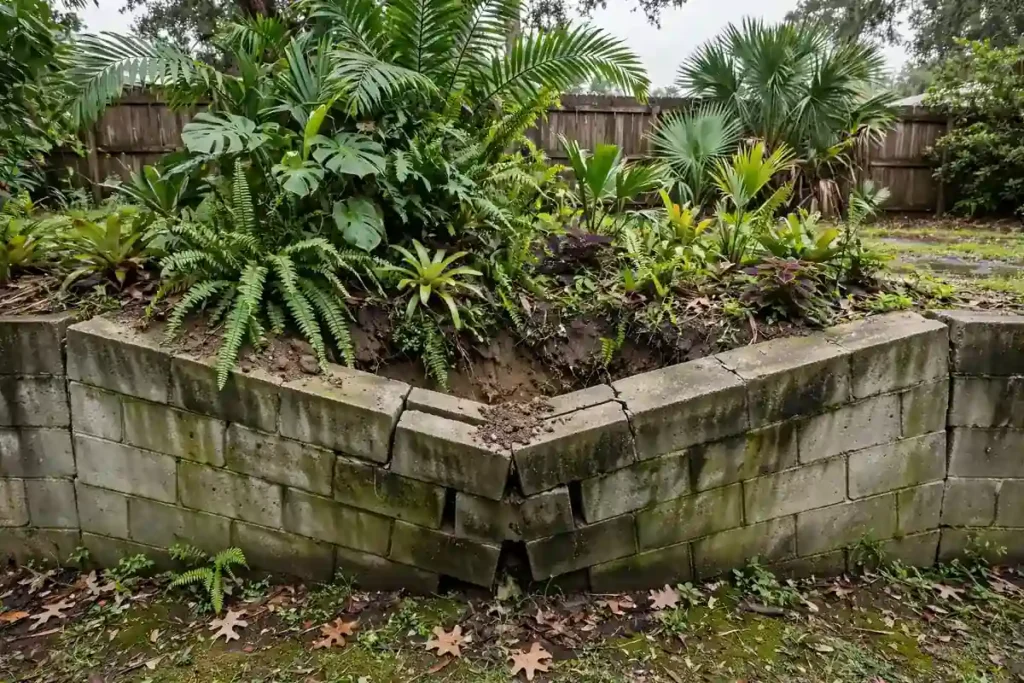
Every paver field needs a restraint along its edge. When it fails, pavers at the edge spread outward, joints open, and the field loses its lock. The loose pavers rock and crack at the corners. It often starts where the restraint was buried too shallow or water washed the soil away behind it.
A Bad Paver or a Bad Batch
It is rare, but a paver can crack because it was made wrong: too much water in the mix, or drying too fast, leaves a weak unit. A single cracked paver with a sound base and level neighbors is often just a bad unit. Swap it and move on.
Cosmetic Crack or Structural Problem?
Start by reading the pattern: one cracked paver in a level field is a unit problem. Cracks that run in a line, pavers that rock when you step on them, or a low spot that holds water after rain all point below the surface. Press on the pavers around the crack: if they move, the base has failed there.
| What you see | Likely cause | First check |
|---|---|---|
| One cracked paver, surface level | Bad unit or a single impact | Lift it and check the base below |
| Cracks in a line toward a tree | Root lift | Follow the line to the nearest tree |
| Cracks plus a low spot | Base washout or settlement | Check drainage and probe the base depth |
| Pavers rocking underfoot | Lost joint sand or failed edge | Check the joints and edge restraint |
| Cracks across a wide area | Full base failure | Call a pro first |
How to Fix a Single Cracked Paver
If the base is sound and the damage is one paver, the fix is a swap. Work in dry weather, and match the new paver’s size, color, and thickness to the old one.
- Mark the cracked paver with chalk so you lift the right one, then clear the joint sand around it with a screwdriver or a joint tool.
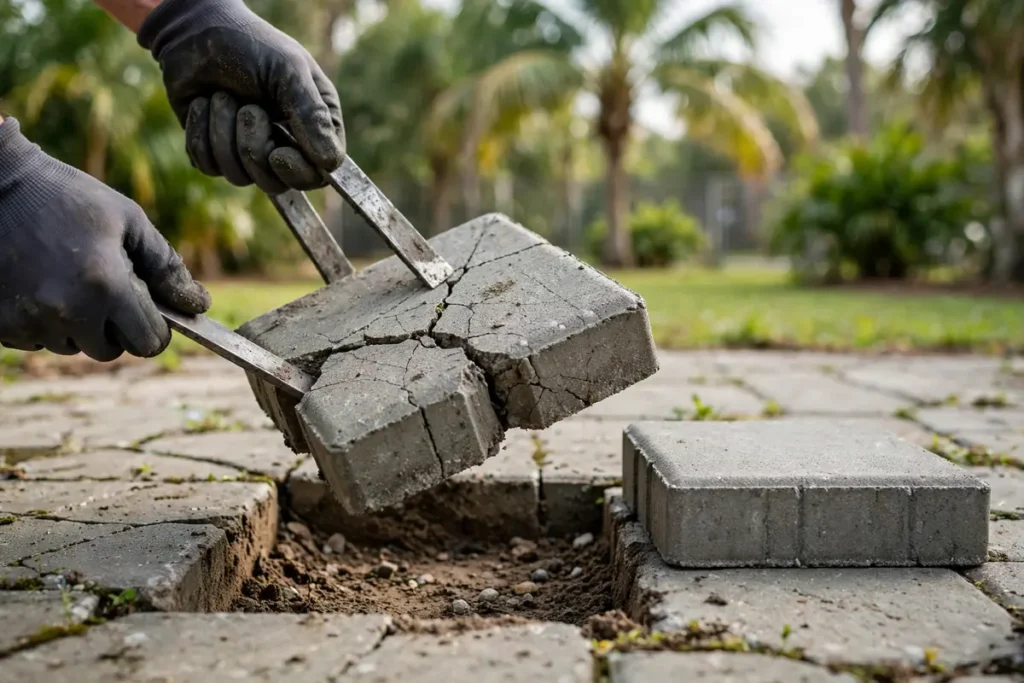
- Break the paver into pieces with a cold chisel and hammer, and lift the pieces out. Take care not to chip the pavers beside it.
- Look at the bedding sand below. If it is level and firm, leave it. If it is soft or washed out, dig down to firm base, add fresh crushed stone, and compact it.
- Add a thin layer of coarse bedding sand and level it with a straight board resting on the pavers beside the gap. The new paver should sit a quarter inch high, to allow for settling when you tap it in.
- Set the new paver in place and tap it down with a rubber mallet until it is level with its neighbors, then sweep polymeric sand into the joints, mist it lightly, and let it harden.
Polymeric sand hardens when it gets wet, so it locks the paver in place and keeps weeds out of the joint. Our guide on polymeric sand for pavers covers the full method, including how much water to use and what to do if rain comes before it sets.
Filling a Small Crack vs Replacing the Paver
A hairline crack in a paver that sits flat and level can be filled instead of replaced. Sweep polymeric sand into the crack, mist it, and let it harden into a water-resistant seal. A wider crack takes concrete caulk, pressed in and smoothed with a putty knife. Deep cracks in stone can take epoxy, mixed and poured to the maker’s instructions.
Filling is a patch, not a cure. If the paver rocks, sinks, or sits in a low spot, the filler will crack again because the base is still moving. Fill only when the paver is level, the base is firm, and the crack is the only fault.
When to Call a Pro Instead
Call a pro when the damage covers a wide area, when pavers sink across a section, or when you find soft soil or a void under the surface. A drainage cause needs a pro too: a patio that floods in every storm needs the water routed away, not just new pavers. The same goes for roots under the base, which need a root barrier or a rerouted edge.
Pavers Commandos, a paver repair crew in Brevard County, lists cracked paver replacement at about $6 to $12 per square foot, and a full base rebuild at $14 to $22 per square foot. Those are material prices for that county; your quote will vary with access, paver type, and base work needed. A targeted repair still costs far less than relaying the whole surface.
How to Keep Pavers From Cracking Again
Prevention starts at install: a base built to the soil, not to a guess, is the first line of defense. Ask for the base depth in writing before any new patio goes in. Our guide on how to install pavers in Florida covers base depth, compaction, and slope.
Keep the joints full. Sweep polymeric sand back into open joints each year, and seal the surface after it sets. Sealing keeps water out of the joints and slows the washout below. Our guide on how to seal pavers explains the timing and the sealer types.
Keep heavy loads off patios and walkways, and keep roof runoff and irrigation spray off the paver field. A downspout that dumps onto a patio washes the base out a little at a time. If a patio has already dropped in one spot, read our guide on how to fix sunken pavers before the damage spreads.
Cracked Pavers in Palm Coast
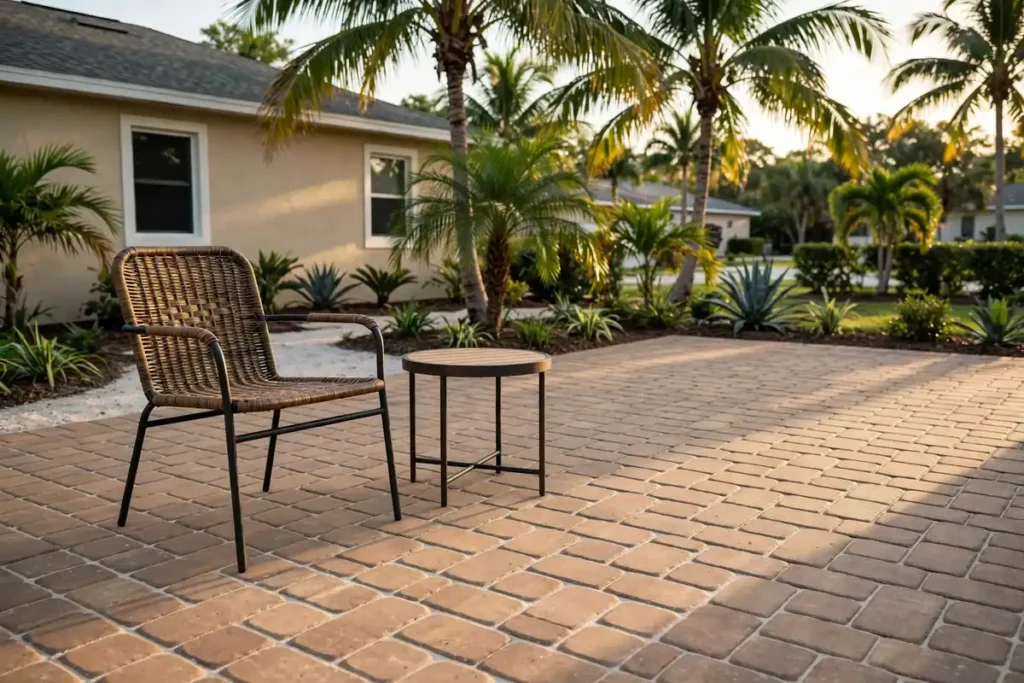
Most cracked pavers in Palm Coast come down to one thing: the ground under them moved. Fix the cause first, then the paver. A single cracked unit is an afternoon job. A cracked field is a base job, worth a pro’s look first. We build and repair paver patios and driveways across Palm Coast, Flagler Beach, Bunnell, Ormond Beach, and St. Augustine, with a compacted base made for Flagler County sand. Call Dreamscapes Florida at (386) 237-2983 or request a free estimate and we will walk your yard with you.
Frequently Asked Questions
Yes. A single cracked paver can be lifted out and swapped for a matching one, as long as the base below is firm and level. Hairline cracks can be filled with polymeric sand. Cracks across a wide area usually mean the base has failed, and that needs a pro.
The base under them is moving. In Florida, sandy soil settles unevenly, rain washes fine material out of the base, and roots lift pavers from below. Until the cause is fixed, new pavers will crack in the same place again.
Yes, for hairline cracks in pavers that sit flat and level. Sweep the sand into the crack, mist it lightly, and let it harden. It locks the joint and keeps weeds out. It will not fix a paver that rocks or sinks.
A Florida repair crew in Brevard County lists cracked paver replacement at about $6 to $12 per square foot, and a full base rebuild at $14 to $22 per square foot. Your quote varies with paver type, access, and how much base work is needed.
Not always. A hairline crack in a level paver can be filled. A paver that is split through, rocking, or sitting in a low spot should be replaced, because a filler will crack again once the base underneath it moves.
Sealing helps, but it does not fix a bad base. A sealer keeps water out of the joints, which slows the washout that opens voids below. It works best on a sound patio with full joints, not as a cure for sinking or widespread cracks.