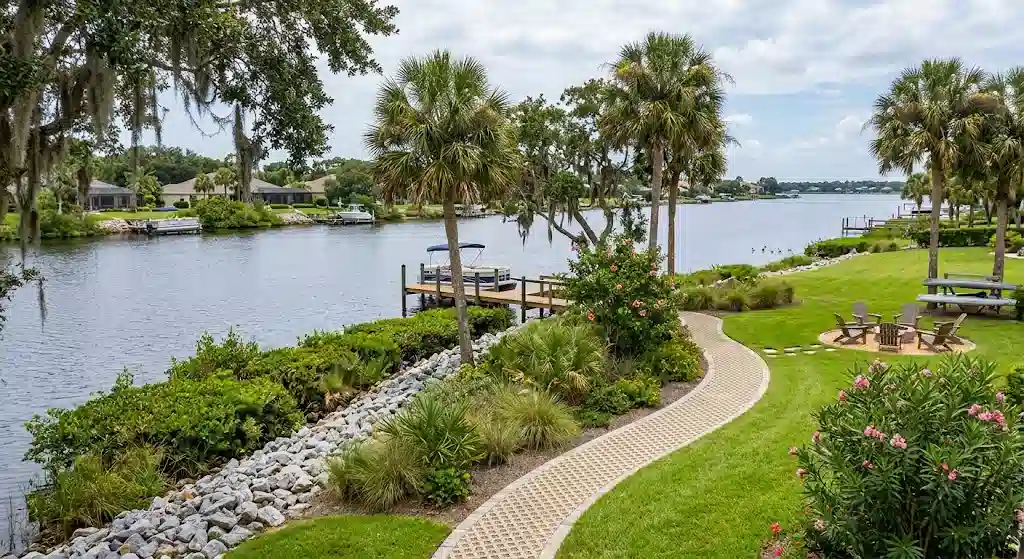
Waterfront landscaping is the design, planting, and care of outdoor spaces beside canals, rivers, lakes, ponds, and the coast. It uses salt-tolerant plants, erosion control, and smart drainage to protect your shoreline and keep your yard beautiful. Dreamscapes Florida designs and builds waterfront landscapes for homes and businesses across Flagler County.
Living on the water is a gift. It also puts your yard under constant pressure from salt spray, wind, shifting soil, and heavy rain. A standard landscape plan will not hold up. A waterfront plan will.
This guide explains what makes waterfront landscaping different, which plants work best, and how to protect your shoreline. You will also find answers to the questions homeowners ask us most.
What Makes Waterfront Landscaping Different?
Waterfront properties face conditions that inland yards never see. Water, wind, and soil all behave differently near the shore, so every design choice needs a reason behind it.
A strong waterfront landscape does three jobs at once:
- Protects the shoreline. Deep roots and well-placed stone hold the bank in place.
- Manages water. Grading and drainage send runoff away from your home and keep it out of the canal.
- Looks great year-round. Hardy plants and clean lines keep the view sharp through every season.
Common Waterfront Landscaping Challenges in Florida
Salt Spray and Brackish Water
Salt burns leaves and stunts growth. Plants near the Intracoastal Waterway and tidal canals need real salt tolerance, not just a good reputation. We choose species that handle salt air and occasional salt contact.
Erosion and Shifting Soil
Florida’s sandy soil washes away quickly. Boat wakes, storm surge, and heavy rain strip the bank bit by bit. Left alone, erosion can undercut patios, walls, and even your foundation.
High Water Tables and Flooding
Low-lying yards stay wet after storms. Poor drainage drowns roots and invites fungus. Smart grading, swales, and drainage solutions solve this before it starts.
Wind and Hurricane Exposure
Open water means open wind. We plant sturdy, deep-rooted trees and shrubs and keep large canopy trees properly spaced and pruned.
Best Plants for Waterfront Landscaping in Florida
The right plant in the right place saves you money and replacement work. These plants perform well along Florida shorelines:
| Plant | Best Use | Why It Works |
| Muhly grass | Borders and mass plantings | Handles salt, heat, and drought, and adds pink fall color. |
| Sea oats | Dunes and sandy banks | Deep roots stabilize loose sand. This plant is protected, so never harvest it. |
| Coontie | Foundation beds and edges | This native cycad tolerates salt and needs little care. |
| Saw palmetto | Screens and natural areas | Tough, native, and wind resistant. |
| Sea grape | Coastal screening | Thrives in salt spray and wind. |
| Dwarf yaupon holly | Hedges and clean borders | Salt tolerant and easy to shape. |
| Beach sunflower | Groundcover on sandy slopes | Blooms most of the year and holds soil. |
| Pickerelweed | Freshwater pond and canal edges | Native shoreline plant with purple blooms that attract pollinators. |
Plant tolerance varies by site, so we match each species to your exact exposure. A yard on a tidal canal needs different plants than a yard on a freshwater lake.
Choosing the Right Grass for a Waterfront Lawn
Grass takes a beating near the water. Salt, foot traffic, and wet soil all test it. Seashore paspalum offers the highest salt tolerance among common lawn grasses. St. Augustine grass works well on sites with less salt exposure and remains a popular choice across Flagler County.
Not sure which grass fits your lot? Our team reviews your exposure, sun, and soil, then recommends a variety. Learn more about sod installation and how we prepare the ground for a lawn that lasts.
Erosion Control and Shoreline Stabilization
Erosion control protects your biggest investment: your land. The best approach depends on your shoreline, your budget, and local rules.
- Native buffer plantings. Roots bind the soil and filter runoff before it reaches the water.
- Rock and stone placement. Stone absorbs wave energy at the base of a slope.
- Retaining walls and terracing. These structures hold steep banks and create usable level space.
- Regrading and drainage. Redirecting runoff stops the damage at its source.
Shoreline work often requires permits. Before any project near the water, we help you understand which local or state approvals apply to your property.
Hardscaping and Lighting for Waterfront Properties
Patios, walkways, and seating areas let you enjoy the view. On the water, materials matter. Salt and moisture wear down cheap products fast. We build with durable pavers, stone, and corrosion-resistant fixtures that keep their finish.
Our hardscaping services include patios, walkways, and retaining walls built to handle wet, sandy conditions. For evening beauty and safety, landscape lighting highlights docks, paths, and key plants without overpowering the natural setting.
Irrigation for Waterfront Landscapes
Waterfront yards still need smart watering. Sandy soil drains fast, while low spots stay wet. An efficient system waters each zone only as much as it needs.
- Use drip irrigation in beds to reduce waste and runoff.
- Add rain sensors so the system skips unnecessary cycles.
- Separate zones for lawn, shrubs, and salt-exposed plants.
- Follow local watering restrictions.
Our irrigation services include design, installation, and repair, so your waterfront landscape gets the right amount of water.
What Affects the Cost of Waterfront Landscaping?
Every shoreline is different, so costs vary. These factors have the biggest impact on your quote:
- The size of the property and the length of the shoreline
- The level of erosion and the repairs needed
- Plant selection and the number of mature trees
- Hardscape materials, such as pavers, stone, and walls
- Irrigation and lighting requirements
- Permits and site access
A site visit gives you an accurate price. Request a free quote and we will walk your property with you.
How We Approach Your Waterfront Landscape Design
A clear process keeps your project on track. Here is how a typical project works:
- Site walk. We study your shoreline, soil, sun, drainage, and views.
- Custom design. We create a plan that fits your style and your budget. See how our landscape design process works.
- Professional installation. Our crew builds, plants, and finishes the project.
- Ongoing care. We keep your landscape healthy with regular lawn and landscape maintenance.
Why Choose Dreamscapes Florida for Waterfront Landscaping?
Dreamscapes Florida serves residential and commercial clients throughout Flagler County, including Palm Coast, Flagler Beach, Bunnell, Ormond Beach, Daytona Beach, and St. Augustine. We handle design, installation, irrigation, lighting, hardscaping, and maintenance, so you work with one team from the first sketch to the final walkthrough.
Ready to Transform Your Waterfront?
Your waterfront deserves a landscape that looks beautiful and stands up to Florida’s toughest conditions. Contact Dreamscapes Florida today to schedule your free consultation.
Waterfront Landscaping FAQs
Muhly grass, sea grape, coontie, saw palmetto, dwarf yaupon holly, and beach sunflower all tolerate salt well. The best choice depends on how close your plants sit to the water and how much salt spray they receive.
Combine deep-rooted native plants, stone placement, and proper drainage. Steeper banks may need a retaining wall. A landscape professional can assess your shoreline and recommend the right mix.
Often, yes. Work that changes the bank, adds structures, or disturbs the waterline can require local or state approval. Check the rules before you start, or ask us to guide you through the process.
Use it carefully. Fertilizer runoff harms water quality, and many Florida communities limit its use, especially in summer. Follow local rules and keep a low-maintenance buffer zone along the water’s edge.
Seashore paspalum offers the best salt tolerance. St. Augustine grass suits yards with less salt exposure. We recommend a variety after we check your site conditions.
Most properties benefit from regular seasonal care, including pruning, mulching, irrigation checks, and a post-storm review. Frequent attention catches small problems before they become expensive repairs