Brown patch in St. Augustine grass is usually large patch, a fungus named Rhizoctonia solani. It shows up as yellow to brown rings from November to May, when temperatures stay below 80 degrees. You can slow it by watering only in the early morning, skipping quick-release nitrogen in cool months, and using a labeled fungicide if it keeps spreading.
Palm Coast lawns see it almost every fall. Nights turn cool, dew sits heavy, and rain and humidity keep leaves wet for hours. St. Augustine also grows slowly in cool weather, so it cannot outgrow damage the way it does in summer.
Brown Patch vs Large Patch: Same Fungus, Different Season
The name mix-up causes most bad advice online. Brown patch and large patch come from the same fungus, Rhizoctonia solani, also called Rhizoctonia blight. The difference is the grass and the season.
On cool-season grasses up north, it shows up in summer heat and is called brown patch. On warm-season grasses in Florida, it shows up in cool months and is called large patch. According to UF/IFAS EDIS LH044, it hits St. Augustinegrass and zoysiagrass hardest, runs November through May below 80 degrees, and is normally not seen in summer.
That is why summer advice from northern sites does not fit a Palm Coast lawn. In Florida, large patch is a cool-season problem, and the fix starts with watering and feeding from fall through spring.
How to Tell If It Is Large Patch
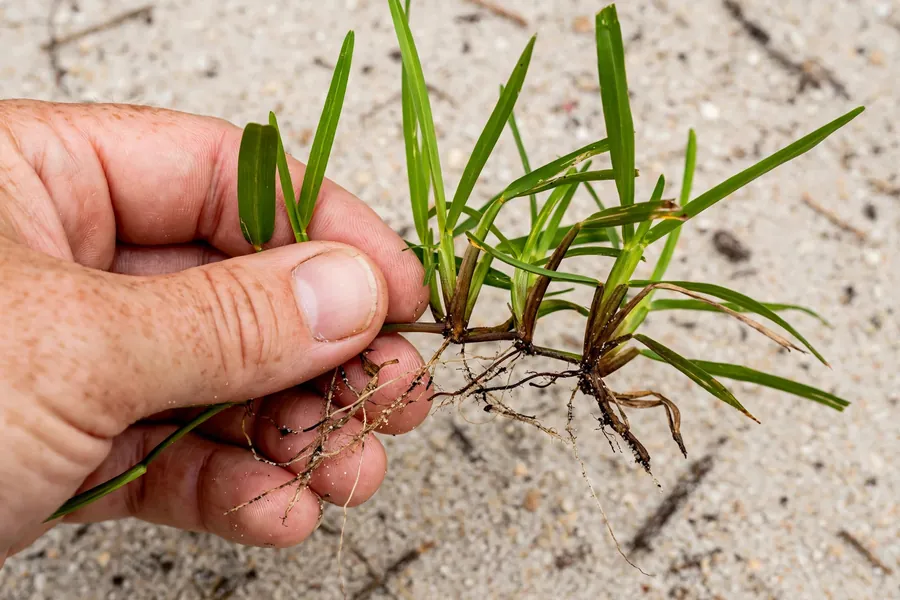
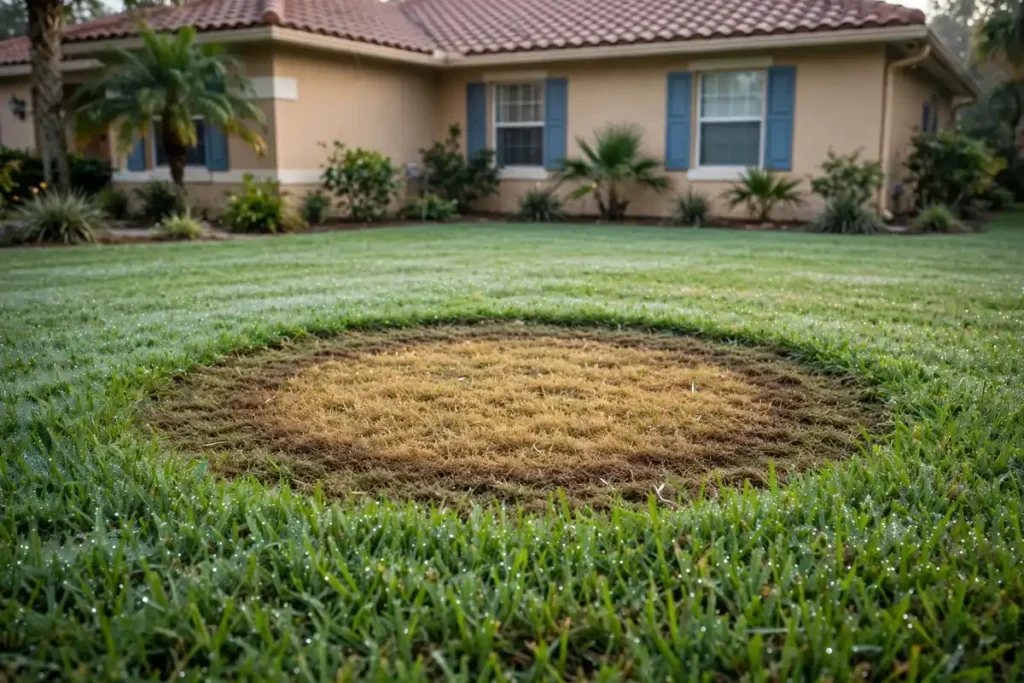
Patches start small, about 1 foot across, and turn yellow first. Then they shift to reddish brown, brown, or straw color, and they can grow to several feet wide. Rings often form around healthy-looking turf in the center.
A dark, wilted outer edge means the fungus is active right now. If the edge looks dry and faded, the patch may be old damage that is no longer spreading.
The fastest check is the tug test, and it takes about two minutes:
- Go to the outer edge of a patch and grab a few blades.
- Pull gently. With large patch, leaves pull off easily.
- Look at the leaf base. It feels soft and dark, like rot, and smells rotten.
- Check the roots. With large patch, roots are not affected, even when blades look bad.
That rotten leaf base sets large patch apart. If the base is dry and tan with no rot smell, the cause is likely something else, such as herbicide damage.
Large Patch vs Chinch Bugs vs Drought vs Herbicide Damage
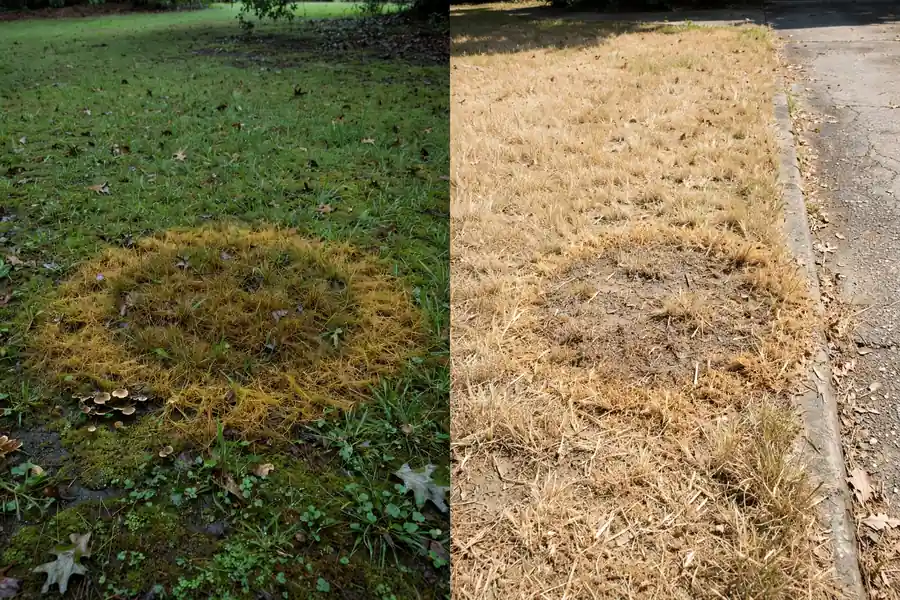
Four problems can all turn a St. Augustine lawn brown, but they show up in different seasons and fail different tests. If you are not sure which one you have, read our guide to chinch bugs in Florida before you treat, and compare your lawn to this table.
| Problem | When it shows up | What you see | Quick test |
|---|---|---|---|
| Large patch | November to May, cool and wet weather, below 80 degrees | Yellow to reddish brown rings, sometimes several feet wide, with a dark wilted outer edge | Tug test: leaves pull off, base is soft, dark, rotten; roots fine |
| Chinch bugs | Hot, sunny summer areas | Irregular straw colored patches that spread in sun, often near driveways and sidewalks | Coffee-can float test: push a can into the turf, fill with water, watch for small bugs floating up |
| Drought | Dry spells and hot weather, when watering falls short | Folded blue-gray blades that look wilted, and footprints that stay visible after you walk on the lawn | Water deeply: drought stress perks up next day, disease damage does not |
| Herbicide damage | After a weed control application | Brown or bleached areas that match where the product was sprayed | Leaf base is dry and tan, no rot, no smell |
When two problems look alike, the tug test and the season usually settle it. Large patch is cool and wet with a rotten leaf base. Chinch bugs are a hot-weather pest, while drought and herbicide damage leave the base dry.
What Causes Large Patch in Florida Lawns
Large patch starts when leaves stay wet for 48 hours or more, from rain, extra irrigation, or high humidity. In a Palm Coast fall, all three often hit at once.
Four habits make the problem worse:
- Evening watering. Water put down late in the day sits on blades all night, which stretches the wet period past 48 hours when rain follows.
- Too much quick-release nitrogen in cool months. Fast nitrogen pushes soft growth that the fungus attacks with ease, right when growth is slow.
- Poor drainage. Low spots hold water after rain, so those areas stay wet longest and get hit first.
- Heavy thatch. A thick thatch layer traps moisture at the leaf base and blocks air flow.
Watering is the lever you control first. Read our guide to how much water a lawn really needs to set run times that wet the soil without keeping blades damp overnight. If thatch is thick, read our guide to dethatching St. Augustine grass before fall.
How to Treat Large Patch: A Step-by-Step Plan
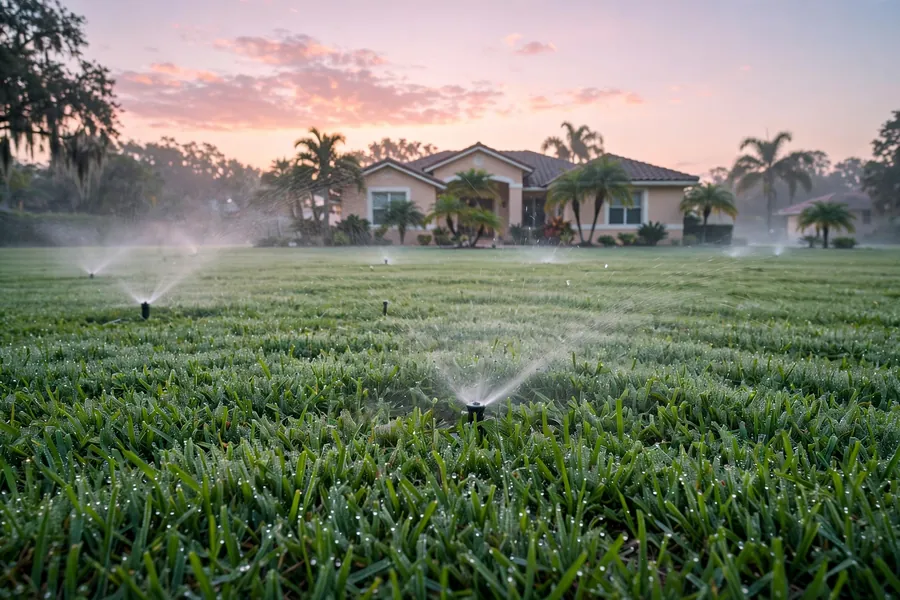
Work through these steps in order. Most lawns improve once watering and feeding change.
- Confirm it with the tug test. Do not treat on color alone. Pull blades at the outer edge and check for a soft, dark, rotten base. If the base is dry, it is likely not large patch.
- Water only in the early morning, and only when needed. UF/IFAS points to about 2 to 8 a.m., while dew is present. Cut back run time as nights cool, and skip irrigation when rain has already wet the lawn.
- Stop quick-release nitrogen. Use slow-release nitrogen in a balanced fertilizer with equal nitrogen and potassium. Avoid excess nitrogen while the disease can develop.
- Mow infected areas last and rinse the mower. Mowing sick patches first spreads fungus across healthy turf. Finish the rest of the lawn first, then mow patches, and wash clippings off the mower.
- Consider a labeled fungicide if spread continues. If patches keep growing after watering and feeding change, a fungicide labeled for large patch on home lawns can stop the spread. Follow the label exactly. Fungicide stops spread but does not regrow grass.
Give the plan time to work. Damaged grass will not green up overnight in cool weather. Judge progress by whether patches stop growing, not by instant color change.
Should You Use a Fungicide?
Fungicide makes sense in one case: patches keep spreading after you fix watering, feeding, and mowing. If patches have stopped growing, a spray adds little.
Be careful with product choice. UF/IFAS lists many active ingredients, but the listing is not a recommendation, and some products cannot be used on residential lawns at all. Preventive use only makes sense if large patch is a routine problem year after year.
We never name brands or rates here on purpose. Products and labels change, and the label is the legal guide for the product in your hand. Always follow the label, and check that the product is labeled for home lawns and large patch on St. Augustine before you buy.
Will the Grass Grow Back?
In most cases, yes. Large patch rots the leaf base, but the roots are not affected. St. Augustine spreads by runners from healthy roots, so once the fungus stops and warm weather returns, runners fill the thin spots.
Expect patience through spring. Damage looks worst in late winter, when growth is slow. As soil warms, bare rings close from the edges. Mow at the right height and keep watering in the morning.
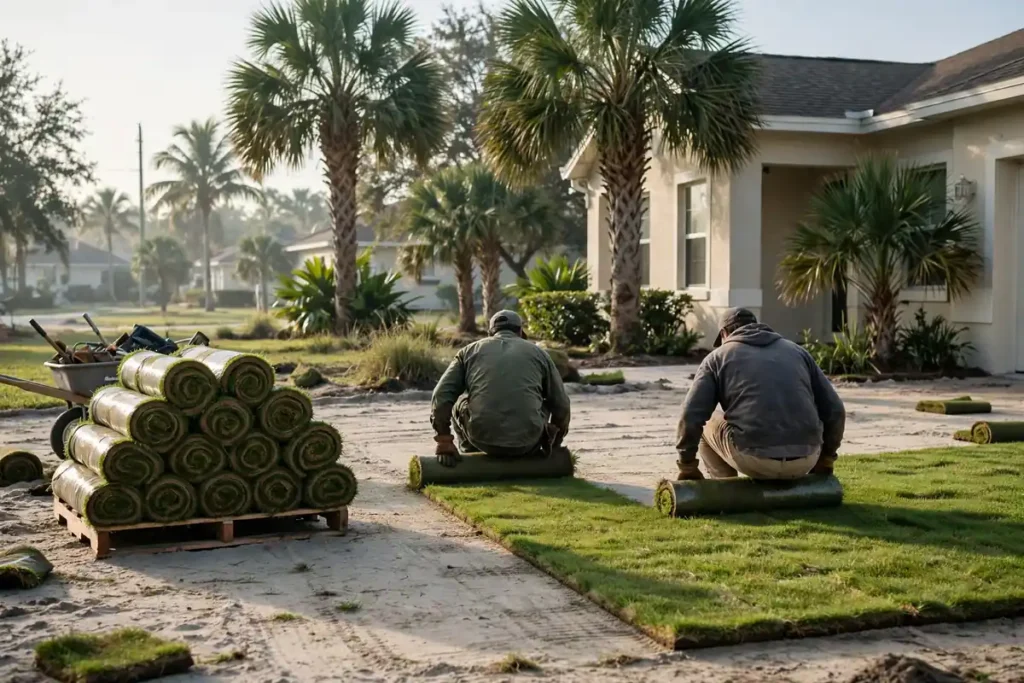
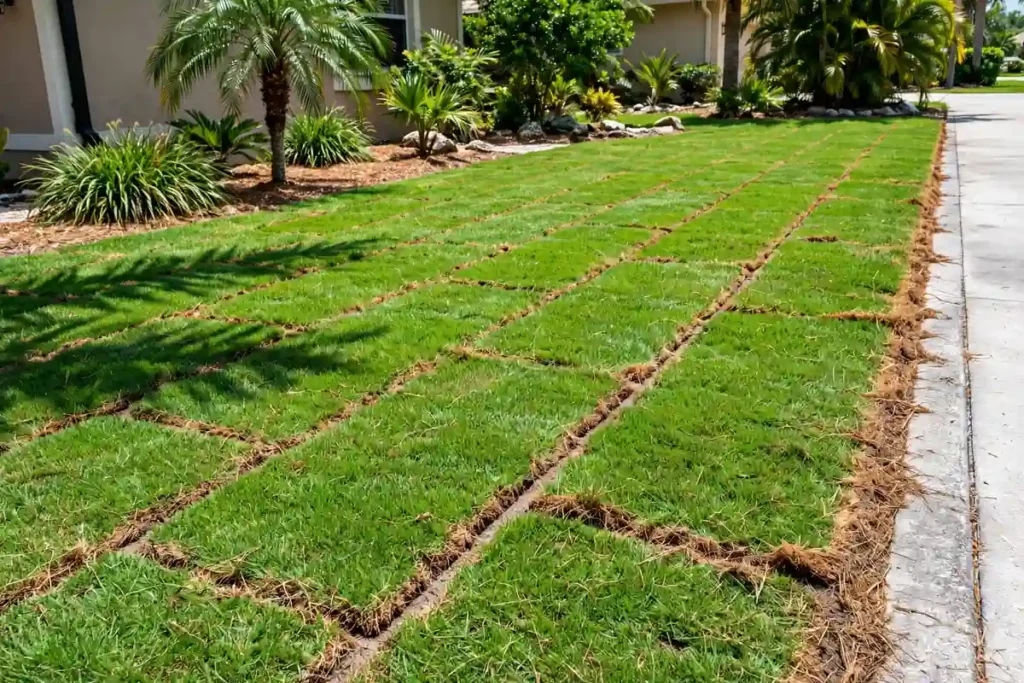
If bare spots stay open into late spring, plugs or re-sod can close gaps that runners never filled, and warm soil helps new grass root fast. For recovery, read our guide to make St. Augustine grass thicker. If the lawn looks dead beyond patchy rings, read our guide to restore a dead lawn.
How to Prevent Large Patch Next Fall
Use this checklist in fall, while the lawn is still healthy:
- Switch irrigation to early morning, about 2 to 8 a.m., and cut run time as nights cool.
- Follow the Florida lawn fertilizer schedule so nitrogen goes down slow-release at the right time, not as a fast shot in cool months.
- Fix low, wet spots so water drains instead of pooling after rain.
- Control thatch so air moves at the leaf base and moisture does not sit trapped.
- Keep mowing height right through fall on a steady schedule.
If the lawn is new sod and patches show up in the first season, the cause may differ from an old lawn. Read our guide on why new sod dies to check sod-specific causes before you treat for fungus.
Lawn Care in Palm Coast
Not sure if the rings in your yard are large patch or something else? We check the leaf base, watering, and feeding before we treat anything, and we plug or re-sod bare areas once the fungus is under control. We serve Palm Coast, Flagler Beach, Bunnell, Ormond Beach, and St. Augustine. Call (386) 237-2983 or ask for a free estimate. Learn more about our lawn maintenance plans and sod installation services.
Frequently Asked Questions
Brown patch in St. Augustine grass shows up as yellow rings or patches that turn reddish brown, brown, or straw colored. Patches start about a foot across and can grow to several feet wide. Leaves pull off with ease, and the leaf base feels soft and dark and smells rotten. A dark, wilted outer edge means the fungus is active.
Large patch shows up mostly from November through May, when temperatures stay below 80 degrees and leaves stay wet for long stretches. Rain, extra irrigation, and high humidity all keep blades damp long enough for infection. It is normally not seen in summer, when heat and fast growth work against the fungus.
Yes, in most cases. The roots are not affected by large patch, so runners from healthy crowns fill back into thin spots once the fungus stops. Recovery needs warm weather and active growth, so rings often look worst in late winter and close up through spring. Bare spots that stay open into late spring may need plugs or re-sod.
Water only when the lawn needs it, and only in the early morning, about 2 to 8 a.m., while dew is present. Morning water dries during the day instead of sitting on blades all night. Skip evening watering and cut run time as nights cool. Wet leaves for 48 hours or more are what let the fungus infect.
Avoid quick-release nitrogen while large patch is active, since fast nitrogen pushes soft growth the fungus attacks with ease. If you feed, use slow-release nitrogen in a balanced fertilizer with equal nitrogen and potassium. Follow local fertilizer rules and the seasonal schedule, and hold off on extra nitrogen until the spread stops.
No. Chinch bugs hit hot, sunny areas in summer and drain sap from the grass, leaving dry, straw colored patches that spread in the sun. They do not rot the leaf base. Large patch shows up in cool, wet months from November to May, and its mark is a soft, dark, rotten leaf base that pulls off with ease.