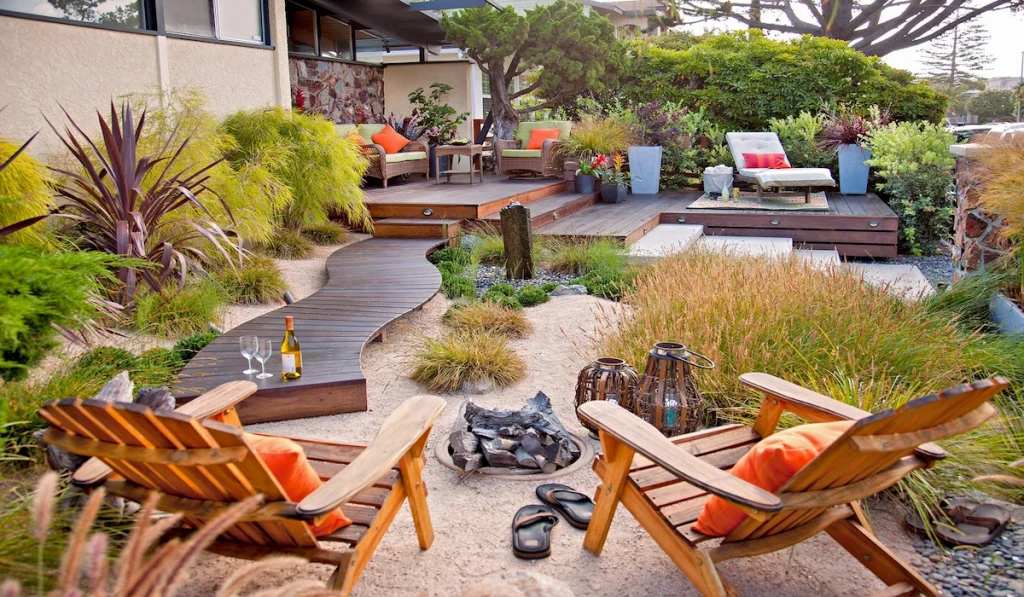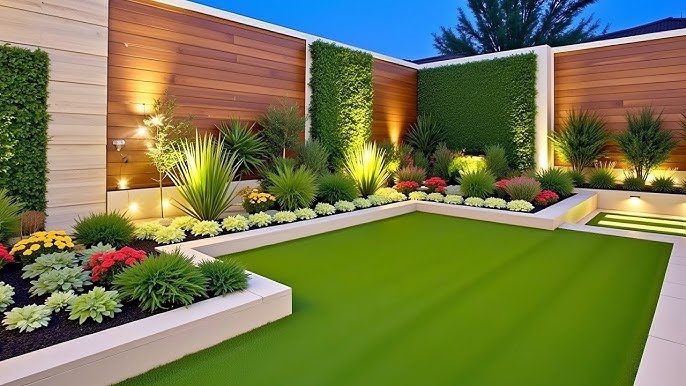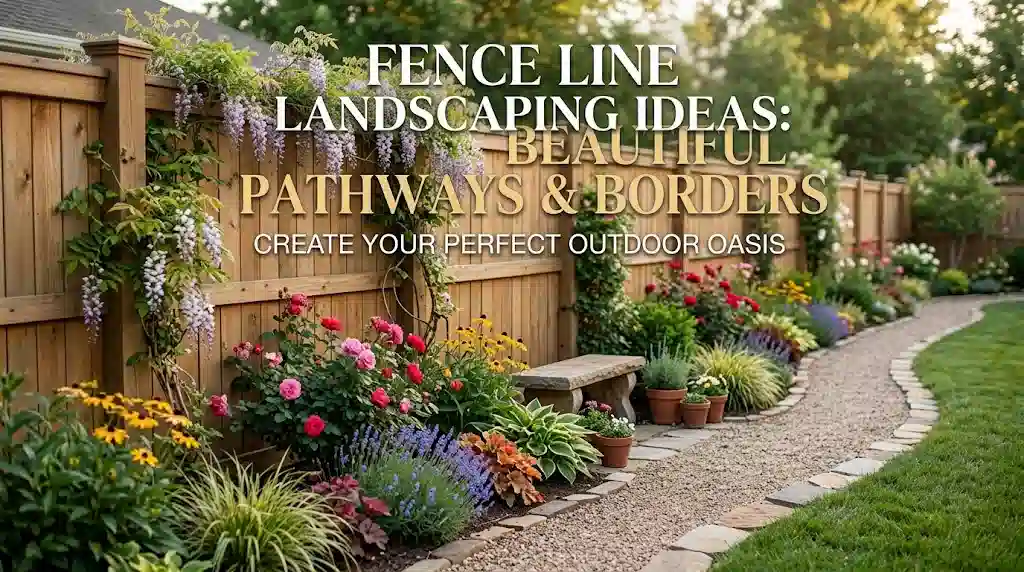
The best fence line landscaping ideas for Florida yards are layered privacy hedges, flowering vines like coral honeysuckle, low-care gravel or mulch strips with drip irrigation, and accent lighting. Leave a 12 to 18 inch gap between plants and the fence, keep mulch off wood boards, and pick plants that handle heat and sandy soil.
Most Palm Coast homes have a long stretch of fence that does nothing but hold back the neighbor’s view. That bare line is one of the easiest places in the yard to add color, privacy, and curb appeal. The catch is that many fence line ideas online come from colder states. In Florida, a bed pushed tight against a wood fence invites termites and rot, sprinklers stain vinyl panels, and many popular vines are invasive here. These 15 ideas are sorted by what you want your fence line to do, with the Florida details built in.
4 Fence Line Rules to Follow Before You Plant
- Leave a gap. Plant shrubs at least half their mature width away from the fence, and keep a 12 to 18 inch walking strip behind beds. You will need it to trim, paint, and fix the fence.
- Keep soil and mulch off wood. Wet mulch piled against wood boards and posts speeds up rot and gives termites an easy path. Keep it a few inches below the bottom board.
- Aim sprinklers away. Spray that hits the fence leaves orange well-water stains on vinyl and grows algae on wood. Drip lines are a better fit along fences.
- Know your property line and drainage. Many Palm Coast backyards have a drainage swale along the rear fence. Do not block it with raised beds or dense plantings, and check your HOA rules before planting near shared fences.
Fence Line Ideas by Goal
If You Want More Privacy
1. A layered privacy hedge. Instead of one flat row of shrubs, plant two staggered rows of different heights. Podocarpus, sweet viburnum, and native wax myrtle all grow well in Flagler County and fill in fast. For a full list of screening plants, see our guide to plants that add privacy to your yard.
2. Palms for height. Sabal palms or clusters of taller palms lift the eye above a 6-foot fence and block second-story views. Plant them in groups of three at different heights for a natural look.
3. Clumping bamboo, carefully. Clumping bamboo makes a fast, tall screen. Stay away from running bamboo, which spreads under fences and into your neighbor’s yard.
If You Want Color
4. Flowering vines on the fence. Native coral honeysuckle blooms red and draws hummingbirds, and UF/IFAS notes it blooms best in full sun. Confederate jasmine adds white, fragrant spring flowers and covers chain-link quickly. Train vines onto wire or a trellis, not straight onto wood boards that need repainting.
5. A three-layer flower bed. Put tall plants in back, medium in the middle, and low edging plants in front. Firebush, plumbago, and coontie make a tough Florida mix. Firebush may die back after a hard freeze but usually returns in spring.
6. Containers for seasonal color. Line a fence with large pots and swap annuals each season. Petunias and snapdragons work in our cool months, and pentas and vinca handle summer heat.
If You Want Low Maintenance
7. A gravel strip. A 2 to 3 foot band of stone along the fence stops weeds, keeps mower wheels off the boards, and needs almost no care. Our guide to pea gravel landscaping explains how to keep stone from sinking into sandy soil.
8. Ornamental grasses. Muhly grass and Fakahatchee grass need little water once settled and look good all year. Muhly turns a soft pink cloud each fall.
9. A mulch bed with drip irrigation. Wide shrub beds with drip tubing under mulch use far less water than spray heads. That matters in Flagler County, where the current water shortage order limits watering to one day a week. For more easy-care plans, browse our low-maintenance landscaping ideas.
If You Want to Hide an Ugly Fence
10. Cover chain-link with vines. Chain-link is the perfect frame for vines. Confederate jasmine or coral honeysuckle can hide it within a season or two.
11. Freestanding trellis panels. Set wood or metal trellis panels a foot in front of an old fence and grow vines on them. You get a green wall without touching the fence itself.
12. Refresh the fence, then plant. A coat of dark stain or paint makes green plants pop and hides wear. Dark gray, black, and deep brown work especially well behind bright Florida foliage.
If Your Yard Is Small
13. Vertical planters. Wall-mounted planters or pocket planters hung on a sturdy fence add green without taking ground space. Herbs and trailing plants do well in them.
14. A narrow raised bed. A 12 to 18 inch wide raised bed gives you good soil in a tight space. Keep it a few inches off the fence and leave gaps for water to drain.
15. Fence line lighting. Uplights on palms and small spotlights along the fence make a small yard feel bigger at night. Our landscape lighting team designs low-voltage systems that stand up to Florida rain.
Best Fence Line Ideas by Fence Type
| Fence type | What works best | What to avoid |
| Vinyl (PVC) | Shrub beds with drip, grasses, containers, lighting | Spray heads that leave orange stains |
| Wood | Freestanding trellis, gravel strip, beds with a gap | Mulch and soil piled against boards, vines on the boards |
| Chain-link | Flowering vines, a layered hedge in front | Woody vines that grow into the mesh and bend it |
| Aluminum or pool fence | Low shrubs, grasses, lighting | Tall plants that block the view or help kids climb a pool barrier |
Vines to Avoid in Florida
Some vines sold online and in big-box stores are invasive here. UF/IFAS lists Japanese honeysuckle as a prohibited plant in Florida, and it warns that Chinese and Japanese wisteria grow so aggressively they can smother and even kill trees. Also skip flame vine, cat’s claw vine, and air potato. Stick with native coral honeysuckle or well-behaved choices like confederate jasmine.
Fence Line Tips for Palm Coast Yards
A few local details change how you plan a fence line here:
- Rear swales: Many Palm Coast lots drain through a swale along the back fence. Keep that low strip open with grass or low groundcover so water can move.
- HOA communities: Neighborhoods like Grand Haven and Palm Coast Plantation often have rules on hedge height and plantings near shared fences. Get approval first.
- Coastal wind: In Flagler Beach and along the Intracoastal, salt spray and wind tear up delicate plants. Choose tough options from our list of salt-tolerant plants for Florida.
Want a fence line that looks finished from day one? Our team plans and installs fence line beds, hedges, and lighting across Flagler County. Learn more about our landscape installation services, or call Dreamscapes Florida at (386) 237-2983 for a free estimate.
Frequently Asked Questions
Podocarpus, sweet viburnum, and wax myrtle make good privacy hedges. For color, try coral honeysuckle, confederate jasmine, firebush, and plumbago. Muhly grass and Fakahatchee grass are easy, low-water choices for a softer look.
Plant shrubs at least half their mature width away from the fence, and leave a 12 to 18 inch strip behind the bed. That gap gives air flow, keeps branches off the fence, and lets you reach the fence for repairs.
No. Mulch and soil piled against wood boards hold moisture, which speeds up rot and gives termites an easy path. Keep mulch a few inches below the bottom board of a wood fence.
A gravel or mulch strip with a few ornamental grasses is the cheapest option. Vines on an existing chain-link fence are another low-cost way to add green fast.
Clumping bamboo and wax myrtle are among the fastest. Podocarpus and sweet viburnum grow a bit slower but make a denser, longer-lasting screen. Avoid running bamboo, which spreads into neighboring yards.
Usually yes, but many HOAs set rules for hedge height and plantings near shared fences. Check with your HOA before you plant, and do not block any drainage swale along the fence line.