A garden pathway is more than stones placed in the ground. It creates a journey through your outdoor space and ties the whole landscape together.
A well-designed walkway does more than offer direction. It adds structure, charm, and a sense of flow to any yard, whether it’s a sprawling backyard or a small courtyard.
Curved paths invite exploration and feel soft and organic. Straight paths feel formal and efficient. The style you choose should match the character of your garden.
Natural Stone Walkways
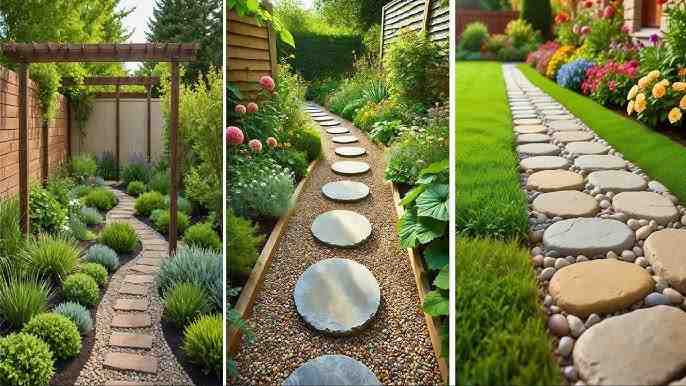
Natural stone walkways bring timeless beauty and lasting strength to any landscape. Materials like slate, sandstone, limestone, or fieldstone offer irregular edges and rich texture.
Stone paths hold up well in different weather conditions and need very little upkeep, which makes them a smart long-term investment. If you’re planning a full outdoor renovation, our hardscape design and installation services can help you pair stone walkways with matching patios and retaining walls.
Moss or creeping groundcover growing between the stones softens the look over time, helping the path feel like a natural part of the garden.
Gravel Pathways for a Casual, Elegant Look
Gravel pathways bring a relaxed, sophisticated feel to any garden. They’re versatile, budget-friendly, and easy to install compared to other walkway materials.
Gravel paths work well in both structured gardens and looser, cottage-style landscapes. Edging with stone, timber, or metal strips keeps the gravel contained and prevents it from spreading into planting beds.
Over time gravel may need occasional topping off, but its low-maintenance nature makes it appealing for homeowners who want a good-looking path without much upkeep. Pairing gravel with erosion-resistant ground cover, like the options in our erosion control plant guide, helps keep the path stable during Florida’s heavy rains.
Stepping Stones and Their Whimsical Appeal
Stepping stone walkways add a playful, practical element to garden design. Individually placed stones create a floating effect across grass, mulch, or gravel.
Spacing can be adjusted to encourage a slower, more relaxed pace, which works especially well when connecting focal points like flower beds, water features, or garden benches. Planning where those focal points sit is part of a larger home landscaping design plan that ties your walkway into the rest of the yard.
Materials range from flat river rocks and slate to handmade concrete pavers, giving you flexibility to match any style, formal or informal.
DIY Garden Paths
DIY garden paths let homeowners personalize their outdoor space without hiring a professional. Reclaimed brick, broken concrete, or repurposed wood can cut costs while adding unique texture and color.
A well-planned layout still needs proper drainage, stability, and level footing to stay safe and functional over time. Once your pavers or stone path is installed, routine care matters just as much as the build — our guide to professional surface cleaning for pavers and hardscape covers how to keep algae, mold, and stains from building up.
Building the path yourself also adds a personal, hands-on connection to the finished landscape.
Integrating Landscaping With Walkway Design
A garden pathway doesn’t exist on its own — it’s part of the larger landscape. Low-growing plants that spill softly over the edges frame a walkway nicely, while taller shrubs add rhythm and height.
Lighting matters too, especially for paths used in the evening. Solar or low-voltage fixtures tucked along the edges improve safety and add ambiance after dark, which is exactly what our landscape lighting installation services are designed for.
Water features, statues, or a seating area placed along the path can serve as a destination point that draws people through the garden.
Budget-Friendly Walkway Ideas
A beautiful pathway doesn’t require a big budget. Crushed gravel, mulch, or decomposed granite create a textured, affordable surface.
Repurposed materials — old bricks, salvaged wood, or leftover concrete slabs — can be arranged in creative patterns for a custom look at a fraction of the cost. Getting the base and soil composition right underneath matters just as much as the surface material; our guide to loam soil explains how proper soil structure supports drainage and long-term stability.
Painted or stenciled stepping stones add personality without adding much expense.
Enhancing Curb Appeal Through Outdoor Walkways
Garden pathways shape the first impression of a home. A well-crafted walkway welcomes guests and sets the tone before they even reach the front door.
Pathways made from well-maintained materials suggest a tidy, cared-for property, while creative layouts and materials show personality and craftsmanship. If you’re planning a full front-yard refresh, our landscape design services can help design a walkway that complements your home’s overall look.
Small touches, like decorative gravel or bordered edges, can lift the entire property’s curb appeal.
Blending Decorative and Functional Elements
A successful walkway balances decoration with function. Mosaics, stamped concrete, or embedded tiles can turn an ordinary path into a visual feature, while non-slip textures and proper drainage keep it safe.
Smooth stones can be given a textured, slip-resistant finish, while composite materials offer durability without sacrificing style. Seating areas, arches, or trellises along the way create spots to pause and enjoy the garden.
Frequently Asked Questions
What’s the most low-maintenance garden pathway material? Natural stone and gravel are both low-maintenance choices. Stone needs almost no upkeep, while gravel only needs occasional topping off.
Is a DIY garden path a good option? Yes, for smaller or budget-conscious projects. Just make sure the base has proper drainage and a level, stable foundation before laying material.
How far apart should pathway lights be spaced? A common rule of thumb is 6 to 8 feet apart for pathway lights, which provides even illumination without overdoing it.
What’s the cheapest walkway material? Crushed gravel, mulch, and decomposed granite are among the most affordable options, especially compared to natural stone or pavers.
Final Thoughts
A well-designed garden pathway does more than connect two points in your yard. It shapes how people move through and experience your outdoor space, while adding lasting curb appeal and function.
Whether you’re planning a natural stone walkway, a gravel path, or a full outdoor living space, working with an experienced team ensures the result is both beautiful and built to last. Explore our full landscaping services or contact Dreamscapes Florida for a free consultation on your next pathway project.