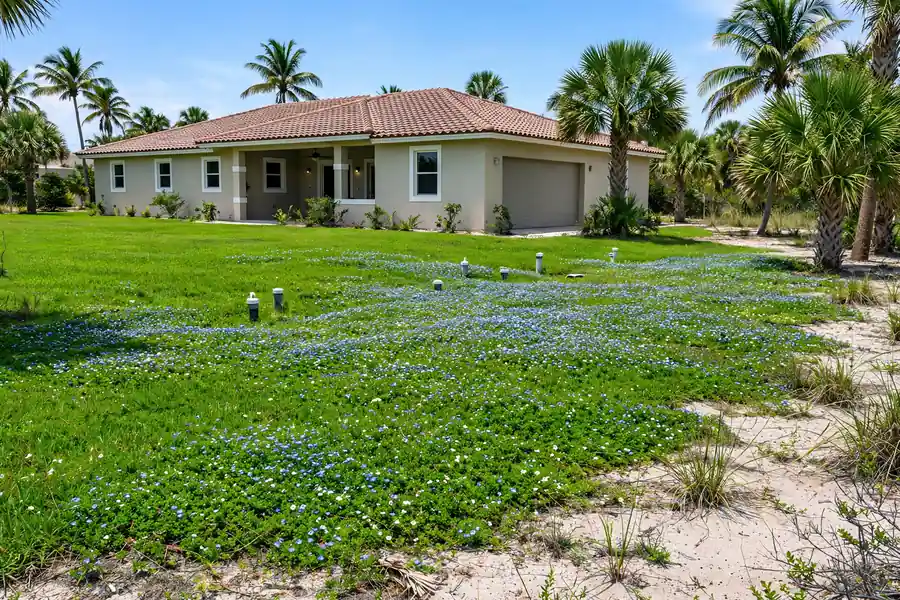
The safest cover for a septic drain field in Florida is grass. St. Augustinegrass, bahiagrass, zoysiagrass, and bermudagrass all have shallow, fibrous roots that hold the soil, drink up extra moisture, and never reach the pipes. Shallow flowers and groundcovers can work too. Trees, shrubs, vegetable gardens, and hardscape never belong on the field.
Many homes across Flagler County sit outside city sewer lines and rely on a septic system. Nearly 1 in 3 Florida households depends on one, and UF/IFAS researchers estimate more than 2.5 million systems are in use across the state. A lot of Palm Coast yards have a drain field hiding under the lawn, and yours can still look cared for if you plant with the system in mind.
How a Drain Field Works and Why Roots Matter
A septic system has two main parts. The tank holds wastewater long enough for solids to settle out. The liquid that leaves the tank, called effluent, flows to the drain field, where it moves through perforated pipes in gravel trenches and seeps into the soil. Soil microbes finish treating it there.
Those pipes sit closer to the surface than most people think. UF/IFAS Extension notes they can sit just a few inches below the soil, and other guidance puts the usual depth at 6 to 36 inches. The lines are often 18 to 36 inches wide, with pipes spaced 8 to 10 feet apart.
Roots seek water and nutrients, and a drain field offers both. Fine grass roots stay near the surface and cause no harm, but woody roots grow into pipe joints, clog lines, and can crack pipes. A damaged field can back wastewater up toward the home, and repair means digging up the yard. Plant choice is the cheapest protection a drain field gets.
The Short Answer: Grass First, Flowers Second
Grass is the best cover for a drain field, and shallow-rooted flowers are the second best choice. UF/IFAS Extension and the U.S. Environmental Protection Agency give the same advice: plant grass or keep native vegetation over the field, and use only shallow-rooted plants.
Good plants do more than look nice. Their roots take up moisture and nutrients from the effluent, which helps the soil treat wastewater. They hold sandy soil in place during summer storms and let oxygen reach the soil, which the microbes in the field need. Bare soil does none of this well. Pick plants with shallow, fibrous roots that need little water and no yearly digging.
The Best Grass for a Florida Drain Field
Turfgrass is the most common and easiest cover for a drain field, and UF/IFAS Extension names four warm-season grasses that work in Florida, all with shallow, fibrous roots that handle the extra moisture and nutrients in the soil.
| Grass | Why it works over a field | Watch out for |
|---|---|---|
| St. Augustinegrass | The most common Florida lawn grass. It spreads by above-ground runners, and its roots stay shallow and fibrous. | Needs water in dry spells and does best in sun to light shade. |
| Bahiagrass | Tough and low input. It handles sandy soil and dry spells with little care. | It can look thin in shade and needs mowing to stay neat. |
| Zoysiagrass | Forms a dense mat that crowds out weeds and feels soft underfoot. | It grows slowly, so bare spots take time to fill in. |
| Bermudagrass | Loves full sun and heat, and it recovers fast from wear. | It spreads hard and needs edging so it does not take over beds. |
For help matching a grass to your yard, see our guide to the best grass for Florida lawns. One rule applies to all four: do not fertilize turf over the drain field. The effluent already feeds the grass.
Flowers and Groundcovers That Stay Shallow
Grass is the safest choice, but a drain field does not have to be plain lawn. UF/IFAS Extension lists herbaceous plants that work on or around a drain field in Florida, including milkweed, aster, plumbago, pink muhly grass, iris, Agapanthus, and fountain grass. UF/IFAS also lists yarrow, coreopsis, black-eyed Susans, gaillardia, and phlox.
Herbaceous means soft stems and no woody roots, and that is the key trait. These plants add color, and they can be pulled out or replaced without deep digging if the field ever needs service. Native wildflower mixes suited to Florida also work with turfgrass if they stay low and shallow-rooted.
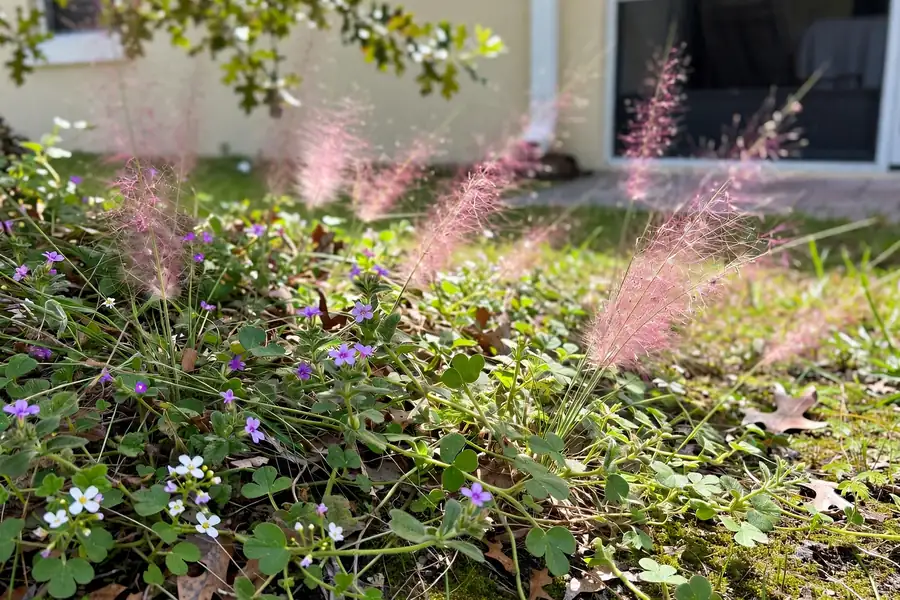
Plant them by hand and keep the holes shallow, since digging more than a few inches deep over the field risks hitting a pipe. Skip plants that need frequent dividing, deep cultivation, or heavy watering. Bamboo and pampas grass are out too: UF/IFAS Extension warns their roots run deep and wide, and large ornamental grasses can also reach the pipes.
What Never Goes on a Drain Field
Some things cause damage no matter how careful you are, so keep every item on this list off the field and off the tank. The U.S. Environmental Protection Agency gives the same list in its SepticSmart guidance.
| Never place on a drain field | Why it harms the system |
|---|---|
| Trees and large shrubs | Woody roots grow into pipes, clog lines, and crack joints. |
| Vegetable or fruit gardens | Bacteria and pollutants from effluent can enter the food chain. |
| Raised beds | Added soil and weight press on pipes and block air from the soil. |
| Patios, decks, sheds, pools, driveways | Weight compacts the soil and can crush pipes, and it blocks access for service. |
| Plastic sheeting or heavy fill | It seals the soil surface and starves the field of oxygen. |
| Ponds or water features | Standing water saturates the soil and slows treatment. |
| Sprinkler lines | Buried lines cross the pipes, and added water overloads the field. |
| Parking or driving | Vehicle weight compacts soil and can break buried lines. |
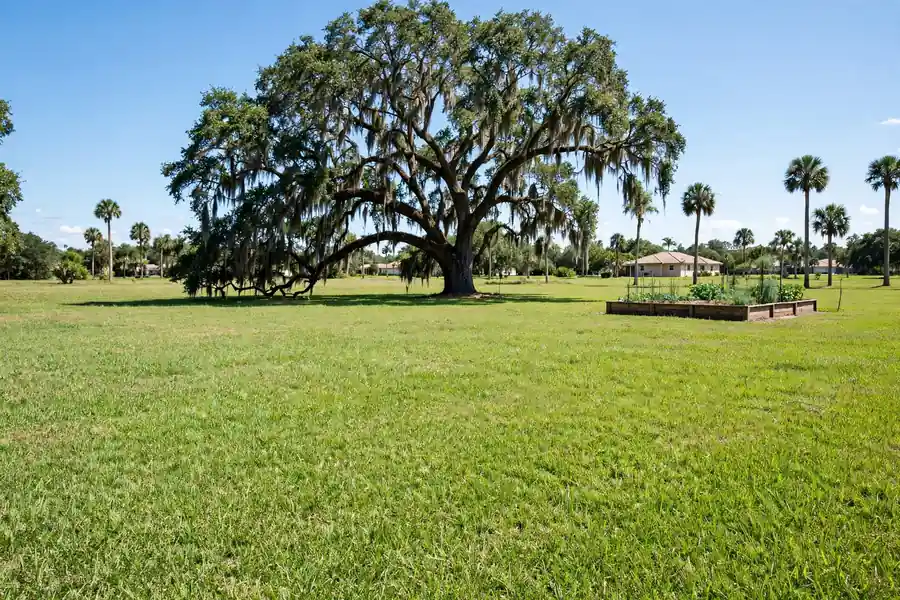
The vegetable garden surprises homeowners most. The soil over a field is rich, so vegetables grow well there, but UF/IFAS Extension warns that bacteria or pollutants can reach the food, so keep edible plants well away from the tank and the field. The same goes for reshaping the ground: do not add fill or regrade over the field. The EPA notes that a couple of inches of topsoil is generally fine, but anything more changes how water moves through the soil.
How Far Away Do Trees and Shrubs Belong?
Trees and shrubs can still be part of your yard. They just need distance. UF/IFAS guidance puts shrubs at least 10 feet from the drain field and trees 30 to 50 feet away, measured from the edge of the field rather than from the house. A tree with a 30-foot canopy spread planted 20 feet from a field is a recipe for failure, according to UF/IFAS.
The reason is root spread. Tree roots can grow 2 to 3 times wider than the mature canopy, according to UF/IFAS Extension, so a tree that looks small at planting time can send roots across a whole yard as it matures. Keep thirsty species farthest from the system.
If you want trees in the yard, pick small-maturing species and plant them far from the field. Our guide to the best trees for small yards can help you choose, and our notes on landscaping around trees cover spacing and root care. If a tree is already growing close to the field, do not cut its roots yourself. Call a licensed septic contractor first, since cutting roots can kill the tree and damage pipes.
Find Your Drain Field Before You Dig Anything
Find the field before you plant anything, and start with the permit drawing. When a septic system is installed in Florida, the county health department keeps the permit and a drawing that shows the tank, the drain field, and the reserve area. The Florida Department of Health oversees onsite sewage systems in the state, and your county office can pull the record for your address.
Look for clues in the yard too. The tank lid is often a round or square cover at grade, and cleanout pipes may stick up near the house. The field itself sometimes shows as stripes of greener grass in dry weather.
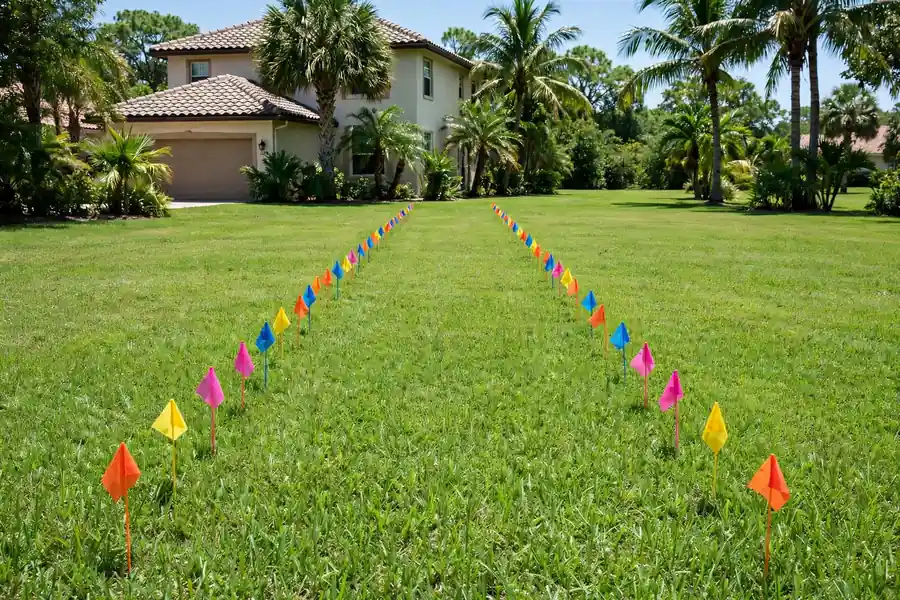
Before any digging, call Sunshine 811 at least 2 full business days ahead. Florida law requires the call, and the day you call does not count toward the two days. Weekends and holidays do not count either, and the marks stay valid for 30 calendar days. One warning: 811 marks utility lines owned by member companies, not your private septic lines. Mark the field yourself with flags once you know where it runs, and hand-dig shallow near the lines.
Water, Mulch, and Mowing Over the Field
Daily care over a drain field is simple, and most of it is about not adding water. The field already receives effluent every day, and extra water slows treatment. Keep roof drains, sump outlets, and gutter downspouts pointed away from the field. A rain garden placed well away from the field, downhill from the house, can take roof runoff instead.
Do not run irrigation lines over the field or aim sprinklers at it. If the lawn over the field looks dry in a hot spell, water it lightly by hand rather than running a zone over the pipes. A healthy lawn over a field usually stays green on its own.
Mow as usual, and leave the clippings where they fall. They break down fast and feed the grass. Skip heavy mulch over the field, since a thick layer holds moisture against the soil and blocks air. If you mulch beds near the field, keep the layer thin and off the field itself.
Landscaping a Septic Field in Palm Coast
Palm Coast yards add a few local twists. Much of Flagler County sits on sandy soil that drains fast, which suits a drain field but also lets roots travel farther in search of water. Summer storms can saturate a field for days, so anything that adds water or blocks drainage makes a bad stretch worse. Homes near the coast deal with salt air too, and UF/IFAS Extension warns against salt-sensitive plants over a field. If you are unsure, have your soil tested for salt before you plant.
Keep the field itself in grass, add shallow flowers or groundcovers at the edges if you want color, and put trees, beds, and hardscape well away from the lines. Mark the field with small flags while you plan.
We design yards around septic systems across Palm Coast, Flagler Beach, Bunnell, Ormond Beach, and St. Augustine. If you are not sure where your field runs or what will grow safely over it, our landscape design team can map the area and build a plan that keeps your yard looking good and your system working. Call us at (386) 237-2983 or reach us through our contact page.
Frequently Asked Questions
Yes. Grass is the best cover for a drain field. Its shallow, fibrous roots hold the soil, take up moisture and nutrients, and never reach the pipes. St. Augustinegrass, bahiagrass, zoysiagrass, and bermudagrass all work in Florida. Do not fertilize the grass over the field, since the effluent already feeds it.
Yes, if the flowers are shallow-rooted and herbaceous, with soft stems and no woody roots. Good Florida choices include milkweed, aster, plumbago, pink muhly grass, iris, and black-eyed Susans. Plant them by hand in shallow holes, and skip anything that needs deep digging, frequent dividing, or heavy watering.
No. Never plant vegetables, fruit, or herbs on or near a septic tank or drain field. UF/IFAS Extension warns that bacteria and pollutants from effluent can enter the food chain. The soil is rich and vegetables grow well there, but the health risk is real. Grow edibles in a separate bed well away from the system.
Keep trees 30 to 50 feet away from the edge of the drain field, and shrubs at least 10 feet away. Tree roots can spread 2 to 3 times wider than the canopy, so a small tree can still reach the pipes as it grows. Measure from the field itself, not from the house.
No. Heavy structures such as patios, decks, sheds, pools, and driveways press on the pipes and compact the soil, which can crush lines and block access when the system needs service. The EPA SepticSmart guidance lists all of these as items to keep off the tank and drain field.
Start with the permit drawing kept by your county health department, which shows the tank, the drain field, and the reserve area. In the yard, look for the tank lid, cleanout pipes, and stripes of greener grass. Before any digging, call Sunshine 811 at least 2 full business days ahead so utility lines can be marked.