If your backyard turns to mud every time it rains, the mud is not the actual problem. Mud is what’s left after something else goes wrong: the grass died, the soil got packed down, the roof dumps water in one spot, or that corner never really dries out. Fix the cause and the mud goes away. Guess at the cause and you’ll pay for the fix twice.
That’s the difference between this guide and our guide to getting rid of standing water. Standing water is puddles — water sitting on top of the ground. Mud is what you’re left with after the puddle is gone: bare, churned-up ground that stays slippery for days and gets tracked through the house. Some muddy yards do have a drainage problem underneath; plenty don’t. Here’s how to tell which one you have, and what to do about it in the right order.
First, Work Out Which Kind of Mud You Have
Four checks, all free, and together they point at the right fix almost every time.
Watch the yard while it’s actually raining
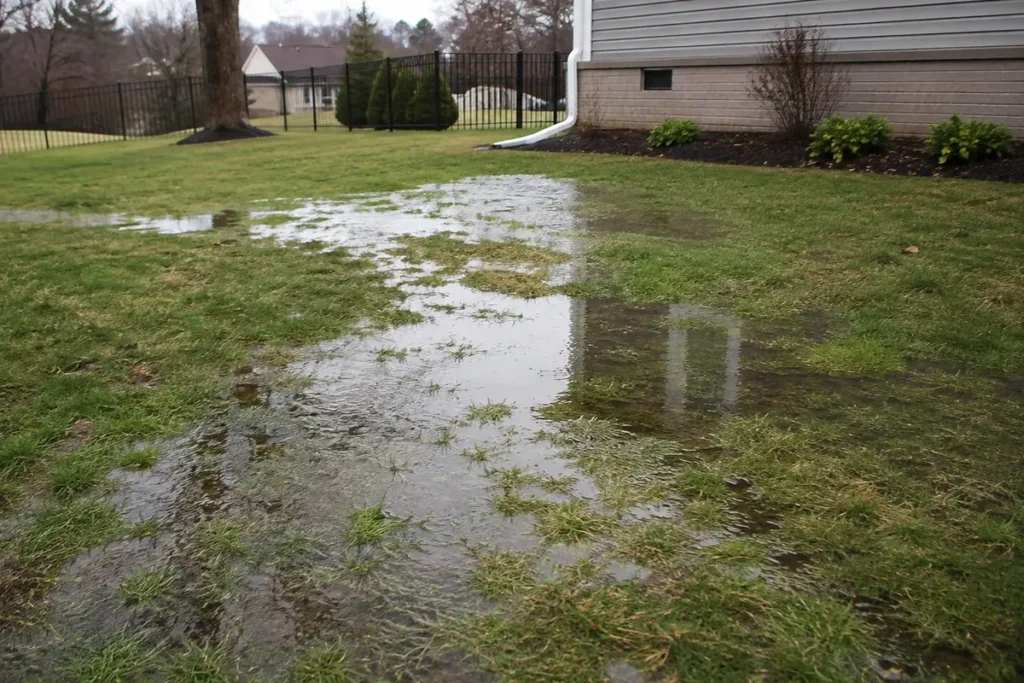
Stand at a window during a hard rain — a real Florida afternoon storm, not a drizzle — and watch where the water goes. Does it sheet across the yard? Shoot out of a downspout into the same crater every time? Water moving fast across the surface is a runoff problem. Water that sits and slowly sinks is a soil or low-spot problem. Different fixes — and this five minutes tells you which one you’re buying.
Do the screwdriver test
The morning after a rain, push a flathead screwdriver into the muddy area, then into a healthy lawn. In healthy soil it slides in up to the handle with one hand. In compacted soil you’ll be leaning on it with both hands and getting two inches. Compaction is the most under-diagnosed cause of mud in Florida: feet, paws, mowers, and pool-party traffic squeeze the air out of the ground until rain can’t soak in, so it sits on top and churns.
Look at the grass, not the water
If the muddy patch is exactly where the grass is thin or gone — the route from the back door to the gate, the shady side of the house, the corner where the dogs wrestle — the water may be a minor player. A healthy stand of St. Augustine is a working surface: its runners knit the soil into a mat that sheds water and survives traffic. Lose the mat and you get mud, even in a yard that drains fine.
Follow the roof water
One inch of rain on a 1,500-square-foot roof is roughly 900 gallons of water, and all of it leaves through a handful of downspouts. If one ends at the foundation or dumps onto a splash block two feet from the house, that corner of your yard gets flooded on purpose, every single storm. Check where each downspout actually ends before you blame the soil.
Get Through This Weekend: Stabilizers That Buy You Time
If the mud is driving everyone inside today, cover it. A two-to-three-inch layer of pine bark mulch or pine straw over the worst area gives you a walkable surface the same afternoon.
Be clear-eyed about what these are: covers, not cures. Mulch on a traffic path gets kicked aside within weeks. Straw blows around, mats down, and rots into the soil. Neither fixes worn grass, compaction, or a downspout problem. They buy you time to do the real fix below.
Most Mud Is a Grass Problem, Not a Water Problem
Break up compacted ground first
If the screwdriver test failed, start here. A core aerator — the kind that pulls out small plugs, rented for about $75–$100 a day — opens the ground back up. Run it over the muddy zone when the soil is moist but not soupy, then rake a half-inch topdressing of compost or a compost-and-sand mix into the holes. This sounds backwards in sandy Palm Coast soil, but the sand isn’t the layer causing trouble. The mud forms in the thin layer of topsoil and organic muck sitting on top of it, which traffic packs into a crust. The plugs and compost break that crust and give roots something to grow through.
Re-sod the worn areas — seed won’t save you here
Florida’s lawn grass is St. Augustine, and St. Augustine doesn’t grow from seed in any practical sense. It’s planted as sod or plugs. That’s the short version of the sod vs. seed question, and it’s why overseeding a muddy patch does nothing. For a worn traffic lane or a dead corner: cut out what’s left, loosen the soil, fix the level so the spot doesn’t sit in a dip, and lay fresh sod tight. Small patches — a door landing, a gate swing — are realistic weekend work. Water new sod daily until the roots grab and it resists a tug, usually two to three weeks.
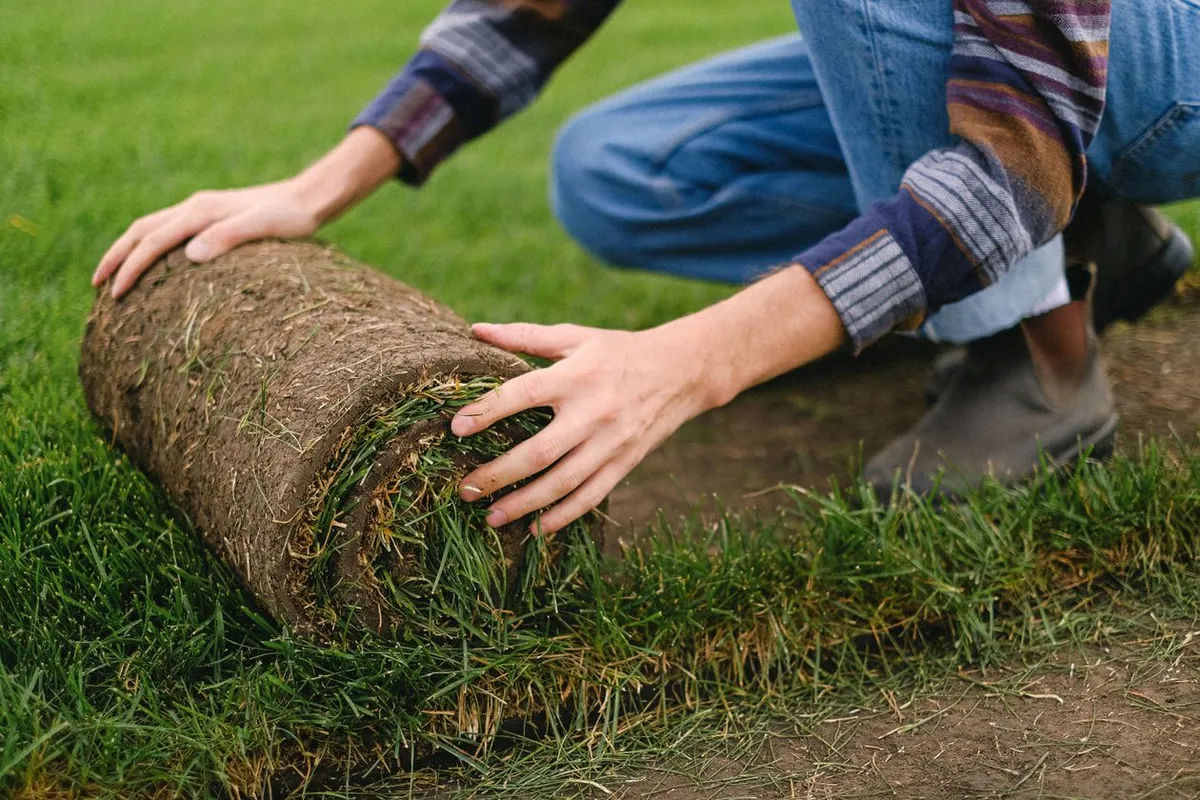
One warning: re-sodding a spot that stays wet because of a drainage problem gives you new grass to kill. If the ground under the mud stays saturated for days after rain, do the drainage work below first, then sod.
Where grass refuses to grow, stop planting grass
Under a big oak or on the north side of the house, St. Augustine thins out no matter what you feed it, and thin grass turns into mud. Ground covers that handle shade and light foot traffic — Asiatic jasmine is the workhorse in Flagler County — turn those strips into a green surface instead of a yearly re-sodding bill. A mulched bed with a stone edge does the same job where even jasmine struggles.
When the Ground Itself Holds Too Much Water
Sometimes the diagnosis really is water: the spot stays spongy for two or three days after a storm, the soil smells sour, and the grass dies from wet feet rather than traffic. That’s a drainage job, with a known order of operations.
Start with the cheapest fix: getting the roof water away from the house. Extending a downspout so it discharges six to ten feet out — buried pipe is tidier than the accordion extensions that clog — solves a surprising share of wet-corner mud all by itself.
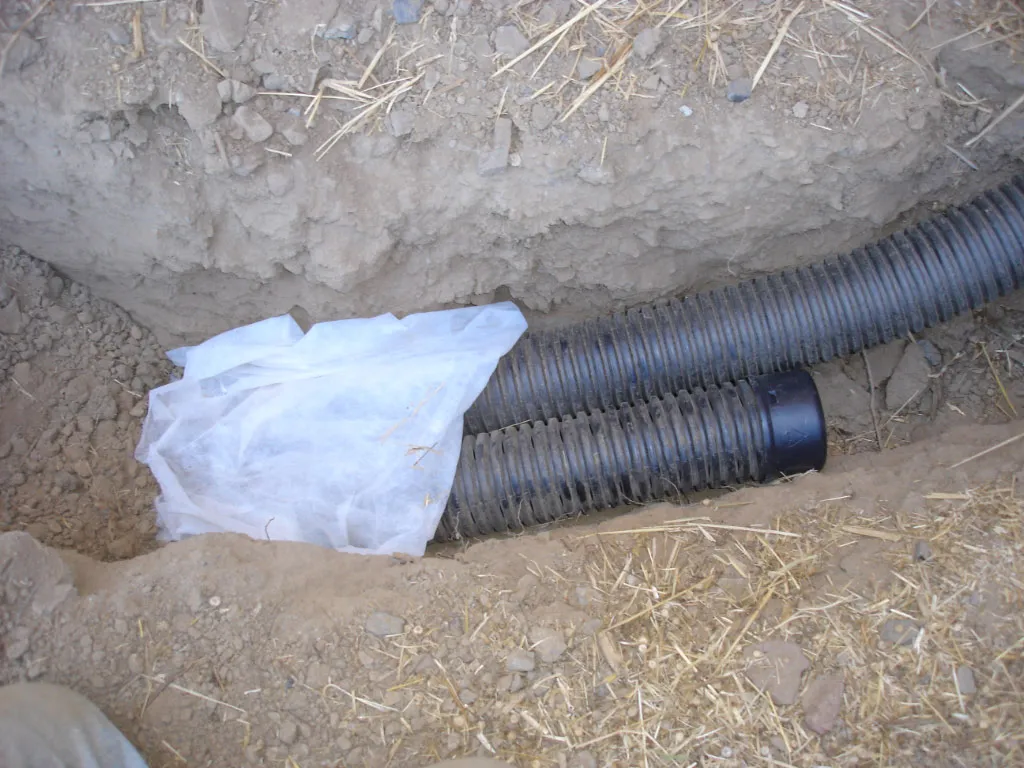
If the ground is still saturated after that, the water needs somewhere to go underground. A French drain — a gravel trench with a perforated pipe, set 18 to 24 inches deep and sloped to an outlet — collects that water and carries it off. Where the problem is surface runoff you can watch flowing, a dry creek bed handles it in the open and looks like landscaping instead of plumbing. Our French drain vs. dry creek bed comparison walks through which one fits which yard, and our overview of drainage solutions in Palm Coast covers catch basins and the rest of the toolbox. Two rules for whatever you install: the pipe has to daylight somewhere legal — not into your neighbor’s yard — and in Palm Coast sand the trench gets lined with landscape fabric, or the sand migrates in and chokes the gravel within a few years.
A low area that collects everybody’s water can be planted as a rain garden: a shallow basin of water-tolerant natives like blue flag iris, muhly grass, and swamp milkweed that holds storm water for a day, lets it soak in, then returns to being a flower bed. It only works if the basin drains within 24 to 48 hours. A rain garden that stays wet is a mosquito farm with better PR.
Spots That Will Never Grow Grass: Cover Them on Purpose
Some patches lose to traffic no matter what you plant. The honest fix is to take them out of the grass business entirely.
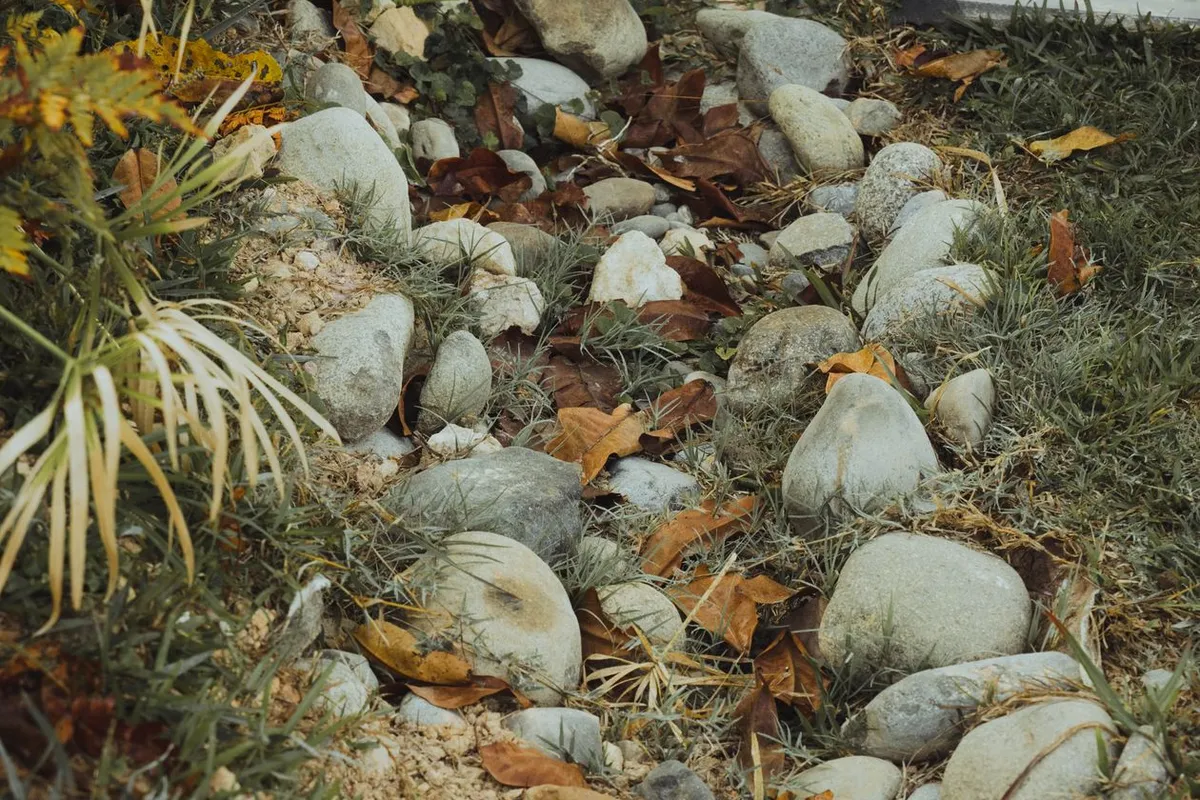
The strip the dogs run along the fence line. The route from the back door to the pool equipment. The gate swing. Give these a real surface: a gravel or paver path on a compacted base, with landscape fabric under the gravel so it doesn’t sink into the sand. Permeable pavers do the same job in a dressier finish and let rain soak through instead of shedding it sideways. It’s the difference between a path you chose and a mud rut you gave up on — same footprint, but one of them looks intentional.
For a dedicated dog run, artificial turf over a compacted, free-draining base is the one surface that ends the mud cycle outright: no grass to wear out, it hoses clean, and it drains if the base is built right. Size it to the run the dogs actually use — most dogs patrol a smaller area than owners expect. Our dog-friendly backyard ideas cover layout options that keep the rest of the lawn out of the blast zone.
The Palm Coast Version of This Problem
Most mud advice online assumes clay soil. Around Palm Coast the problem has a different shape:
- Rain arrives in buckets, in season. From June through September, an afternoon storm can drop two inches in an hour. A yard that handles a normal rain fine can still turn to soup in August. Judge your drainage by the worst storm, not the average one.
- Sand cuts both ways. Open sand drains almost too fast. The mud forms where builder’s fill, a clay pocket, or years of organic muck sits on top of the sand and holds water like a plugged bathtub.
- The water table is close. In low-lying parts of Palm Coast — near the canals and wetlands — groundwater can sit a couple of feet below the surface in wet season. Some yards never dry from below in August, which pushes the fix toward drainage with a real outlet, or toward raised and covered surfaces.
- St. Augustine sulks in shade and drowns in puddles. It’s the right grass for this coast, but it rots where water stands and thins out under the oaks, and both failures read as a mud problem.
When It’s a Pro Job
Aerating, topdressing, re-sodding a worn lane, extending a downspout — all fair game for a homeowner with a free Saturday. Call someone when water moves toward the house or sits against the foundation, when the fix needs regrading (moving soil changes where your neighbor’s water goes too, and Palm Coast has rules about that), or when you’ve fixed the grass in the same spot twice and it drowned twice. That pattern means the problem is structural, and a third round of sod is just a donation.
DreamScapes handles the drainage, sod, and landscaping work across Palm Coast and Flagler County. If you want a straight read on which rung of the ladder your yard needs, call (386) 237-2983.
Frequently Asked Questions
How do I fix a muddy backyard when I have dogs?
Accept that the dogs’ favorite routes will never hold grass, and surface them: a gravel or paver path along the fence line, or artificial turf over a compacted base for a dedicated run. Keep the dogs off freshly laid sod until it roots — about three weeks — or they’ll peel it up at the corners. Fix the grass everywhere else too: a smaller mud zone is a smaller mess tracked through the house.
How can I dry up a muddy yard fast?
The fastest honest answer is cover, don’t dry. Two to three inches of pine bark mulch or straw over the mud gives you a usable surface the same day. Drying the ground means fixing the cause — compaction, a downspout, or drainage — and that takes days to weeks, not hours. Anything promising to dry a yard overnight is selling you a powder that washes off in the next storm.
Will grass seed fix a muddy lawn?
Almost never in Florida. The standard lawn grass here, St. Augustine, isn’t grown from seed — it’s installed as sod or plugs, so seed spread on mud mostly feeds the birds. Box-store mixes sold for southern lawns are usually bahia or ryegrass, which give you a thin, temporary stand that dies back and leaves the mud behind. Worn areas need sod; wet areas need the water fixed first.
What is the cheapest way to fix a muddy backyard?
It depends on the cause, and the diagnosis is free. If a downspout is dumping beside the house, extending it costs under $50 in pipe and an hour. Compaction costs an aerator rental, roughly $75–$100 a day. Mulch runs a few dollars a bag. The expensive mistake is skipping the diagnosis: sod laid over a drainage problem, or a drain installed under a traffic problem, both end up bought twice.
How much does it cost to fix backyard drainage in Florida?
Typical ranges, not quotes: a professionally installed French drain around Palm Coast runs $20–$35 per linear foot, so a 50-foot run lands around $1,200–$2,500 depending on depth and where the outlet has to go. Dry creek beds run $15–$30 per foot. Regrading varies too much to pin down without seeing the lot — size, access, and how much soil has to move drive it. Anyone quoting drainage sight-unseen is guessing with your money.