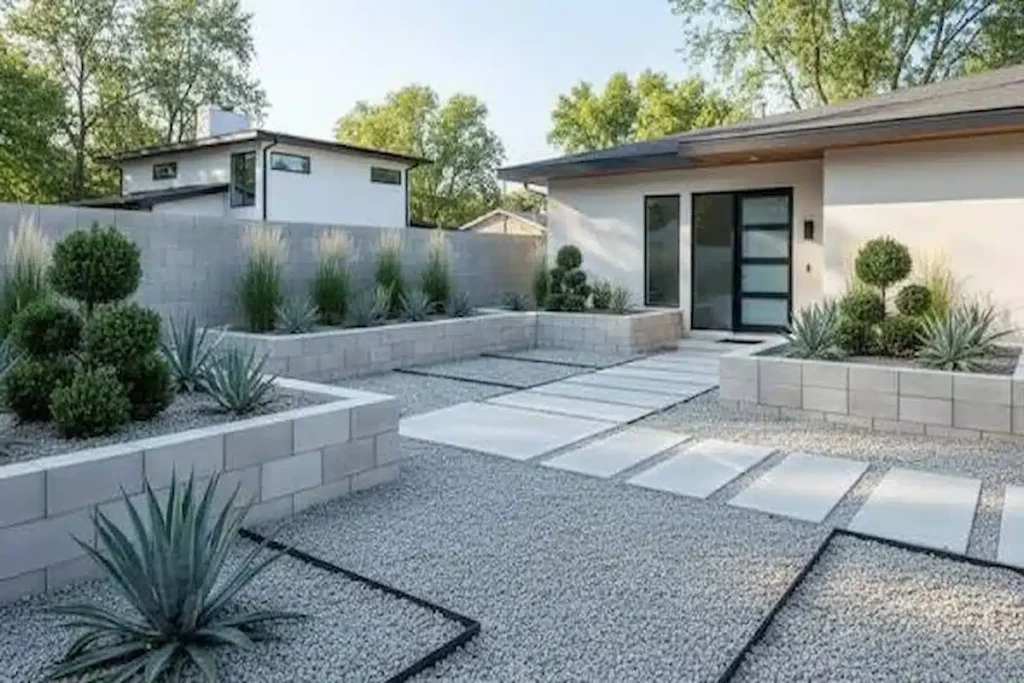
Pea gravel is one of those materials people either love right away or completely misunderstand. Walk through any neighbourhood in Palm Coast, Ormond Beach, or Flagler Beach, and you’ll spot it under fire pits, alongside yards, and packed around palm beds where grass gave up years ago. It’s cheap, it drains fast, and it looks clean without asking much from you on a Saturday morning.
But pea gravel landscaping done poorly turns into a weedy, sinking mess within two seasons. The difference comes down to what happens under the stone and around its edges. After years of installing gravel beds across Flagler County, we’ve learned exactly where homeowners get it right and where they lose money.
What Is Pea Gravel?
Pea gravel is small, naturally rounded stone, usually between 3/8 and 5/8 of an inch. The rounded shape comes from water tumbling the rock over long stretches of time, which is why it feels smooth underfoot instead of sharp like crushed granite. That same roundness is its strength and its weakness: it’s comfortable to walk on barefoot, but it also rolls, so it travels if nothing holds it in place.
You’ll find pea gravel landscape rock sold loose by the cubic yard at local supply yards, or in half-cubic-foot bags at big box stores. For anything larger than a small planter bed, buying bulk saves real money. A single bag covers about two square feet at a proper depth, so a 200-square-foot path would take roughly 100 bags. Nobody wants to load that into an SUV. If you’re weighing gravel against other stone options, our breakdown of gravel landscaping ideas covers how each size and type performs in a yard.
Why Pea Gravel Works Well in Florida Yards
Our soil here is sandy and our rain arrives in sheets. In June and July, an inch of rain in twenty minutes isn’t unusual. Turf and mulch struggle with that, but water moves straight through a gravel bed instead of pooling on top or washing your material into the street.
Pea gravel also doesn’t decompose. Pine bark and cypress mulch break down and need topping off every year, and hurricane winds scatter them across the driveway. Stone stays put through storms, doesn’t feed termites, and won’t fade to gray by August the way dyed mulch does. For homes in zones 9a and 9b where heat and humidity punish organic material, that longevity matters.
There’s a water-savings angle too. Gravel beds paired with drought-tolerant plants cut irrigation needs sharply, which is the whole idea behind our xeriscaping approach for Florida properties.
Pea Gravel Landscaping Ideas That Actually Hold Up
Walkways and Side Yards
The narrow strip between your house and the fence is where grass dies and weeds win. Landscaping with pea gravel here solves the problem permanently. Keep the path 36 to 48 inches wide, set it between solid edging, and you have a clean route to the backyard that drains after every storm. Mixing gravel with stepping stones gives you a firm surface for foot traffic while the stone fills the gaps, an approach we use often in our garden pathway and walkway designs.
Fire Pit and Seating Areas
A pea gravel base under a fire pit is smart for a simple reason: it won’t burn. Stray embers land on stone instead of wood chips. Give yourself at least six feet of gravel in every direction from the fire ring, keep the depth around three inches so chairs don’t sink, and use heavier edging to contain it. If you’re still choosing a style of fire feature, these garden fireplace and fire pit ideas are worth a look before you break ground.
Around Patios and Pool Decks
Pea gravel fills those awkward transition zones where pavers meet planting beds. It reads as a finished surface rather than bare dirt, and it lets rainwater soak in instead of running toward your slab. Just keep it out of areas where people walk barefoot straight from the pool, since stone sticks to wet feet and ends up in the water. Our guide to landscaping around a paver patio shows how to blend the two materials cleanly.
Dry Creek Beds
A shallow trench lined with fabric and filled with pea gravel and a few larger stones gives runoff somewhere to go. It looks intentional, almost decorative, while quietly doing drainage work during our summer downpours. Homeowners dealing with standing water after storms should read our notes on preparing a yard for heavy rain before deciding whether a creek bed alone will handle the volume.
Dog Runs
Pea gravel landscaping for dogs works better than mulch because it doesn’t hold moisture or odor, and it rinses clean with a hose. Pick a smooth, rounded stone rather than anything angular so paw pads stay comfortable.
Choosing Pea Gravel Colors
Color affects how your yard feels more than most people expect. Tan and buff blends are the standard around here because they match the warm tones of Florida stucco and paver work. White pea gravel landscaping looks crisp against dark green foliage and reflects heat, though it shows dirt and organic debris faster and needs occasional rinsing. Black pea gravel makes a strong modern statement and pairs well with light-colored homes, but it absorbs heat, so keep it away from spots where kids or pets sit for long stretches. Gray and brown blends fall in the middle and hide staining best.
Do You Need Landscape Fabric Under Pea Gravel?
Yes, and this is where most DIY jobs fall apart. Without a barrier, the stone slowly presses into sandy soil and disappears. Within eighteen months you’re looking at half the gravel you paid for, with weeds pushing through the rest.
Use a woven, professional-grade fabric rather than the thin rolls sold as weed block. Woven material lets water pass while stopping soil migration, and it holds up under the weight of stone. Overlap seams by six inches, pin every couple of feet, and run the fabric slightly past your edging. The full process is covered step by step in our guide to installing landscape fabric for weed control.
One caution: fabric stops soil, not seeds. Wind carries seed onto the gravel surface where it germinates in accumulated debris. Plan on a quick weed pull or spot treatment two or three times a year.
Landscape Edging for Pea Gravel
Round stone rolls. Without a barrier, it ends up in your lawn, your mower, and eventually your neighbor’s driveway. Steel and aluminum edging give the cleanest lines and last decades in our climate; our overview of metal landscape edging explains the gauge and depth that make sense for gravel containment. Concrete curbing, paver soldier courses, and pressure-treated timber all work too. Whatever you choose, it should stand about an inch above the finished gravel height so the stone stays where you put it.
Pea Gravel vs. River Rock
River rock runs larger, usually one to three inches, and stays put better on slopes. It’s the safer pick for areas with real water movement or grades. Pea gravel is more comfortable to walk on, cheaper per yard, and better suited to paths, seating areas, and flat beds. Many yards use both: river rock in the swale, pea gravel on the path.
Some homeowners ask about landscape glue for pea gravel. Polymer binders can lock stone in place on slopes and stop scatter, but they reduce drainage and make future repairs harder. We usually recommend proper edging and correct depth instead.
Cost and Installation
Expect roughly $3 to $8 per square foot installed in the Palm Coast area, depending on access, prep work, edging choice, and how much soil has to come out. Material alone runs about $30 to $60 per cubic yard bulk, and one yard covers roughly 100 square feet at three inches deep.
The installation itself follows a clear order: excavate three to four inches, grade the base so water flows away from structures, lay woven fabric with proper overlap, set edging, then spread gravel to a consistent depth and rake it level. Skipping the excavation and dumping stone on existing grass is the single most common mistake we’re called out to fix. If your project ties into pavers, walls, or a patio, our hardscape services team can handle the whole build as one job.
Keeping It Looking Good
Rake the surface a few times a year to redistribute stone and break up compacted spots. Blow leaves off before they decompose into a seed bed. Top off with a thin layer every three to four years as gravel settles. A hose rinse in spring brings the color back after pollen season.
Ready to Plan Your Gravel Project?
Dreamscapes Florida has been building landscapes across Palm Coast, Flagler Beach, Ormond Beach, Bunnell, and St. Augustine for years, and we know how gravel behaves in local soil and local storms. If you’re weighing pea gravel for a path, a fire pit area, or a full front yard redesign, reach out for a free estimate and we’ll walk the property with you.
Frequently Asked Questions
How deep should pea gravel be?
Two to three inches for planting beds and decorative areas, three inches for walkways and seating. Deeper than four inches feels unstable underfoot.
Is pea gravel good for landscaping in Florida?
Yes. It handles heavy rain, resists storm damage, doesn’t rot, and lowers irrigation needs, which suits our sandy soil and summer weather well.
Will weeds grow through pea gravel?
Some will, from seeds that land on top rather than roots underneath. Woven fabric plus two or three cleanups a year keeps it manageable.
How much pea gravel do I need?
Multiply length by width in feet, multiply by your depth in feet, then divide by 27 for cubic yards. A 10-by-20 area at three inches needs about 1.9 cubic yards.
Can I put pea gravel over grass?
No. The grass dies, decomposes, and creates soft spots. Strip the turf first.