The best custom patio ideas for Florida are shaded seating areas, light-colored pavers that stay cooler underfoot, curved patios that follow the shape of the yard, fire pit circles for cool winter nights, seat walls for extra seating, and built-in lighting, all set on a base that drains well.
Planning beats picking from photos. A patio that fits how you live, where the sun falls, and how water drains will look better and last longer than a copied design. In Palm Coast, sandy soil, summer storms, and salt air shape every choice, from the base to the shade.
Plan Your Custom Patio in 5 Steps
A good patio starts with a plan, not a product catalog. Walk through these five steps before you pick a single paver, and the rest of the choices get easier.
- Decide how you will use it. Dining needs room for a table, chairs, and a path around them. Lounging needs deep chairs and side tables. A fire pit needs a circle with safe clearance. Write down the main use first, because it sets the size and shape.
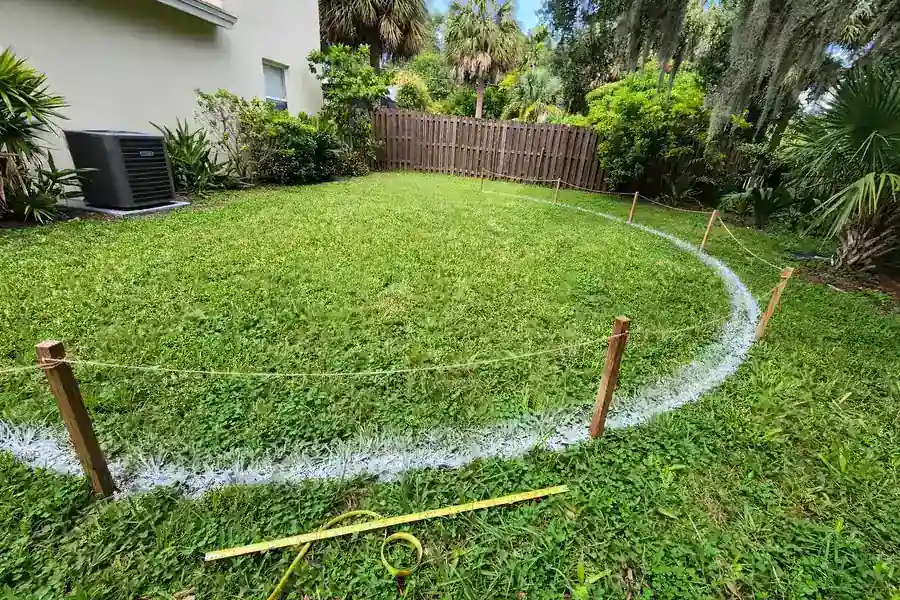
- Size it for real life. Allow room for chairs to pull back and for people to walk past without squeezing through. Mark the shape on the lawn with a garden hose or spray paint, then live with the outline for a few days before you build.
- Check sun and shade at different times. Visit the spot in the morning, at midday, and in the late afternoon. Put seating where shade falls during the hottest hours, and save sunny corners for plants that love heat.
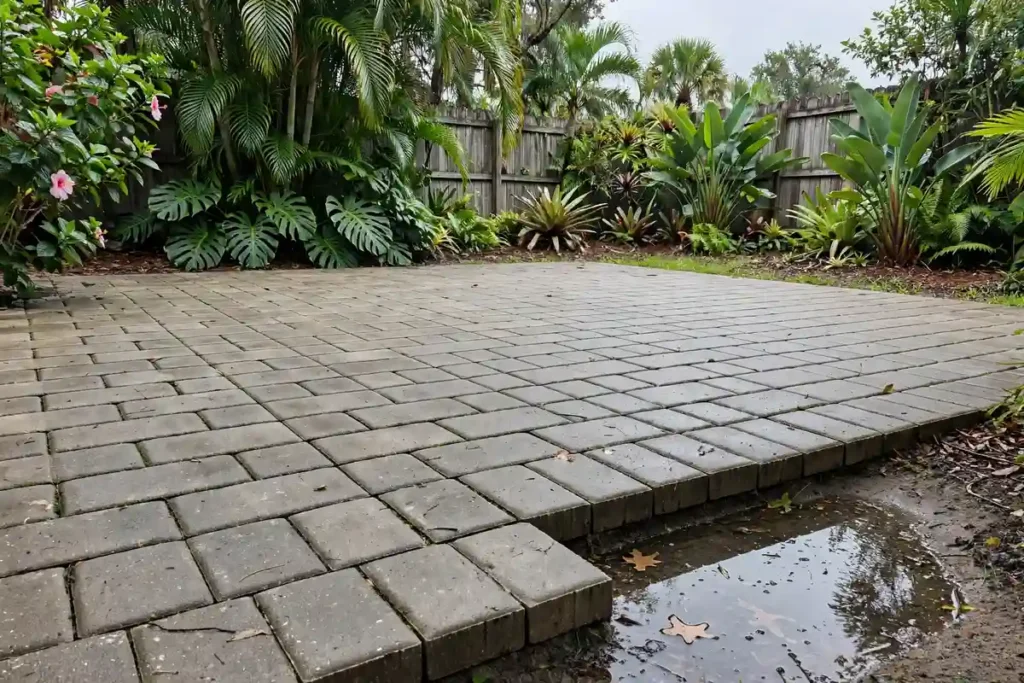
- Plan drainage before you build. The patio must slope away from the house so storm water runs off into the yard, not toward the walls. Keep roof water off the patio, and plan where heavy rain will go.
- Pick materials last. Once you know the size, shade, and slope, choose pavers and features that fit the heat, the upkeep you want, and the budget. Light colors suit sunny spots, and textured surfaces suit pool areas.
12 Custom Patio Ideas for Florida Homes
Use these ideas as a menu, not a checklist. Pick the two or three that fit your yard, your budget, and how you spend time outside, and build around those.
1. Curved Paver Patio That Follows the Yard
Soft curves suit Florida lots better than stiff rectangles. A curved patio can wrap around a tree, follow a garden bed, or open toward the best view, and a border course of contrasting pavers gives the edge a clean finish. Curves also make a small yard feel larger, because the eye follows the line instead of stopping at a corner. Florida tip: border pavers help hold the shape in sandy soil, so the edge stays crisp through summer storms and heavy rain.
2. Shaded Patio With Pergola or Shade Sail
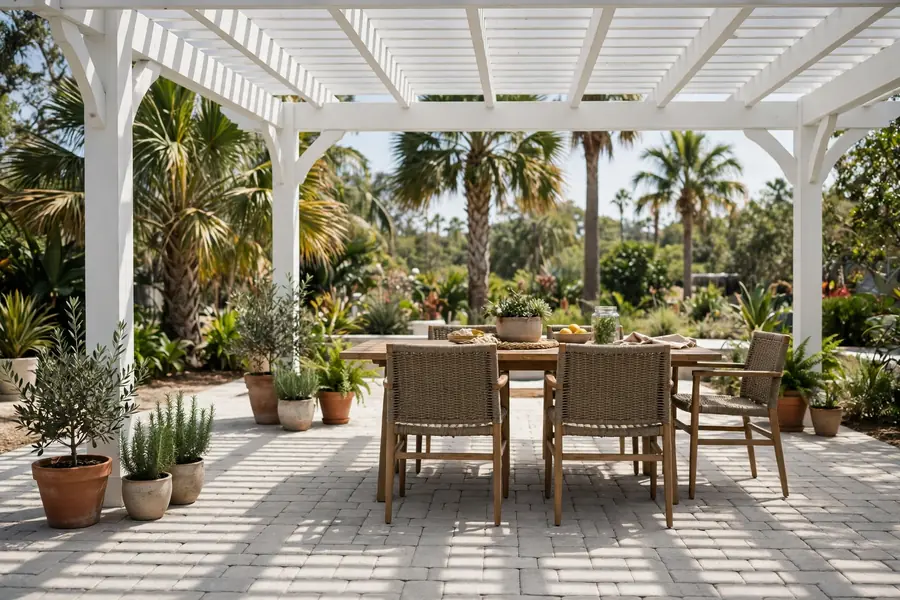
Shade is the top comfort upgrade on a Florida patio. A pergola gives a fixed frame that can carry vines or a fabric top, while a shade sail costs less and can be taken down before a storm. Either one turns a patio that bakes at midday into a spot you use all afternoon. Put the shade over the dining table or the main chairs, not over the whole patio, so you still get sun in winter. Florida tip: check whether a fixed structure needs a permit before you build, since rules vary by structure type.
3. Fire Pit Circle
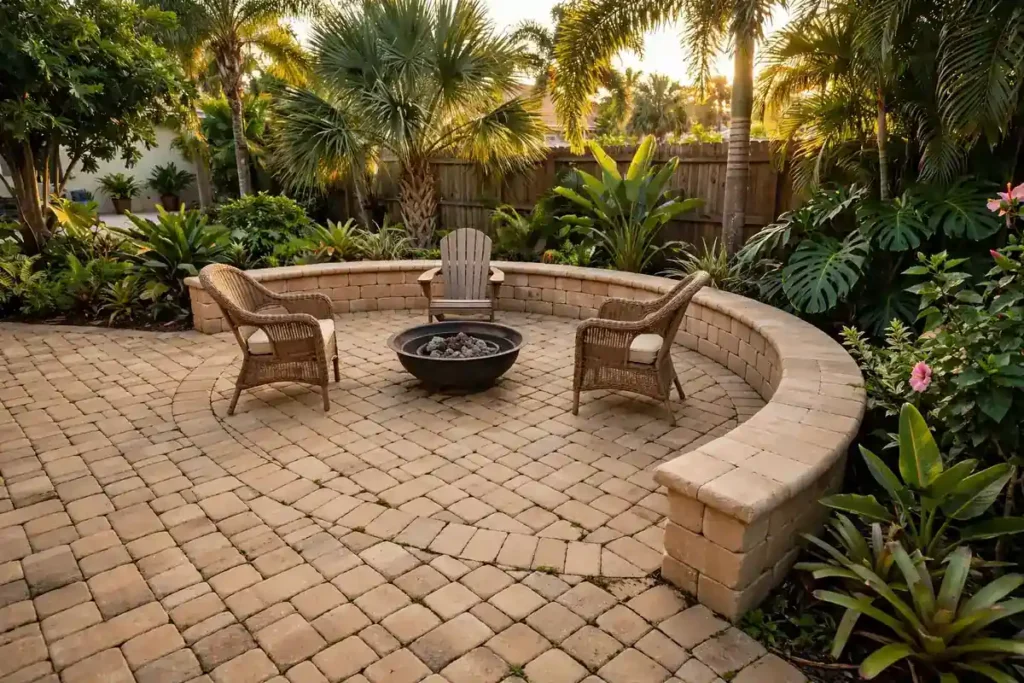
A round patio with a built-in fire pit gives the yard a natural gathering point. Chairs ring the fire, conversation flows, and the circle shape suits small and large yards alike. Winter nights in Flagler County get cool enough to enjoy a fire, and a wood or gas pit both work well on a paver base. Keep the pit clear of overhanging branches and leave a path for carrying wood. See our garden fireplace ideas for more fire feature options.
4. Seat Walls Around the Edge
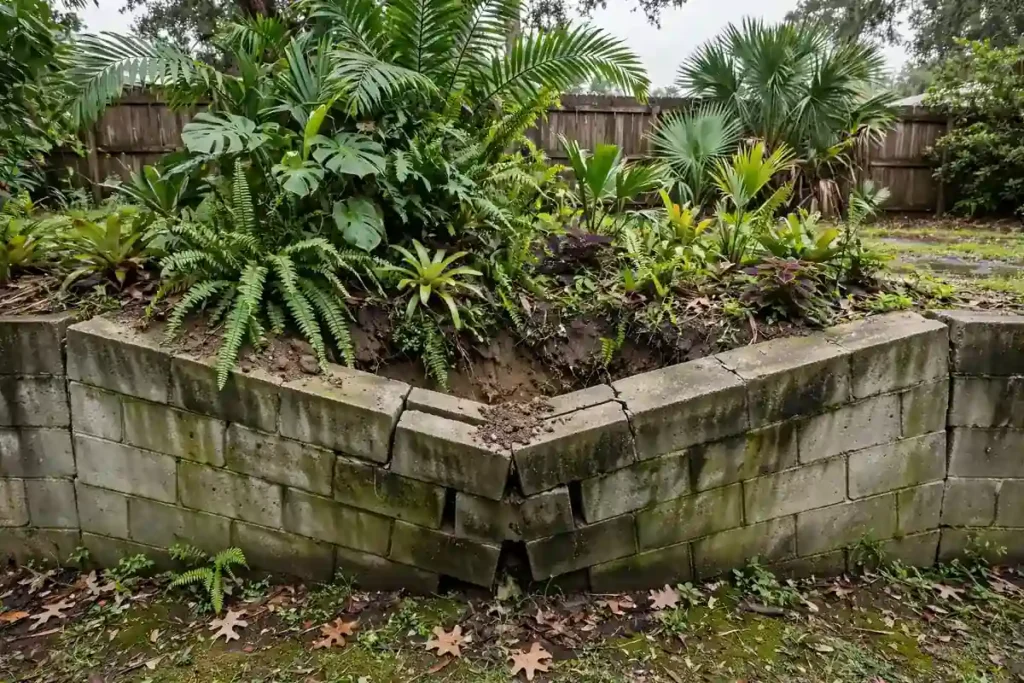
Seat walls add seating without buying more furniture. A low wall around the edge of the patio gives guests a place to sit, sets a clear boundary for the space, and doubles as a spot to set drinks or plates during a cookout. Wall blocks also work as a low retaining edge where the patio meets a garden bed, which keeps mulch off the pavers. Florida tip: choose light-colored cap stones so the wall stays comfortable to sit on in the sun.
5. Light-Colored Pavers for Cooler Feet
Light-colored pavers reflect more sun than dark stone, so the surface stays cooler under bare feet. This matters most on patios that face south or west and catch the afternoon sun. Tan, light gray, and cream tones also brighten a shady yard and show less dust than dark colors. Pair light pavers with shade and you get a patio you can walk on at midday in July. Florida tip: sealer can cut algae growth on shady patios, and our guide to paver cleaning and sealing covers the upkeep.
6. Multi-Level Patio With Steps
Sloped lots suit a patio in two or three levels instead of one flat slab. Steps define zones, so the dining area sits on one level and the fire pit or lounge chairs sit on another, and each level can drain on its own. Wide, low steps feel safer than steep ones, and a seat wall beside the steps gives a handhold and a place to sit. For more on grading and slopes, see our guide to landscaping a sloped backyard.
7. Patio With Built-In Planters
Raised planters built into the patio soften the hardscape and bring plants right up to the seating area. Herbs near the grill, flowers by the chairs, or a small palm in a corner all make the space feel finished without extra pots to trip over. Planters also break up a large slab of pavers and give the patio a custom look. Keep the planting simple and matched to sun and water, and see our notes on landscaping around a paver patio for bed ideas.
8. Pool-Side Patio Extension
A patio that extends from the pool deck gives swimmers a dry lounge area and keeps the whole backyard connected. Use textured pavers that stay cool to the touch and grip wet feet, and leave room for loungers, towels, drinks, shade, and a path back to the house. A small seat wall or planter between the pool deck and the patio marks the change of space without a fence. For pool area layouts, see our rectangular pool landscape design ideas.
9. Herringbone or Basket-Weave Pattern
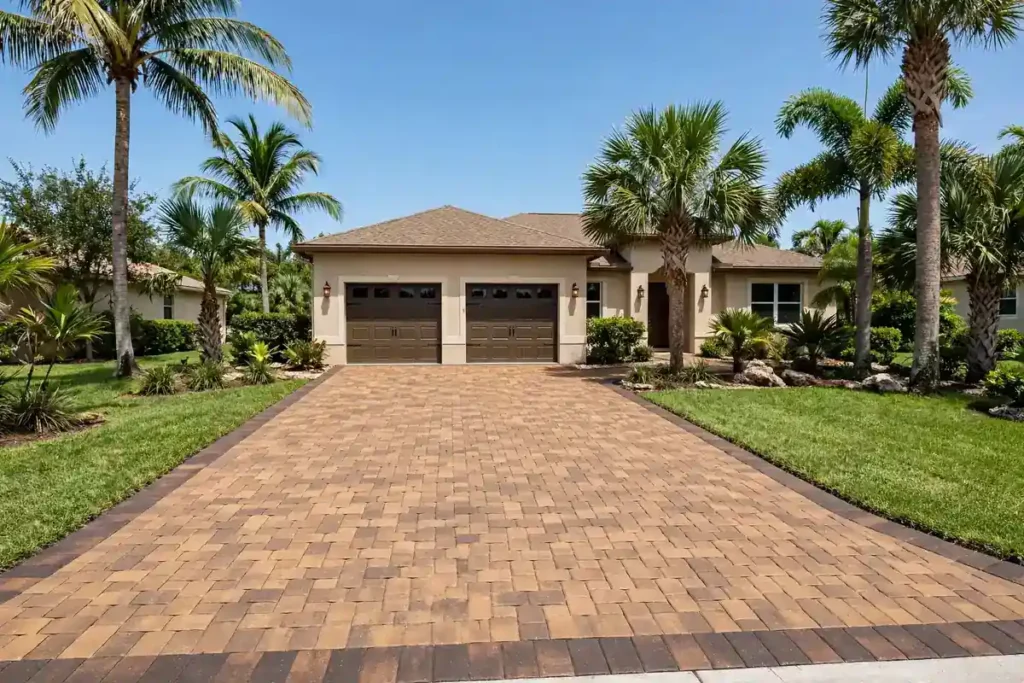
Patterns add custom detail without adding cost in materials. Herringbone locks pavers together well, which suits driveways and paths that take weight, while basket-weave gives a classic, calm look for seating areas. A border in a second color frames either pattern and makes the patio look planned rather than poured. Mix patterns with care: one pattern for the field and one for the border is plenty. Test a small area first to see how the pattern looks in your light. See our brick landscaping ideas for more pattern options.
10. Gravel and Paver Combo
Pairing gravel with pavers cuts cost and drains well. Use pavers for the main walking paths and seating pads, and gravel for the beds and borders around them. The mix suits casual yards and side areas where a full slab would cost too much, and rain soaks through the gravel instead of running off. Keep gravel contained with edging so it stays out of the lawn. Gravel also keeps mud down near garden beds after rain. Our pea gravel landscaping guide covers the details.
11. Low-Voltage Lighting Built In
Step lights, wall cap lights, and path lights make a patio safe and inviting after dark. Low-voltage systems use little power, and lights built into steps and walls look better than add-on fixtures. Light the steps, the path to the house, and the edge of any drop, and leave the seating area soft so conversation stays relaxed. Plan the wiring before the pavers go down, not after. A timer or dusk sensor switches the lights on without daily effort. See our landscape lighting cost guide to budget for the work.
12. Small Courtyard Patio
Tight lots and front entries suit a small courtyard patio. A compact slab with a seat wall, a planter, and a single shade tree can feel like a private outdoor room, even on a narrow lot. Keep the furniture small, use light colors to open the space, and add vertical plants on a wall or trellis instead of spreading beds. A small water feature or wind chime adds life without taking floor space. For small-space layouts, see our courtyard garden ideas.
Choosing Patio Materials for Florida
Each material handles Florida heat, rain, and sand a little differently. Concrete pavers are the all-round choice: they come in many colors, cost less than stone, and single pavers can be lifted and reset if the ground shifts. Travertine stays cooler underfoot but costs more. Brick gives a classic look and suits herringbone patterns. Flagstone looks natural but has uneven joints that catch chair legs. Gravel costs least and drains well but shifts underfoot. For the full comparison, see our pavers vs concrete patio guide.
What a Custom Patio Costs
HomeAdvisor puts the national average paver patio cost at about $3,800 for a 280 sq ft patio, with most homeowners spending about $2,400 to $7,000, or about $8 to $25 per sq ft. High-end natural stone can reach about $50 per sq ft. Size pushes cost most, then pattern, seat walls, a fire pit, tight access, and base work in soft sand. Our hardscaping cost breakdown shows how patios fit into a full hardscape budget.
Build It to Last in Sandy Soil
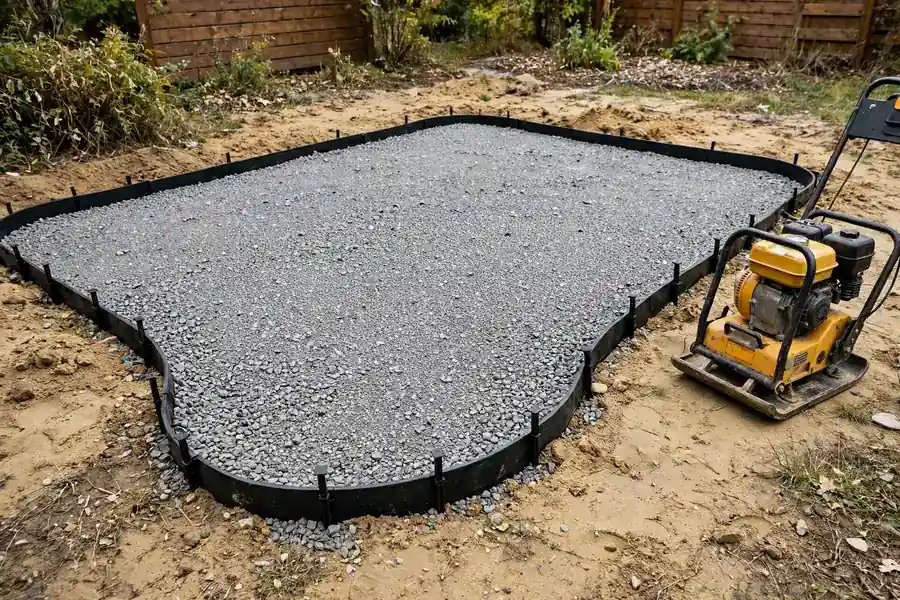
A patio lasts when the base is right. Unilock recommends a compacted base of 4 to 6 inches for pedestrian walkways, with local soil affecting the depth needed. Add a firm edge restraint so pavers cannot creep, slope the surface away from the house, and sweep joint sand into the gaps to lock the field. The City of Palm Coast issues a permit type called ZPA – PATIO/SLAB/PAVERS – NON-STRUCTURAL for paver patios, so check before you build; see the city permit record for an example. If a section ever drops, our guide to how to fix sunken pavers explains the fix.
Custom Patios in Palm Coast
Dreamscapes Florida designs and builds custom paver patios, seat walls, and fire pits across Flagler County. We serve Palm Coast, Flagler Beach, Bunnell, Ormond Beach, and St. Augustine. Call us at (386) 237-2983 or see our hardscape services and request a free estimate to start your patio plan.
Frequently Asked Questions
Concrete pavers are a strong all-round choice. They handle sandy soil, can be lifted and reset if the ground shifts, and come in lighter colors that stay cooler underfoot. Travertine stays cooler still but costs more, so it suits smaller patios or accent areas.
Size it for how you will use it. Leave room around furniture so chairs can pull back and people can walk past without squeezing through. Mark the shape on the lawn with a hose or spray paint before you build, and live with the outline for a few days.
HomeAdvisor puts the national average near $3,800 for a 280 sq ft patio, with most homeowners spending $2,400 to $7,000, or about $8 to $25 per sq ft. Seat walls, fire pits, and complex patterns add cost, as does base work in soft sand.
Palm Coast has a permit type for non-structural patios, slabs, and pavers, so check with the city before you build. Covered structures such as pergolas may need more review, and it is worth confirming the rules for your lot early.
Choose lighter colors, which reflect more sun than dark stone, and add shade from a pergola, shade sail, or trees over the main seating area. Avoid dark stone in full sun. A quick rinse on very hot days cools the surface for a short time.
Compact the base in layers, use firm edge restraints, slope the surface away from the house, and keep roof water off the patio. If a section still drops, pavers can be lifted, the base topped up, and the pavers reset without replacing the whole patio.