

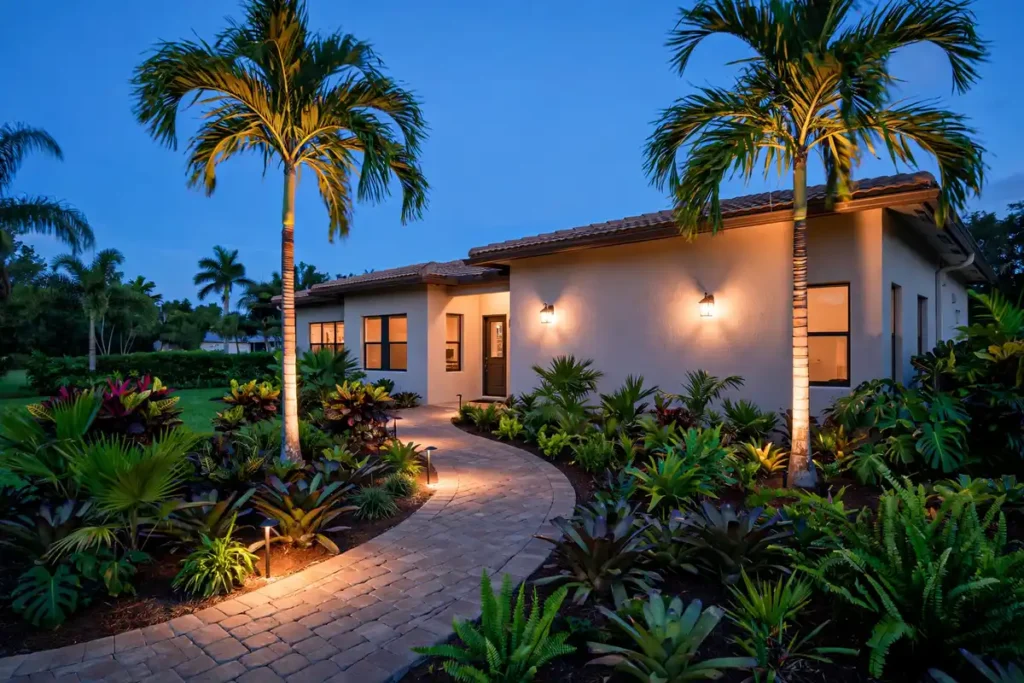
Professional landscape lighting costs about $2,000 to $4,500 for most homes, with an average near $3,250. Installed fixtures run about $100 to $200 each, so a system of 15 to 25 lights lands in that range. Small path-light setups can start around $1,000, while large homes with 40 or more fixtures can pass $7,000.
Those national numbers are a good start, but a Florida yard asks more of a lighting system than most. Salt air, daily summer storms, sprinklers, and sandy soil all wear on fixtures. The cheapest system is rarely the cheapest one to own. Below, we break down what you pay for, what Florida adds to the bill, and where you can safely save.
Landscape Lighting Cost by Project Size
The number of fixtures drives the price more than anything else. These ranges come from 2026 data published by LawnStarter and match what we see on local jobs.
| Number of Fixtures | Typical Installed Cost | What It Usually Covers |
|---|---|---|
| 10 to 20 | $1,000 to $2,000 | Front walkway, entry, and a few accent lights |
| 20 to 30 | $2,000 to $3,000 | Front yard plus palms and trees |
| 30 to 40 | $3,000 to $4,000 | Front and back yard, patio, and pool area |
| 40 or more | $4,000 to $7,000 or more | Full property with layered lighting |
Cost by Fixture Type
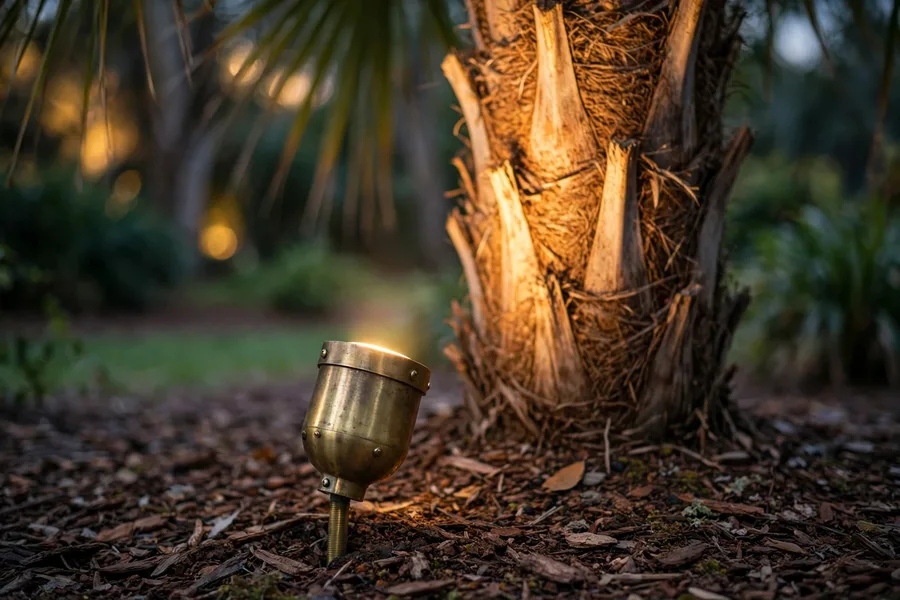
Different lights do different jobs, and their prices vary a lot. Most homes use a mix.
| Fixture Type | Installed Cost Each | Common Use |
|---|---|---|
| Path lights | $50 to $150 | Walkways, driveway edges, garden beds |
| Uplights and spotlights | $100 to $400 | Palms, oaks, house walls, columns |
| In-ground well lights | $85 to $250 | Lawn areas and spots where a mower passes |
| Bollard lights | $250 to $900 | Long driveways and commercial entries |
| Wall and step lights | $50 to $250 | Patio steps, retaining walls, pool decks |
| Solar lights (installed) | $50 to $200 | Low-use areas with full sun |
Uplighting a single palm is one of the most popular requests in Palm Coast. For ideas on which features to light first, see our list of landscape lighting ideas.
Where Your Money Goes
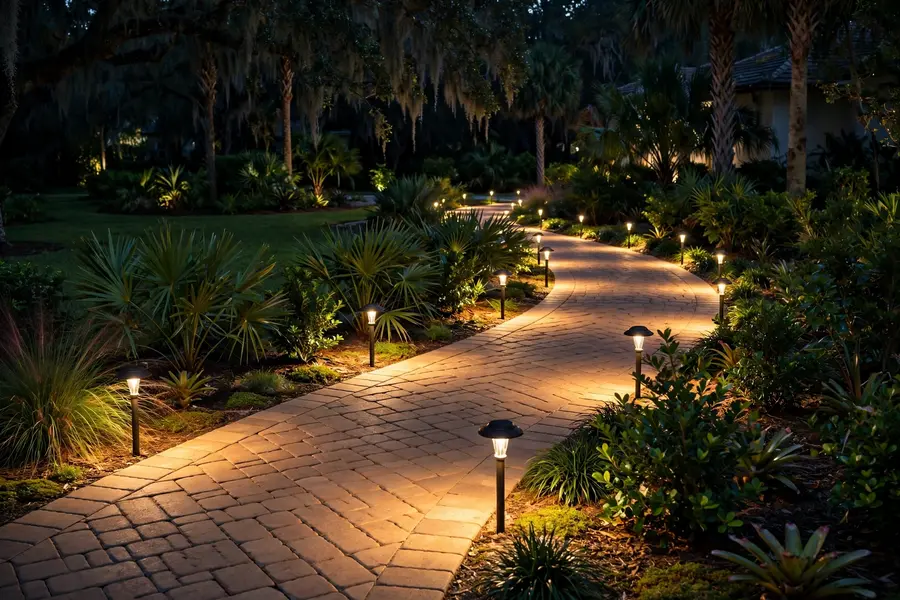
Fixtures. This is the biggest part of the bill. A fixture’s body material matters more in Florida than its bulb. More on that below.
Transformer. Low-voltage systems run through a transformer that steps household power down to a safe 12 volts. It needs to be sized for the total wattage, with room to add lights later. Most installers include it in their per-fixture price.
Wire and trenching. Low-voltage cable runs a few inches under the soil or mulch. Expect about $3 to $5 per foot for wiring. A new outdoor outlet or a long run back to the house adds to the cost.
Labor. Installers charge about $45 to $100 per hour. A typical system takes one to two days.
Controls. A timer or photocell is standard. Smart or app-based controls add about $100.
Florida Factors That Change the Price
Salt air eats cheap fixtures
Within a few miles of the ocean, salt in the air corrodes painted aluminum and plastic fixtures fast. They fade, crack, and fill with water. Solid brass or copper fixtures cost more up front but often last for decades near the coast. If you live in Flagler Beach, Hammock, or anywhere east of A1A, ask for brass or copper.
Storms, humidity, and sprinklers
Daily summer storms and high humidity get into every wire splice. Good installers use sealed, waterproof connectors, not twist caps with tape. Fixtures also need to sit where lawn sprinklers will not spray them every morning, since hard water spots cloud the lenses.
Sandy soil and growing plants
Stakes loosen in sand, and shrubs grow over path lights within a season. Plan fixture placement around how big your plants will get. A system designed for today’s landscape may be hidden in two years.
Beachfront homes and sea turtles
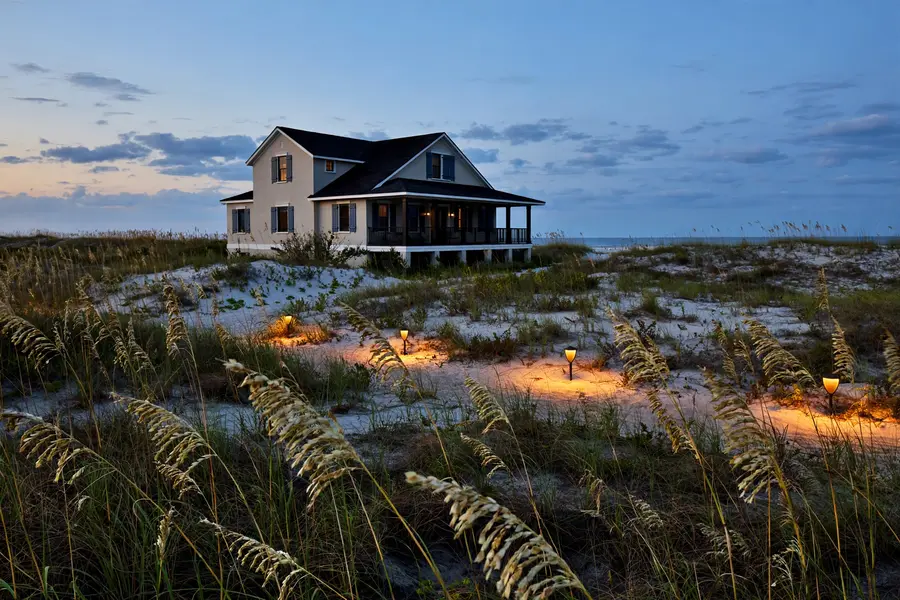
Sea turtle nesting season in Flagler County starts May 1 and runs into fall. Lights that can be seen from the beach can pull hatchlings away from the ocean, and beachfront homes may need to follow local lighting rules. That usually means shielded, low, warm-colored fixtures pointed away from the dunes. Plan for this if your home faces the ocean.
Solar vs Low-Voltage: The Real Cost
Solar lights look like a bargain. They need no wiring and cost less to install. But they depend on a full day of sun, and many yards in Palm Coast are shaded by oaks and palms. Their light is also dim and fades through the night, and batteries wear out within a few years.
Low-voltage LED lighting costs more at the start but gives steady, bright light every night. LED bulbs use very little power and can last for years. For a front yard you want to look good every evening, low-voltage is almost always the better value. Solar works fine for a garden corner or a spot you rarely use.
Three Sample Florida Projects
Starter front yard: about $1,500 to $2,000. Eight path lights along the walkway, two uplights on front palms, a small transformer, and a timer.
Front and back yard: about $3,000 to $4,000. Twenty-five fixtures covering the entry, house wall, palms, patio steps, and a few backyard trees. If you have a water feature, adding light there makes a big difference at night. Our guide to lighting a garden fountain shows how.
Coastal home: about $5,000 to $7,000 or more. Thirty-five or more solid brass fixtures, sealed connections, a larger transformer, and smart controls, built to handle salt air for the long term.
How to Keep the Cost Down
- Light the best features, not everything. A few well-placed uplights on palms and the entry often look better than a runway of path lights. Our tips on highlighting your landscape at night explain the basics of placement.
- Start with the front yard. Ask for a transformer big enough to add the backyard later without redoing the system.
- Choose LED. It costs less to run and saves on bulb changes.
- Buy quality once. Replacing corroded fixtures every few years costs more than brass from the start, especially near the coast.
- Install with other projects. If you are already planning new beds or a patio, run the wire while the ground is open.
Coastal yards also do better with plants that handle salt spray. Pair your lighting with salt-tolerant plants for Florida so the whole landscape holds up. For businesses, HOAs, and offices, see our guide to commercial outdoor lighting.
Get a Landscape Lighting Quote in Palm Coast
Dreamscapes Florida designs and installs low-voltage LED lighting for homes and businesses across Flagler and Volusia counties. We plan every fixture around your plants and your view from the street, use sealed connections built for our weather, and recommend brass fixtures where salt air demands it. Learn more about our landscape lighting service for Palm Coast, Flagler Beach, Ormond Beach, and St. Augustine, or call (386) 237-2983 for a free estimate.
Frequently Asked Questions
Installed landscape lights usually cost $100 to $200 each, including the fixture, wire, and labor. Path lights can be as low as $50, while large uplights and bollards can cost $250 to $900.
For most homes, yes. Good lighting improves curb appeal, makes walkways and steps safer, and lets you use your yard after dark. LED systems use little power, so the ongoing cost is low.
Low-voltage LED lighting is brighter and more reliable, and it works in shade. Solar lights cost less to install but fade at night and need full sun. In shaded Florida yards, low-voltage is usually the better choice.
LED bulbs can last for many years. Fixture life depends on the material. Brass and copper fixtures can last decades, while painted aluminum and plastic often wear out in a few years, especially near the coast.
Very little. A typical LED system of 20 fixtures uses about as much power as a few household light bulbs. Running it on a timer keeps the cost low.
Yes, if the transformer has spare capacity. Ask your installer to size the transformer for future lights so you can expand to the backyard or pool area without starting over.