Core aeration pulls plugs of soil out of your lawn to relieve compaction, and it is backed by university research. Liquid aeration is a spray that may help water soak in, but extension experts say it has not been shown to relieve compaction. Many sandy Florida lawns need aeration less often than clay lawns.
If a lawn company has offered you liquid aeration, or if your St. Augustine lawn looks thin in the spots where people walk, this guide will help you decide what your lawn actually needs. We explain what each method does, what university researchers have found, and how to test your own soil before you spend money.
We have cared for lawns across Flagler County since 2015, and most of the yards we see sit on sand. That changes the answer. Sand behaves very differently from the clay soils that most aeration advice is written for.
Liquid Aeration vs Core Aeration at a Glance
The table below sums up the key differences at a glance. The details follow in the sections below.
| Feature | Core Aeration | Liquid Aeration |
|---|---|---|
| How it works | Hollow tines pull small plugs of soil out of the lawn. | A liquid spray applied to the lawn surface. |
| What it fixes | Soil compaction, so air, water, and nutrients reach the roots. | May help water soak into dry soil. It does not remove soil. |
| Research support | Backed by university extension research. | Colorado State University Extension found no scientific evaluation of effectiveness. |
| Mess | Soil plugs left on the lawn for a few weeks. | None. No plugs, no mess. |
| Timing | Late spring and summer, while warm-season grass grows. | Often sold year round, but timing does not change what it can do. |
| Best for | Compacted soil, heavy foot traffic, and thin turf in worn paths. | Dry sand that sheds water, as a wetting agent only. |
The table shows the core difference in one line: core aeration removes soil, and liquid aeration does not. That one fact decides most of the debate. Everything else flows from whether the method physically opens the soil or only treats its surface.
What Core Aeration Does
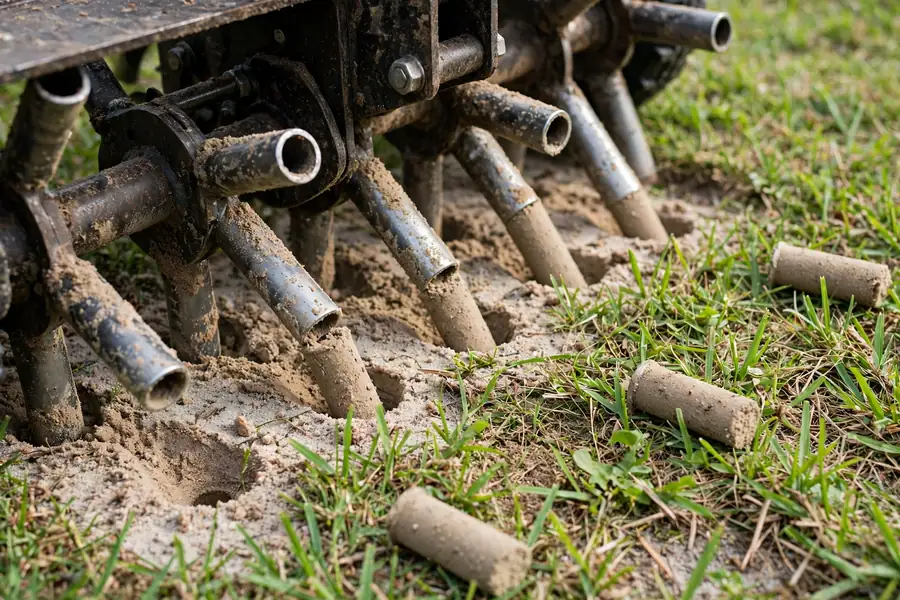
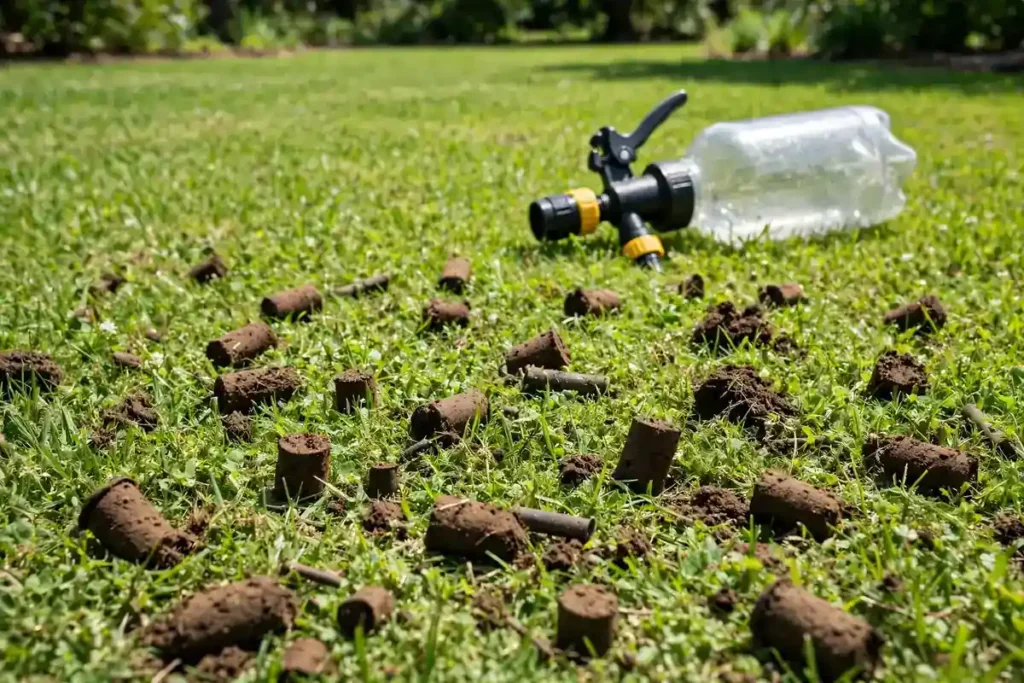
A core aerator is a machine with hollow tines that punch into the soil and pull out small plugs, about the size of a finger. The holes let air, water, and nutrients move down to the roots, and the UMass Amherst Extension notes that this movement also stimulates root growth. For heavily compacted areas, the extension recommends tines with inside diameters of 1/4 to 3/4 inch and a maximum penetration of about 2.5 to 4 inches. Clemson Cooperative Extension adds that tines should sit 2 to 3 inches apart for even coverage.
Leave the plugs where they fall. They break down over a few weeks and act as a light topdressing, returning soil and organic matter to the surface. If your lawn also has low spots, see our guide on how to level a lawn before you topdress, since leveling and aeration solve different problems. Core aeration works best as part of steady lawn care, not as a one time rescue for a lawn that has deeper problems.
Before the machine runs, water the lawn a day ahead so the tines punch cleanly. Dry, hard ground fights the tines, and soggy ground smears. Mark shallow lines and sprinkler heads first so the tines do not catch them. After the job, the lawn looks rough for a week or two, then the holes close as the grass grows.
What Liquid Aeration Is (and What Research Says)
Liquid aeration is a spray product, not a machine. Most products contain liquid humates, while others contain soap-like materials such as sodium lauryl sulfate. The idea is that the spray loosens the soil from the inside, but that claim has not held up in research.
Colorado State University Extension states that there is no indication liquid aeration products have been scientifically evaluated for effectiveness, and that there is no chemical substitute for physical remediation of soil compaction. At best, the extension says, these products may provide a minor wetting agent effect. That is a fair point in their favor for one narrow case: a wetting agent can help water soak into dry sand that sheds water. But helping water soak in is not the same as relieving compaction, and a spray cannot open the pore space that plugs remove.
Labels tell the same story if you read them. A product that lists humic acids or surfactants is a soil conditioner or wetting agent, not a replacement for plugs. None of that makes the product useless. It only means the product should be sold for what it does, which is help water move, not fix compaction.
Does a Sandy Florida Lawn Need Aeration?
Flagler County lawns mostly grow on sand, and sand drains fast and compacts less than clay. That is why many Florida lawns need aeration less often than lawns up north. But sand still compacts where it takes steady pressure: foot traffic paths, parking strips, play areas, and spots where builder fill was packed hard during construction.
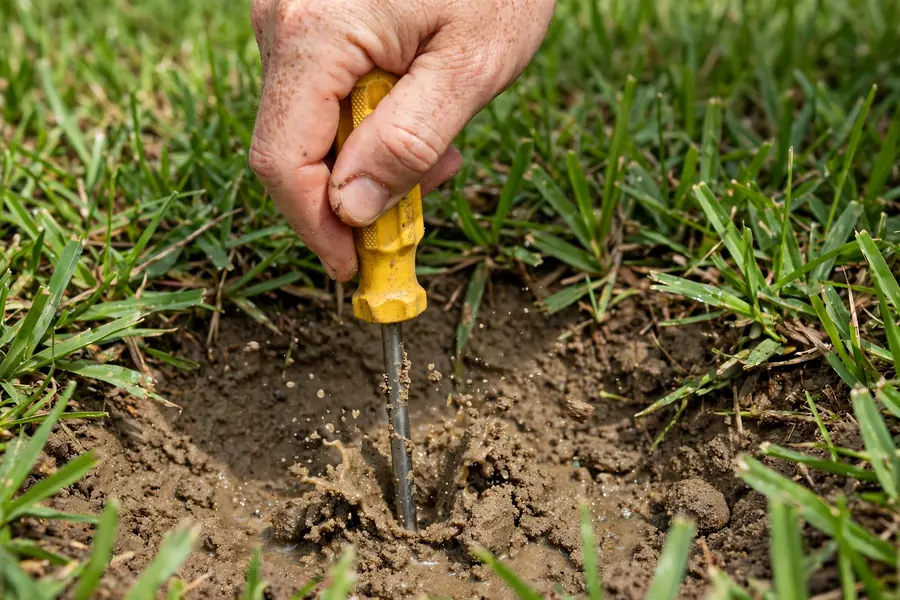
Try a simple test before you book anything. Push a long screwdriver into moist soil. If it slides in with little effort, compaction is probably not your problem. If it is hard to push in, core aeration is worth considering. Other signs point the same way: water that runs off instead of soaking in, and thin turf in the paths where people walk. If water runs off in dry spots, read our guide on how much water a lawn really needs to rule out a watering problem first.
Newer Palm Coast subdivisions deserve a closer look. Builder fill is often packed hard to level lots, and a lawn planted on that fill can act compacted even though the native soil is sand. If your home is only a few years old and the lawn struggles in the same spots every year, compaction from fill is a likely cause. The screwdriver test will tell you fast.
When to Aerate St. Augustine and Other Warm-Season Grasses
Clemson Cooperative Extension says warm-season grasses such as St. Augustinegrass are best aerified in late spring and summer while they grow actively. That timing matters. The grass fills the holes fast while it grows, so the lawn recovers in weeks rather than months. Aerate when the soil is moderately moist, not wet. Wet soil smears and seals instead of opening up.
Skip aeration on stressed or dormant turf. A lawn browned by drought or worn thin by pests needs the cause fixed first, and aeration will not do that job. After aeration, water as normal and keep your usual mowing routine. For feeding dates that pair with aeration, see our Florida lawn fertilizer schedule.
Expect the lawn to look untidy for a short while. Plugs sit on the surface, and the holes stay visible until growth fills them. That is normal, and it is a sign the job was done right. Keep foot traffic light for a week or two, then return to your normal routine.
Aeration vs Dethatching: Which Does Your Lawn Need?
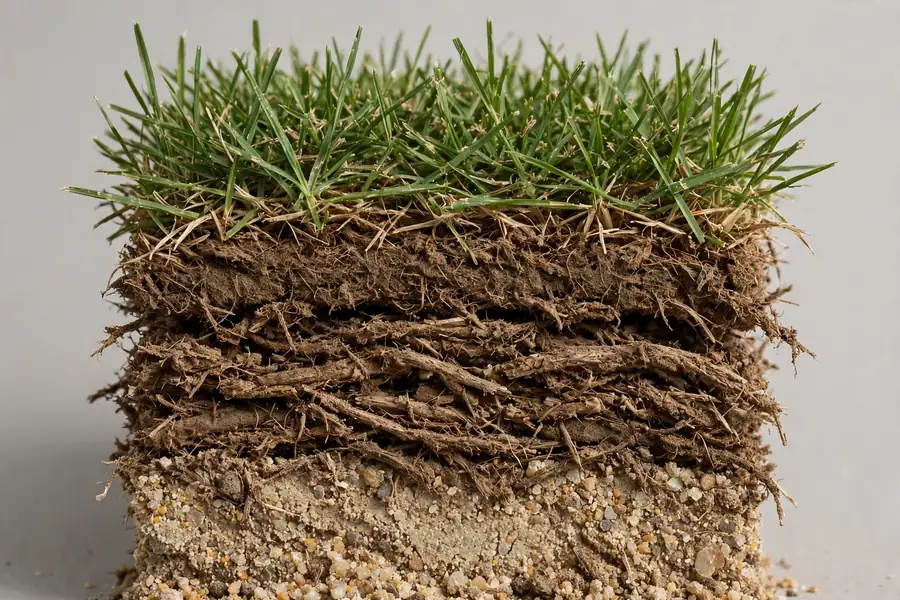
Aeration and dethatching fix two different problems, and it helps to know which one your lawn has. Aeration relieves compaction below the surface by pulling plugs. Dethatching removes the spongy layer of stems and roots that builds up above the soil. St. Augustine builds thatch faster than many grasses, so a thick, spongy feel underfoot points to thatch, while hard soil and runoff point to compaction. Some lawns need both, but most need only one. For the thatch side of the question, see our guide to dethatching St. Augustine grass.
One quick check tells them apart. Push your fingers into the turf. If you feel a soft, springy mat above firm soil, that is thatch. If the soil itself resists a screwdriver, that is compaction.
Which One Should You Choose?
Use this short list to decide:
- Compacted soil: Choose core aeration. It is the only method shown to relieve compaction.
- Thin lawn from shade or pests: Fix the cause first. Aeration will not replace light, and it will not stop pests.
- Dry sand that sheds water: A wetting agent may help water soak in, but it is not aeration. Do not pay for it as a compaction fix.
- Thin lawn with no clear cause: Test the soil, check watering, and read our guide on how to make St. Augustine grass thicker before you buy any treatment.
When in doubt, test first and treat second. A screwdriver test costs nothing and often saves you a treatment your lawn never needed.
Lawn Care in Palm Coast
Not sure what your lawn needs? We check soil, thatch, and watering before we recommend aeration, so you only pay for what your lawn needs. We serve Palm Coast, Flagler Beach, Bunnell, Ormond Beach, and St. Augustine. See our lawn maintenance and sod installation services, or call (386) 237-2983 for a free estimate.
Extension experts say it has not been proven to relieve compaction. It may act like a wetting agent, helping water soak into dry sand. But a spray cannot open pore space the way plugs do. For compacted soil, core aeration is the tested method, backed by university research.
Yes, when the soil is compacted. Do it in late spring or summer while the grass grows actively, on moist soil, not wet soil. The grass fills the holes fast in warm weather. Skip it on stressed or dormant turf, and leave the plugs to break down.
Many sandy lawns need it only when compaction shows up: hard soil, runoff, or thin turf in traffic paths. Lawns on builder fill or heavy-use areas may need it yearly. Test with a screwdriver first, and aerate only when the soil resists.
Late spring through summer, when warm-season grass grows fast and fills the holes quickly. Aerate on moist soil, not wet soil. Avoid dormant or drought-stressed lawns, since stressed turf recovers slowly and gains little from the treatment. In Palm Coast, that window usually runs from late spring into the summer rainy season.
Yes. The plugs break down in a few weeks and return soil and organic matter to the surface. They act as a light topdressing. Mowing over them speeds the breakdown, and they disappear on their own. Raking them up removes that free benefit.
No. Aeration relieves compaction by pulling plugs from the soil. Dethatching removes the spongy layer of stems and roots above the soil. St. Augustine lawns may need either, or both, but the two jobs fix different problems. Test the soil and the turf layer to tell them apart.