Retaining wall repair cost in Florida usually runs $250 to $1,250 for most repairs, with a national average near $750. Larger fixes, such as anchors or rebuilding a section, are priced by the foot. A full replacement usually costs $3,500 to $10,000, plus removal.
These are national averages from Fixr, and Florida jobs vary with height, material, and access. The cause of the damage decides the price more than anything else. A wall that leans because water builds up behind it needs its drainage fixed, not just its blocks pushed back. Fix the cause, or the same wall fails again.
We have repaired and rebuilt retaining walls across Palm Coast and Flagler County since 2015. Most of the failures we see come back to water. Sandy soil, heavy summer rain, and missing drainage put pressure on a wall until it cracks, leans, or bulges. This guide gives you real price ranges by problem, so you can budget, and it shows when a repair is money well spent and when replacement is the smarter call.
Retaining Wall Repair Cost by Problem
The table below uses national average figures from Fixr. Your price in Palm Coast can land higher or lower based on the wall height, the material, and how easy the site is to reach. Treat these numbers as a budgeting guide, not a quote.
| Problem | Typical National Cost |
|---|---|
| Small crack | $150 to $400 |
| Crumbling blocks or face | $150 to $1,250 |
| Water seeping through the wall | $150 to $1,250 |
| Leaning or bowing section | $250 to $1,500 |
| Drainage added behind the wall | $70 to $90 per sq ft |
| Anchors installed | $60 to $80 per linear ft |
| Rebuild a section | $70 to $125 per linear ft |
| Wood rot repair | $40 to $60 per sq ft |
| Full replacement | $3,500 to $10,000, plus $250 to $1,250 for removal |
Small, single-problem fixes sit at the low end of the range. A cracked cap block or a short section that needs repointing is a half-day job with little material. Costs climb when the repair covers a long run, needs anchors or a partial rebuild, or needs drainage added behind the wall. For comparison, a brand new retaining wall averages about $6,300 nationally, typically $3,500 to $9,400, or about $33 per sq ft, according to LawnStarter. That is why a sound wall is almost always worth repairing, while a wall with a failed base is often worth replacing.
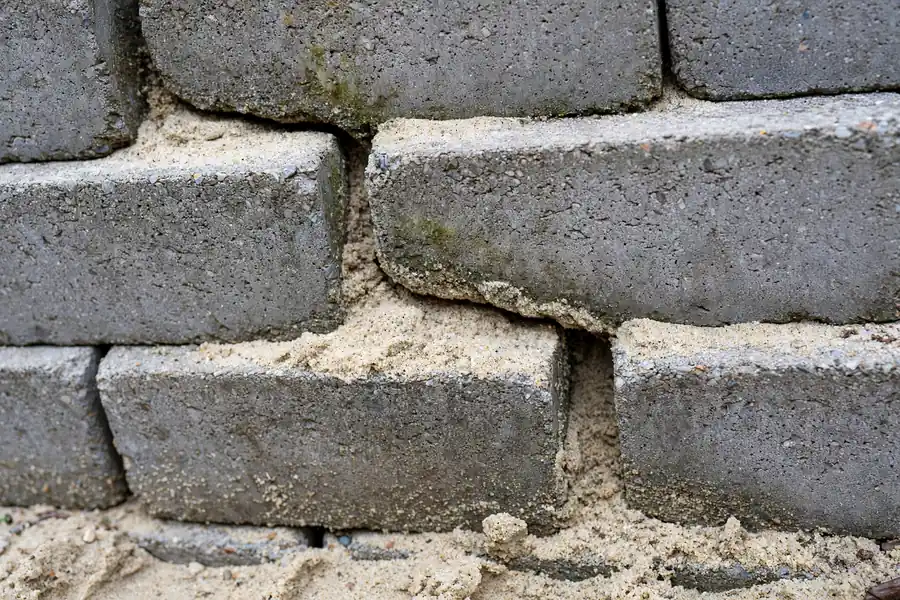
Repair or Replace? How to Decide
Repair makes sense when the damage is limited and the wall structure is still sound. Small cracks, a short leaning section, and missing drainage on an otherwise solid wall all fall in this group. A repair here is cheaper, faster, and it can add years to the wall if the drainage problem behind it gets fixed at the same time.
Replacement is the better call when the damage runs through most of the wall. Replace when the wall leans over most of its length, when the footing has failed, when timber is rotted through, or when a wall over 4 feet tall was built without reinforcement. Patching a wall in this shape usually means paying twice, because the next storm season pushes it out again.
| What you see | Usually the right call |
|---|---|
| Small cracks, wall still straight | Repair |
| One short section leaning | Repair, and add drainage |
| Drainage missing, wall still sound | Repair, and add drainage |
| Wall leaning over most of its length | Replace |
| Footing cracked or sunk | Replace |
| Timber rotted through | Replace |
| Wall over 4 ft with no reinforcement | Replace, with engineering |
If the slope above the wall is steep, a shorter wall with terraced beds can take pressure off the structure and cost less to maintain than one tall wall. Our guide to landscaping a sloped backyard shows how grading and planting work with a wall instead of against it. When you are unsure, an on-site inspection settles it fast. We check the lean, the base, and the drainage, then give you a straight repair price and a replacement price so you can compare.
Why Retaining Walls Fail in Florida
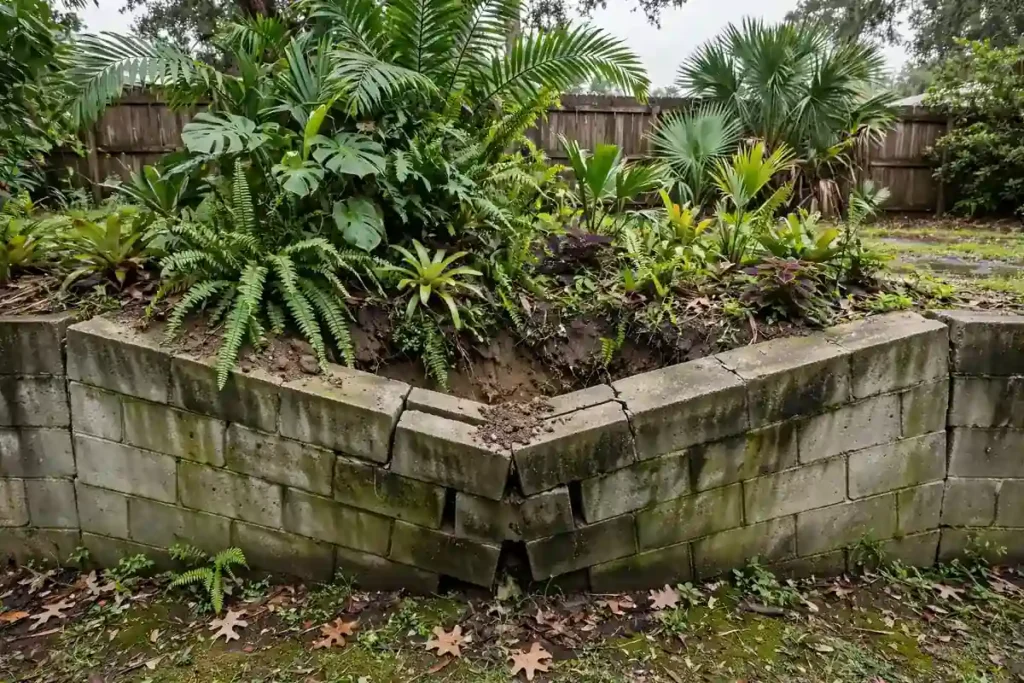
Most Florida wall failures start with water trapped behind the wall. A wall holds back soil, and soil holds water after every summer storm. Without a way out, that water pushes on the wall day after day until blocks shift, joints open, and the wall leans forward.
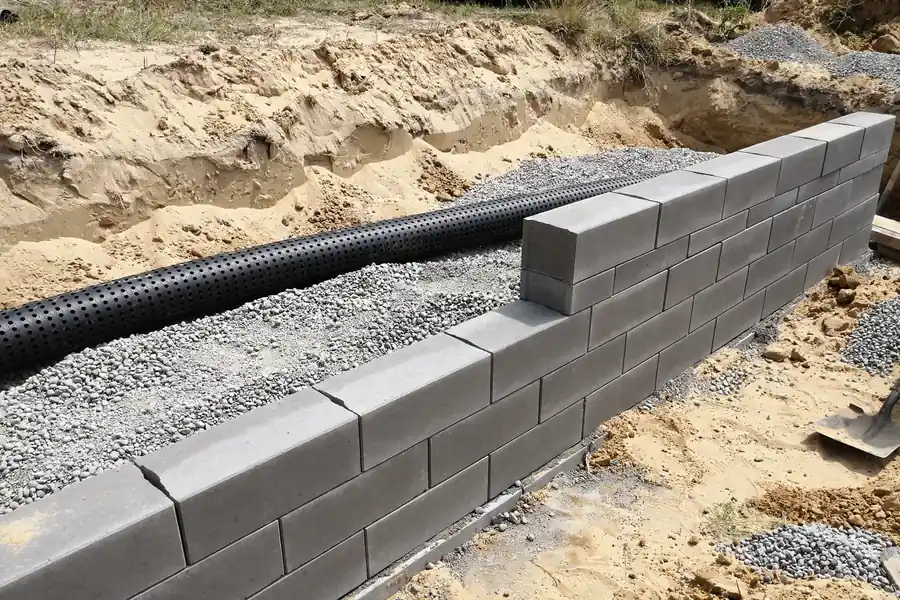
The most common cause is missing drainage. Many older walls in Flagler County were built with no drainage stone and no pipe behind them. Water then has nowhere to go. The fix is clean gravel backfill and a perforated drain pipe that carries water out to daylight. Our guide to retaining wall drainage in Florida covers that work in detail.
Sandy soil makes the problem worse. Our sand washes out through open joints and from behind the wall, which leaves voids. The wall settles into those voids, and the soil above keeps moving. Heavy summer rain speeds this up, because a single storm can dump inches of water on soil that drains fast but holds little shape. Where runoff runs down a slope and across bare soil, erosion control landscaping such as ground cover and mulch beds can slow the washout.
Tree roots push walls out of line too. A tree planted close to a wall sends roots into the joints and behind the blocks. As roots thicken, they lift and shift the courses. Rotting landscape timbers are the last common cause. Timber walls look good at first, but our heat, humidity, and soil contact rot them from the inside out. Once timber is soft, no surface repair holds it. Water causes a related problem on patios as well. The same settling forces that sink a wall section can drop pavers, which is why we often fix both on one visit. See how to fix sunken pavers if your patio has dropped near a wall.
Warning Signs to Check
Walk your wall twice a year, and after any big storm. These signs tell you to act before a small fix turns into a rebuild:
- Leaning or bulging sections, even a slight tilt
- Cracks wider than a coin, or cracks that run in steps through the blocks
- Water stains on the wall face, or soil coming through the joints
- Gaps opening at the ends of the wall
- Puddles that sit at the base after rain
- Cap blocks that rock or have shifted out of line
A hairline crack on a straight wall is often minor. A crack that grows, a lean that increases, or soil washing out of the joints all mean the wall is moving. Measure the lean with a level and a photo every few months. If it changes, call for an inspection before the next storm season.
What Adds to the Cost
Height and length set the base price. A taller wall holds back more soil, so it needs a deeper base, more material, and more labor per foot. A longer wall multiplies all of that. Access matters too. A wall at the back of a fenced yard with no machine access costs more, because material moves by hand and the crew works slower.
Material changes the bill as well. Concrete block and poured concrete cost more than timber up front, but they last far longer in our climate. Stone sits at the top of the range. Drainage work adds cost, but it is the part that keeps the repair from failing. Skipping it to save money is the most expensive choice of all, because the wall moves again.
Engineering and permits add to larger jobs. An engineer typically charges $100 to $200 per hour, and an inspection runs $150 to $300. Removal and haul-off of an old wall runs $500 to $1,500. Permits typically cost $40 to $450 nationally. For a wider look at how hardscape projects are priced, see our hardscaping cost breakdown.
Permits and Engineering in Palm Coast
Walls over 4 feet tall typically need permits and reinforcement nationally. That rule exists because a tall wall holds back a large weight of soil and water, and a failure can damage property and injure people. An engineer sizes the footing, the reinforcement, and the drainage for the soil on your lot.
Palm Coast permits retaining walls as masonry walls, with a retaining wall foundation inspection and stormwater review. That means the city checks the footing before blocks go up, and it reviews how water leaves the site. Small repairs to an existing wall may not need a permit, but rebuilding a section or building taller usually does. Confirm your job with Palm Coast Building Services at (386) 986-3780 before work starts. You can also check the City of Palm Coast permit record for how these permits are listed.
Retaining Wall Repair in Palm Coast
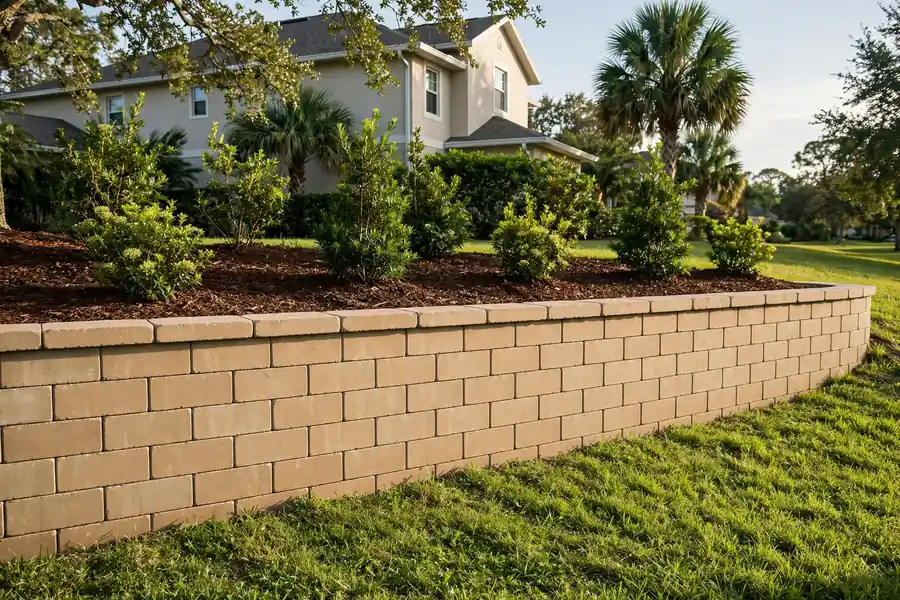
Dreamscapes Florida inspects, repairs, and rebuilds retaining walls across Flagler and Volusia counties, and we fix the drainage so the repair lasts. We serve Palm Coast, Flagler Beach, Bunnell, Ormond Beach, and St. Augustine. Call (386) 237-2983 or see our hardscape services and ask for a free estimate. We will check the lean, the base, and the drainage, then give you a straight price for repair and for replacement.
Frequently Asked Questions
A short leaning section usually costs $250 to $1,500 to fix, based on national averages from Fixr. The final price depends on the length of the section and the cause. Anchors run $60 to $80 per linear foot, and rebuilding a section runs $70 to $125 per linear foot. Fix the drainage too, or the wall can lean again.
Repair is cheaper when the damage is small and the wall is still sound. Small cracks, one short leaning section, or missing drainage on a solid wall are all worth fixing. Replacement makes sense when most of the wall leans, the footing has failed, or timber is rotted through. Patching a wall in that shape usually means paying twice.
Water pressure is the usual cause. When drainage is missing behind the wall, rainwater builds up in the soil and pushes the wall forward. A weak or shallow base adds to the problem, and sandy soil washing out from behind the wall leaves voids that let it settle and tilt. Tree roots can also push blocks out of line.
Small repairs to an existing wall may not need a permit. Rebuilding a section, building taller, or work on a wall over 4 feet tall usually does, and Palm Coast permits retaining walls as masonry walls with a foundation inspection and stormwater review. Confirm your job with Palm Coast Building Services at (386) 986-3780 before work starts.
A well-built block or concrete wall can last for decades with sound drainage behind it. Timber walls last far less time in Florida, because heat, humidity, and soil contact rot the wood from the inside out. The drainage, the base, and the material matter more than any single number, so we do not quote a fixed lifespan.
You can fix small cracks or reset a few loose cap blocks on a short, low wall yourself. Leaning walls, walls over about 4 feet tall, and walls with drainage problems need a professional. These jobs involve soil pressure, footing depth, and drainage design, and a wrong fix can fail in the next storm season.