If you’ve got a sloped backyard, you know the frustration. Mulch washes into the patio after every storm. The mower wants to tip sideways. And every contractor who walks the property seems to have a different opinion about what to do with it.
I’ve spent years finding ideas for landscaping a sloped backyard across Palm Coast and Flagler County, where sandy soil, heavy rain, and rolling lots create headaches with backyard slope landscaping. Some yards drop two feet over twenty feet of run. Others have a brutal six-foot grade change behind the lanai. Every one is fixable, but the right fix depends on the slope, the soil, and how you want to use the space.
This isn’t theory. It’s what I’ve seen work, what I’ve seen fail, and what I’d tell a neighbor over the fence.
Why Sloped Backyards Can Be Challenging
A slope isn’t just a design inconvenience — it’s a water management problem first, and a landscaping problem second.
Water always finds the lowest point — your neighbor’s fence line, your foundation, or a low spot that becomes a mosquito pond every June. In Palm Coast, our sandy soil drains fast on top but compacts quickly underneath after construction, so water that should soak in instead sheets across the surface and takes your topsoil with it.
I’ve walked properties where a homeowner planted a beautiful garden bed on a hillside, only to watch it slide downhill after the first tropical storm. The plants weren’t the problem. The grading was.
Steep backyards also limit usability. You can’t put a fire pit on a 20-degree grade, and mowing it comfortably is nearly impossible.
Best Ideas for Landscaping a Sloped Backyard
Once we understand the grade and drainage pattern, the creative part starts. Here are the sloped backyard landscaping ideas I rely on most.
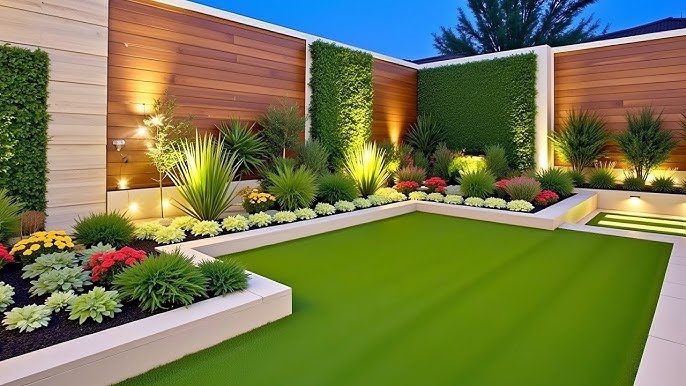
Terracing for flat usable zones. Breaking a slope into level sections is still the most reliable way to reclaim a yard. Even a modest two-tier terrace turns an unusable hill into a patio level and a garden level.
Naturalized hillside plantings. Not every slope needs hardscape. On gentler grades, deep-rooted native grasses and groundcover handle erosion control without a single block being laid.
Dry creek beds. One of my favorite hillside landscaping ideas because it solves drainage and looks intentional. Instead of fighting the water, you give it a designed path lined with river rock that channels runoff away from the house.
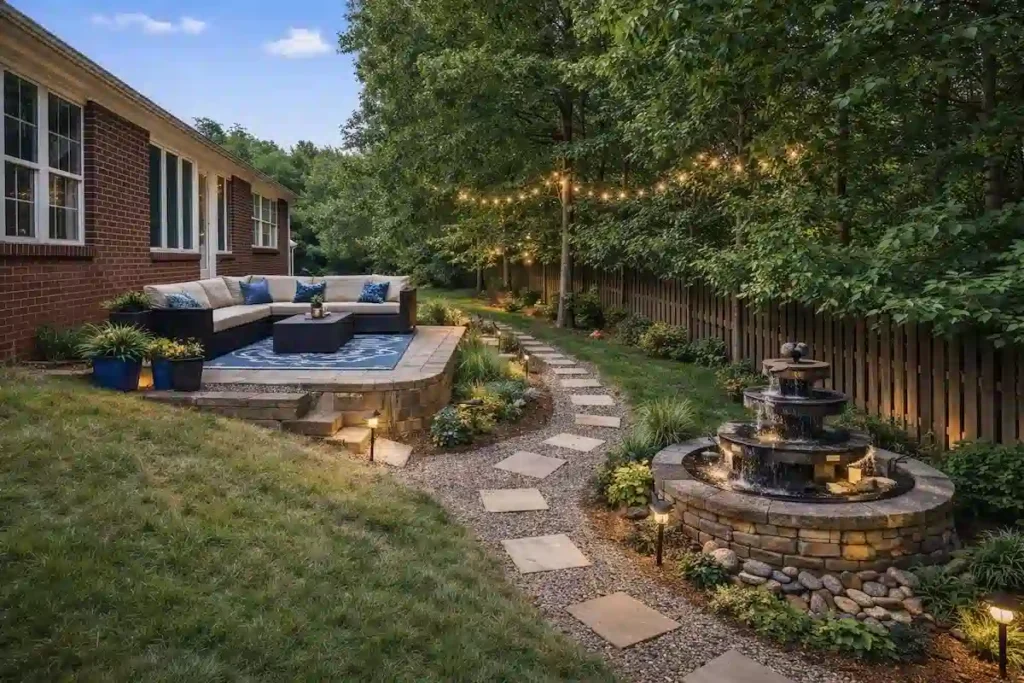
Stepped pathways. A switchback path with timber or stone steps makes a steep slope walkable again, especially for yards that drop down to a dock, pool, or fire pit area.
Raised garden terraces. Built on the uphill side of a retaining wall, these give usable planting space without erosion risk — useful when landscaping an uneven backyard for vegetables or cut flowers, and one of the simplest landscaping for hillsides projects to start with.
Retaining Walls and Terracing
This is where I get the most questions. Retaining wall landscaping is often the backbone of a slope renovation, but it’s not automatic.
A retaining wall does two jobs: holds back soil and creates a flat zone above or below it. For walls under about three feet, a homeowner with the right materials can sometimes manage it. Anything taller, especially on sandy coastal soil, needs engineered footings, drainage gravel behind the wall, and weep holes or a drain pipe system. I’ve fixed more leaning, bulging walls than I can count, almost always because someone skipped the gravel backfill or built on unsettled fill dirt.
Terraced backyard ideas work best when each tier has a clear purpose. For landscaping a steep backyard, I usually put lawn or seating on the top tier, a garden or fire feature on a middle tier, and a patio closest to the house on the lowest tier. Good backyard retaining wall ideas follow water downhill instead of fighting it.
Drainage and Erosion Control Solutions
You can have the prettiest terraces in Flagler County, and they’ll fail within two seasons if drainage isn’t handled first.
The basics that matter: a French drain along the top of any retaining wall, swales redirecting surface water around structures, and grading that maintains at least a 2 percent slope away from the foundation. Erosion control landscaping isn’t glamorous, but it’s the difference between a project that lasts fifteen years and one redone after the first hurricane season.
Backyard drainage solutions I install most often include buried downspout extensions, rock-lined runoff channels, and ground-anchored erosion mats under new plantings until roots establish. On steeper grades, these backyard grading solutions often combine two or three methods, since one alone rarely handles Florida’s rain intensity.
Choosing the Right Plants for Slopes
Plant selection for slope garden design comes down to root structure, not just looks. I lean toward muhly grass, juniper, lantana, and coontie palm for Palm Coast slopes because their roots spread wide and hold soil in place.
Avoid shallow-rooted annuals on steeper grades — they look great for a season, then wash out. Mulch helps short term, but on a real slope, pine straw or jute erosion netting holds better than loose mulch, which migrates downhill in heavy rain.
For low maintenance sloped backyard plantings, group drought-tolerant natives together so you’re not running irrigation up and down a hill, which is inefficient and often the actual cause of erosion in the first place.
Creating Functional Outdoor Living Areas
Clients almost always want more than erosion control — they want an outdoor living space on a slope they can actually enjoy.
A cut-and-fill patio built into the hillside is usually the move for a deck or seating area. We excavate into the slope on one side and build a low retaining wall on the other, leveling the space without a full terrace system. I’ve used this for fire pit patios, outdoor kitchens, and even a small putting green built into a hill the homeowner swore would never be flat.
Common Mistakes Homeowners Make
The biggest one: addressing the surface without fixing the grade. Planting over a drainage problem just hides it temporarily.
The second: undersized retaining walls without engineering for taller sections, leading to failure within a few years.
The third, and most common: ignoring water flow from neighboring properties. Your slope doesn’t exist in isolation. If the lot behind you drains into yours, no amount of landscaping fixes that without a swale or drainage plan covering the whole watershed, not just your fence line.
Professional Tips From Real Landscaping Projects
On one Palm Coast project, a homeowner had tried three times to grow grass on a steep side yard, washing out within a month each time. The fix wasn’t better grass — it was a buried drain pipe rerouting roof runoff, plus a terraced retaining wall breaking the slope into two manageable sections. Grass has held for years since.
One more lesson: over-build drainage capacity, don’t under-build it. I’d rather size a drain for a 100-year storm and have it work fine in a normal one than the reverse.
When to Hire a Landscaping Professional
DIY works fine for naturalized planting on gentle slopes. I’d strongly recommend a professional for anything involving retaining walls over three feet, slopes steeper than roughly 15 degrees, or a yard where water already pools near the foundation. Getting grading wrong, structurally or legally, almost always costs more than doing it right the first time.
Firms like Dreamscapes Florida earn their keep locally here, since proper grading and wall engineering require soil knowledge and code compliance that’s hard to DIY safely.
Conclusion
There’s no single right answer, but there are dozens of proven ideas for landscaping a sloped backyard, and most start with understanding water before worrying about plants. Terracing, retaining walls, smart drainage, and the right root systems turn a frustrating hillside into one of the more interesting features of a property. If your slope has you stuck, a quick site evaluation from a local professional usually costs far less than fixing a failed DIY attempt later.
FAQ
What is the cheapest way to landscape a sloped backyard?
Groundcover plantings with deep root systems, combined with mulch or erosion netting, are the most budget-friendly fix for gentle slopes. Hardscape and retaining walls cost more but are necessary for steeper grades.
How do you prevent erosion on a sloped backyard?
Combine proper grading, a French drain or swale system, and deep-rooted native plants. Erosion control rarely works with just one method alone on steep terrain.
Are retaining walls necessary for every sloped yard?
No. Gentle slopes under roughly 10 degrees can often be managed with plantings and grading alone. Steeper grades or yards near a foundation usually need a wall.
What plants work best on a slope?
Native, deep-rooted plants like muhly grass, junipers, lantana, and coontie palm hold soil well and require minimal upkeep once established.
How much does sloped backyard landscaping cost?
Costs vary widely by slope severity and materials, ranging from a few thousand dollars for plantings and drainage to tens of thousands for engineered retaining walls and terraced hardscape. A site visit is the only accurate way to estimate.