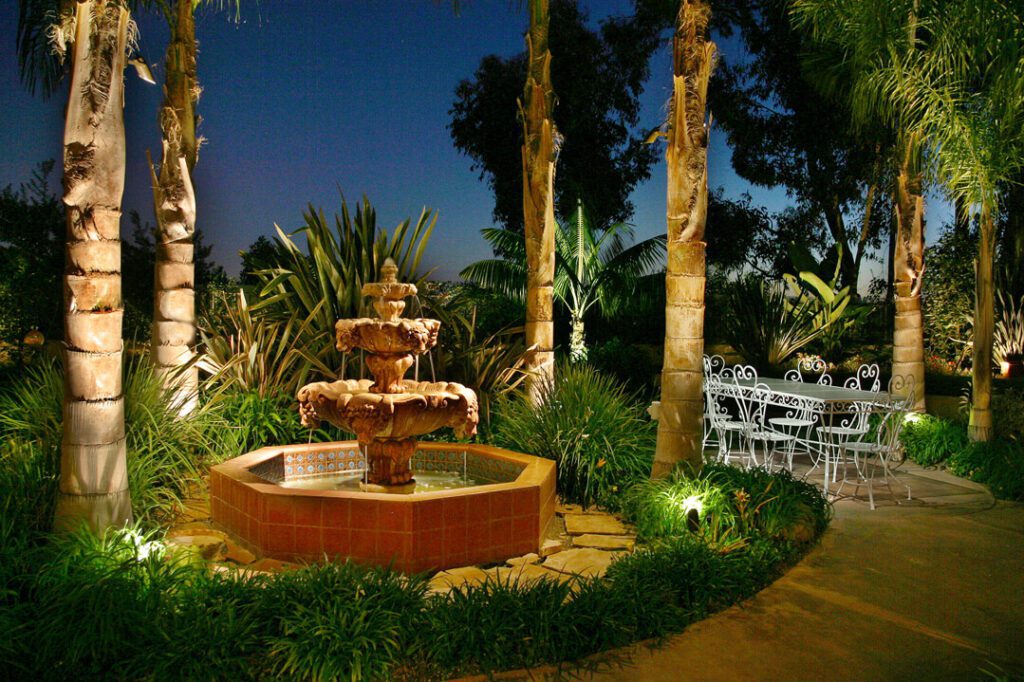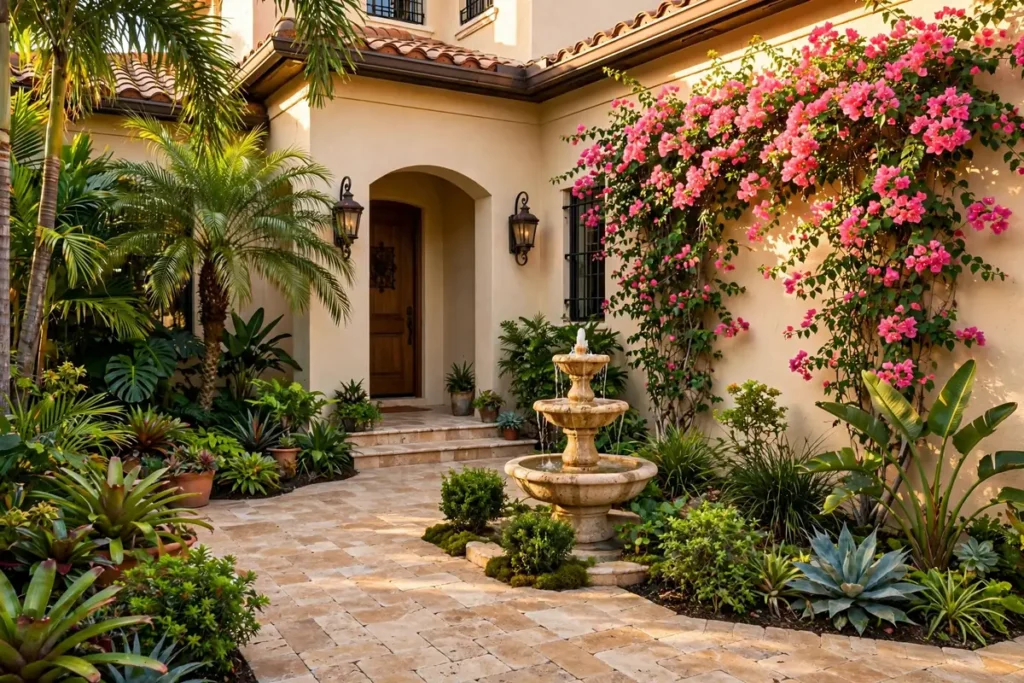
Florida homes are full of courtyards — those enclosed outdoor rooms tucked between the garage and the front door, wrapped around the pool, or hidden behind a garden wall. They’re also the most misunderstood spaces in the yard. A courtyard is not a small backyard: surrounded by walls, it runs hotter, stays shadier, and collects water in ways an open lawn never does. Design it like a backyard and the plants cook, the corners stay dark, and the first summer downpour turns it into a pond. Design it for what it actually is, and it becomes the most-used room of the house. These courtyard garden ideas are built for Florida conditions — Palm Coast heat, afternoon storms, and all.
Read Your Courtyard First: Sun, Heat and Water
Before picking a single plant, spend one day noticing three things. Sun: most courtyards get direct sun for only part of the day, and the pattern shifts with the seasons — a spot that’s sunny in April can be fully shaded by July. Heat: stucco and concrete walls absorb the day’s heat and radiate it back all evening, so a west-facing courtyard wall can push nearby plants 5–10 degrees past the official temperature. Water: enclosed spaces shed roof runoff into one area and drain slowly; wherever water stands after a storm is where your design has to start. Every idea below is matched to one of these realities, because the right courtyard for a shady north entry will fail completely in a blazing west-facing one.
Ideas Matched to the Courtyard You Actually Have
The Front-Entry Courtyard: Privacy Without Building a Fortress
The classic Palm Coast layout puts the courtyard between the street and the front door — which means it has two jobs: welcome guests and block the street’s view into your home. A solid wall of hedge does the second job and ruins the first. Instead, layer it: a low, neat edge near the walkway, mid-height shrubs behind it, and one tall, airy screen where sightlines actually enter. Tall ornamental grasses are made for this — they screen without sealing, and they move in the breeze instead of baking against the wall (our guide to tall ornamental grasses for privacy covers the best Florida varieties). Finish with one focal point the eye lands on from the gate — a tiered fountain, a specimen palm in a glazed pot, or a small seating bench — so the space reads as a garden room, not a corridor.
The Shaded Courtyard: Bright Plants for Dark Corners
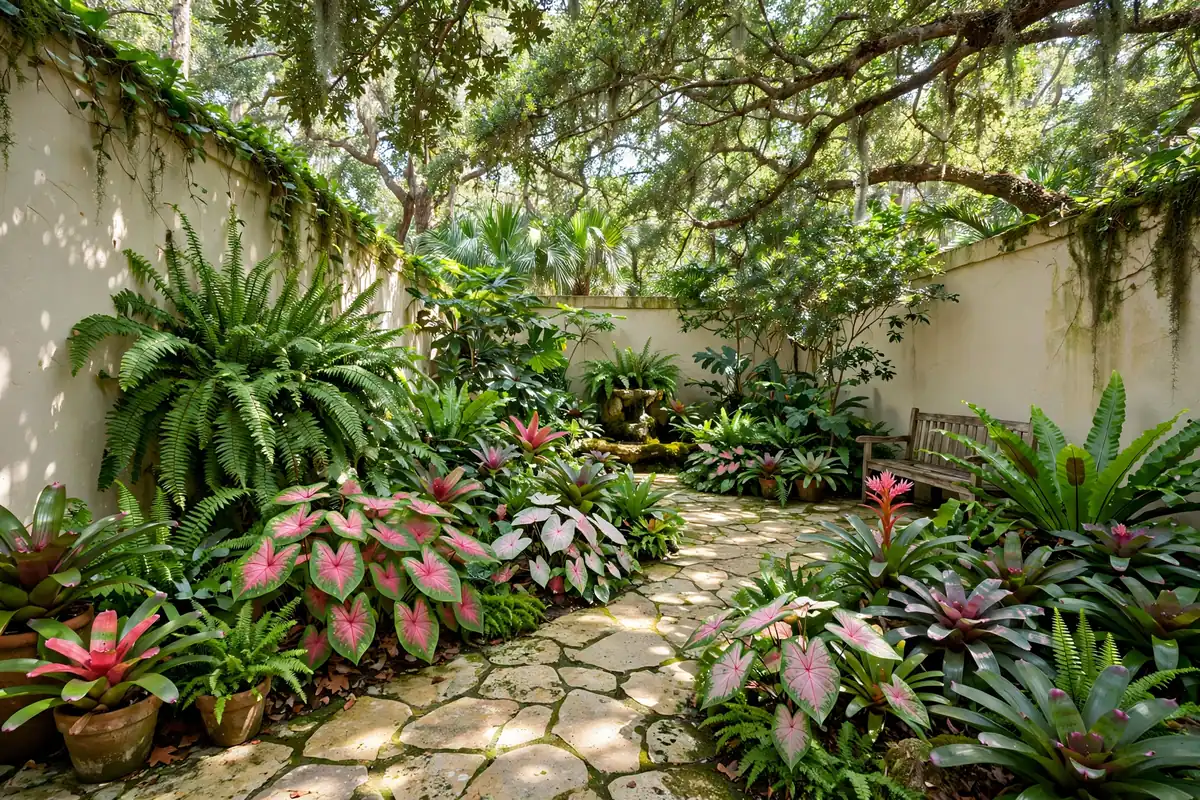
A courtyard shaded by the house or a live oak isn’t a problem — it’s a cooler room that just needs light borrowed from the plants themselves. Choose foliage that glows in shade: variegated ginger, caladiums, bromeliads, macho ferns, and white-flowering peace lilies brighten corners no paint can reach. Underfoot, pale gravel or light-colored pavers bounce what light there is instead of swallowing it. Keep the palette tight — greens, whites, and one accent color — because a riot of dark plants in a dark space just reads as gloom. The reward for getting this right: a courtyard that’s genuinely pleasant at 2 p.m. in August, when the open yard is unusable.
The Sun-Blasted Courtyard: Shade You Build, Plants That Laugh at Heat
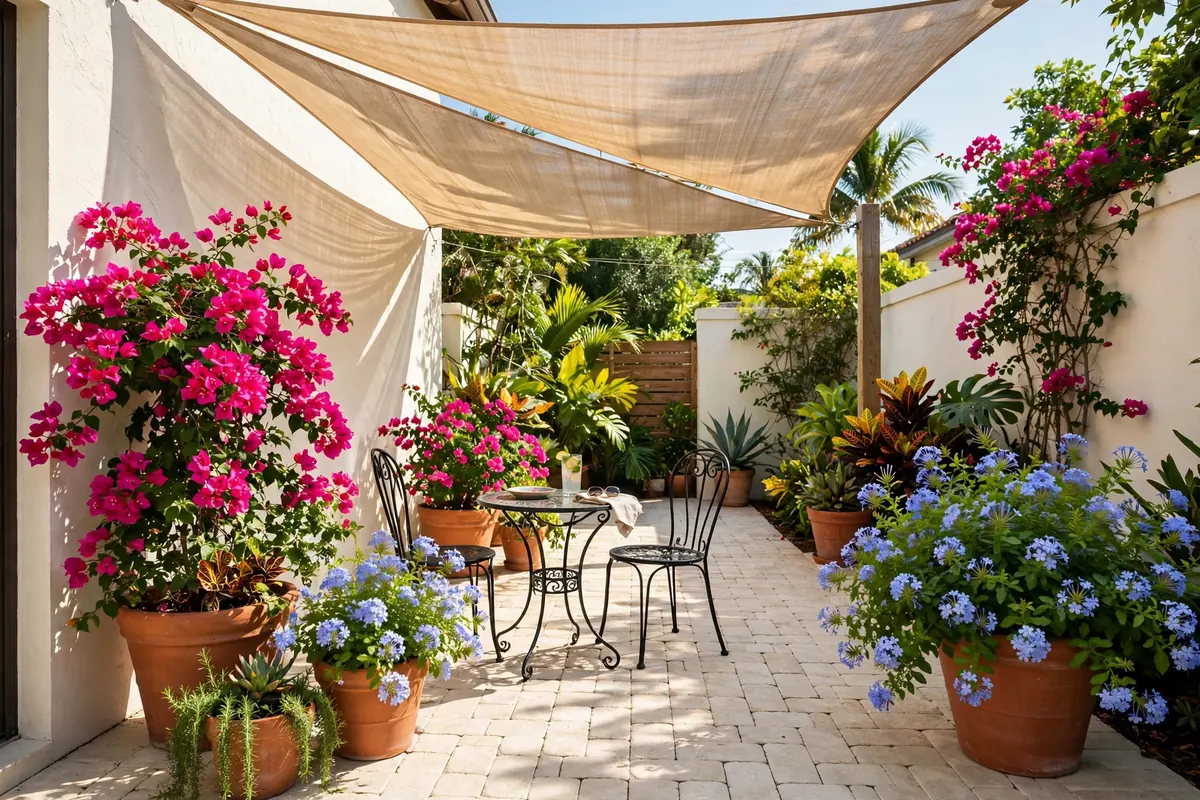
If your courtyard faces west and bakes all afternoon, no plant choice alone will save it — you have to manufacture shade. A shade sail, a slim pergola, or a trellis wall with vines changes the space more than any other single move, and it lets you use the courtyard during the hours it was previously uninhabitable. Under that shade, plant the heat specialists: bougainvillea trained up a sunny wall, plumbago’s blue clouds, lantana, firebush, and society garlic — all of which treat a Florida summer as a suggestion. Use the lightest flooring you can: dark pavers in a sun trap store enough heat to radiate past sunset.
The Pool and Lanai-Side Courtyard: Tropical, Tidy, Nothing in the Water
Courtyards wrapped around a pool or lanai live by one rule: whatever drops, drops in the water. Choose low-litter plants — palms (areca, christmas, and pygmy date are courtyard-scaled), bird of paradise, croton for color, and agapanthus along edges. Skip heavy shedders near the coping, keep planters back from the waterline, and pick pavers that stay grippy when wet. The look to aim for is the resort courtyard: layered green walls, one flowering accent, and clean stone — lush from the lounger, effortless from the skimmer.
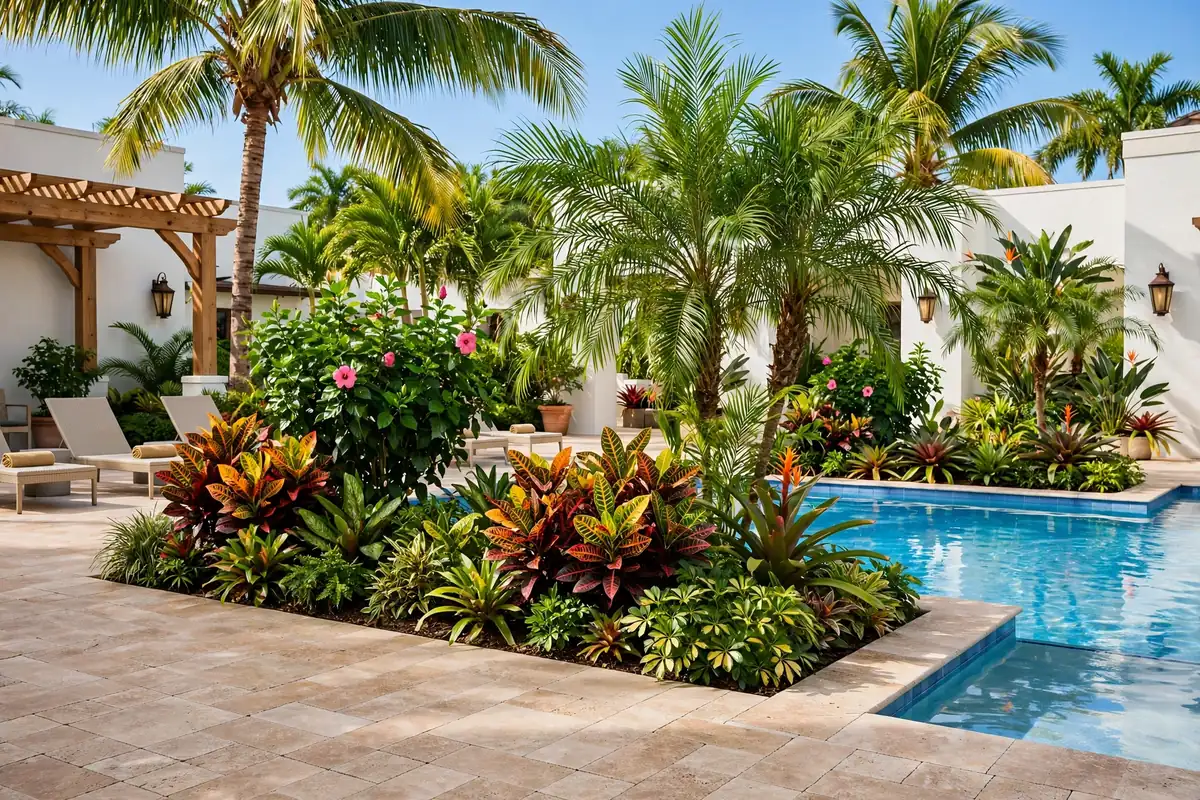
The Tiny Courtyard: One Focal Point, Everything Else Vertical
Under about 100 square feet, the mistake is trying to fit a normal garden into a phone booth. Pick one star — a wall fountain, a single sculptural palm, a bistro set under a market umbrella — and let everything else climb: star jasmine or confederate jasmine on the walls, hanging baskets at eye level, slim planters in the corners. Small enclosed spaces reward the same thinking as the tight areas in our landscaping around a deck guide: define one use, furnish for it, and let the walls do the gardening.
The Florida Plant Shortlist for Courtyards
Most courtyards are mostly paved, which means most of your garden lives in pots — buy the biggest containers the space allows, because small pots in Florida heat need watering twice a day. By role:
Climbers: bougainvillea (sun), star jasmine (sun to shade, fragrant), passion vine (butterflies). Color: plumbago, croton, hibiscus, pentas, firebush. Structure: areca and pygmy date palms, bird of paradise, dwarf umbrella tree, podocarpus in slim planters. Shade: bromeliads, caladiums, macho fern, variegated ginger, peace lily. Notice what’s missing: the lavender, hostas, and Japanese maples filling the generic courtyard lists online. Those are fine plants — for Oregon. In a Florida courtyard they decline within a season, which is why local plant choice, not the prettiest photo, decides whether a courtyard thrives.
Floors and Drainage: The Unglamorous Part That Decides Everything
In an open yard, a flooring mistake is cosmetic. In a courtyard, it’s structural: the floor is most of the space, and enclosed ground in a Florida downpour has nowhere for water to go. Pavers on a proper base beat poured concrete here — they drain at the joints, stay cooler in light colors, and can be lifted if a drain line ever needs work (the full comparison is in our pavers vs concrete patio guide). Whatever the surface, it must slope away from the house and toward a drain or a planted swale — and if your courtyard already floods, solve that before planting anything; our French drain vs dry creek bed breakdown shows the two fixes that work in Flagler County soil.
Light It, and the Courtyard Doubles After Dark
Walled spaces take lighting better than any other part of the yard: uplight the focal palm, wash one textured wall, and put low path lights along the walk, and the courtyard gains a second life every evening. It also fixes the shaded courtyard’s winter gloom. This is quick work for a landscape lighting crew because runs are short and walls hide fixtures — budget it into the design rather than bolting it on after.
Four Florida Courtyard Mistakes We See Constantly
Copying a northern plant list. If the idea came from a UK or Pacific Northwest blog, its plants are wrong here — check every name against Florida heat and humidity first. Planting tight against a hot west wall. Radiant heat kills more courtyard plants than drought; give sun-side plantings a foot of air. Designing before draining. Beautiful planting in a courtyard that ponds is a one-season garden. Filling every corner. Enclosed spaces feel larger with one empty, calm area — a clear patch of pale gravel or an open stretch of paver does more for the room than a sixth planter.
Want a Courtyard Designed for How Florida Actually Behaves?
DreamScapes designs and installs courtyard gardens across Palm Coast and Flagler County — layout, planting, pavers, drainage, and lighting planned together, with plants chosen for your courtyard’s actual sun pattern instead of a catalog photo. Call (386) 237-2983 for a free estimate, or start with our landscape design page to see how a project comes together.
Frequently Asked Questions
How much does it cost to landscape a courtyard in Florida?
A planting-and-pots refresh of an existing courtyard typically runs $1,500–$5,000. A full design with new pavers, drainage, lighting, and planting generally falls between $6,000 and $25,000 depending on size and materials. Enclosed spaces cost more per square foot than open yards because every material comes in through the house or a gate.
What are the best plants for a shaded Florida courtyard?
Bromeliads, caladiums, macho ferns, variegated ginger, and peace lilies all thrive in bright shade and look lush in containers. For a vertical accent in shade, star jasmine is the most reliable fragrant climber. Avoid sun-lovers like lavender and lantana in shaded courts — they stretch, weaken, and stop flowering.
How do I keep a courtyard cool in Florida heat?
Add shade first — a sail, pergola, or vine trellis over the seating area. Choose light-colored flooring that reflects heat, keep at least one wall planted to break up radiant heat, and consider a small fountain: moving water cools the immediate area and gives the space a focal point.
Does a courtyard need drainage?
Yes — enclosed spaces collect roof runoff and have limited natural drainage, so standing water after storms is the most common courtyard failure. The floor should slope away from the house toward a drain, and chronically wet courtyards usually need a French drain or a planted swale to move water out.
What is the best low-maintenance courtyard layout?
Paved floor, large containers instead of in-ground beds, and a short list of proven Florida plants (palms, croton, plumbago, bromeliads) on drip irrigation. Fewer, bigger plantings in big pots need far less watering and pruning than many small ones, and pavers eliminate mowing and edging entirely.