Mailbox landscaping ideas work best when the bed stays small, the plants stay low, and the mailbox door stays clear. Use compact plants, clean edging, and mulch or stone, and keep the carrier path, sidewalk, and road view open. That simple plan suits Florida heat, rain, and sandy soil.
A mailbox bed is a small project with a big effect on curb appeal. It is often the first planting a visitor sees up close, and it frames the front of the home. Yet it sits in a hard spot: next to the road, in full sun, with heat from the pavement and fast drainage through sandy soil. A plan that respects those limits will look good for years with little care.
We plan small front-yard beds this way at Dreamscapes Florida. Since 2015, we have worked on front yards across Palm Coast, and the mailbox beds that last are the simple ones: a clear shape, a few plants that fit the site, and nothing that blocks the box.
Why the Mailbox Area Deserves Its Own Small Landscape Plan
The mailbox area is not just a leftover strip of lawn. It has its own rules. The carrier must reach the box every day, drivers must see the road clearly, and utility lines may run close by. A bed planned for those needs will work well. A bed planned only for looks can block access and cause daily trouble.
Start by standing at the road and looking at the box the way a carrier sees it. Check the path to the box, the view along the road, and the space around the post. Then check the sun, the soil, and how water runs off the road after rain. Those checks shape the bed size, the plant list, and the edging choice.
Choose a Simple Circular, Curved or Rectangular Planting Bed
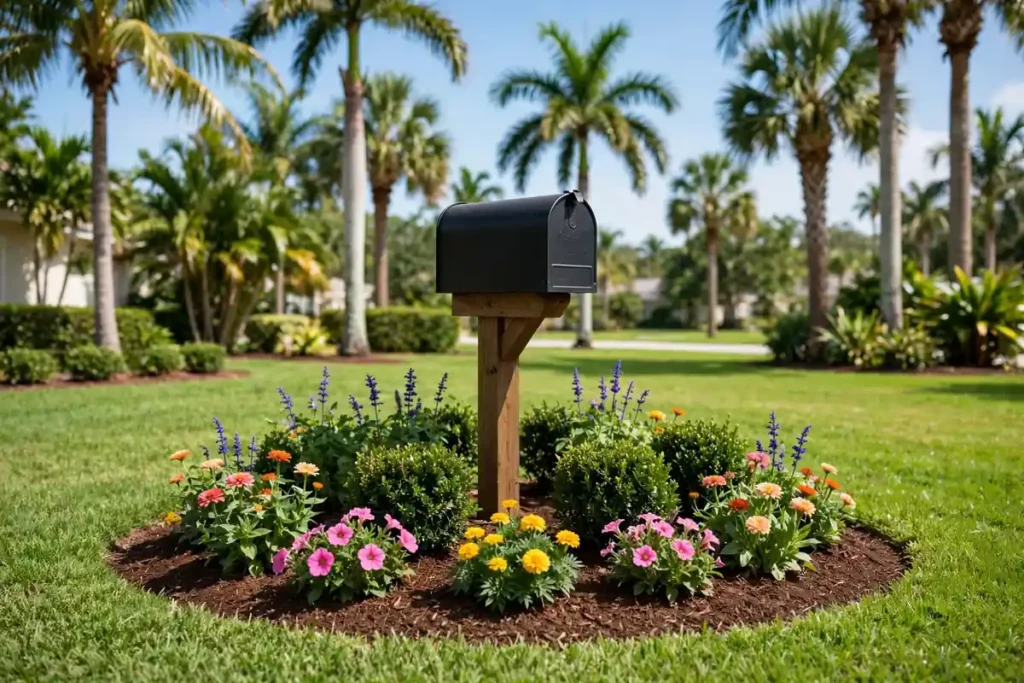
Simple shapes work best at a mailbox. A circle suits a post standing alone in the lawn. A curved bed suits a corner where the lawn meets a walk. A rectangle suits a post set close to the sidewalk or driveway edge. Pick the shape that fits your space, and keep the edges clean so the bed reads as one planned feature.
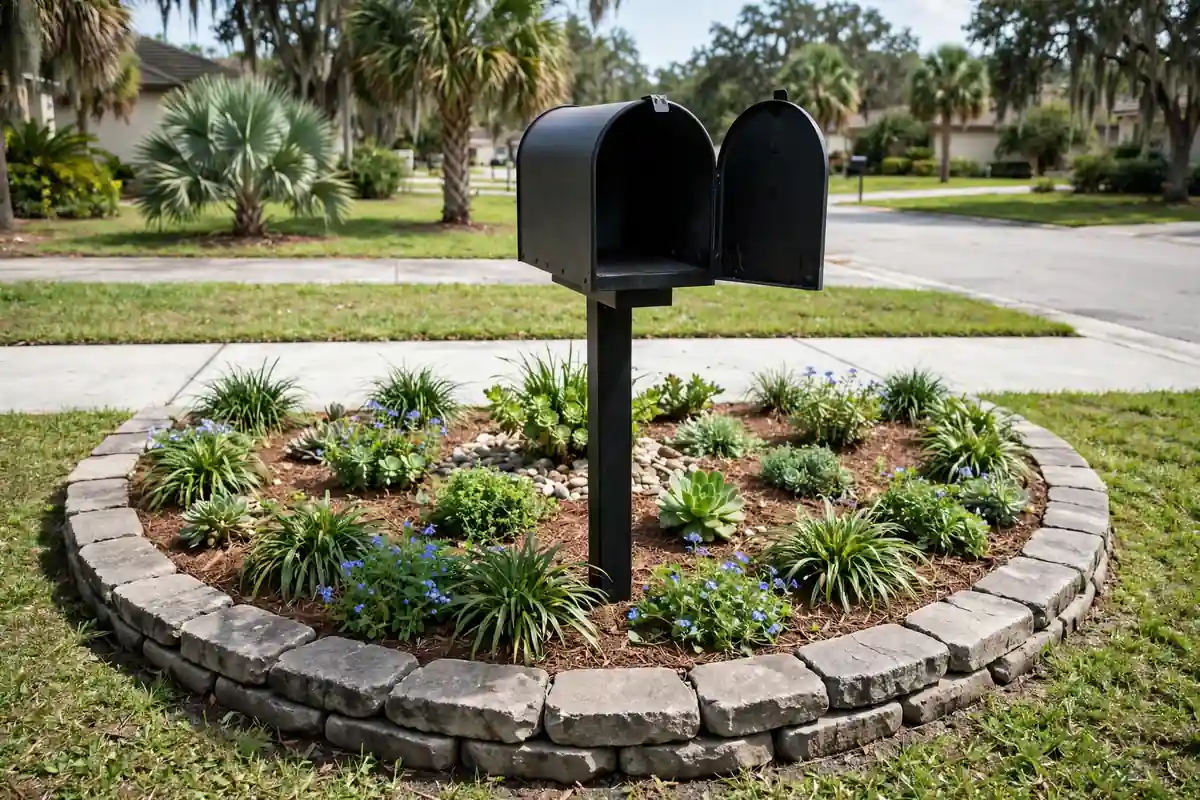
Size matters more than shape. A bed about 3 to 4 feet across holds a few compact plants without crowding the post or the road. Mark the edge with a hose or rope before you dig, and walk around it to check the view from the road and the path to the box. A bed that looks right on paper can still feel too wide once it is on the ground.
Use Compact, Low-Growing Plants That Stay Out of the Way
Compact, low-growing plants are the right fit for a mailbox bed. They stay below the box, keep the door clear, and hold their shape with light trimming. Low shrubs, groundcovers, and small flowering plants all work, as long as their mature size stays well under the box height.
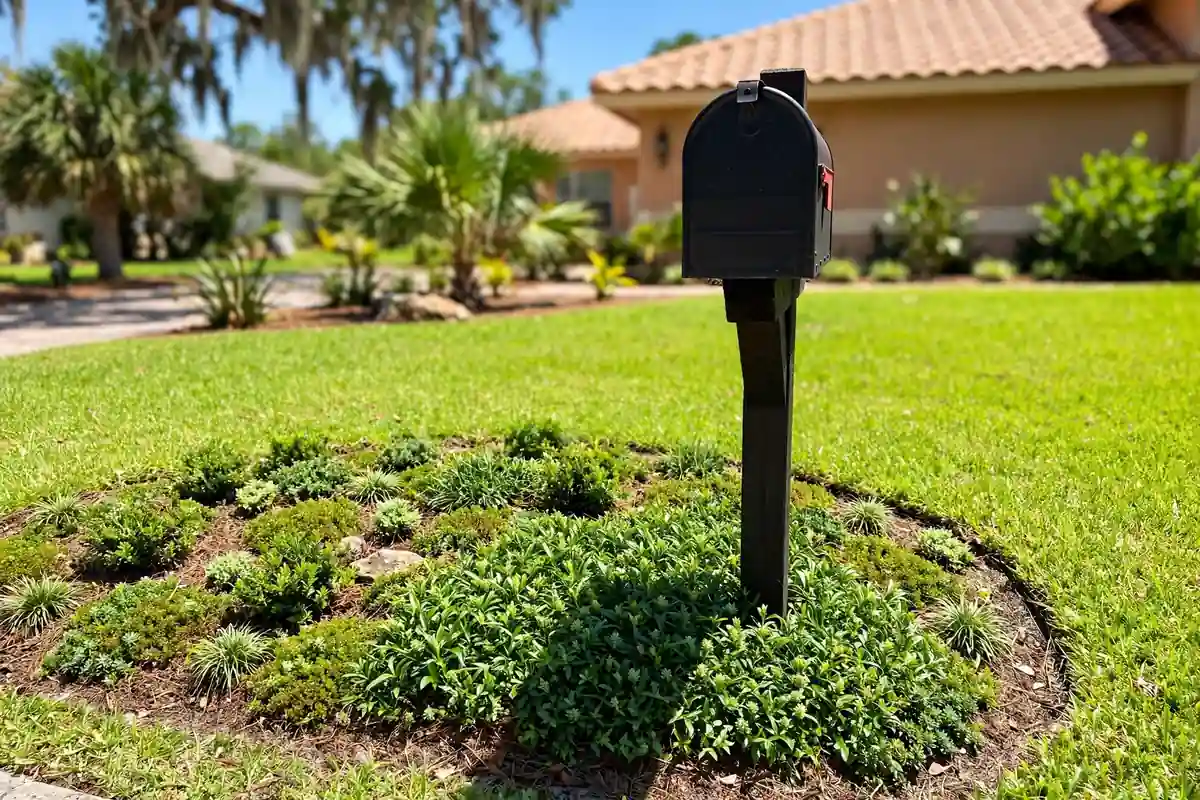
Judge every plant by its mature size, not its size in the pot. A shrub that looks small today can grow past the box in two seasons and block the door. Leave space between plants at planting time, so each one has room to grow without crowding its neighbors or the post.
Repeat one or two plant types through the bed instead of mixing many kinds. A simple mix looks tidy, needs less care, and keeps the bed from looking busy. Save taller plants for beds farther from the road, where height will not block a view or a door.
Combine Mulch, Decorative Stone and Defined Edging
A clean ground layer makes a mailbox bed look finished and cuts weed growth. Mulch holds soil moisture and feeds the soil as it breaks down. Decorative stone lasts longer, drains fast, and stays put in heavy rain. Both work, and the best choice depends on your yard and your care routine.
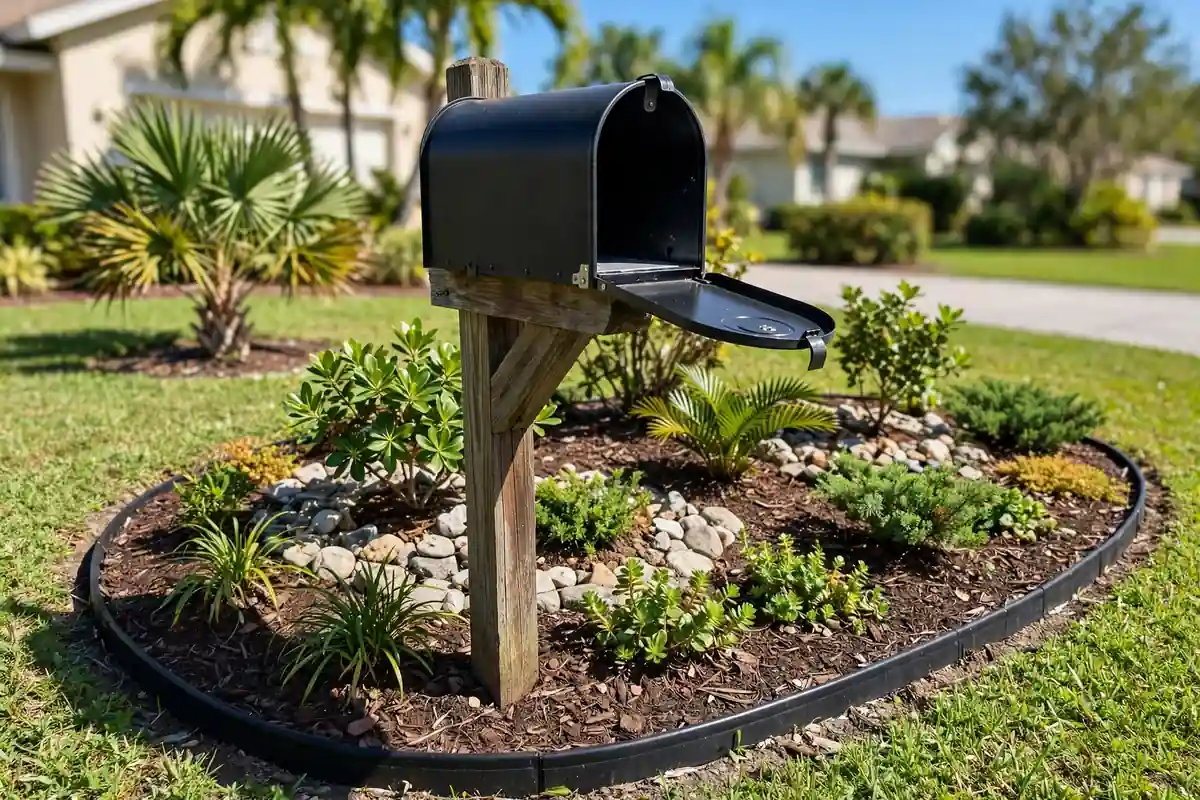
Edging holds the ground layer in place and gives the bed a clear border. Stone edging, metal edging, and paver edging all work, as long as the edge sits low and does not trip walkers or catch a mower. Keep edging out of the sidewalk and away from the road edge, so it never blocks a path or a tire.
Many Florida beds mix the two ground layers. Stone near the road edge stands up to splash and heat, while mulch around plants holds moisture where roots need it. Whichever mix you pick, keep the ground layer a few inches below the top of the edging, so mulch and stone stay in the bed after rain.
Add Seasonal Color Without Creating High Maintenance
Seasonal color makes a mailbox bed stand out, but it should not turn a small bed into a high-care chore. Pick a few seasonal flowers that suit full sun and heat, and plant them in groups so the color reads from the road. A small group of one color looks stronger than single plants scattered through the bed.
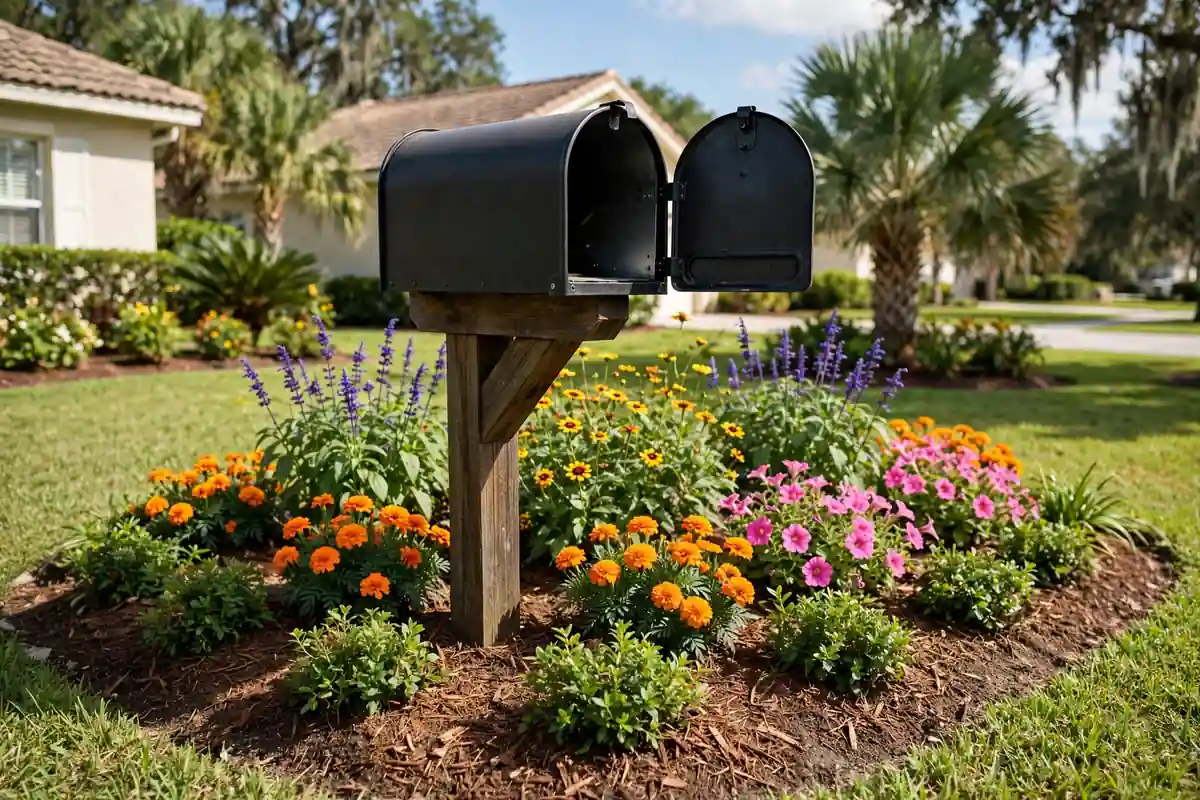
Plan color in waves, not all at once. A bed that blooms in one season and fades in the next will look bare for months. Mix plants that bloom at different times, and keep evergreen shrubs in the bed so the shape holds when flowers fade. Replace tired seasonal plants promptly, since a small bed shows gaps fast.
Coordinate the Mailbox Bed With the Front Yard
A mailbox bed should match the front yard, not fight it. Repeat a plant, a mulch color, or an edging style from the front beds, so the mailbox bed reads as part of the same yard. If the front yard uses stone edging, use stone edging at the mailbox too. If the front beds use dark mulch, use the same mulch here.
Match the scale as well. A large front yard can carry a slightly wider mailbox bed, while a small front yard needs a tighter bed that does not crowd the walk. Our guide to salt-tolerant plants can help you pick plants that suit coastal yards and tie the mailbox bed to the rest of the front landscape.
Keep the Mailbox, Sidewalk and Road Sightlines Clear
Clear sightlines are a safety rule, not a style choice. The carrier must see and reach the box, walkers must use the sidewalk without stepping into plants, and drivers must see the road and the driveway clearly. Plants that block any of those views create risk every day.
Keep plants low on all sides of the box, and trim often so growth never covers the door, the house number, or the flag. Keep the bed out of the sidewalk and clear of the road edge. After storms, check the bed first, since wind can push plants and mulch into paths and sightlines.
Avoid thorny plants and plants that attract stinging insects at a mailbox. Thorns catch skin and clothes when the carrier reaches the box, and bees and wasps near the door make every delivery risky. Soft foliage and clean growth are the safe choices here.
Protect Utility Access and Call Before Digging
Call 811 before you dig anywhere near a mailbox. Buried lines often run along the road edge, and a shovel can cut one fast. Mark the lines, and keep plants clear of meters, valves, and cable boxes so crews can reach them without cutting plants away.
Check postal rules for carrier access and the clear space the carrier needs around the box before you plant. If your community has an HOA, check its rules too, since some groups limit bed size, edging, or plant types near the road. A quick check now saves rework later.
Choose Plants for Florida Sun, Rain, Heat and Salt Exposure
Florida conditions shape every mailbox plant choice. Full sun, heat, heavy rain, sandy soil that drains fast, and salt exposure near the coast all test plants. Florida-friendly guidance for mailbox and utility areas points to low and medium shrubs with clean growth and soft foliage, with no thorns and no plants that draw stinging insects.
Check every species for your exact site before planting. Published plant lists for Florida-friendly yards are often built for zones 8A and 8B, and those lists do not fit every Palm Coast site on their own. Match each plant to your sun, soil, water, and salt exposure, and check its mature size so it stays low and clear of the box for years.
Group plants with similar water needs together, so one watering routine serves the whole bed. Mulch helps hold moisture in sandy soil, and a quick rinse after storms can wash salt and road splash off leaves. With the right plants and a simple routine, a mailbox bed can stay neat through summer heat and storm season alike.
Mailbox Landscaping in Palm Coast
We have shaped front yards across Palm Coast since 2015, and small beds like this one are a good place to start a front-yard refresh. A tidy mailbox bed lifts the whole front of the home, and it takes far less time and care than a full yard redesign.
If you want help planning a mailbox bed or a full front-yard design, explore our landscape design and landscape installation services, or reach out for a free estimate. We serve Palm Coast, Flagler Beach, Bunnell, Ormond Beach, and St. Augustine. Call us at (386) 237-2983 and we will help you plan a mailbox bed that looks sharp and stays easy to care for.
Frequently Asked Questions
Pick compact, low-growing plants that stay below the mailbox and suit your sun, soil, and salt exposure. Good choices include low shrubs, groundcovers, and small flowering plants that hold their shape. Check each plant for mature size and salt tolerance, since a plant that thrives inland can struggle near the coast. Avoid anything tall, thorny, or fast spreading.
Keep the mailbox door, carrier approach, and road view open at all times. Plant low on all sides and leave a clear path so the carrier can reach the box without stepping through plants. Trim often so growth never covers the door or house number. Keep the bed out of the sidewalk and clear of the road edge.
A bed about 3 to 4 feet across works well for most mailboxes, with the post near the center or back. That size holds a few compact plants without crowding the post or road. A wider bed can creep toward the sidewalk, and a smaller bed leaves plants no room to grow. Measure first, then mark the edge.
Both work, and the best choice depends on your yard. Mulch holds soil moisture and feeds soil as it breaks down, but heavy rain can wash it away. Stone lasts longer and drains fast, but it holds heat and adds no food to soil. Many Florida beds mix stone near the road edge with mulch around plants.
Avoid tall plants, thorny plants, and plants that attract stinging insects. Tall plants block the door and road view. Thorns catch clothes and skin when the carrier reaches the box. Plants that draw bees and wasps make every delivery risky. Also skip fast spreaders that swallow the bed and creep toward the road.
Yes, check before you dig or plant. Call 811 first so buried lines get marked, and keep plants clear of meters, valves, and cable boxes. Check postal rules for carrier access and clear space around the box. If your community has an HOA, check its rules too, since some limit bed size, edging, or plant types.