Why is my hedge turning brown? In most Palm Coast yards, the cause is the shape of the hedge itself. A hedge trimmed wider at the top than the bottom shades its own lower branches, and those branches thin out and die from lack of light. Water trouble, salt, cold, heat, and herbicide drift can also turn leaves brown.
The pattern of the browning usually points to the cause. Where the brown starts tells you a lot. Once you know the cause, you can fix it, reshape the hedge, or decide it is time to replace it.
Cause 1: The Hedge Is Shaped Upside Down
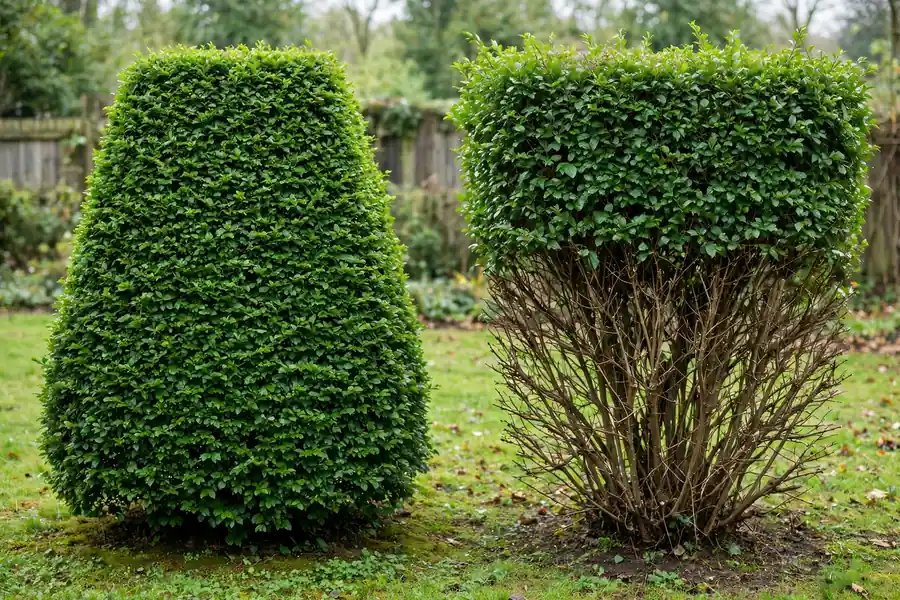
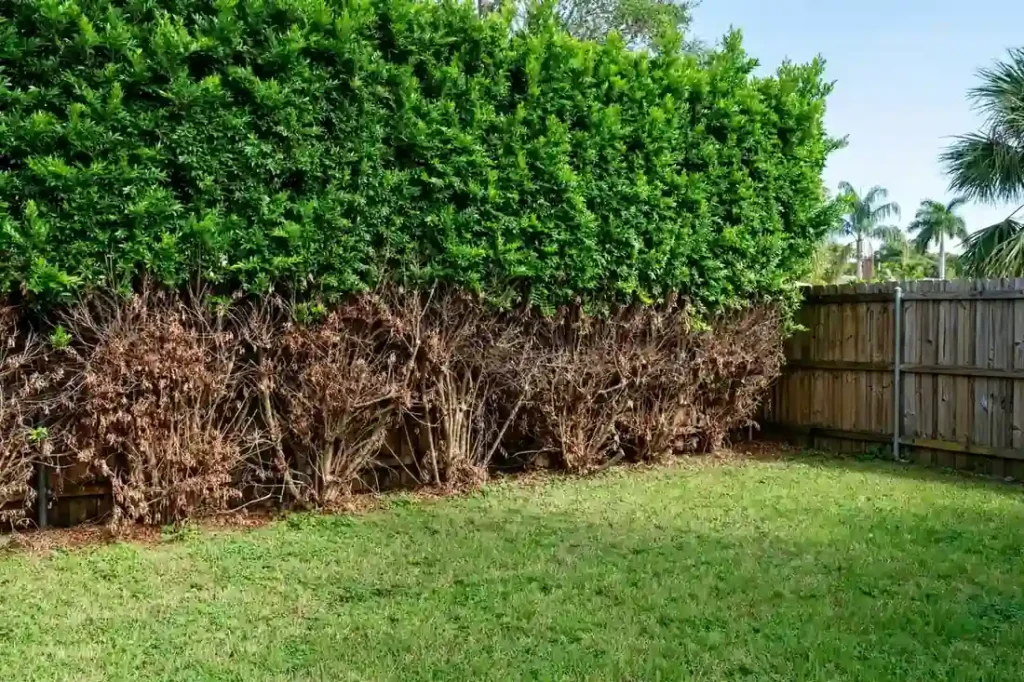
Walk down any Palm Coast street and you will see hedges trimmed into neat boxes, wide at the top and narrow at the base. That shape looks tidy, but it starves the bottom of the plant, since sunlight and rain cannot reach the lower branches.
UF/IFAS Gardening Solutions puts it plainly: hedges should be wider at the bottom than the top so light and rain reach the whole plant. Box-shaped hedges shade their lower branches, which thin and can die from lack of sunlight. UF/IFAS Extension Charlotte County calls bare lower branches typical of improper pruning, and it recommends a trapezoid or cone shape, narrow at the top and wide at the base.
So before you look for disease or a watering problem, look at the shape. If the top is green and full while the bottom is bare and brown, the trim is the likely cause. Reshape the hedge so the base is wider than the top and light gets back in. A hedge kept in a box shape will keep losing lower branches no matter how much you water it.
Cause 2: Too Little Water or Root Problems
The second common cause is dehydration. A hedge can dry out from lack of water, drying wind, or root problems that stop it from taking water up. UF/IFAS Extension Monroe County notes that root damage shows first on the leaves farthest from the roots.
Florida sandy soil drains fast, and a dry spell plus hot wind can stress a hedge in days. Soggy soil can also damage roots, so the goal is steady moisture, not a flood. A mulch layer helps hold moisture in the root zone. If you are not sure how often mulch needs topping up, read our guide on how long mulch lasts.
Check the soil before you add water. If it feels dry a few inches down, the plant needs water. If it stays wet and soggy days after rain, drainage may be part of the problem.
Cause 3: Salt
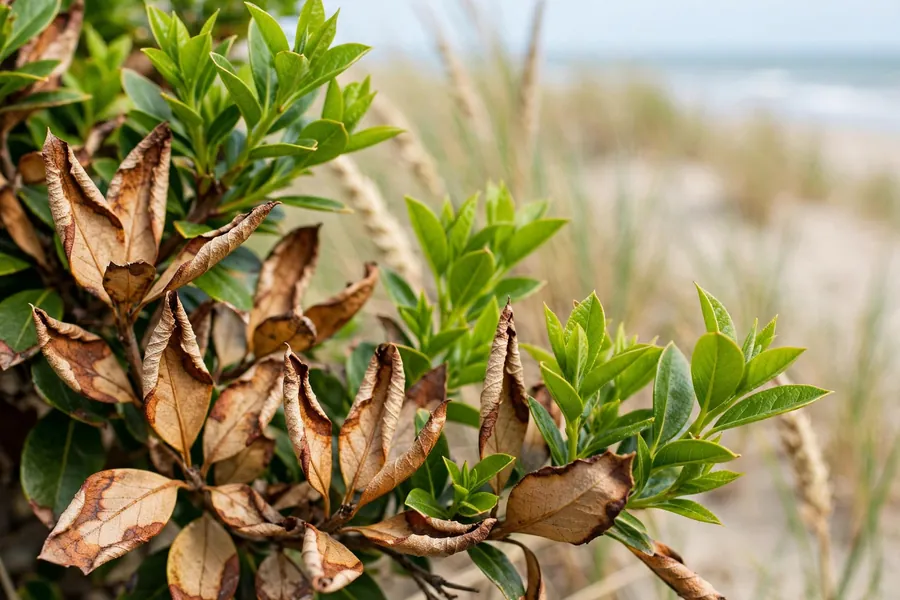
Salt is a real factor in coastal Flagler County yards. Salt spray rides in on ocean wind, and salty irrigation water can add to the load. UF/IFAS Extension Monroe County explains that salt causes brown leaf edges and tips, and it damages older leaves more than new growth.
That pattern is your clue. If the brown shows up mainly as crispy edges and tips, and older leaves look worse than fresh growth, salt is high on the list. Damage often looks worst on the side facing the wind, where spray lands first.
Some plants handle salt far better than others. If salt is a repeat problem in your yard, look at salt-tolerant plants built for coastal conditions.
Cause 4: Cold Damage
Florida cold snaps are short, but they can still brown a hedge. Cold winter winds can turn whole leaves brown, according to UF/IFAS Extension Monroe County. That whole-leaf pattern sets cold apart from salt, which browns edges and tips first.
UF/IFAS Environmental Horticulture adds that cold damage often shows as dead tops, and it is worse on younger, smaller twigs and branches. Dead branches can be pruned back to the most distal sprouts any time after the damage, so you do not need to rush out with shears the morning after a freeze. Wait until you can see which wood is truly dead and where new sprouts appear.
One plant worth a note here is the clusia hedge, which many Palm Coast homeowners grow for privacy. Its cold care is covered in depth in our clusia post rather than here. For general freeze prep, read our guide on how to winterize your garden before the next cold snap.
Cause 5: Heat, Sun, and Herbicide Drift
Not all browning is slow. Sudden blotches on leaves can come from heat, too much sun, or herbicide exposure, according to UF/IFAS Extension Monroe County. If brown patches appear fast, and mainly on the sunny side of the hedge, heat or sun scorch is a likely cause.
Herbicide drift acts the same way. Spray meant for weeds can drift onto hedge leaves on a breezy day and leave blotches behind. If blotches line up with a recent weed treatment nearby, drift belongs on your short list.
One more pattern: iron deficiency also browns leaf edges but is worse on new growth, the reverse of salt damage. Telling new from old growth helps narrow the cause.
How to Read the Browning Pattern
Match what you see to the table below, and start with the first step listed.
| Where the browning is | Likely cause | First step |
|---|---|---|
| Bottom bare, top green | Shape: top shades the lower branches | Reshape the hedge so the base is wider than the top |
| Leaf tips and edges, older leaves worse | Salt | Cut back salt exposure and consider a salt-tolerant plant |
| Whole leaves after a cold night | Cold damage | Wait for new sprouts, then prune dead wood back to live growth |
| Sudden blotches on the sunny side | Heat, sun, or herbicide drift | Check for recent spraying and give shade and water time to help |
| Leaves farthest from the roots | Water or root problems | Check soil moisture and fix drainage or watering |
If your hedge matches more than one row, fix the clearest cause first. A hedge with both a box shape and dry soil needs water now and a reshape at the next trim.
Pests and Diseases
Some browning does come from insects or disease, but that is a smaller share of cases than most homeowners expect, and the signs often look like the causes above. If you have ruled out shape, water, salt, cold, and spray drift, take a sample of the affected growth to your county UF/IFAS Extension office for a diagnosis before you treat anything. A correct diagnosis saves you from spraying the wrong product on the wrong problem.
How to Bring a Brown Hedge Back
Start with the shape. Reshape the hedge into a trapezoid or cone, wider at the base than the top, so light reaches every branch. UF/IFAS Gardening Solutions advises clipping formal hedges while new growth is green, which keeps the cut soft and lets the plant fill in well.
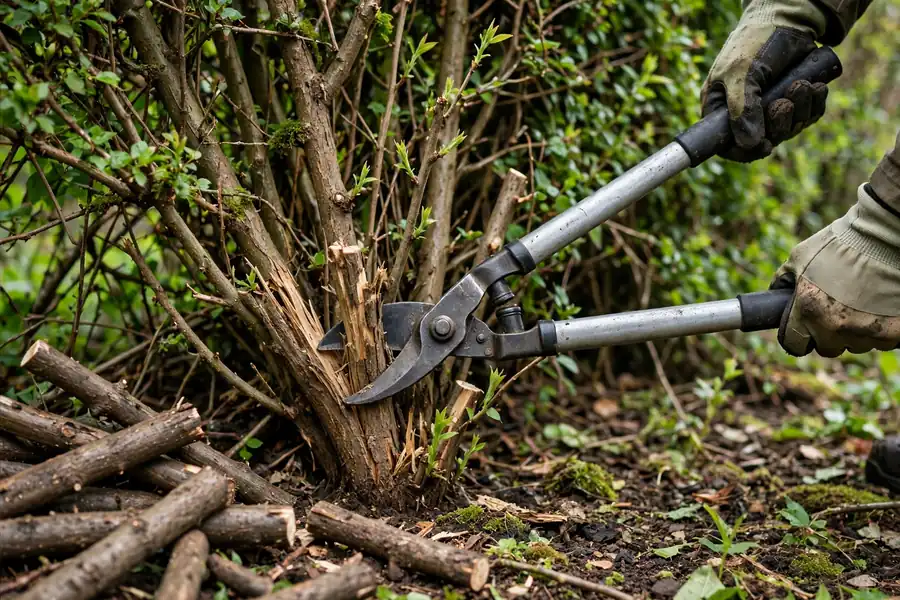
For a thin, leggy hedge, a slow renewal works better than a hard cut all at once. UF/IFAS Extension Sarasota County recommends renewing old, leggy hedges over about three years in late winter or early spring: remove one-third of the old stems in year one, half of the remaining old stems in year two, and the rest in year three. Each round lets new shoots grow from the base while the remaining old stems keep the hedge looking full.
A hard renovation is another option for some shrubs. UF/IFAS Gardening Solutions says overgrown shrubs can be cut to within a few inches of the soil in early spring, but this does not work with all shrubs, especially certain evergreens. Do not cut a hedge to the ground unless you know the plant will regrow from the base. When in doubt, use the three-year renewal plan instead, since it never leaves the hedge bare.
After any reshaping or renewal, give the hedge a full growing season before you judge the result. A hedge bare in spring can fill in well by late summer if the cause is fixed.
When to Replace the Hedge
Some hedges are past saving, and knowing that early saves money. If most of the hedge is dead, with dry, brittle stems and no new sprouts after a growing season, replacement beats another year of patching. The same holds if the plant keeps struggling with the conditions in that spot, such as salt, cold, or deep shade. A plant that fights its site every year will keep browning.
Replacement is also right when the hedge no longer fits the job. A privacy hedge that never fills in at the bottom will not screen a yard, no matter how often you trim it. Start from the spot: sun, salt, and room to grow.
For replacement ideas, browse our guide to plants that add privacy, and consider a clusia hedge if you want a dense, fast privacy screen that suits many Palm Coast yards. Think about placement too: our fence line landscaping ideas show how a hedge works with fences, paths, and neighboring plants instead of fighting them.
Hedge Care in Palm Coast
We have diagnosed brown hedges across Flagler County since 2015, and the pattern is almost always the same: shape first, then water, salt, cold, or spray.
If your hedge is turning brown and you are not sure which cause fits, we can look at it and tell you plainly whether it can recover or needs replacing. See our lawn maintenance page for ongoing hedge trimming and care, or our landscape installation page if the hedge needs replacing. Call us at (386) 237-2983 or request a free estimate. We serve Palm Coast, Flagler Beach, Bunnell, Ormond Beach, and St. Augustine.
Frequently Asked Questions
Often, yes, if the stems are still alive. First fix the cause, then reshape the hedge so the base is wider than the top and light reaches the lower branches. Give the plant a full growing season to fill in. If whole stems are dry and brittle with no new sprouts, those sections are dead and need replacing.
Usually because the hedge was trimmed wider at the top than the bottom. UF/IFAS explains that the top then shades the lower branches, which thin out and die from lack of light. Reshape the hedge into a trapezoid or cone, wider at the base, so sunlight reaches every branch again.
Yes, cut dead wood back to live growth, where stems still show green under the bark or new sprouts. For cold damage, UF/IFAS says dead branches can be pruned back to the most distal sprouts any time after the damage. Do not cut a whole hedge to the ground unless you know that plant regrows from the base.
Yes. Salt causes brown leaf tips and edges, and UF/IFAS Extension notes it damages older leaves more than new growth. Coastal yards face salt spray, and salty irrigation water adds to the load. If salt browning keeps returning, switch to a salt-tolerant plant that suits a coastal spot.
Renew it over three years, as UF/IFAS recommends. In late winter or early spring, remove one-third of the old stems in year one, half of the remaining old stems in year two, and the rest in year three. Reshape the hedge wider at the base, and new shoots will fill in from the bottom up.
Replace the hedge when most of it is dead, with dry stems and no new sprouts after a growing season. Also replace it when the plant keeps struggling with salt, cold, or shade in that spot. A better-suited plant will screen your yard sooner than years of repairs on the wrong plant.