If you’ve ever stood in your front yard watching mulch wash into the grass after a summer storm, or pulled St. Augustine runners out of your flower bed for the third time this month, you already know why so many Palm Coast homeowners are switching to metal landscape edging.
I’ve personally installed and repaired metal edging on more residential and commercial properties than I can count, from small flower bed borders in Palm Harbor to long driveway lines in Flagler Beach. Some of it has held up beautifully for over a decade. Some of it failed in two years because it was the wrong material for sandy Florida soil and salt air.
This guide isn’t a rewrite of a manufacturer’s spec sheet. It’s what we’ve actually learned from digging trenches in Florida sand, watching cheap edging rust through, and fixing other people’s DIY mistakes. By the end, you’ll know exactly what type of metal edging works here, what it costs, how it’s really installed, and how to avoid the problems we see most often.
What Is Metal Landscape Edging?
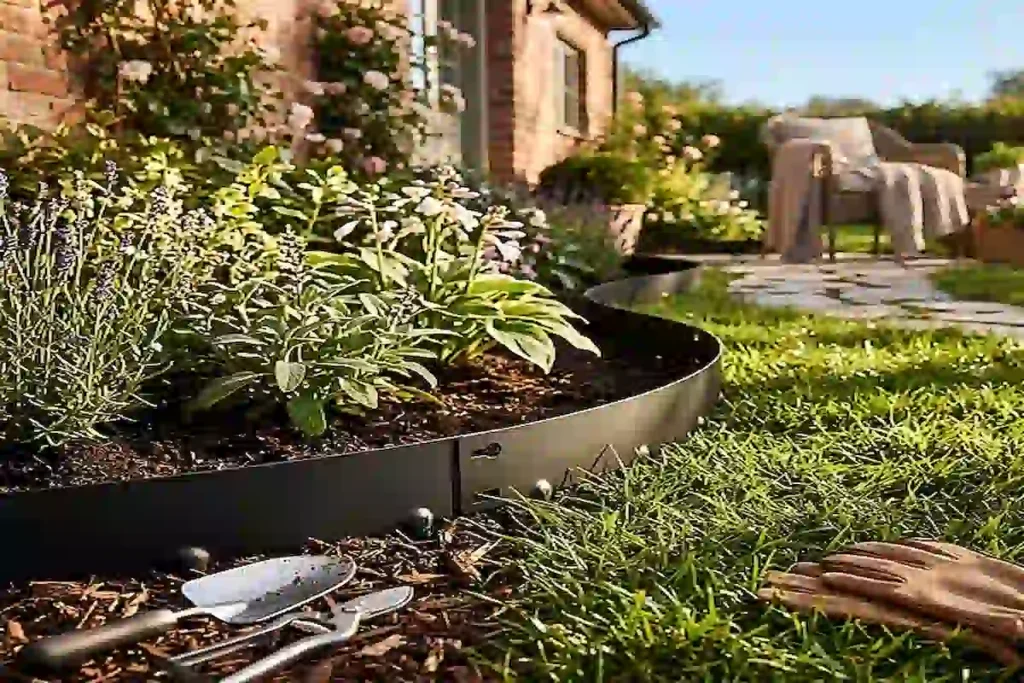
Metal landscape edging is a thin strip of aluminum, steel, or corten metal installed partway into the ground to create a clean, physical border between two areas of a yard, such as a lawn and a flower bed. It holds mulch and soil in place, blocks grass runners, and gives garden beds a crisp, defined line that lasts far longer than plastic.
Most edging comes in coils or flat sections, ranging from about 4 inches to 14 inches tall, with roughly a third of that height buried underground. It’s sold by the linear foot, and a typical residential bed might need anywhere from 30 to 150 feet depending on the layout.
People also search for this product under a few other names: steel landscape edging, metal lawn edging, garden edging, or landscape border. They’re all describing the same basic idea, just with different metals and finishes.
Why Florida Yards Are Different
Florida’s sandy soil, intense UV exposure, heavy seasonal rain, and salt air (especially near the coast) all affect how metal edging performs, which means edging that works great in Ohio or Pennsylvania can underperform or corrode quickly here.
I learned this the hard way early in my career, recommending a basic mild steel edging on a property near the Intracoastal. Within 18 months, the client was calling about rust streaks bleeding into their white shell pathway. That job changed how I spec metal edging for every coastal property since.
A few things make Florida unique for this kind of project:
Sandy soil drains fast and doesn’t hold edging in place the way clay-heavy soil does up north. That means stake spacing and burial depth matter more here, not less.
Heat and direct sun cause metal edging to expand during the day and contract at night. Over years, loose or poorly staked sections will start to wave or lift if this isn’t accounted for during installation.
Salt air along Flagler and Volusia County coastlines speeds up corrosion on anything that isn’t truly rust-resistant, even some products marketed as “weather resistant.”
Heavy summer rain and tropical storm runoff put real pressure on edging that’s holding back mulch on a slope. We see more washout failures in June through September than any other time of year.
Types of Metal Landscape Edging
The three main types are aluminum (lightweight, rust-proof, easy to bend), galvanized or powder-coated steel (stronger, holds straight lines well, coating can wear over time), and corten weathering steel (develops an intentional rust-like patina and is extremely durable once that patina forms).
Aluminum Landscape Edging
This is what we recommend most often for Palm Coast properties, especially anything within a few miles of the water. Aluminum doesn’t rust because it doesn’t contain iron, so salt air isn’t the threat it is for steel. It’s also lighter to work with, which matters when you’re bending it around curved flower beds or pool decks.
The tradeoff is that aluminum dents more easily than steel if a mower or trimmer clips it, and very thin gauges can flex out of shape over time in soft sandy soil.
Steel Landscape Edging (Galvanized or Powder-Coated)
Steel edging is heavier and holds a straighter, more rigid line, which is why we like it for long driveway borders or commercial properties where the look needs to stay crisp without constant maintenance. Galvanized coatings resist rust reasonably well inland, but we’ve seen the coating wear thin at cut edges and screw points within a few years on coastal lots, which is exactly where rust starts.
Corten (Weathering) Steel Edging
Corten is the metal edging you’ve probably seen in modern landscape design photos, with that warm, rusted-orange finish. The patina that forms on the surface actually protects the metal underneath from further corrosion once it fully develops, usually within a few months of installation. It’s a great look for modern landscape edgingand contemporary garden borders, but homeowners need to know upfront that it will rust-stain a light-colored paver or shell pathway if it’s installed right against one without a buffer.
Quick Comparison Table
| Material | Best For | Rust Risk in FL | Flexibility | Typical Lifespan Here |
|---|---|---|---|---|
| Aluminum | Coastal properties, curved beds, pool areas | Very low | High | 20+ years |
| Galvanized Steel | Long straight runs, driveways, inland properties | Moderate near coast | Moderate | 10-20 years |
| Corten Steel | Modern landscape design, intentional rustic look | None (by design) | Moderate | 25+ years |
Metal Edging vs. Other Border Materials
Metal edging outperforms plastic edging in durability and looks more refined, costs less than natural stone or brick borders, and requires far less ongoing maintenance than wood, which doesn’t hold up well in Florida humidity.
| Material | Durability | Upfront Cost | Maintenance | Florida Performance |
|---|---|---|---|---|
| Metal | High | Moderate | Low | Excellent (right material) |
| Plastic | Low-Moderate | Low | Low | Warps and cracks in UV/heat |
| Brick/Paver | High | High | Low-Moderate | Excellent, but pricier |
| Wood | Low | Low-Moderate | High | Rots fast in humidity |
| Natural Stone | Very High | Very High | Very Low | Excellent, premium cost |
Plastic edging is the one we get called to remove most often. It looks fine for a season or two, then Florida sun makes it brittle, and it starts popping out of the ground or cracking at the stakes. If budget is the main driver, we’d still steer most clients toward a basic aluminum edging over plastic, since the price gap is smaller than people expect once you factor in how often plastic needs replacing.
Installation Insights From Real Jobs
Proper metal edging installation in Florida means digging a clean trench slightly deeper than the buried portion of the edging, compacting a firm base, staking every few feet (more often in loose sandy soil), and leaving roughly half an inch of edging exposed above grade for a clean line without a tripping hazard.
Here’s what that actually looks like on a real job site, and where things tend to go wrong if you skip steps.
Step 1: Layout and Design
We mark the bed line with marking paint or a garden hose first, then walk it with the homeowner before any digging starts. This is the step DIYers skip most, and it’s also the easiest place to fix a design flaw before it’s permanent. Curves should be gentle; sharp angles in metal edging are where most kinking and bending problems start.
Step 2: Trenching
In Florida’s sandy soil, trenching is fast, but the soil doesn’t hold a clean wall the way clay does, so the trench can collapse slightly while you’re working. We dig slightly wider than necessary to account for this and tamp the base before placing the edging, especially on properties with nearby irrigation lines that we need to route around.
Step 3: Staking
This is the step that separates edging that lasts 15 years from edging that’s wavy and loose within two summers. Sandy soil needs closer stake spacing than clay or loam, typically every 2 to 3 feet rather than the 4-foot spacing you’ll see in installation guides written for other regions. On commercial properties with mower traffic, we stake even tighter along the lawn-facing side.
Step 4: Joining Sections
Most metal edging connects with an overlap or a sliding lock system. The hidden challenge here is thermal movement. Florida ground temperature swings significantly between a January morning and a July afternoon, and joints that are installed too tight with no room to shift can buckle over a year or two. We leave a small amount of play at every joint specifically for this reason.
Step 5: Backfill and Finish Grade
The edging should sit about a half inch above the finished grade, no more. We see a lot of installs where edging sticks up 2 to 3 inches, which looks heavy-handed and becomes a real tripping and lawn mower hazard. Backfill gets compacted on both sides, not just the bed side, because loose soil on the lawn side is what lets edging lean over time.
Common Mistakes Homeowners Make
The most common mistakes are burying edging too shallow for sandy soil, skipping stakes to save money, choosing plain steel near saltwater, installing it flush or proud instead of a half inch above grade, and ignoring irrigation head placement during layout.
A few specific ones we run into constantly:
- Not burying it deep enough. In sandy soil, a shallow install looks fine on installation day and starts heaving within one rainy season. We’ve re-dug entire yards because the original install only buried 2 inches of an 8-inch panel.
- Skipping stakes on “easy” sections. Homeowners often think a straight run doesn’t need as many stakes. In Florida sand, straight runs actually need consistent staking just as much as curves, because there’s nothing locking the soil around the edging the way root-bound clay would.
- Choosing the wrong metal for a coastal lot. We’ve replaced more than a few rusted steel edging jobs within sight of the water that should have been aluminum or corten from day one.
- Installing edging flush with the lawn. This invites string trimmer damage and lets grass creep right over the top. A small, consistent reveal above grade is what actually keeps the border looking sharp.
- Forgetting about irrigation. Sprinkler heads installed too close to edging get clipped during mowing, and edging installed without checking irrigation lines first sometimes ends up cutting right through a buried line. We always recommend a quick walk-through with whoever manages your before any trenching begins.
Cost Considerations
Metal landscape edging in Florida typically runs from around $4 to $12 per linear foot installed, depending on material (aluminum vs. steel vs. corten), gauge thickness, and how much trenching, curving, or obstacle navigation the layout requires. Material alone, without labor, generally falls in a lower range, while professional installation adds labor, equipment, and proper compaction that DIY jobs often skip.
A few cost factors that matter more than people expect:
Gauge thickness changes price significantly. Thicker, heavier-gauge metal costs more upfront but resists denting, bending, and mower damage far longer, which usually makes it the better value over a 10 to 15 year window.
Curved layouts cost more than straight runs because they take more time to install correctly and sometimes require additional cuts or specialty bending.
Obstacles like sprinkler heads, tree roots, and existing hardscaping add labor time that a flat per-foot estimate doesn’t always capture upfront.
Site prep matters. If a property already has clean bed lines from a prior installation goes faster and cheaper than starting from an undefined, overgrown bed.
The cheapest material isn’t usually the best value here. We’ve torn out plenty of bargain edging that needed full replacement within 3 years, which ends up costing more than installing the right product once.
Florida Climate Considerations
In Florida, choose rust-resistant metal (aluminum or corten), bury edging deeper and stake it tighter than national average recommendations due to sandy soil, leave expansion room at joints for heat-driven movement, and plan for heavier wear during hurricane season rainfall.
Heat and Sun
Direct Florida sun heats dark-finished metal edging significantly above air temperature. We’ve measured surface temps that could be uncomfortable to touch barefoot in midsummer. This matters most for edging near pool decks, patios, or play areas, where we’ll often recommend a lighter-finish aluminum specifically to keep surface temps more manageable.
Sandy Soil
Sand doesn’t compact and hold the way clay or loam does. This affects almost every part of the installation, from trench stability to stake spacing to how the edging behaves after the first heavy rain. Anyone installing edging here using instructions written for northern soil types is setting themselves up for a loose, wavy border within a year.
Salt Air and Coastal Corrosion
Within several miles of the Intracoastal or the Atlantic, salt-laden air accelerates corrosion on anything containing iron. This is the single biggest factor in choosing between aluminum and steel for coastal Flagler County properties. It’s also why some “rust-resistant” coated products still fail faster here than their warranty might suggest.
Hurricane Season and Heavy Rain
June through November rain, especially during tropical systems, tests every weak point in an edging install. Edging on a slope without adequate staking can shift or lift as saturated soil moves. We always walk sloped properties separately during design to plan extra staking or a slightly deeper burial in those specific zones.
St. Augustine and Bahia Grass
Florida’s dominant lawn grasses spread aggressively by runners. Metal edging is genuinely one of the best tools for keeping these grasses from invading flower beds, but only if it’s buried deep enough. A shallow install just gives the runners a ramp to climb over.
Maintenance Guide
Metal landscape edging needs very little maintenance: an occasional check for loose stakes after big storms, mulch or soil topped back up if it’s washed below the edge line, and a quick rinse if salt spray or fertilizer residue builds up on the surface. Unlike wood or plastic, it doesn’t need replacing on a regular schedule.
That said, “low maintenance” doesn’t mean zero maintenance. Here’s our actual seasonal routine for clients:
Spring: Walk the bed lines and check for any sections that lifted or loosened over winter. This is also a good time to top off mulch that settled below the edging height.
Summer (rainy season): After any major storm, a quick visual check for washout or shifting is worth five minutes, especially on sloped beds.
Fall: Trim back any grass or groundcover that’s started growing over the top edge, which is common with aggressive Florida grasses by late summer.
Winter: This is typically the lowest-maintenance season here, but it’s a good time to address any rust spots on steel edging before they spread, using a wire brush and touch-up coating if needed.
If you already have a regular lawn maintenance plan with a landscaping company, ask them to include a quick edging check during routine visits. It’s a small add-on that catches problems early.
Pros and Cons
The main advantages of metal landscape edging are durability, a clean modern look, and strong resistance to grass invasion. The main drawbacks are a higher upfront cost than plastic, potential rust if the wrong material is chosen, and sharp edges that require careful installation around kids and pets.
Pros:
- It holds a clean, professional line far longer than plastic or wood.
- It physically blocks grass runners better than most alternatives.
- Aluminum and corten options resist Florida’s climate extremely well when chosen correctly.
- It works with both traditional and modern landscape design styles.
- It typically outlasts its cost compared to materials that need frequent replacement.
Cons:
- Upfront cost is higher than basic plastic edging.
- Steel options can rust in coastal environments if the wrong grade is chosen.
- Cut or bent edges can be sharp, which matters around children, pets, and bare feet near pool decks.
- Heat absorption can make some finishes hot to the touch in direct summer sun.
- DIY installation mistakes (shallow burial, wide stake spacing) are common and shorten lifespan significantly.
Expert Tips
A few things we tell every client, whether they’re doing it themselves or hiring it out:
Bury more than you think you need to in sandy soil. The “rule of thumb” depths in most online guides assume firmer soil than what we have here.
If your property is within a mile or two of saltwater, default to aluminum or corten unless you have a specific design reason for plain steel.
Leave a small gap at every joint. It’s a tiny detail that prevents buckling from thermal expansion over the years.
Don’t skip the half-inch reveal above grade. It’s the detail that makes a border look intentional instead of sloppy, and it protects against mower scarring.
Pair edging with a thoughtful planting plan. Edging defines the line, but the right plant selection from a solid is what actually makes a bed look finished.
Safety Considerations
Cut and corner sections of metal edging can have sharp edges, especially right after installation before they weather slightly. We always recommend filing or capping any exposed cut ends, particularly around pool decks, play areas, and pet zones. Gloves are non-negotiable during installation, and it’s worth a quick walk-through with kids in the house to point out where the new border is until everyone gets used to it.
If edging ever ends up sitting more than an inch above grade, whether from settling or a rushed install, it becomes a real tripping hazard. That’s one more reason we’re strict about the half-inch reveal during every install.
Long-Term Durability: What to Expect
Based on installs we’ve maintained for over a decade, here’s a realistic timeline for properly installed metal edging in Florida:
Years 1-2: Corten will fully develop its protective patina. Aluminum and galvanized steel should show no visible change if installed correctly.
Years 3-5: This is when shortcuts show up. Edging installed too shallow or under-staked will start to wave, lean, or pop in spots. Properly installed edging still looks like day one.
Years 5-15: Aluminum and corten typically continue performing with zero structural issues. Galvanized steel in coastal zones may start showing surface rust at cut edges or screw points if the coating has worn thin.
Years 15-20+: Aluminum and corten edging frequently outlasts the plants and mulch design around them, often needing nothing more than a layout refresh rather than replacement.
The honest takeaway: the material and installation quality matter far more than the brand name on the package. We’ve seen premium products fail from poor installation and budget products perform well for years because the basics, depth, staking, and material choice for the environment, were done right.
Final Thoughts
Metal landscape edging is one of those upgrades that looks simple from the outside but has a lot of small details that determine whether it lasts 3 years or 30. The material, the depth, the stake spacing, and the way it’s installed for Florida’s sandy soil and coastal air all matter more here than they would in most other parts of the country.
If you’re planning a new flower bed border, a full property redesign, or just want to stop fighting grass runners and washed-out mulch, we’d be glad to walk your property and give you a straight answer on what edging makes sense for your specific yard, budget, and location in Flagler County.