New sod usually dies for one of four reasons: too little water in the first two weeks, too much water that rots the roots, gaps where the edges dry out, or pests and fungus attacking stressed grass. Most brown sod is not dead yet. If the runners at the base are still green, you can save it.
We get this call every summer. A homeowner spends thousands on a new lawn, and two weeks later it looks like straw. The good news is that most of these lawns recover. The key is figuring out the cause fast, because the fix for dry sod is the exact opposite of the fix for soggy sod. This guide walks you through it.
First, Check If Your Sod Is Really Dead
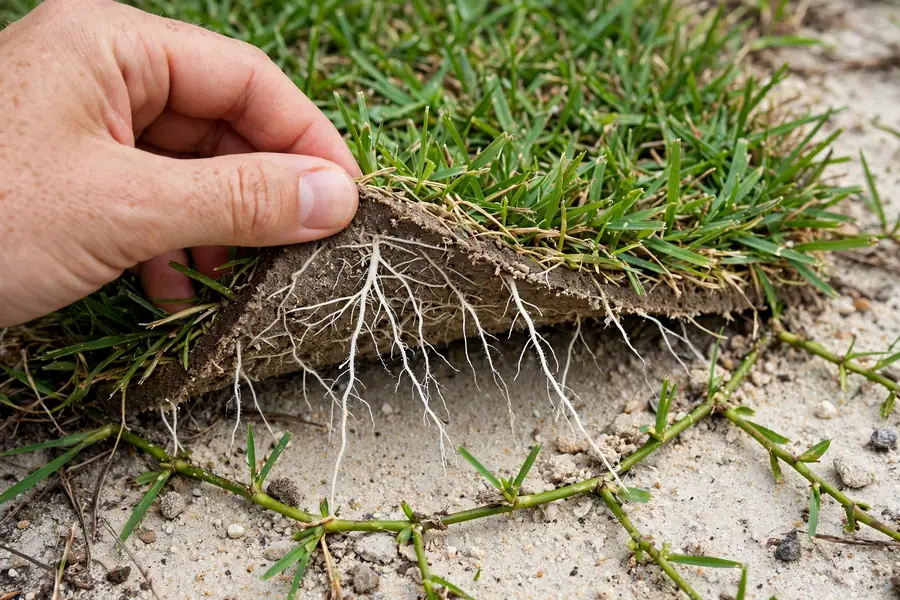
Brown blades do not always mean dead grass. St. Augustine and Zoysia spread by runners that lie along the soil. As long as those runners are alive, new blades will grow back.
The base check. Pull back the brown blades and look at the runners and the white roots underneath. Green, firm runners mean the sod is alive. Brown, dry, or mushy runners mean that section is dead.
The tug test. Gently lift a corner of a sod piece. In the first week it will lift easily. After 10 to 14 days in warm weather, you should feel the roots holding on. If a piece still lifts like a loose rug after three weeks, it is not rooting, and something is wrong.
Read the Symptoms: What Your Sod Is Telling You
The color and pattern of the damage usually point straight to the cause.
| What You See | Likely Cause | What to Do |
|---|---|---|
| Blades turn gray-blue, fold up, and feel crunchy | Not enough water | Water right away, then add a midday cycle for a week |
| Grass turns yellow, soil stays soggy, smells sour | Too much water | Skip watering for 1 to 2 days and cut back |
| Brown strips along the edges and seams | Gaps between pieces | Push pieces together, fill gaps with soil, water edges more |
| Brown or yellow rings that grow outward in cool, wet weather | Large patch fungus | Water only in the morning; ask about a fungicide |
| Chewed, ragged blades and small moths at dusk | Sod webworms | Confirm with a soap flush, then treat |
| Dry, yellowing patches in hot, sunny spots in summer | Chinch bugs | Inspect the edges of the patch and treat |
| Thin, weak grass under trees | Wrong grass for the shade | Replace with a shade-tolerant type |
| Burned stripes or spots a few days after a product was spread | Fertilizer or weed killer burn | Water deeply to flush the soil |
The Most Common Causes, Explained
1. Not enough water in the first two weeks
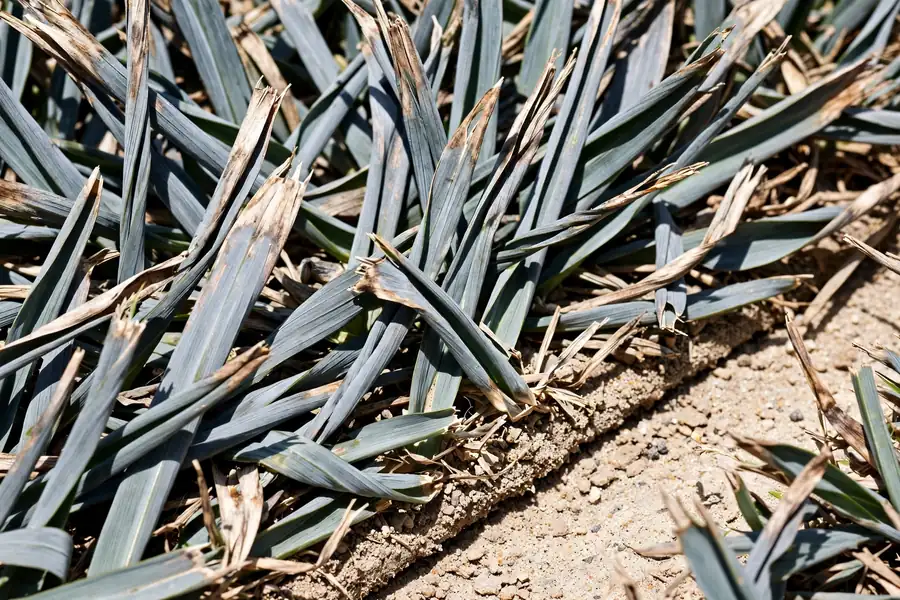
New sod has almost no roots. For the first week or two, it can only drink the water in the top inch of soil, and Florida sand dries out fast. Sod that dries out even once in July can scorch. This is the most common cause of failure we see, especially at the edges, near driveways, and next to the street where pavement adds heat.
2. Too much water
The opposite problem is just as common. Running sprinklers for 30 minutes three times a day, every day, keeps the soil soaked. Roots need air as well as water. Soggy soil leads to yellow grass and root rot. If your shoes squish when you walk on the lawn, you are watering too much.
3. Gaps and poor soil contact
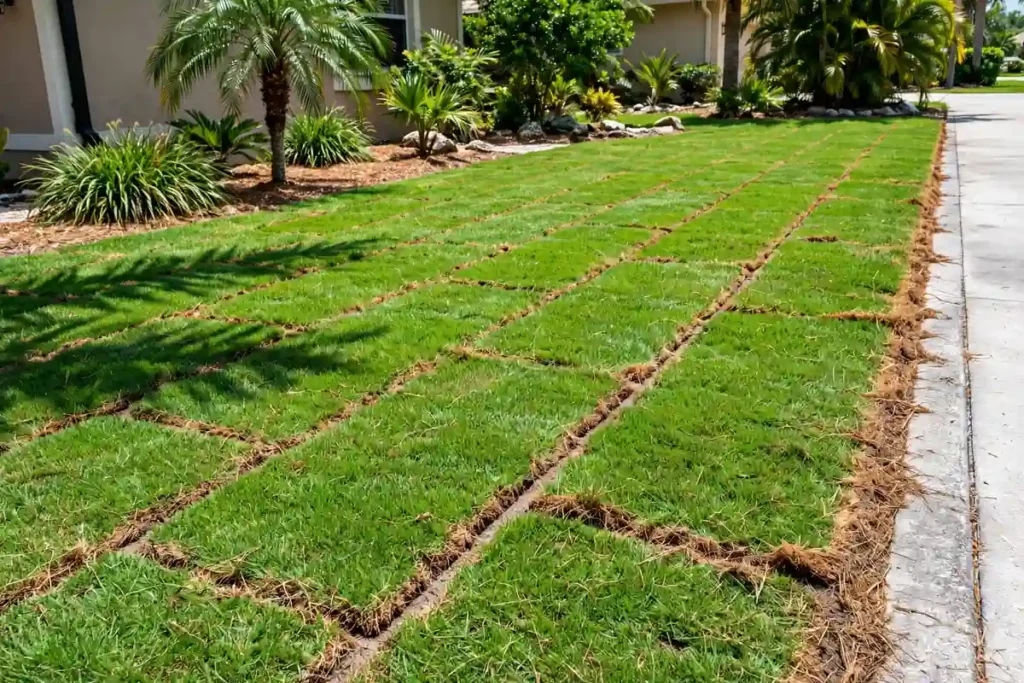
Sod needs to touch bare soil everywhere. If pieces were laid with gaps between them, or over bumps and low spots, the edges dry out and die first. Gaps also let weeds in. Push the pieces together where you can, and fill any remaining gaps with a little topsoil.
4. Insects
Stressed new sod is an easy target. In the summer, chinch bugs attack St. Augustine in hot, sunny areas. Our guide to chinch bugs in Florida shows how to check for them. Sod webworms chew the blades at night, and white grubs feed on roots, which lets you roll the sod back like a carpet. Learn the signs in our article on how grubs damage your lawn.
5. Fungus
Large patch is a fungus that shows up as brown rings in the cooler, wet months of fall and spring. Watering in the evening, so the grass stays wet all night, makes it much worse. Always water in the early morning.
6. The wrong grass for the spot
Floratam, the most common St. Augustine in Florida, needs a lot of sun. Under oaks or on the north side of a house, it slowly thins out no matter how well you water it. If your new sod is dying only in the shade, the grass type is the problem. Our comparison of the best grass for Florida lawns lists better choices for shady yards.
A Watering Schedule That Works for New Sod in Florida
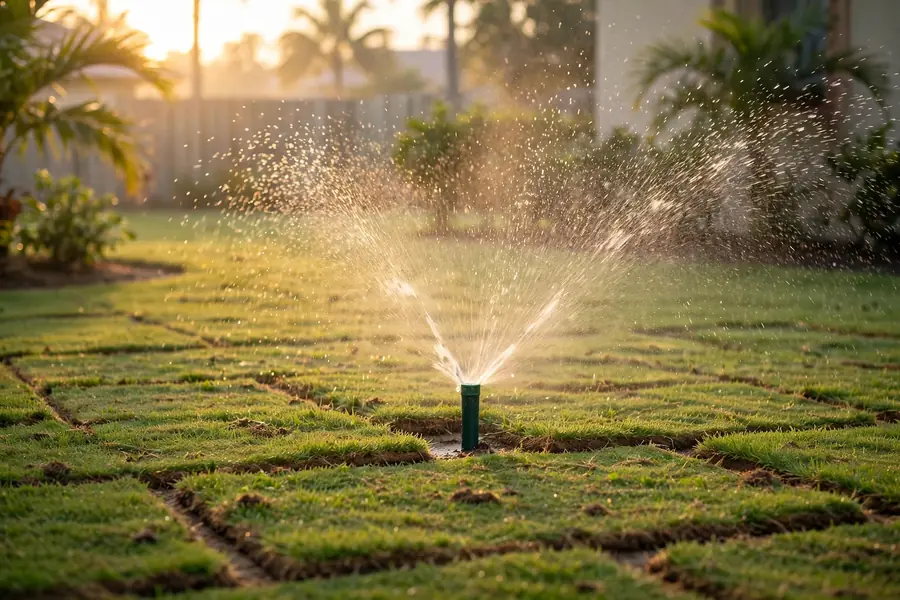
Use this as a starting point and adjust for rain and heat. The goal is moist soil, not standing water.
- Day 1: Water within 30 minutes of the sod going down. Soak it until the soil underneath is wet 3 to 4 inches deep. Lift a corner to check.
- Days 2 to 10: Water every day, early in the morning, plus a short midday cycle on hot days. Keep the soil under the sod damp but not muddy.
- Days 11 to 21: Cut back to once a day in the morning, and water a little longer each time to push the roots deeper.
- Weeks 4 to 6: Water every two to three days. By now the sod should be firmly rooted.
- After that: Switch to your normal schedule under local watering rules.
You may wonder whether daily watering breaks local rules. Under St. Johns River Water Management District rules, new landscaping can be watered on any day for the first 30 days, then every other day for the next 30 days. Check with your city for details on new sod. For long-term watering, see how much water a lawn really needs.
Mistakes That Kill New Sod
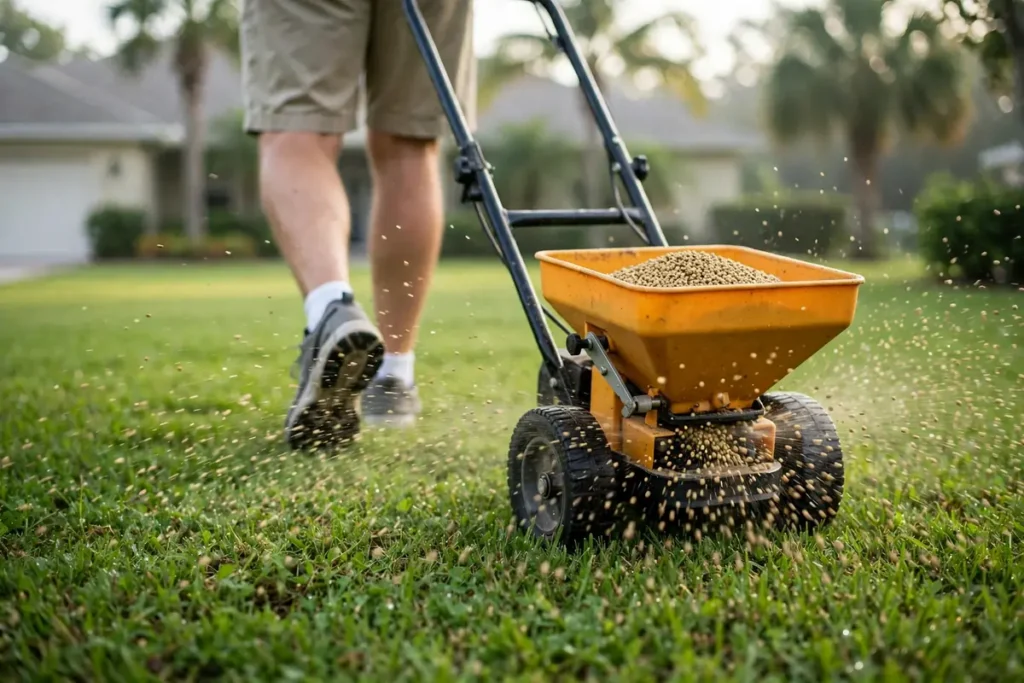
Fertilizing too soon. It is tempting to feed a struggling lawn, but a University of Florida study found that fertilizing new St. Augustine sod right away did not make it greener and lost about twice as much nitrogen into the soil. Sod comes from the farm well fed. Wait at least 30 days.
Using weed and feed. Many weed and feed products are too harsh for new sod, and some weed killers can damage St. Augustine even when it is established. Our guide to crabgrass in St. Augustine grass explains which products to avoid.
Mowing too early. Wait until the sod has rooted and the grass is about a third taller than its normal height, usually two to three weeks. Mow with a sharp blade and never cut off more than a third of the blade.
Walking on it. Keep people, pets, and heavy equipment off new sod for at least two weeks.
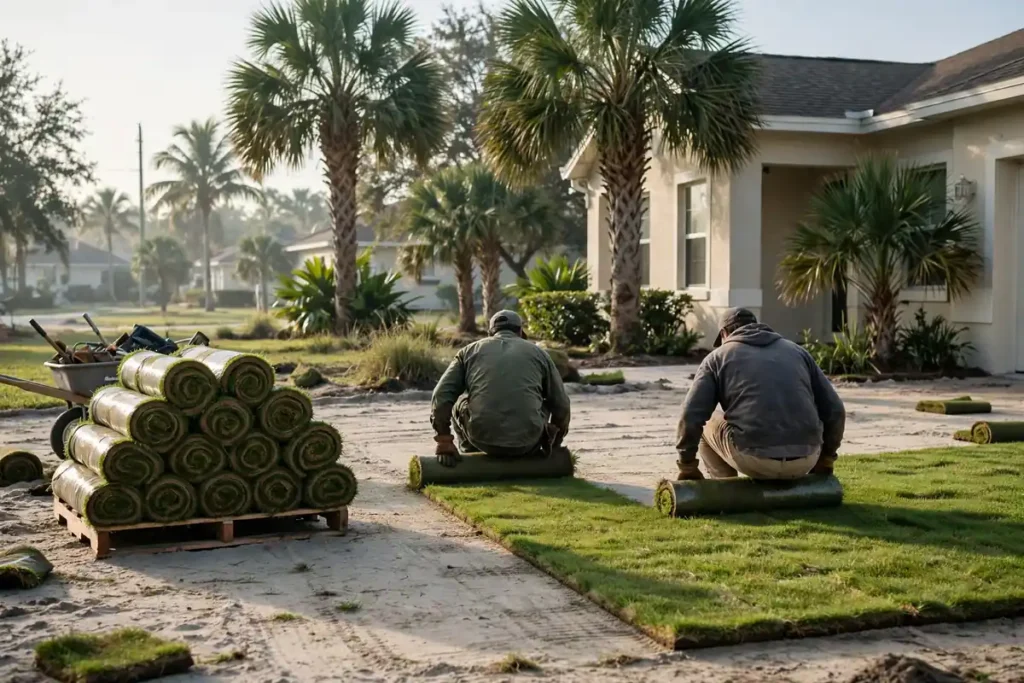
Laying it at the wrong time. Sod roots fastest in spring and early summer. Sod laid in the middle of a dry spell or in winter needs more care. See our guide to the best time to install sod in Florida.
When to Replace Instead of Repair
If the runners are dead and the soil underneath is bare, that section will not come back. Small dead patches can be cut out and replaced with fresh pieces of the same grass. If more than half the lawn has failed, look at the cause before you buy more sod. Fixing drainage, choosing a shade-tolerant grass, or treating pests first will keep the new lawn from failing too. Our guide on how to restore a dead lawn in Florida covers the full process.
Get Help Saving Your New Lawn
If your new sod is browning and you cannot tell why, a quick visit can save the lawn and your investment. Dreamscapes Florida diagnoses and repairs new lawns across Palm Coast, Flagler Beach, Bunnell, Ormond Beach, and St. Augustine. We also handle sod installation done right the first time, and lawn maintenance to keep it healthy. Call (386) 237-2983 or request a free estimate.
Frequently Asked Questions
Often, yes. If the runners at the base are still green and firm, new blades will grow back once you fix the watering or the pest problem. If the runners are brown and dry, that section is dead and needs to be replaced.
Signs of overwatering include yellow grass, soggy soil that squishes underfoot, a sour smell, and mushrooms. Let the lawn dry for a day or two, then water less often.
In warm Florida weather, new sod usually starts to root in 10 to 14 days and is firmly rooted in three to six weeks. It takes longer in winter.
No. Wait at least 30 days after installation. A University of Florida study found that early fertilizer does not help new St. Augustine sod and is more likely to wash into the soil.
Spot damage usually points to uneven watering, gaps between pieces, shade, or pests. Check whether the dying areas are near pavement, under trees, at the edges, or outside the sprinkler spray.
Try to keep foot traffic off new sod for at least two weeks, and longer for heavy use or pets. Walking on it before the roots grip the soil can shift the pieces and create gaps.