Polymeric sand is coarse sand mixed with polymers and binders. You sweep it dry into paver joints, then mist it lightly with water so it hardens in place. Once set, it helps block weeds, keeps ants out, and stands up to heavy rain. The pavers must be completely dry, and the forecast must stay clear.
Florida weather makes timing the whole job. A summer storm can roll in by mid-afternoon, so we plan resanding jobs for dry mornings and watch the forecast. If you are still shaping the space, our custom patio ideas post can help you plan the layout before you lock the joints.
What Polymeric Sand Is and What It Does
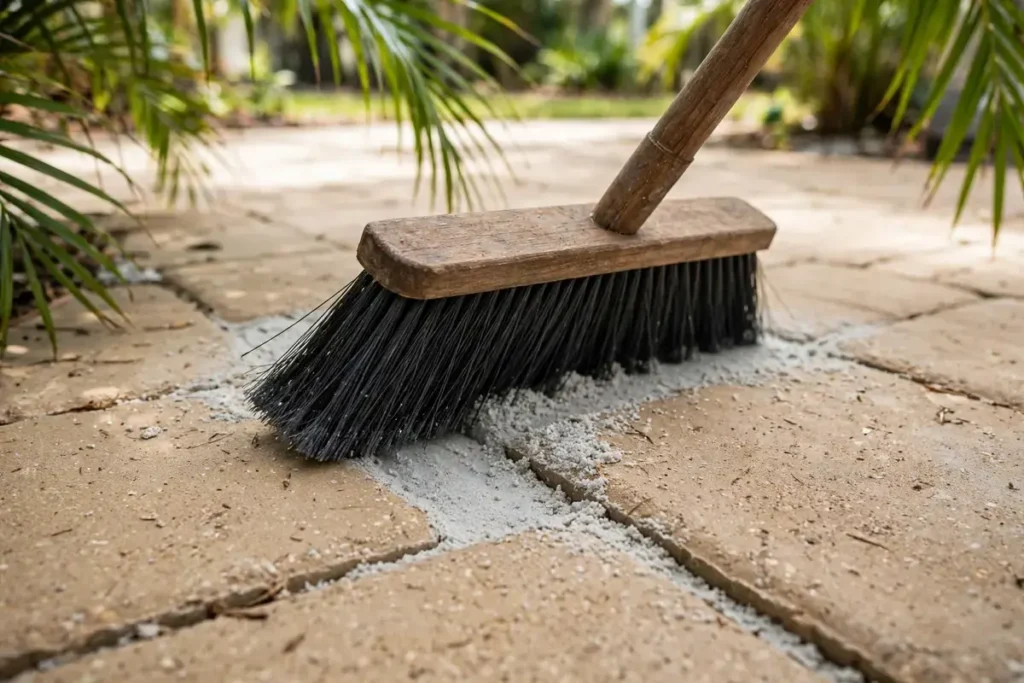
Polymeric sand is a mix of coarse sand, polymers, and binding agents. You sweep it dry into the joints between pavers, then mist it with water. The water wakes up the binders, and the sand hardens into a firm joint that locks each paver to its neighbors. The Unilock polymeric sand guide describes the same mix and set.
Once the joints harden, three problems shrink. Weeds have a harder time taking root in a firm joint. Ants find it much harder to dig in and nest. Heavy rain is less likely to wash the joint material out. Polymeric sand is not a fix for loose pavers or a failing base. It locks joints that already sit on a sound base.
Polymeric Sand vs Regular Sand
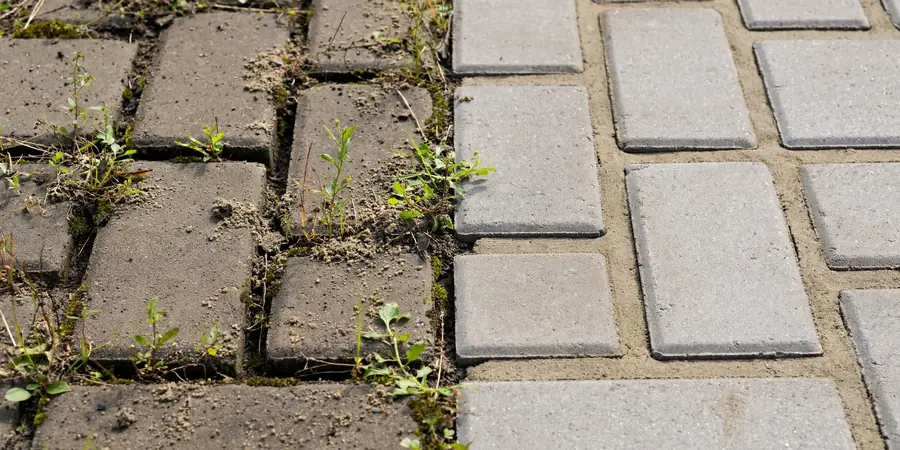
Regular joint sand is plain sand swept into joints. It does the job for a while, but it stays loose. Polymeric sand costs more and asks more of the installer. The table below shows how the two compare.
| Feature | Regular joint sand | Polymeric sand |
|---|---|---|
| Weeds | Weeds grow through loose joints fast | Helps block weed growth |
| Ants | Ants dig it out and nest in joints | Harder for ants to enter |
| Washout | Heavy rain washes it out | Resists erosion from heavy rain |
| Install skill | Simple: sweep it in and go | Needs dry pavers, full joints, and careful misting |
| Cost | Lower cost up front | Higher cost up front |
| Repair ease | Easy to top up, but needs topping up often | Lasts longer; a failed spot must be cleaned out and redone |
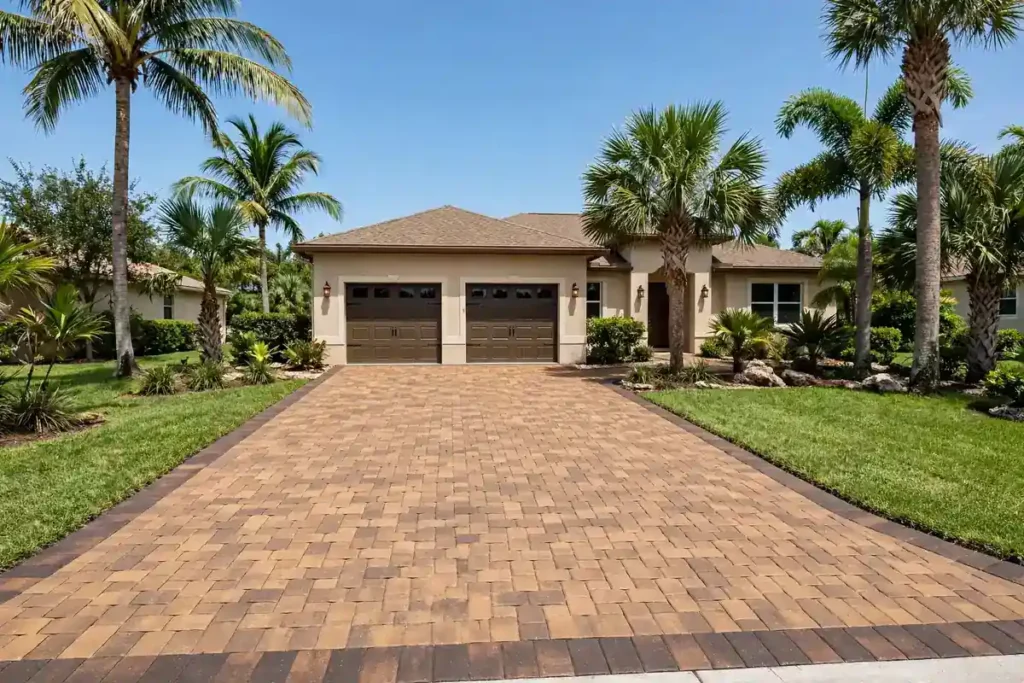
For most Florida patios, pool decks, and driveways, polymeric sand is the better pick. It holds up to summer rain, and it keeps joints full far longer than loose sand. If you are comparing patio surfaces, our pavers vs concrete patio post lays out the trade-offs. For driveways, see our paver driveway cost post to plan the budget. Polymeric sand also suits brick patterns; our brick landscaping ideas post shows patterns that work well with firm joints.
When to Apply It in Florida
The first rule is simple: the pavers must be completely dry. Dry joints let the sand fall deep and set true. Wet joints clump the sand at the top and leave voids below. Alliance Gator’s 10-step guide adds forecast rules: no rain for 1 hour before install on a drainage base, and 24 hours on a non-drainage base. Install at 32 degrees Fahrenheit or above. Rapid-set products differ, so check the bag.
In Florida, summer storms make this tricky. Afternoons often bring a fast downpour, so we plan resanding for dry-season mornings when the forecast holds clear. Humidity can slow drying, so give the surface extra time after rain. If the forecast turns shaky, wait. A delayed job beats a washed-out one.
Tools You Need
You do not need much gear. These tools cover a standard patio or walkway.
- Hard bristle broom, for sweeping sand deep into the joints
- Soft bristle broom, for the fine final pass
- Plate compactor with a protective pad, to settle the sand
- Leaf blower, to clear dust off the paver tops
- Hose with a shower or mist nozzle, for gentle watering
- Safety glasses and a dust mask, for the dusty steps
How to Apply Polymeric Sand Step by Step
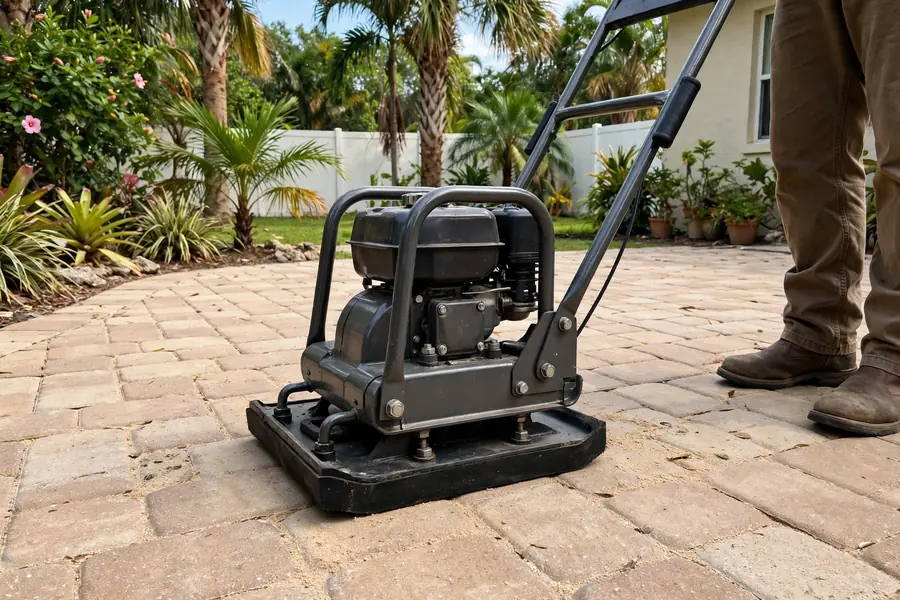
Work in order, and do not rush the drying steps. The steps below follow Alliance and Unilock guidance, and they work across brands. Always check the bag for your product, since products differ.
- Clean the surface and the old joints. Sweep out loose sand, leaves, and weeds, then wash or blow the patio clean. Let the pavers dry fully before you start.
- Pour the sand in small piles across the patio. Small piles spread easy and keep work tidy.
- Sweep the sand into the joints with a hard bristle broom. Push from several directions so each joint fills deep.
- Run a plate compactor with a protective pad over the pavers. Then sweep again and compact again. The second pass settles sand the first pass missed.
- Finish with a soft bristle broom so the sand sits about 1/8 inch below the rounded or beveled paver edge. A small reveal keeps the sand in place and looks neat.
- Blow all dust and loose grains off the paver tops with a leaf blower. Repeat if you must. Any dust left on top can set into haze.
- Mist the joints in passes. Hold the shower nozzle about 4 feet above the pavers for the first pass, then about 2 feet for the next. Keep no more than 3 to 4 minutes between passes, and never let the surface dry out while you water. Stop if you see white foam or puddles.
- Let the sand cure per the bag before foot or vehicle traffic. Keep the surface dry during the cure. Traffic too soon can break the fresh set.
How to Prevent Polymeric Sand Haze
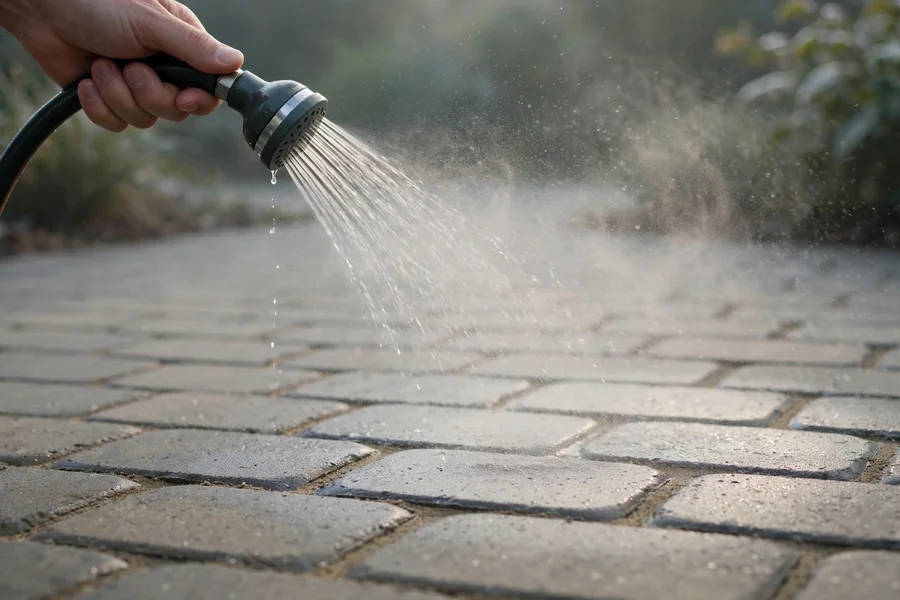
Haze is the pale film that shows when polymeric dust dries on paver tops. The fix starts before you water. Sweep and blow the surface fully clean, then check it in bright light. On deeply textured stone, leftover residue can leave a stubborn haze, so take extra care there. Travertine and other textured pavers need the most care.
If buildup shows while you mist, stop. Let the surface dry, brush the buildup off, then start the misting again. For haze that is already set, see our paver cleaning and sealing post. A cleaner made for pavers, used per its label, can lift light haze.
Common Mistakes That Make It Fail
Most failed jobs trace back to one of these mistakes. Check each one before you start.
- Wet pavers: sand clumps at the top and never fills the joint.
- Rain on fresh sand: a storm before the set can wash joints out.
- Joints left short: sand below the right level leaves room for weeds.
- Too much water: flooding washes sand out of the joints.
- Too little water: the binders never set, and joints stay soft.
- Sand left on paver tops: dust dries into haze.
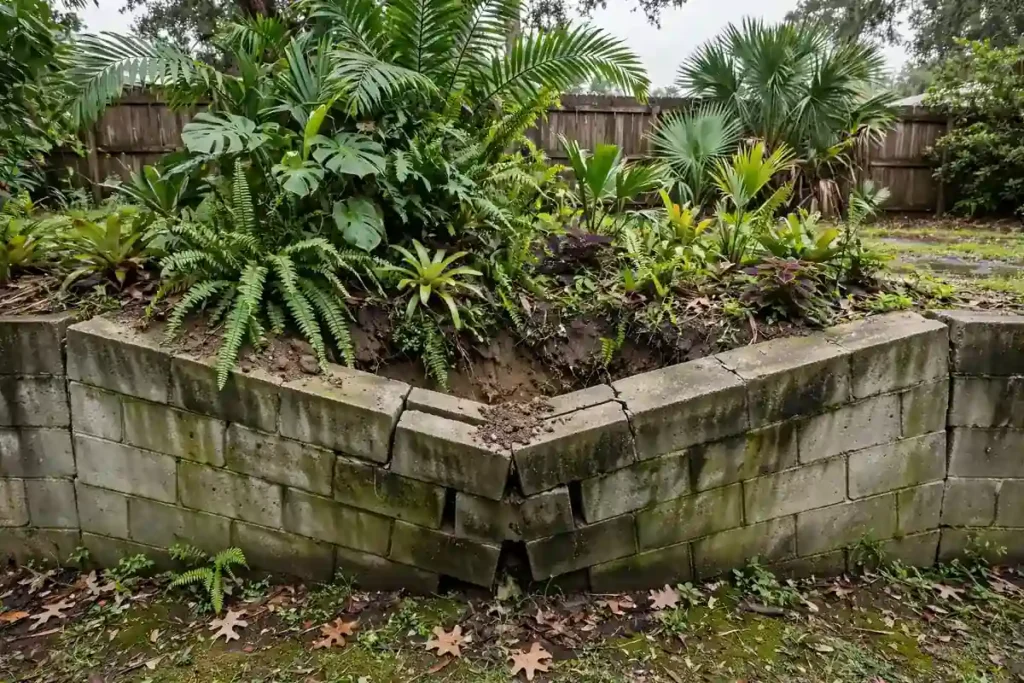
- Joints too narrow, or a base that already fails: sand cannot fix movement. For sunken or shifting pavers, see our how to fix sunken pavers post first.
How Long Polymeric Sand Lasts
Polymeric sand can last several years when it is applied and kept up the right way. How long it lasts depends on the product, the install, and the exposure. Sun, rain, and traffic all wear joints down over time.
Watch for three signs that the joints need redoing. Joints that crumble when you brush them are spent. Weeds coming back through the joints mean the lock is gone. Washout near downspouts shows where water keeps cutting the joints out. Redo those joints before weeds and ants move back in.
Paver Joint Restoration in Palm Coast
We have worked on paver patios, walkways, and driveways across Flagler County since 2015. Our crew at Dreamscapes Florida cleans, resands, and seals joints, and we time each job around Florida weather so fresh sand cures right.
If your joints need a refresh, see our hardscape services page or ask for a free estimate. Call us at (386) 237-2983. We serve Palm Coast, Flagler Beach, Bunnell, Ormond Beach, and St. Augustine.
Frequently Asked Questions
Polymeric sand is coarse sand mixed with polymers and binding agents. You sweep it dry into paver joints and mist it with water. The water sets the binders, so the joints harden and lock the pavers in place. Set joints help block weeds, keep ants out, and stand up to heavy rain better than loose sand.
For most Florida patios, pool decks, and driveways, yes. Polymeric sand resists washout from heavy rain, helps block weeds, and makes it harder for ants to dig into joints. It costs more up front and needs a careful install on dry pavers. Regular sand is cheaper and simpler, but it washes out and needs topping up far more often.
No, not unless the product label allows it. Most products need fully dry pavers and a rain-free window. Alliance guidance calls for no rain for 1 hour before install on a drainage base and 24 hours on a non-drainage base. In Florida, plan the job for a dry morning and check the forecast before you start.
Cure time depends on the product, the temperature, and the humidity. Some products set fast, while others need more time before foot or vehicle traffic. Always follow the bag instructions for your product, since products differ. Keep traffic off the pavers until the cure time on the label has passed.
Prevention works best: sweep and blow the paver tops fully clean before you wet the joints, so no dust dries on the surface. For haze that is already there, use a cleaner made for pavers and follow its label. Deep haze on textured stone can be stubborn. A paver cleaning pro can help with haze that will not budge.
Polymeric sand can last several years when it is applied and maintained the right way. How long it lasts depends on the product, the quality of the install, and how much sun, rain, and traffic the pavers get. Crumbling joints, weeds coming back, or washout near downspouts are signs it is time to redo the joints.