Dog urine spots on lawn happen when nitrogen and salts build up in one patch of grass. To fix them, flush the salts with water, remove dead grass and the top half inch to 1 inch of soil, and patch St. Augustine with sod or plugs, since it cannot be grown from seed. A gravel potty area stops new spots.
If you live in Palm Coast and your dog uses the same corner of the yard every day, you have probably seen the result. Round brown patches show up in the grass. Some have a darker green ring around the edge. Most of these spots can be fixed. Most guides tell you to reseed the bare spot. That advice does not work here, because St. Augustine grass cannot be grown from seed.
We have repaired lawns across Flagler County since 2015, and dog spots are one of the most common calls we get. This guide explains why the spots form, how to tell them apart from insect or disease damage, which products waste your money, and how to patch the spots the right way.
Why Dog Urine Kills Grass
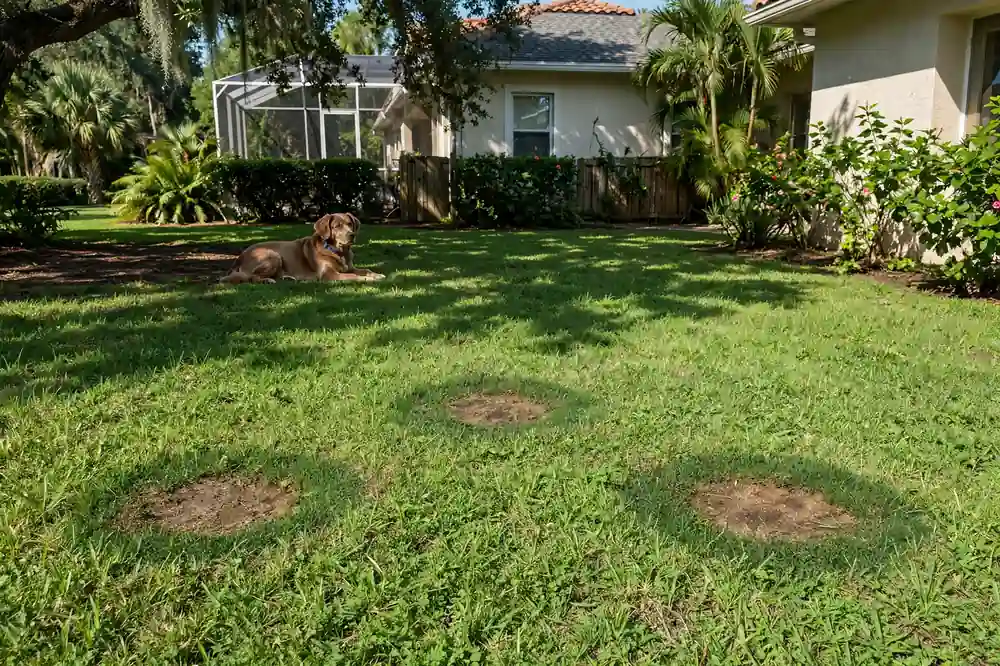
Urine carries nitrogen compounds and salts. When a dog passes a large amount of urine in one small area, those compounds build up to a level the grass cannot handle. The center of the spot gets too much, and the grass dies. That is why dog spots are round and sharply defined. They mark exactly where the urine landed.
Squatting puts a large volume in one place. Most dogs that squat are female, but some male dogs squat too. A dog that lifts a leg spreads urine across a fence post or a shrub, so it rarely kills a patch of lawn. A dog that squats puts it all in one spot, and that spot takes the full dose.
Not every spot looks the same. A brown spot means the grass in the center is dead. A green spot means the grass got a smaller dose of nitrogen, and that nitrogen acted like fertilizer. The grass grows darker and faster than the lawn around it. Both types come from the same cause. The only difference is the dose. Colorado State University Extension explains this cause in its guide to dog urine damage on lawns.
Dog Spot or Something Else?
Before you start digging out a spot, check that it really came from your dog. Insects and lawn disease can leave marks that look close to dog spots at first glance. The table below gives you a fast way to tell them apart.
| Problem | What it looks like | Quick check |
|---|---|---|
| Dog urine spots | Round patches, often where the dog goes, sometimes with a darker green edge | Watch where your dog goes for a few days and see if the spots match those places |
| Chinch bugs | Spreading patches in hot, sunny areas in summer | Read about chinch bugs in Florida and check sunny spots first |
| Brown patch disease | Large patches, often with rings, in cool months | Read about brown patch in St. Augustine grass and note the size and season |
Dog spots stay round and stay tied to one place. If a patch keeps growing and your dog never uses that part of the yard, look for another cause before you treat it as a dog spot.
Myths That Waste Money
Pet stores and online shops sell plenty of products that promise to end dog spots. Colorado State Extension has checked the claims, and most of them do not hold up. Save your money and skip these:
- Only female dogs cause spots. This is false. Most squatters are female, but some males squat too, and any dog that puts a large volume in one spot can kill the grass there.
- Urine-acidifying supplements fix the problem. No dietary supplement is scientifically proven to reduce dog spots. Worse, urine-acidifying supplements may cause urinary system problems in your dog.
- Baking soda or gypsum neutralizes the urine. Both are salts, and Colorado State says they may make the problem worse, not better. Adding salt to salty soil does not help.
- A spray-on lawn product prevents or cures spots. No spray-on product is proven to prevent or cure dog spots. Water is the only thing that reliably flushes salts out of the soil.
Ask your vet before you give your dog any supplement, rock, or chew that claims to change urine. We do not give veterinary advice, and a product that has no proof behind it is not worth a risk to your dog’s health.
How to Fix Dog Urine Spots in St. Augustine Grass
Fixing a dog spot takes five steps. Work through them in order, and do not skip the watering step. Water is what moves the salts out of the soil so a new patch can take root.
Step 1: Water the Area Deeply
Start with extra irrigation. Water dilutes the salts and flushes them down past the roots. Soak the spot well, and keep watering it for several days after you first notice it. The sooner you water after the dog uses the spot, the less damage the salts can do. Follow your local watering days, and see how much water a lawn needs for a full guide to watering a Florida lawn.
Step 2: Check If the Grass Is Still Alive
Look at the runners at the base of the grass in the spot. St. Augustine spreads by runners, and those runners tell you whether the spot can heal on its own. If the runners are still green, the grass can fill back in once you flush the salts out. If the runners are dry and brittle, the spot is dead and needs a patch. For tips on helping thin areas fill in, read about how to make St. Augustine grass thicker.
Step 3: Remove Dead Grass and the Top Layer of Soil
Cut out the dead sod with a flat spade. Then remove about 0.5 to 1 inch of soil from under it. That top layer holds the salts, so leaving it in place means your new patch sits in the same salty soil that killed the old grass. Level the hole so the new patch will sit even with the lawn around it.
Step 4: Patch With Sod or Plugs
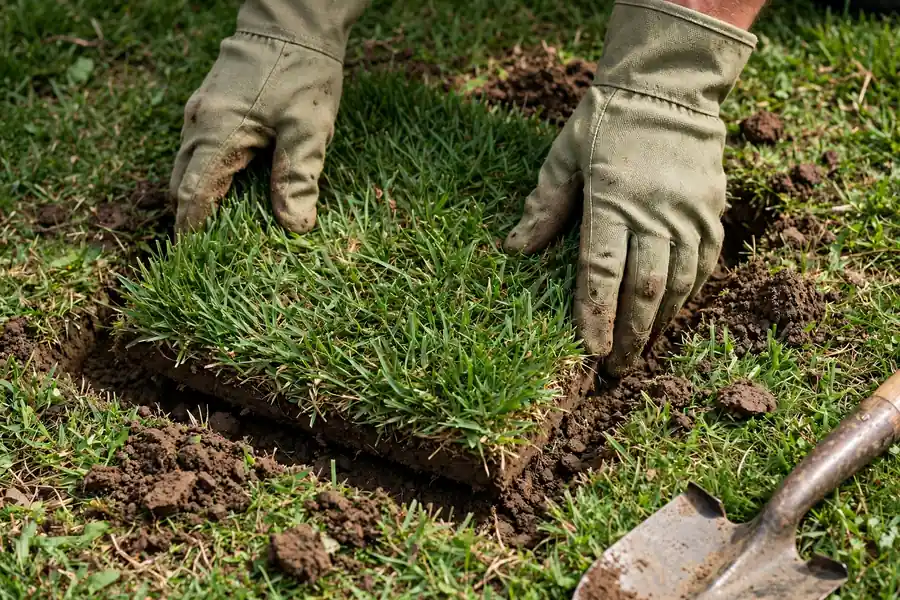
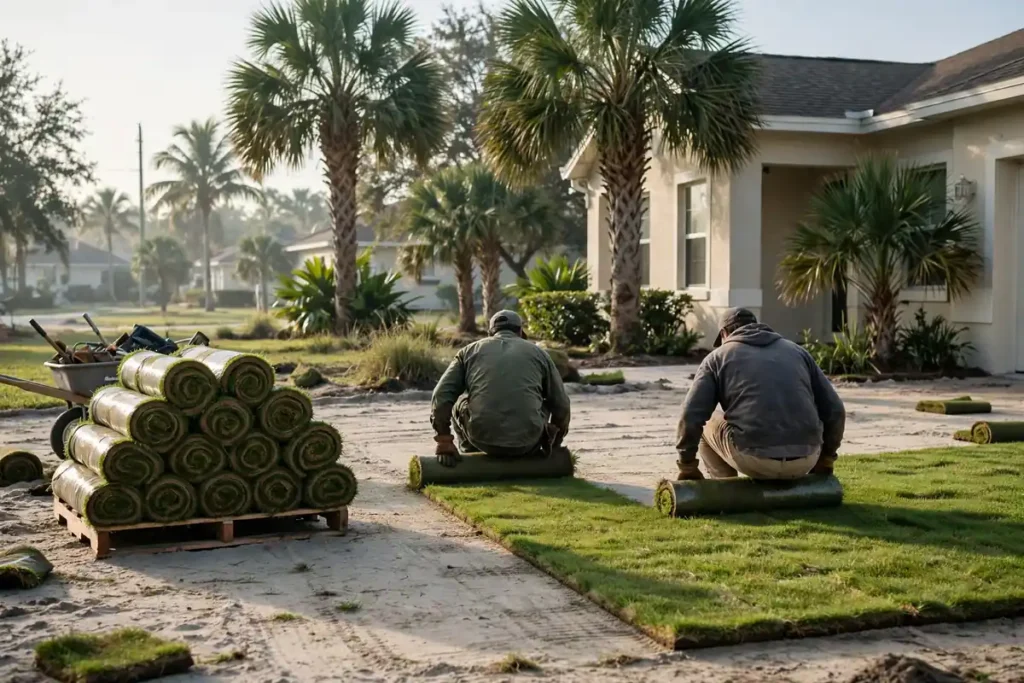
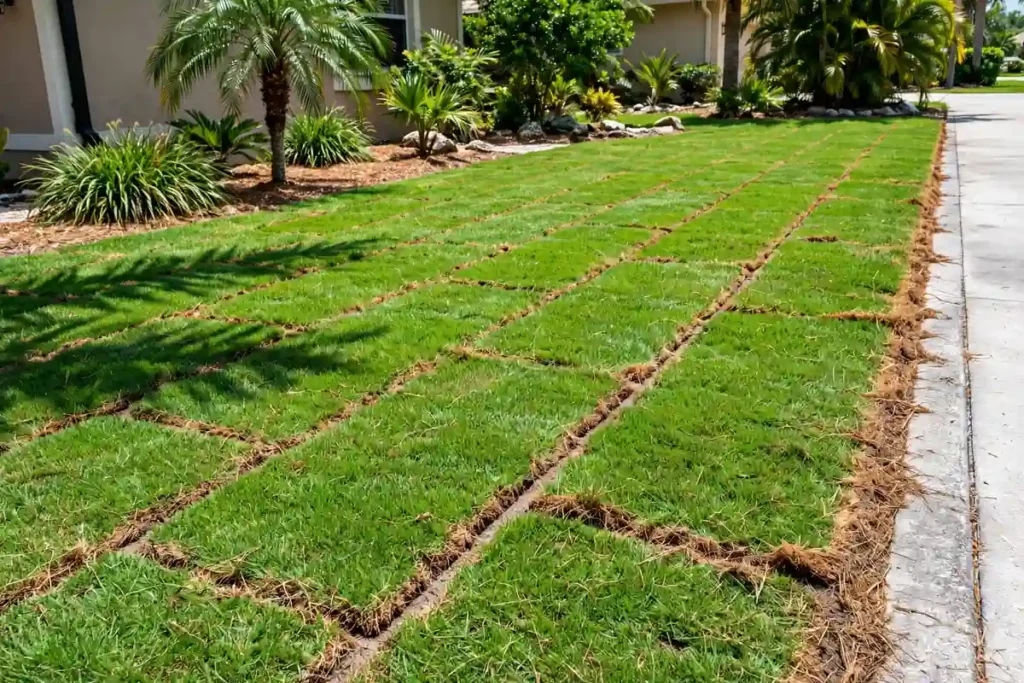
St. Augustine grass is established only by sod, plugs, or sprigs, according to UF/IFAS Extension. Seed will not work, no matter what the bag promises. Cut a piece of matching sod to fit the hole, press it level with the lawn, and step on it lightly so it makes full contact with the soil. Small spots work well with plugs. Larger spots need a full piece of sod.
Keep the patch moist until it roots. Water it lightly every day at first, then ease back as the roots take hold. For help picking the right repair method, read about the best grass for Florida lawns, and for care after patching, follow our guide to new sod care. Standard St. Augustine cultivars are mowed at 3.5 to 4 inches, so set your mower to that height once the patch is rooted.
Step 5: Feed Lightly Around Green Spots
Green spots already got extra nitrogen, so they do not need more. Colorado State suggests evening out a green spot with steady irrigation and a light, even feeding across the whole lawn. Follow the Florida lawn fertilizer schedule so you do not feed one area twice and burn it again.
How to Stop New Dog Spots
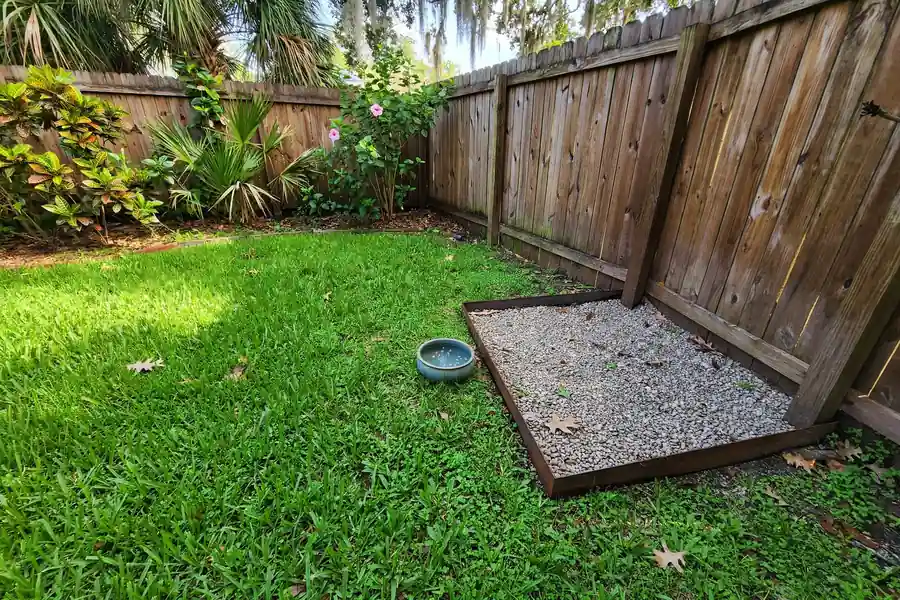
Colorado State calls a trained non-turf potty area the only sure solution to dog spots. That means you pick one area of the yard that is not grass, and you train your dog to use it every time. A small area of pea gravel or mulch works well. It drains fast in summer storms, it does not die when urine hits it, and it is easy to rinse. Our guide to pea gravel landscaping shows how this material looks and drains in a Florida yard.
Pick a corner of the yard that is easy for the dog to reach and easy for you to clean. Lead the dog to it on a leash for the first few weeks, and praise the dog each time it uses the area.
Two smaller habits help too. Keep plenty of fresh drinking water available for your dog, because more water dilutes the urine. And when you can, rinse a fresh spot with water right after the dog uses it. For layout ideas for the rest of the yard, see our post on dog-friendly backyard ideas.
When to Re-Sod a Larger Area
Patching works well for a few spots. It stops working well when spots cover much of a section of lawn, or when new spots keep showing up in the same area faster than you can patch them. At that point, re-sodding the whole section makes more sense than cutting out one patch after another.
Re-sod with matching St. Augustine, and add a pet zone at the same time. If you re-sod without a potty area, the same spots will come back in the same places. Pair the new sod with a gravel or mulch area, and the new lawn gets a real chance to stay green. For a sense of what a larger job costs, read our guide to sod installation cost in Florida.
Lawn Repair in Palm Coast
We patch dog spots with matching St. Augustine sod or plugs, re-sod worn areas, and build pea gravel or mulch pet areas so new spots stop. If your lawn has spots that keep coming back, or a section that needs a fresh start, we can help.
We serve Palm Coast, Flagler Beach, Bunnell, Ormond Beach, and St. Augustine. Call us at (386) 237-2983 for a free estimate. You can also learn more about our lawn maintenance service and our sod installation service.
Frequently Asked Questions
Yes, if the runners at the base are still green. St. Augustine spreads by runners, so a spot with live runners can fill back in once you flush the salts out with plenty of water. If the runners are dry and brittle, the spot is dead. Cut it out and patch it with sod or plugs instead.
No. UF/IFAS Extension says St. Augustine grass is established only by sod, plugs, or sprigs. Seed will not grow into a St. Augustine lawn. Patch a dog spot with a piece of matching sod, or use a few plugs for a small spot. Keep the patch moist until it roots.
No dietary supplement is scientifically proven to reduce dog spots, according to Colorado State Extension. Urine-acidifying supplements may even cause urinary system problems in dogs. Ask your vet before you give your dog any rock, chew, or supplement that claims to change its urine.
No. Both baking soda and gypsum are salts, and Colorado State Extension says they may make the problem worse. Adding salt to soil that is already salty does not help the grass. Water is what flushes salts out of the soil, so soak the spot well instead.
The edge of a spot gets a smaller dose of nitrogen than the center. That smaller dose acts like fertilizer, so the grass there grows darker and faster than the lawn around it. The center gets too much nitrogen at once, so it burns and turns brown while the ring stays green.
Set up a mulch or pea gravel potty area and train your dog to use it. Colorado State Extension calls this the only sure solution. Keep fresh drinking water available too, since more water dilutes the urine. Rinse a fresh spot with water when you can.