HOA landscape maintenance is the regular care of a community’s shared outdoor areas under one contract. It covers entrances, medians, ponds, clubhouse grounds, and sometimes owners’ lawns. A typical contract includes mowing, edging, shrub care, mulch, irrigation checks, and seasonal work. One crew, one schedule, and one standard for the whole community.
Florida boards need that scope in writing. Summer rain, sandy soil, and storm season punish vague contracts. When every visit, task, and extra is spelled out, the board can judge the work fairly and residents see steady results.
This guide walks through what a good contract covers, how to compare bids, what Florida rules say, and what a full year of care looks like in Northeast Florida. Boards that read it will know what to ask, what to compare, and what to put in writing.
What HOA Landscape Maintenance Usually Includes
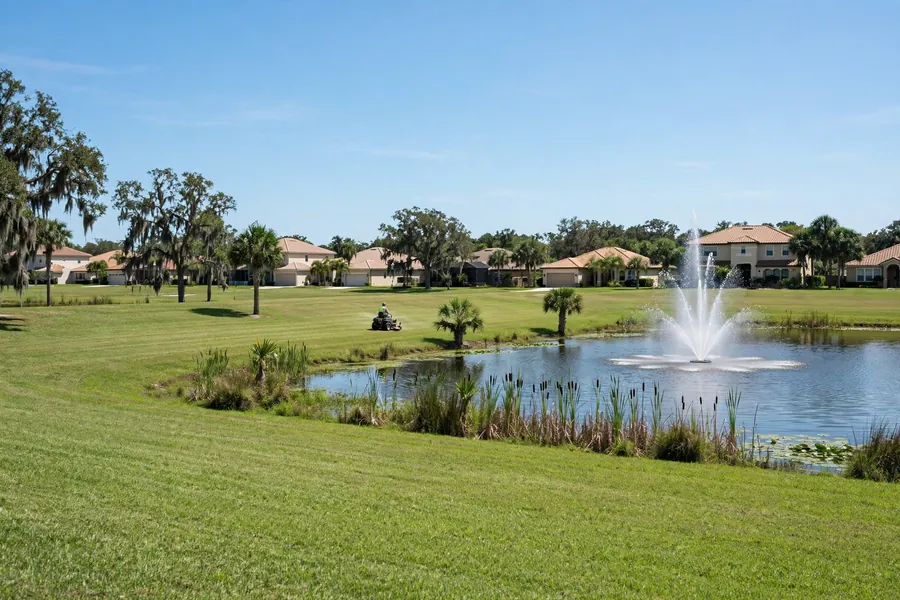
Most HOA contracts cover the same core work, but the details vary. The table below shows what boards in Palm Coast usually see in a scope, how often each task happens, and what to watch for. Use it as a checklist when you read your own contract.
| Service | Typical frequency | Notes |
|---|---|---|
| Mowing and edging | Weekly in summer, less often in winter | Height set by grass type. |
| Shrub and hedge trimming | A few times a year | Shape shrubs and keep walks and signs clear. |
| Weeding beds | Each visit | Pull weeds before they seed. |
| Mulch refresh | Once or twice a year | Fresh mulch holds moisture and keeps beds tidy. |
| Irrigation inspection | Quarterly | Check heads, leaks, and coverage, and fix problems fast. |
| Palm and tree care | A few times a year | Prune dead fronds; tall tree work is often extra. |
| Fertilizer and pest control | By season | Follow label rates and local rules. |
| Seasonal color | A few times a year | Annual flowers are often extra. |
| Storm cleanup | After storms | Often extra; agree on response time in advance. |
Two items cause the most arguments: storm cleanup and tree work above a set height. Both are often priced as extras. Put the trigger, the response time, and the price method in the contract before storm season, not after.
Common Areas vs Owner Lots: Who Maintains What
The governing documents decide who maintains what. That means the declaration, the articles, and the bylaws. Read them before you sign a contract, not after a dispute. Most associations maintain common areas only: entrances, medians, ponds, and clubhouse grounds. Some maintain every lawn in the community. Either model can work, but the contract must say which one applies.
Put a map of maintained areas in the contract. Mark every lawn, bed, median, and pond the crew will touch. A map ends most arguments about what is included and what is not. When a new board takes over, the map also keeps the standard steady from year to year.
Condo associations work the same way, with one twist. Balconies, patios, and small private yards often stay with the owner, while the grounds, parking islands, and pool areas fall under the contract. Mixed communities need extra care on the map, since one street can mix owner lots and common ground. Walk the property with the bidder so both sides see the same lines.
How to Write a Clear Scope of Work
A clear scope turns a handshake into a standard the board can check. Write down each task, how often it happens, and what good work looks like. Then hold every bidder to the same sheet. A good scope lists the maintained-area map, visit frequency by season, mowing height by grass type, mulch depth and type, the irrigation inspection schedule, response time for problems, a written report after each visit, and proof of insurance and license.
We build our lawn maintenance scopes this way, so boards know what each visit covers. Ask any company that bids to price the same list, line by line. If a bid leaves out irrigation checks or visit reports, it is not cheaper. It is thinner.
Review the scope once a year, before renewal. Plants grow, new beds get added, and storm damage can change what the property needs. A short annual walk with the contractor keeps the list honest. If the property added a new median or a new clubhouse bed, add it to the map and the price at renewal, not as a surprise extra mid-year.
Questions to Ask Every Landscape Company
Ask these questions before you sign:
- Who will be on site each visit, and who supervises the crew?
- How often does a supervisor walk the whole property?
- How are irrigation leaks found and reported?
- What is the storm response time, and what counts as extra?
- What is included, and what is billed as extra?
- Can you share references from nearby communities?
- How are problems reported after each visit?
- What proof of insurance and license do you provide?
How to Compare HOA Landscape Bids
Give every bidder the same scope sheet and the same map. Then compare the bids line by line. A low monthly price can hide missing services. Compare visits per year, not the monthly price alone. A company that visits fewer times can look cheaper while doing less. Watch for vague terms like “as needed” with no number attached. If a bid does not state a count, ask for one in writing.
| What to compare | Why it matters |
|---|---|
| Visits per year | Shows how much work you truly get. |
| Irrigation inspections | Leaks waste water and kill turf fast. |
| Included vs extra services | Extras can dwarf the base price. |
| Response time | Storms and breaks need fast action. |
| Visit reports | Reports prove the work happened. |
Ask each bidder to walk the property before pricing. A walk shows wet spots, thin turf, and beds the map may miss. It also shows how the company talks: a careful walk usually means careful work. Ask for two or three references from nearby communities, and call them. Ask how the company handles missed visits and who answers the phone when a problem comes up.
Florida Rules HOA Boards Should Know
This section is general information, not legal advice. For your community, review the rules with your attorney. Florida law says HOA documents, including declarations, articles, and bylaws, may not prohibit an owner from using Florida-friendly landscaping on his or her land. The rule comes from Florida Statutes 720.3075(4)(b).
Florida-friendly landscaping follows nine principles from UF/IFAS: right plant, right place; water efficiently; fertilize appropriately; mulch; attract wildlife; manage yard pests responsibly; recycle yard waste; reduce stormwater runoff; and protect the waterfront. A board can support these principles while still setting design standards for the community.
Watering rules matter too. Under St. Johns River Water Management District rules, irrigation is limited to no more than 2 days a week during Daylight Saving Time and 1 day a week during Eastern Standard Time, and it is prohibited between 10 am and 4 pm. New landscaping may be watered any day for the first 30 days, then every second day for the next 30 days. See the City of Bunnell watering restrictions page for the full rule. For local watering tips, see our irrigation tips for Palm Coast.
Large Florida management firms also stress storm preparation and cleanup, quarterly irrigation checks, and seasonal budgeting with reserves, as noted by FirstService Residential Florida. Boards that plan for storm season and set reserves aside face fewer surprises.
A Year-Round HOA Landscape Calendar for Northeast Florida
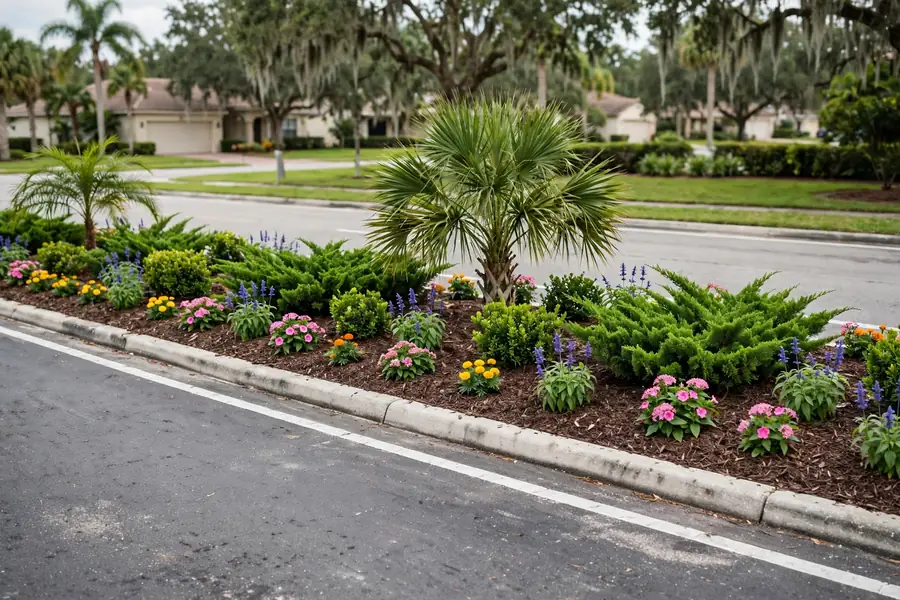
Spring: Lawns green up. Refresh mulch, audit the irrigation system, and fix heads before summer heat. This is the time to catch leaks and dry spots early, while repairs are still small.
Summer: Mowing is most frequent. Prep for storms, secure loose items, and watch for chinch bugs in St. Augustine lawns. Check the Florida lawn fertilizer schedule before you feed, so timing matches the grass and the rules.
Fall: Clean up beds, cut back spent growth, and time fertilizer to the season. Clear storm debris fast so turf can recover. Fall is also a good time to review the contract before renewal.
Winter: Mowing slows. Prune shrubs and palms, and water on the single allowed day during Eastern Standard Time. Cool months are a good time to plan next year’s refresh for entrances and medians.
Signs Your Current Contract Is Not Working
A weak contract shows up in the landscape before it shows up in a meeting. Watch for these signs:
- Dry or brown patches near sprinkler heads.
- Scalped turf cut too short.
- Mulch that never gets refreshed.
- Beds full of weeds.
- Slow response to problems.
- No visit reports after the crew leaves.
If you see two or three of these at once, the scope may be vague or the visits too thin. Compare what you see with the contract, then raise it in writing. Start with the contract, not with anger. Note the date, take a photo, and send a short written note that names the missed task. Good companies fix the gap and tighten the next visit. If the same gaps repeat for a month, the board has a clear record to support a change. For help spotting trouble early, see our guide to signs your lawn needs repair.
HOA Landscape Maintenance in Palm Coast
Dreamscapes Florida maintains HOA and condo communities across Flagler County with written scopes, visit reports, and irrigation checks. We serve Palm Coast, Flagler Beach, Bunnell, Ormond Beach, and St. Augustine. Call us at (386) 237-2983 or request a free estimate.
If your community needs a refresh of entrances, medians, or clubhouse grounds, ask about our landscape installation work. For offices, shops, and medical sites, see our guide to commercial landscaping maintenance.
Frequently Asked Questions
It covers the regular care of shared areas such as entrances, medians, ponds, and clubhouse grounds. A typical contract includes mowing, edging, shrub trimming, bed weeding, mulch, irrigation checks, and seasonal work. Storm cleanup and tall tree work are often extra, so put them in writing.
Mowing is most frequent in the summer growing season and slows down in winter. Set the frequency by season in the contract instead of one number all year. St. Augustine and other warm-season grasses grow fast in heat and rain, then slow when days shorten and nights cool.
No. Florida law (Fla. Stat. 720.3075(4)) says HOA documents may not prohibit an owner from using Florida-friendly landscaping on his or her lot. Architectural review may still apply to design details, so check your community rules and talk with the board before you plant.
Give every company the same scope sheet and the same map of maintained areas. Compare visits per year, included services, irrigation inspections, and response time, not just the monthly price. Watch for missing services and vague terms like “as needed” with no count attached.
It depends on the governing documents. Many associations maintain only common areas, while some include every lawn in the community. Check the declaration and put the answer, with a map of maintained areas, clearly in the contract so no one has to guess.
A maintained-area map, a service list with frequency, mowing height by grass type, a mulch schedule, irrigation inspections, extras pricing, response times, visit reporting, proof of insurance, and termination terms. A contract with these items lets the board judge the work fairly.