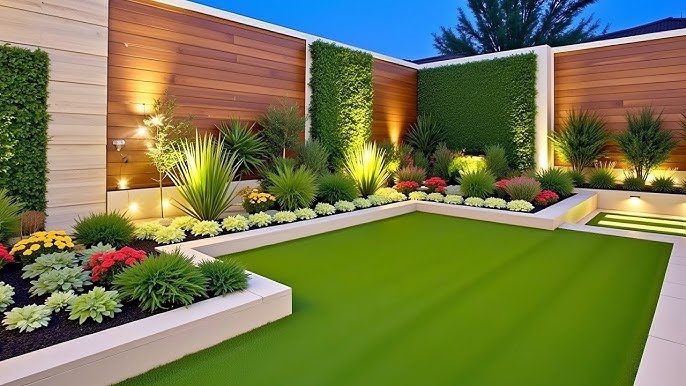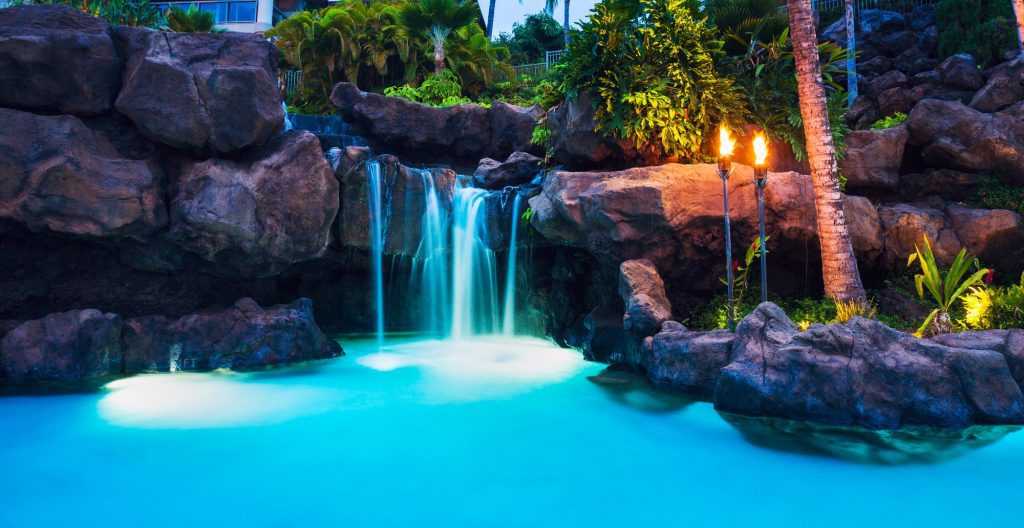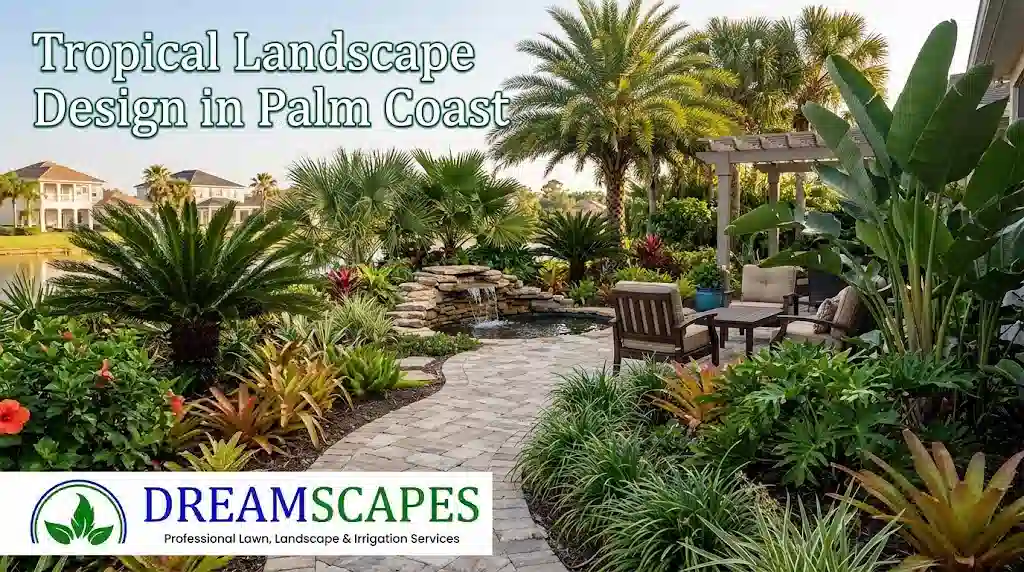
Tropical landscape design in Palm Coast works best when you build it around cold-hardy plants. Use Sabal, windmill, and needle palms for the backbone, add bold-leaf plants that die back and regrow after a freeze, and keep frost-tender tropicals in containers or sheltered spots. Layer them from canopy to groundcover for the full resort look.
Most tropical design guides are written for Miami, Hawaii, or Southern California. They tell you to plant coconut palms, crotons, and ixora everywhere. That advice fails here. Palm Coast sits in USDA Zone 9b on the 2023 map, with winter lows that can drop into the low 20s. In February 2026, nearby Daytona Beach hit 23°F, and Jacksonville logged eight freezing mornings in a row. A yard full of South Florida plants turns brown overnight in weather like that. This guide shows you how to get the lush, layered look and keep it alive through a Flagler County winter.
What Makes a Landscape Look Tropical?
A tropical yard is not about one plant. It is about how the plants work together. Four design elements create the effect:
- Big, bold leaves. Large paddle-shaped or split leaves read as “jungle” from across the yard.
- Dense layers. Plants fill every level, from tall palms down to ferns at ground level, with very little bare mulch showing.
- Strong color contrast. Deep green foliage sets off bright red, orange, and yellow blooms.
- Water and stone. A fountain, pond, or pool, plus natural stone or pavers, finishes the resort feel.
Get these four right with plants that handle our winters, and nobody will guess your yard sits north of Daytona.
Palm Coast Climate: Why South Florida Plant Lists Fail Here
Palm Coast has a humid subtropical climate, not a tropical one. Summers are hot and wet. Winters are mostly mild, but we get several frost nights most years and a hard freeze every few years. Inland neighborhoods and low spots near retention ponds often run several degrees colder than homes near the Intracoastal or the beach.
Coastal yards in Flagler Beach and the Hammock face a second problem: salt spray. Wind off the ocean burns the leaves of many tropical plants. If you live east of A1A or right on the dunes, choose plants from our list of salt-tolerant plants for Florida for the front layer that takes the wind.
The Four-Tier Plant Strategy for North Florida
We sort every tropical plant into one of four tiers before it goes into a Palm Coast design. This simple system keeps your landscape full even after the worst winter.
| Tier | How It Handles Cold | Examples | How Much to Use |
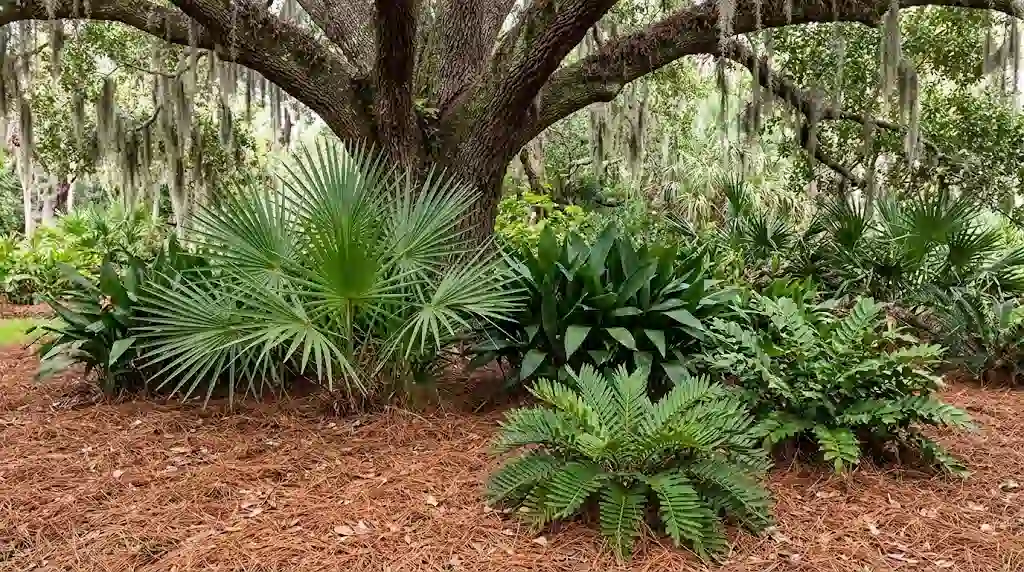
| 1. Backbone | Shrugs off freezes with little or no damage | Sabal palm, windmill palm, needle palm, European fan palm, pindo palm, saw palmetto, coontie, cast iron plant, holly fern, Fatsia | About 60% of the design |
| 2. Comeback plants | Leaves die back in a freeze, then regrow from the roots in spring | Shell ginger, canna, elephant ear, banana, firebush, crinum lily | About 25% |
| 3. Protect or contain | Damaged in hard freezes; needs a sheltered spot or cover | Bird of paradise, philodendron ‘Selloum’, bougainvillea, queen palm, king palm | About 15% |
| 4. Containers only | Dies or declines below freezing | Croton, tropical hibiscus, ixora, most bromeliads | Pots you can move inside |
Plants to skip in the ground entirely: coconut palm, royal palm, foxtail palm, areca palm, and bottle palm. They may survive a mild year, but one hard freeze will kill them.
Best Cold-Hardy Tropical Plants for Palm Coast
Palms
Palms create the tropical skyline, so pick the right ones first. The Sabal palm, Florida’s state tree, handles freezes, salt, and drought with almost no care. Windmill and needle palms survive temperatures far below anything Palm Coast sees, and needle palms thrive in shade under oaks. The pindo palm adds a soft, feathery look that many people want from a queen palm without the cold risk. Our guide to the best palm trees for landscaping compares size, growth rate, and care for each one.
If you love the clean look of a king palm or queen palm, plant it on the south or east side of the house, close to a wall that holds heat. Read our king palm care guide before you buy, because these palms need protection when temperatures fall below the upper 20s.
Bold-Leaf Plants
Bold leaves do most of the visual work in a tropical design. Shell ginger, canna, and elephant ear give you huge leaves by June, even if a January freeze knocks them to the ground. Philodendron ‘Selloum’ and bird of paradise add structure and usually survive light frosts with minor leaf damage. Cast iron plant and Fatsia fill shady spots under trees with big, glossy leaves all winter.
Color Plants
Firebush, a Florida native, blooms orange-red from spring to frost and brings in hummingbirds and butterflies. Bougainvillea gives the most color per square foot when planted against a sunny south wall. Crinum lily, canna, and shell ginger add flowers from late spring through fall. For year-round color, plant crotons and tropical hibiscus in large pots that you can roll into the garage on freeze nights.
Groundcovers and Ferns
Holly fern, autumn fern, and coontie fill the bottom layer and stay green through winter. Coontie, a native cycad, also handles salt and drought. Avoid leaving wide strips of bare mulch. Dense groundcover is what makes a yard feel like a jungle instead of a planting bed.
How to Layer a Tropical Garden
Think of your yard in four layers, from top to bottom:
- Canopy (15 feet and up): Sabal palms, pindo palms, or an existing live oak. These give shade and protect the plants below from frost.
- Mid-story (5 to 15 feet): Windmill palms, bird of paradise, banana, and philodendron ‘Selloum’.
- Shrub layer (2 to 5 feet): Shell ginger, firebush, canna, and needle palm.
- Ground layer (under 2 feet): Holly fern, coontie, and cast iron plant.
Plant in groups of three or five instead of one of each. Repeat the same plants in several spots to tie the design together. Put the tallest plants at the back of each bed and along property lines, where they also work as a living screen. If privacy is your main goal, our guide to plants that add privacy to your yard covers fast-growing hedge options that pair well with palms.
Hardscape, Water, and Lighting
Plants alone will not create the full resort feel. Natural stone, curved paver paths, and a small fountain or bubbling urn add sound and movement. Choose warm, sandy paver colors that match Florida light instead of gray tones. If you have a pool, frame it with clumps of palms and bold-leaf plants, and keep messy, leaf-dropping plants away from the water. Our pool landscape design ideas include a full tropical oasis layout.
Many Palm Coast pools sit under a screened enclosure. The screen blocks some wind, so plants on the inside edge often take a little less cold damage than those in the open yard. It is a good spot for a bird of paradise or a potted croton.
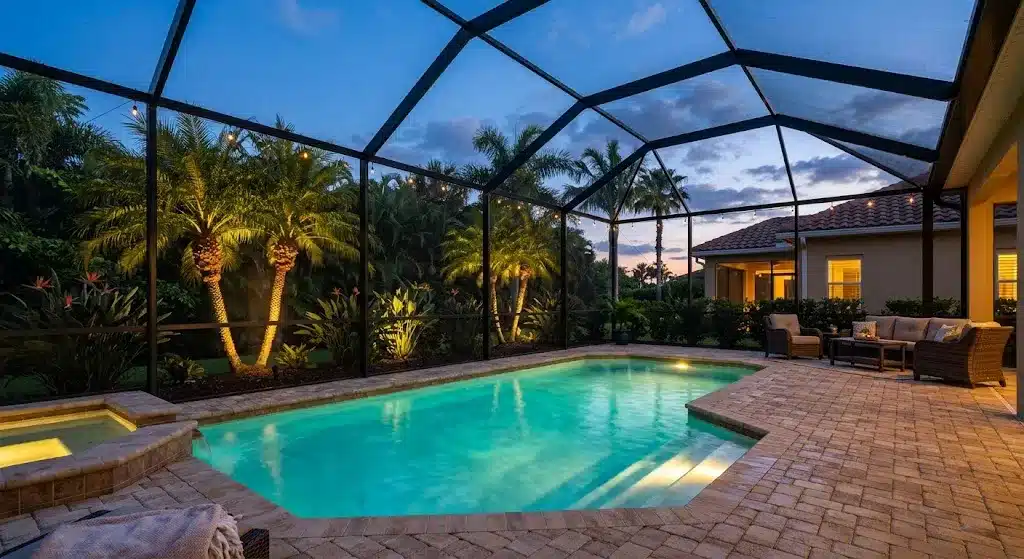
Lighting turns a tropical yard into a nighttime retreat. Uplights at the base of palm trunks, soft path lights along walkways, and a few spotlights on bold leaves create dramatic shadows after sunset. Our landscape lighting team in Palm Coast designs low-voltage LED systems that highlight palms without lighting up your neighbor’s bedroom.
Water and Care for a Tropical Yard
Tropical plants look thirsty, but most of the plants in our backbone tier need little water once established. Group plants by water needs so you do not overwater the palms to keep the gingers happy. Put thirsty plants on their own zone with drip lines or micro-sprays. Our step-by-step guide on how to install a drip irrigation system walks through the setup. Follow the St. Johns River Water Management District watering days for your address.
- Mulch: Use 2 to 3 inches of pine bark or pine straw, kept a few inches away from palm trunks.
- Fertilizer: Feed palms with a slow-release palm fertilizer in spring and summer. Stop by early fall so plants do not push tender new growth before winter, and follow local summer fertilizer rules.
- Pruning: Remove only fully brown palm fronds. Cutting green fronds weakens the palm.
Protecting Your Tropical Landscape Before a Freeze
UF/IFAS research gives a clear plan for cold protection of landscape plants. Here is how it applies to a Palm Coast tropical yard:
- Water the day before. Moist soil holds and releases more heat overnight than dry soil.
- Cover to the ground. Drape frost cloth or old sheets over tender plants so the cover reaches the soil and traps ground heat. Weigh down the edges. Do not let plastic touch the leaves.
- Move containers. Roll crotons, hibiscus, and other Tier 4 pots into the garage or against the house.
- Uncover in the morning. Remove covers once temperatures rise above freezing so plants do not overheat.
- Wait to prune. Leave damaged leaves in place until new growth appears in spring. The dead leaves protect the living tissue from the next cold snap, and you will see exactly what survived.
Common Tropical Design Mistakes in North Florida
- Planting a front yard full of coconut or royal palms after a few mild winters
- Using one of every plant instead of repeating groups
- Leaving large gaps of bare mulch between plants
- Putting frost-tender plants in low, open spots where cold air settles
- Planting large palms too close to the house, pool cage, or power lines
- Ignoring HOA rules. Many Palm Coast communities require design approval before major landscape changes.
Get a Tropical Landscape Designed for Your Palm Coast Home
A tropical yard that survives North Florida winters starts with the right plan. Dreamscapes has designed and installed landscapes across Palm Coast, Flagler Beach, Bunnell, Ormond Beach, and St. Augustine since 2015. Our landscape design services include plant selection matched to your yard’s sun, salt, and cold exposure, plus irrigation and lighting plans that work together. Call (386) 237-2983 or request a free design consultation.
Frequently Asked Questions
Yes. Palm Coast is in USDA Zone 9b, so true tropicals like coconut palms will not survive, but cold-hardy palms, gingers, bird of paradise, and ferns create the same lush look. Keep frost-tender plants in containers you can move.
Sabal, windmill, needle, European fan, and pindo palms all survive North Florida freezes. Needle and windmill palms handle temperatures well below anything Palm Coast normally sees. Avoid coconut, royal, and foxtail palms in the ground.
Sabal palm, coontie, cast iron plant, holly fern, and firebush are among the easiest. They handle heat, drought, and cold once established and need little pruning or fertilizer.
Many do. Shell ginger, canna, elephant ear, banana, and firebush often die to the ground in a hard freeze and regrow from the roots in spring. Wait until new growth appears before you prune.
Use big-leaf plants, plant in dense layers from palms down to ferns, repeat the same plants in groups, and add water, natural stone, and landscape lighting. Cover the ground with plants instead of bare mulch.
Spring, from March through May, is the best time. Plants get a full warm season to root in before winter. Palms also establish well when planted during the warm, rainy summer months.