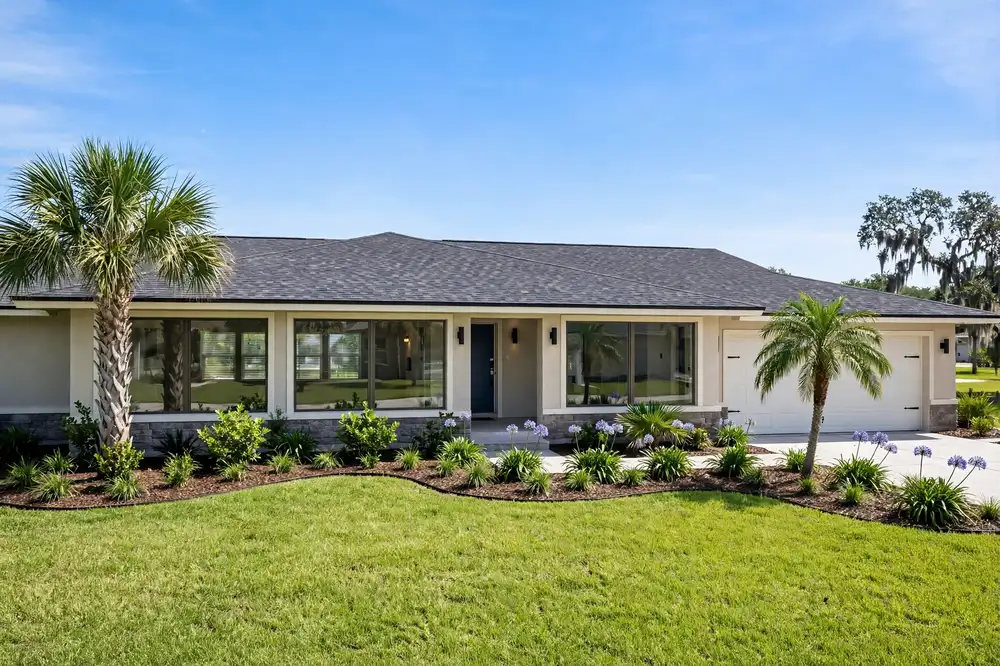
Landscape design for ranch style homes works best when the planting follows the home’s long, low shape. Use low, layered beds that leave windows clear, one or two vertical focal points, and a clear entry walk. Choose plants that handle Florida sun, salt, wind, and sandy soil. That balance keeps the yard easy to care for.
A ranch home gives you a wide canvas and a clear challenge. The house sits low and spreads wide, so the yard can look flat and stretched out if the planting is one long row of the same shrubs. We have designed yards for Palm Coast homes since 2015, and the plans that work best treat the house as a horizontal line to balance, not a wall to hide.
What Makes a Ranch-Style Home Different to Landscape?
A ranch home is a single-story home with a long horizontal facade, a low roofline, and wide frontage. Many ranch homes also have a prominent garage and large picture windows across the front. Those features shape every planting choice.
The long front means a small bed in the middle will look lost, while a tall hedge across the whole front will hide the house. The low roofline means a tall tree planted too close can crowd the roof and block light. The wide garage can take over the whole view if nothing softens it. A good plan answers each of these points on purpose, instead of filling beds with whatever looks nice at the garden center.
Work With the Home’s Long, Low Roofline
Start with rhythm. A ranch home already has a strong horizontal line, so repeat low planting groups along the front to echo that line. Then add one or two vertical focal points, such as a small ornamental tree near the entry or a tall accent shrub at a corner, to break the flat look.
Do not plant a continuous row of shrubs at the same height. That row makes the house look shorter and the yard look stiff. Vary the heights in steps, keep the tallest plants near the corners and the entry, and let the middle of the facade stay open. Our guide to giving your home a step up in curb appeal shows how small changes to the front yard can lift the whole look of the home.
Design Foundation Beds Without Hiding Windows
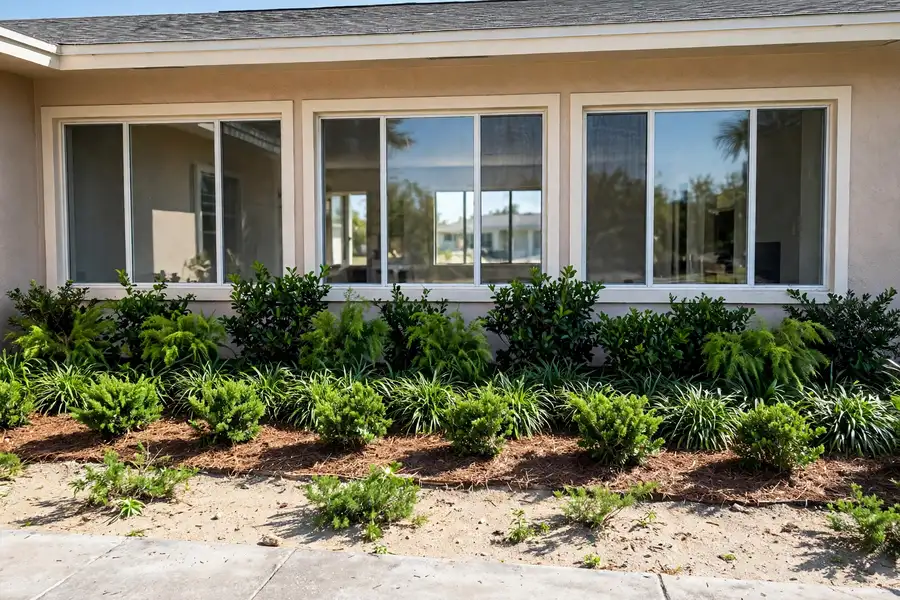
Foundation beds frame the house, but they should never cover the windows. Measure first: note the height of each window sill, the depth of the roof overhang, and how much room you need to walk behind the plants for care. Then pick plants by their mature size, not their size in the pot.
A shrub that looks small today can grow past the sill in two seasons and block light and air. Choose low shrubs for the beds under windows and save taller plants for the corners, where they can anchor the house without blocking a view. Layer groundcovers in front, low shrubs in the middle, and one taller accent at each end for depth. For small yards, our list of dwarf plants for maximum curb appeal gives low-growing options that stay in scale with a ranch facade.
Make the Front Entry the Visual Focal Point
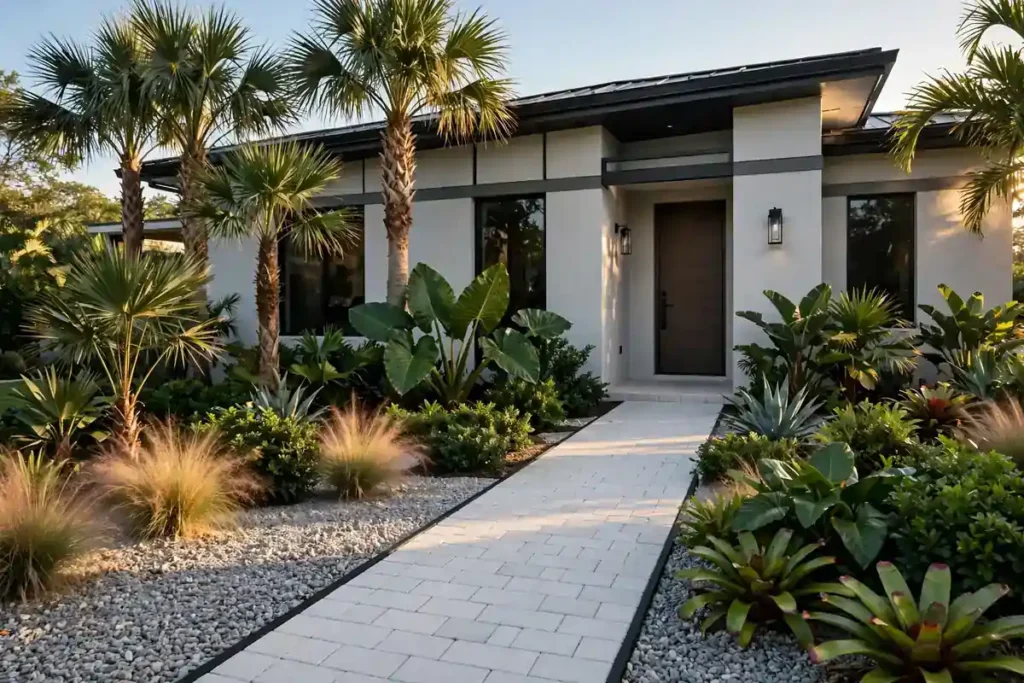
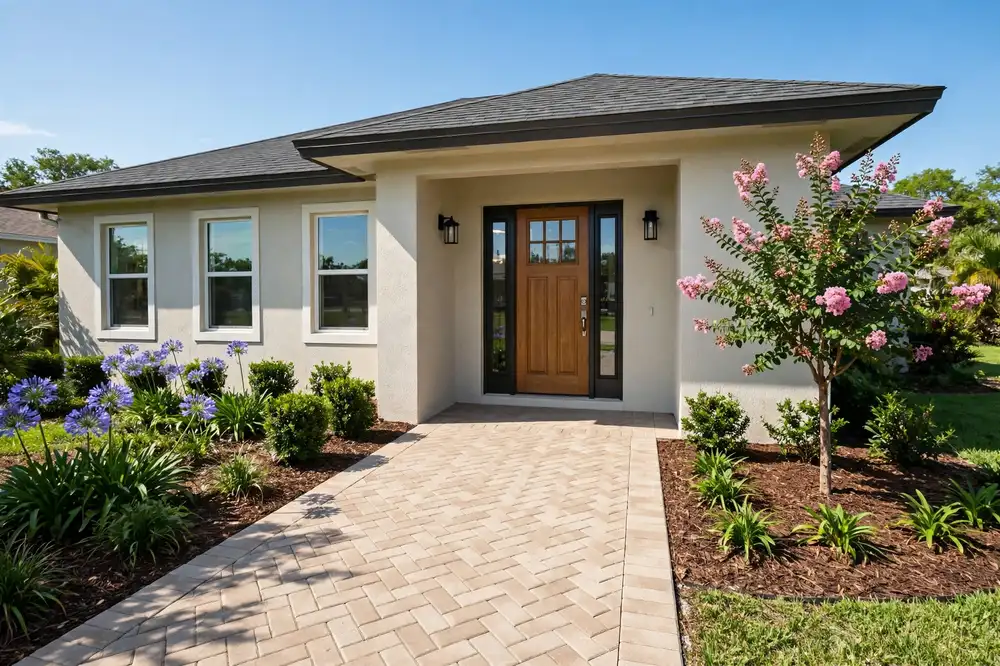
On a long ranch facade, visitors can struggle to find the front door. Make the entry easy to spot. Widen the walk where it meets the drive or street, and keep the path clear and direct. A curved walk can work well, but it should still lead the eye straight to the door.
Frame the door with planting that draws the eye without crowding it. Use lower plants on both sides of the walk and one vertical accent, such as a small tree or a tall container plant, set to one side so the door stays visible. Keep the view to the door open from the street. If guests must hunt for the entry, the entry planting has failed, no matter how pretty it looks up close.
Balance a Wide Driveway or Front-Facing Garage
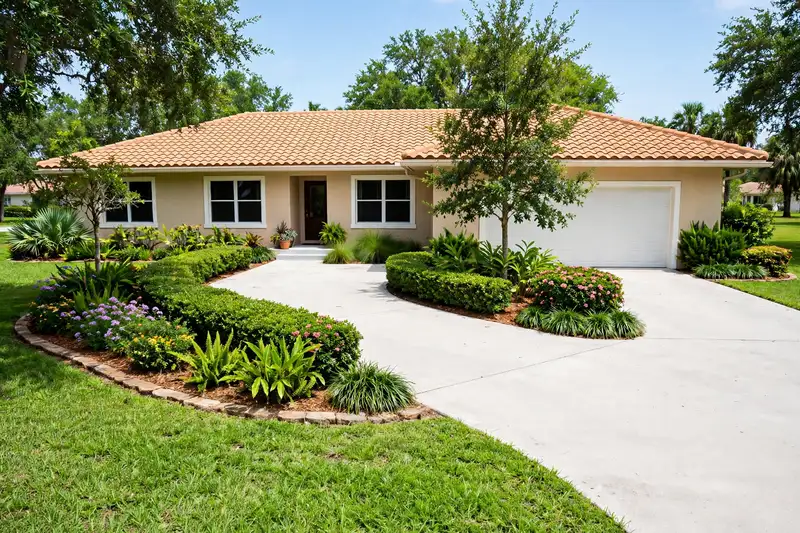
A wide driveway or a front-facing garage can dominate a ranch home. The fix is balance, not hiding the garage. Plant a bed along the side of the drive to soften the hard edge, and place a small tree where it can shade the drive without blocking the view out of it.
Repeat a plant or a bed shape from the front of the house along the garage side so the whole front reads as one design. Use the same edging and mulch through the front beds for a clean, finished look. Leave clear sightlines where cars back out, and keep plants away from the garage door swing. The goal is a garage that sits quietly in the design instead of shouting over the rest of the house.
Choose Florida-Friendly Plants for Sun, Shade, Salt and Sandy Soil
Florida conditions decide which plants will thrive in a Palm Coast yard. The University of Florida IFAS Extension teaches right plant, right place: match each plant to the zone, soil, water, light, and salt and wind exposure of its exact spot. A plant that loves full sun will fail in deep shade, and a plant that hates salt will struggle near the coast.
Palm Coast yards often have sandy soil that drains fast and can run high in pH, plus wind and salt exposure near the coast. Check the mature size, salt tolerance, and water needs of every plant before it goes in the ground. Our guide to salt-tolerant plants in Florida helps narrow choices for coastal yards, and our guide to the best palm trees for landscaping covers palms that suit Florida yards. Use palms as vertical accents, low shrubs for structure, and groundcovers to fill beds and hold soil.
Add Curved Beds, Walkways and Hardscape Transitions
Straight beds along a long, straight house can look rigid. Gentle curves soften the facade and give the yard movement. Curve the front bed out near the entry and back in near the corners, and repeat that curve in the walk or the lawn edge so the shapes feel planned.
Pay attention to where one surface meets another. A walk that ends in lawn with no landing feels unfinished. Add a small patio or landing at the entry, a stone edge where beds meet lawn, and a clear step from the drive to the walk. Keep water moving away from the house, and watch how rain flows across the yard after a storm before you lock in bed shapes. Good hardscape transitions make the yard feel easy to walk through and easy to mow around.
Create a Functional Backyard for a Single-Story Home
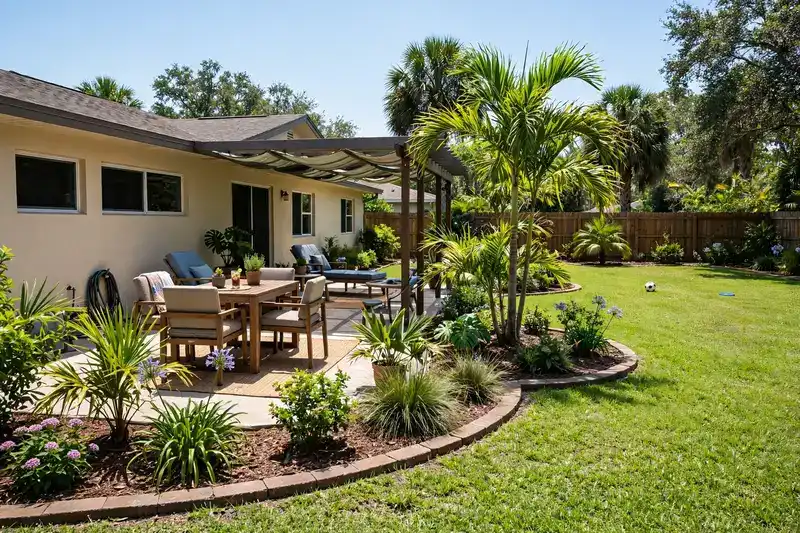
A ranch home lives close to its backyard, since every room sits on one level with direct access outside. Plan the backyard in zones. Put a patio or seating area near the doors you use most, keep an open lawn area for play or pets, and place shade where you will sit in the afternoon.
Use planting for privacy without building a green wall. Layer shrubs and small trees along the fence line, but leave gaps for air and light. Keep a clear path from the back door to the far end of the yard, and leave room to reach the fence and the house walls for care. A backyard that works for daily life will get used far more than a yard designed only to look good from inside.
Plan for Irrigation, Drainage and Long-Term Maintenance
A planting plan is only as good as its water plan. Beds and lawns need different amounts of water, so plan irrigation in zones and check that beds near the house do not stay wet after watering. Watch drainage after heavy rain: water should move away from the foundation and out of beds, not pool around roots.
Plan for care from the start. Pick plants you can prune without a ladder, leave access behind beds, and mulch to hold soil moisture and cut weeds. Check local HOA rules before you plant, since many Palm Coast communities have rules about trees, hedges, and front-yard changes. If you are starting from a bare yard, our guide to landscape design for new-construction homes in Palm Coast walks through the same planning steps for a new home.
When to Hire a Landscape Designer
A simple bed refresh is a fine weekend job. A full ranch-front redesign is a different task. Hire a designer when the yard has drainage problems, the garage dominates the front, the entry is hard to find, or you want a plan that ties beds, walks, lighting, and irrigation into one design. A designer measures the site, maps sun and shade, and picks plants by mature size and site conditions instead of guesswork.
Our landscape design service covers site analysis, 2D and 3D renderings, plant and material selection, and irrigation and lighting layout, with HOA-compliant design where your community requires it. We serve Palm Coast, Flagler Beach, Bunnell, Ormond Beach, and St. Augustine. Reach out for a free estimate or call us at (386) 237-2983, and we will help you shape a ranch yard that fits the house and the Florida coast.
Frequently Asked Questions
Low shrubs under windows, layered groundcovers, one or two palms or small ornamental trees as focal points, and ornamental grasses for movement. Pick plants rated for your sun, soil, salt exposure, and mature size. Check UF/IFAS guidance for North and Central Florida before planting, since a plant that thrives inland can struggle near the coast.
Start with low, layered beds that follow the long facade, keep windows clear, and add one or two vertical focal points. Make the entry easy to find with a clear walk and planting that frames the door. Soften the garage with beds and a small tree, and repeat bed shapes and materials across the front for one clean design.
Add vertical focal points, such as a small tree near the entry or tall accents at the corners, to break the long horizontal line. Vary plant heights in steps instead of one flat row. Curve the beds, widen the entry walk, and layer groundcovers, shrubs, and accents so the eye moves across the yard instead of sliding past it.
Measure the window sill height, then pick shrubs whose mature height stays below it. Do not judge by pot size, since shrubs grow fast. Prune once or twice a year to hold the shape, and leave room behind the bed for access. Move any shrub that crowds glass to a corner, where height helps anchor the house.
Check the window sill height, roof overhang, mature plant size, and access for care. Call 811 before digging so buried lines get marked. Watch drainage so water moves away from the foundation, and keep roots and mulch off the walls. Check HOA rules too, since many communities limit tree and hedge choices near the street.
Wind, salt spray, sandy soil, and fast drainage shape every coastal planting choice. Salt can burn leaves, wind can dry soil, and sandy beds lose water fast. Pick plants rated for salt exposure and your sun and soil, group plants with like water needs, and mulch to hold moisture. Check site conditions plant by plant, not by a single list.