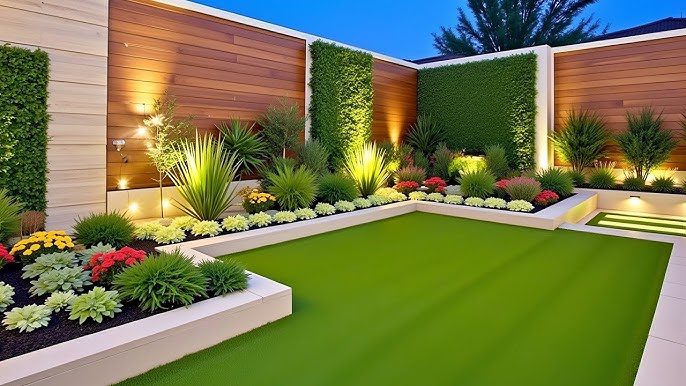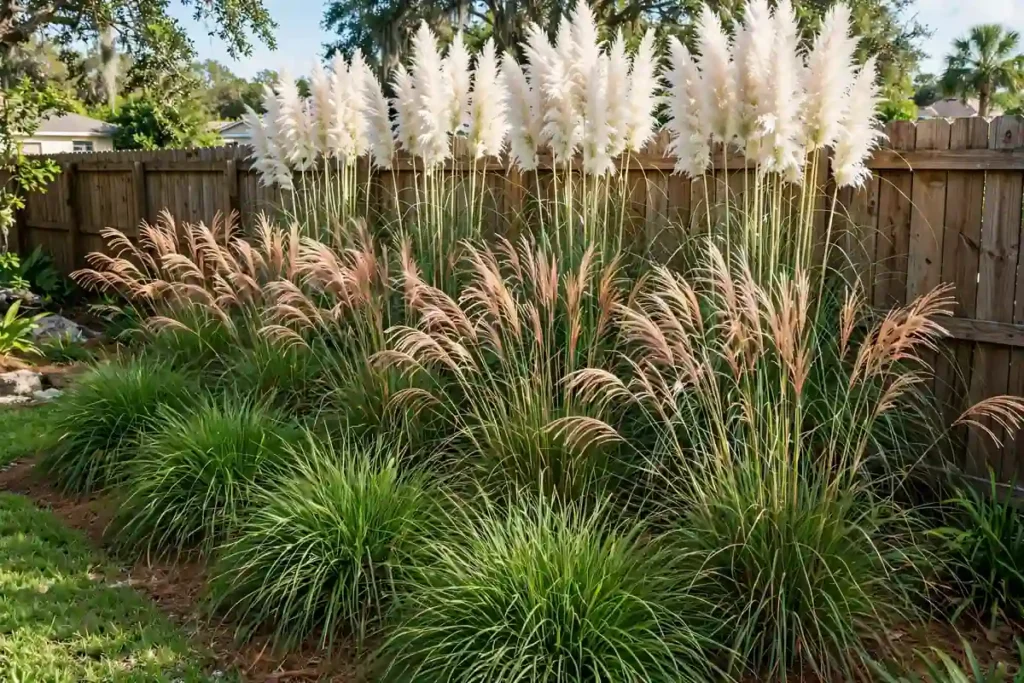
A fence gives you privacy. A living screen of tall ornamental grasses gives you privacy plus movement, texture, seasonal color, and a yard that feels alive. In Florida — where things grow fast and year-round — grasses can form a solid screen in just two growing seasons, often for less than a new fence. Here are the seven best tall ornamental grasses for privacy in Florida, plus exactly how to plant them for a screen that actually works.
7 Best Tall Ornamental Grasses for Privacy in Florida
These seven are proven in Florida heat, humidity, and sandy soil. Heights are mature sizes in Central/North Florida conditions.
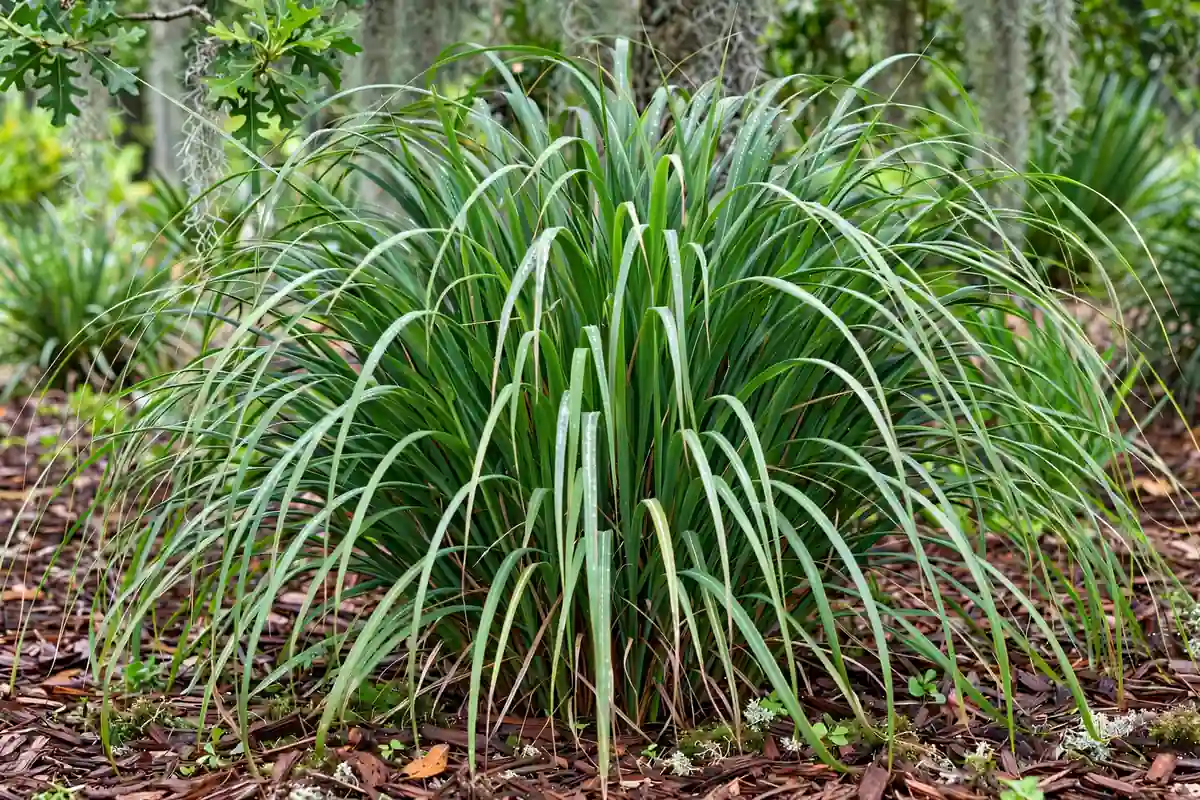
1. Fakahatchee Grass (4–6 ft) — The Florida Native
Tripsacum dactyloides. If you plant one grass for privacy in Florida, make it this one. Fakahatchee is a true Florida native — it laughs at heat, flooding, drought, and neglect. It forms dense 4–6 foot clumps that stay green nearly year-round (no ugly winter dieback like northern grasses). Plant 3 feet apart for a solid evergreen screen. Bonus: it’s a larval host plant for native butterflies.
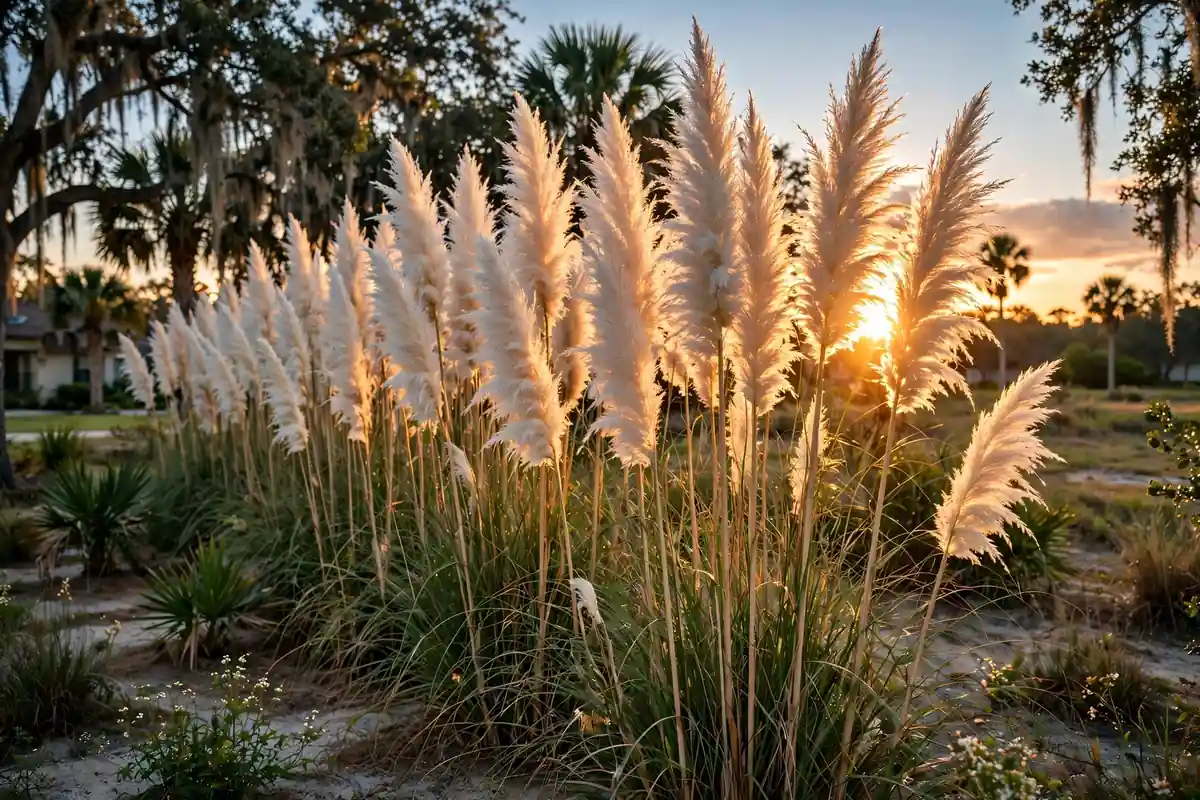
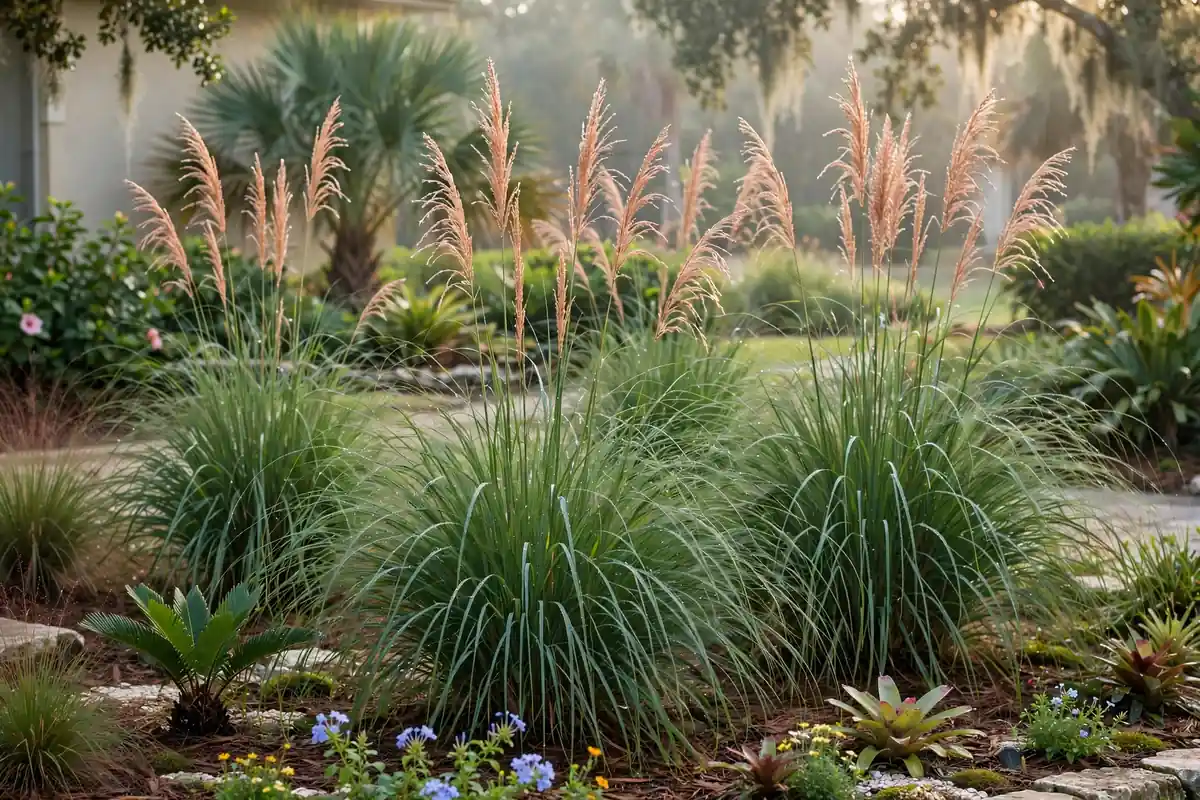
2. Pampas Grass (8–10 ft) — The Fastest Screen
Cortaderia selloana. Nothing beats pampas for sheer presence — 8–10 foot plumes that stop neighbors in their tracks. It establishes fast and makes a dramatic statement. Two honest warnings: the leaf edges are razor-sharp (plant away from walkways, pools, and play areas), and it self-seeds enthusiastically — deadhead the plumes if you don’t want volunteers. For a back property line, though, it’s unbeatable.
3. Miscanthus / Maiden Grass (6–8 ft) — The Reliable Classic
Miscanthus sinensis cultivars like ‘Gracillimus’ and ‘Morning Light’. The workhorse of privacy grasses: upright 6–8 foot clumps, beautiful fall plumes, and excellent wind resistance. Unlike pampas, the foliage is soft to touch. It goes dormant and tan in winter — cut it back in late February and fresh growth explodes by April. Sterile cultivars won’t self-seed into your lawn.
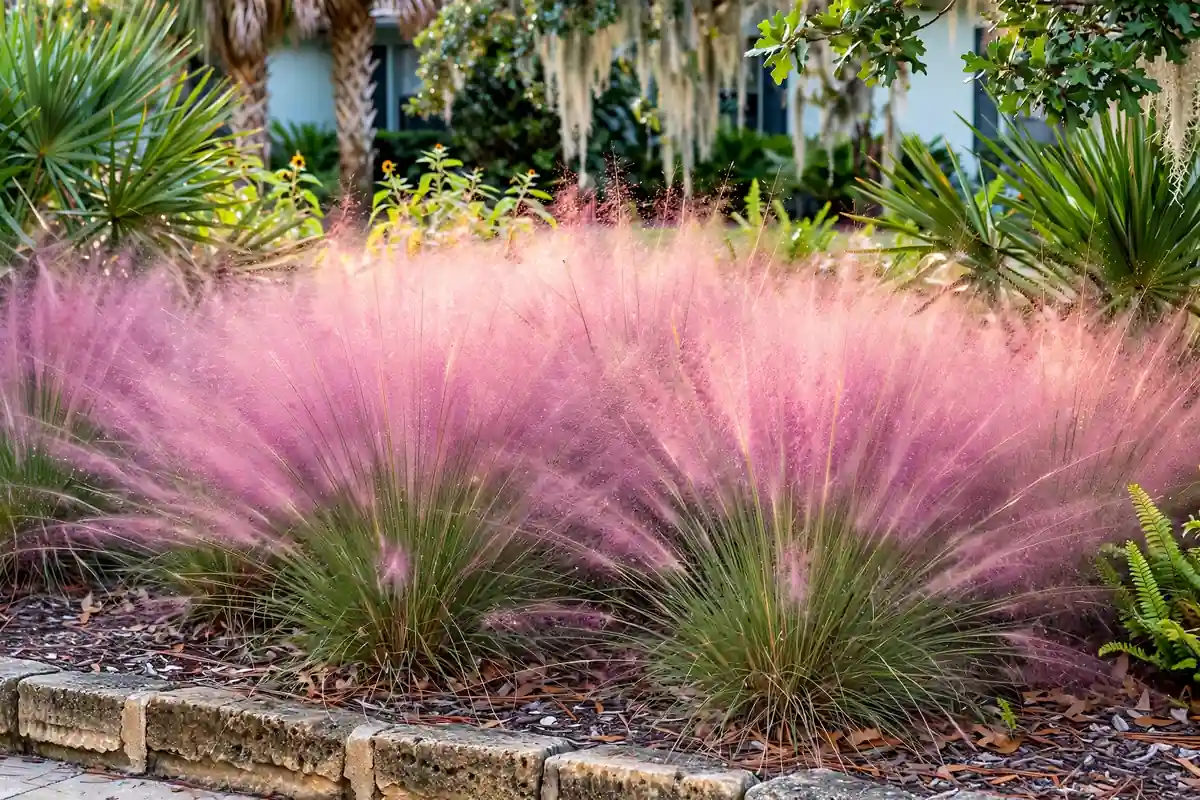
4. Muhly Grass (3–4 ft) — The Layering Grass
Muhlenbergia capillaris. At 3–4 feet, muhly won’t screen a two-story window alone — but planted in front of taller grasses, it creates the layered, professional look that separates designed landscapes from random plantings. And in fall, the airy pink plumes are the single most photographed plant in Florida landscaping. Use it as the front row of your privacy planting; it also softens the base of fences beautifully.
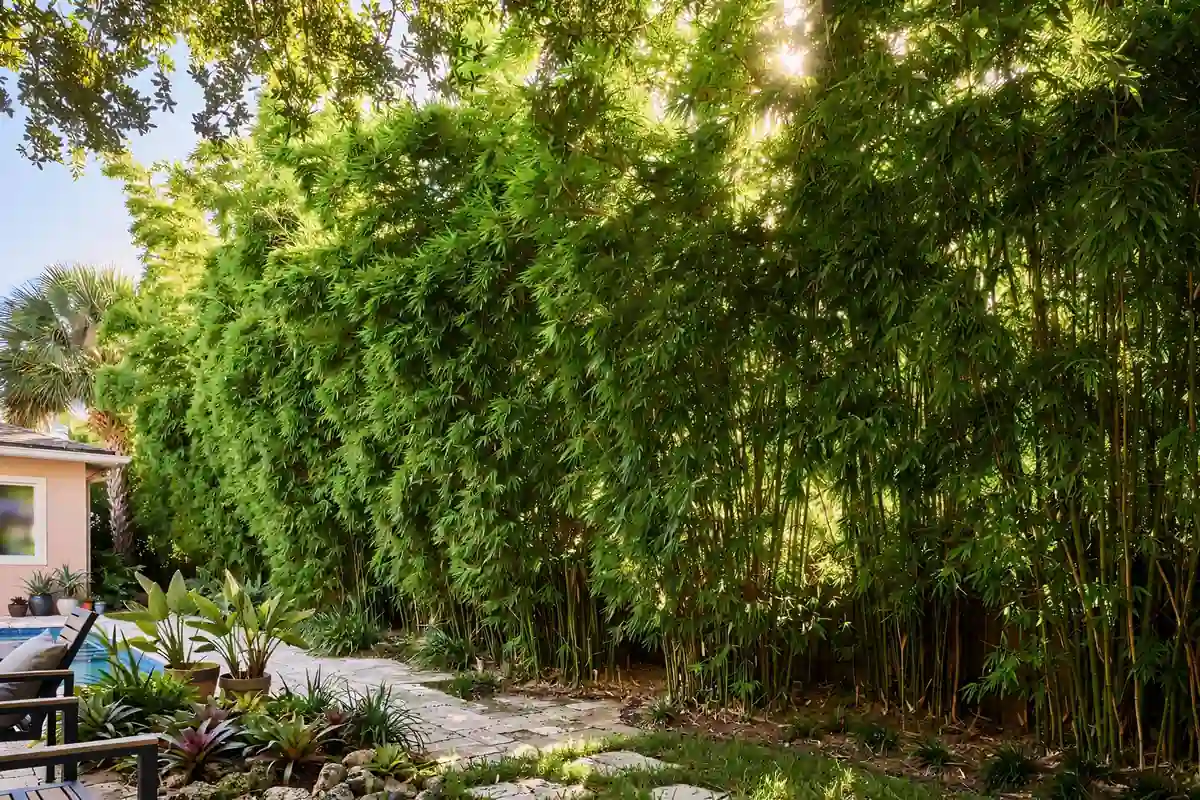
5. Clumping Bamboo (10–20 ft) — The Instant Wall
Bambusa species like ‘Golden Goddess’ or ‘Seabreeze’. When you need serious height fast, nothing touches clumping bamboo — 10–20 feet of dense evergreen screening. The critical word is clumping: running bamboo spreads by underground rhizomes and will invade your yard and your neighbor’s. Clumping varieties stay put. Give each plant 4–5 feet of space and a root barrier for insurance, and you’ll have a green wall within 18 months.
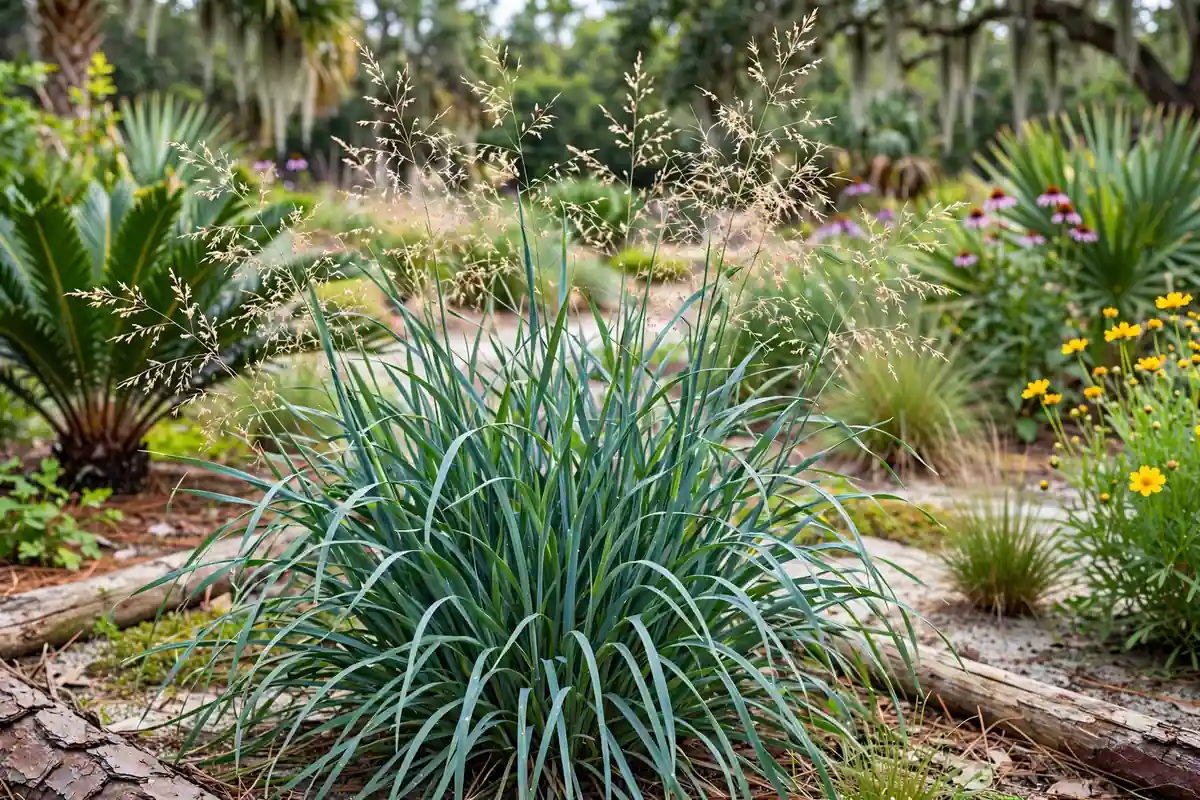
6. Switchgrass (4–6 ft) — The Tough Native
Panicum virgatum cultivars like ‘Dallas Blues’ or ‘Shenandoah’. A North American native that handles Florida’s wet summers and sandy soil without complaint. ‘Dallas Blues’ reaches 6 feet with striking blue-green foliage; ‘Shenandoah’ tops out around 4 feet with burgundy fall color. Upright habit, strong winter structure, and excellent wildlife value — seed heads feed birds through winter.
7. Feather Reed Grass (5–6 ft) — The Neat One
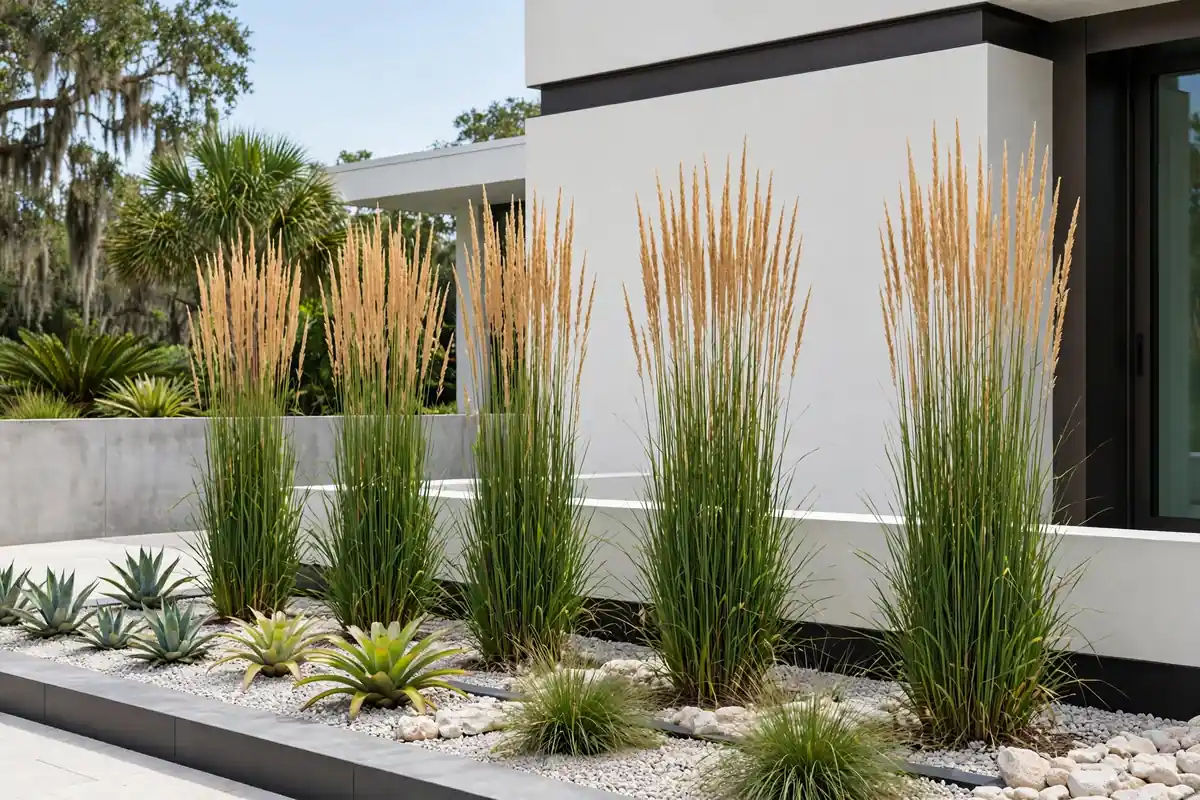
Calamagrostis x acutiflora ‘Karl Foerster’. The most architectural of the bunch — strict vertical 5–6 foot columns that never flop, even in Florida downpours. It holds its shape better than any other tall grass, making it ideal for modern landscapes and tight side yards where you need screening without sprawl. Evergreen-ish in mild winters; cut back in late winter for a fresh start.
How to Plant Grasses for Maximum Privacy
Right plant, wrong planting = no privacy. Follow these rules:
Space for mature size, then cheat slightly. The tag says 4-foot spacing – plant at 3–3.5 feet for screening. Grasses fill in fast in Florida; slight crowding closes the screen a full season sooner.
Stagger two rows for instant density. A single row always has gaps. Two staggered rows (plants offset like bricks) look solid from day one and become impenetrable by year two. This is the single biggest difference between amateur and professional privacy plantings.
Expect the timeline. Year one: plants establish roots and look sparse (normal – don’t panic). Year two: clumps double and the screen closes. Year three: full, lush privacy. Anyone promising instant results is selling you overpriced mature specimens.
Water like you mean it the first year. Even drought-tolerant grasses need consistent water until roots establish – 2–3 deep waterings per week in Florida’s dry spring. After year one, most of these survive on rainfall alone. Pair new plantings with a Florida-adapted planting plan and they’ll thrive with minimal input.
Grasses vs Hedges vs Fences: An Honest Comparison
Cost: A grass screen (plants + mulch + labor) typically runs $1,500–$4,000 for a 50-foot run – often half the price of a comparable wood or vinyl fence, and far less than a masonry wall.
Speed: A fence is instant; grasses take two growing seasons. If you need privacy this weekend, build the fence. If you can wait, grasses reward patience.
Maintenance: Grasses need one annual cutback (late winter) and occasional dividing. Hedges need shearing 3–4 times a year in Florida’s growing season. Fences need staining, repairs, and eventual replacement.
Look and feel: This is where grasses win outright – movement, sound, seasonal change, and wildlife. A fence is a wall; a grass screen is a garden. Many of our clients combine both: a low fence for security with grasses softening it, plus landscape lighting to make the grasses glow at night.
The truth? The best privacy landscapes layer all three – and that’s a design conversation, not a product purchase. Our landscape design service plans exactly these combinations.
Frequently Asked Questions
What is the fastest growing privacy grass in Florida?
Pampas grass and clumping bamboo are fastest – both can form an effective screen within 12–18 months. Fakahatchee grass is nearly as fast and far better behaved long-term.
How far apart should I plant ornamental grasses for privacy?
Plant at 3–4 feet apart (slightly tighter than the tag recommends), in two staggered rows for a solid screen. Single rows always leave gaps.
Do ornamental grasses stay green all year in Florida?
Evergreen and near-evergreen types like fakahatchee grass, clumping bamboo, and muhly grass stay green nearly year-round in Florida. Miscanthus and pampas go dormant/tan in winter – cut back in late February.
Are ornamental grasses better than a fence for privacy?
For looks, movement, wildlife, and cost – yes. For instant privacy and security – no, a fence wins. Many Florida yards combine a low fence with a grass screen for the best of both.
Will ornamental grasses spread into my lawn?
Clumping varieties (fakahatchee, miscanthus cultivars, clumping bamboo) stay put. Avoid running bamboo and deadhead pampas plumes to prevent self-seeding. Choose sterile cultivars when available.
How much does a professional privacy planting cost?
A 50-foot grass privacy screen professionally designed and installed in the Palm Coast area typically runs $1,500–$4,000 depending on plant sizes and site prep. Mature specimen plants cost more but close the screen faster.
Get a Living Privacy Screen Designed for Your Yard
The right grass, the right spacing, the right layout for your sun, soil, and sightlines – that’s the difference between a screen that works in two years and a row of struggling plants. And when it’s part of a bigger landscape vision, the whole yard comes together.
DreamScapes designs and installs privacy plantings across Palm Coast and Flagler County – from single grass screens to complete curb-appeal transformations. Call (386) 237-2983 or visit dreamscapesflorida.com for a free consultation. Prefer screening around a specific feature? See our deck landscaping guide for privacy ideas around outdoor living spaces.